Category: Digital Advertising

How to Make a High-Converting Landing Page [With 3 Examples!]
As a small business owner or marketing manager, having to balance operations, marketing and sales, and customer service leaves you with a packed schedule. Establishing a marketing budget for your small business is one thing, but being responsible for potentially thousands of advertising dollars can be a lofty task.

You can put your advertising dollars to work by maximizing the odds that your potential customers convert every time they encounter your ads. Learn how to make a high-converting landing page to realize the best return on your marketing spend.

What Is a Landing Page on a Website?

Unlike other pages on your site, landing pages are standalone pages; in other words, you will not find them in the navigation menu, nor are they linked to any other page on your site. They are specifically designed for marketing campaigns.

For example, if someone clicks on your Facebook ad or a PPC ad, they would be directed to the landing page, rather than an existing page on your site.

Purpose of a Landing Page

Landing pages are created with a specific goal and call-to-action in mind, in the hopes of maximizing the number of conversions you can capture from your digital marketing campaigns. While other pages on your site may have several different goals, the sole purpose of a landing page is to drive conversions.

The singular purpose of landing pages makes them invaluable tools in your B2C or B2B marketing strategy toolkit.

Schedule a free consultation today to learn how MARION can incorporate landing page optimization into your comprehensive outsourced marketing services.

how to create the best landing page

Why Create a Landing Page Anyway?

With an ad, you typically offer an incentive or a value proposition that entices people to click on the ad. However, you are unlikely to feature this prominently on your general-purpose website, or if you do, your website contains so much additional information that it may get lost in the sea of information. This is where your landing page comes into play.

A landing page enables you to mirror and elaborate on the message featured in your ads without having to make any form of changes to your website. It narrows the visitors’ focus on the message.

Splash Page vs. Landing Page

There are many similarities between a splash page and a landing page, but the main way in which a splash page differs from a landing page is that a splash page is not a standalone page. It’s not even a page at all, despite what the name may imply.

Instead, a splash page is a large screen that appears when visitors first enter a site. While the goal of both a splash page and a landing page is to drive more conversions on your site, splash pages are intended to convert more visitors to the site as a whole and are not necessarily catered to any specific digital campaign.

Do Landing Pages Work?

The short answer is yes, landing pages do work.

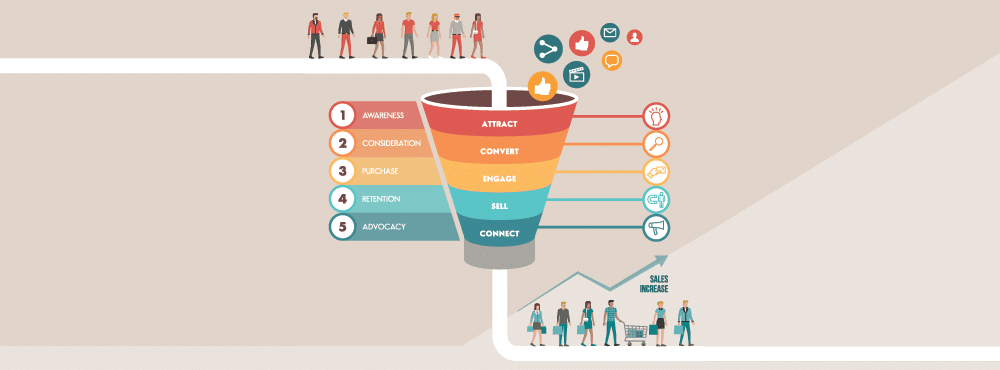
Landing pages are more effective than the typical page on your website because they are specifically designed with only one goal in mind: conversions. The best converting landing pages have content and information that is incredibly relevant to the ads that you are running, and the lack of extraneous information keeps the visitors’ focus on the page, helping to drive them further down the marketing funnel towards the conversion.

what makes an effective landing page

Elements of a Good Landing Page

Making a good landing page can seem overwhelming, but the following six elements of an effective page will eliminate some of your confusion.

  1. Headlines that match
  2. Compelling Content
  3. CTA
  4. Images & Videos
  5. Forms
  6. Ongoing Testing

1. Headlines That Match Intent of Source

One of the very first things visitors notice when they land on your page is the landing page headline. First and foremost, your headline needs to align with the ad the user clicked on to find your landing page.

Then, in very few words, your headline needs to be interesting and eye-catching, telling visitors exactly what they can get from your company. Once you have grabbed their attention and given them an idea of what your product or service is with your headline, you can use your sub-headline to further convince them to take the desired action.

Should a Landing Page Have Navigation?

Landing pages are more limited than a regular page on your site, including where navigation is concerned. Unlike the other pages on your site, you would not include a full navigation menu on the landing page, as the lack of navigation focuses your visitor’s attention on the content on the page.

For that reason, some design experts advise you to limit the use of navigation as much as possible; potentially even limiting it down to simply including your logo that links to your home page.

At MARION, we’ve experienced mixed results from eliminating page navigation. Easily accessible navigation is a major part of what makes a good website. Ultimately, you’ll want to test this out on your landing pages to see which method gets the best results with your unique audience.

2. Compelling Content

The key to a high-converting landing page is compelling content. In a concise manner, communicate the benefits of what you have to offer and how it will meet the needs of your landing page visitor. You know what you have to offer, so communicate that to your visitors as well. If you featured a special or incentive in your ads, be sure to elaborate on those offers on the landing page.

Your digital content strategy should ultimately depend on your offer. When PPC advertising is concerned, the better you can match your landing page content with the information found on your PPC ads and the keywords you use in your campaigns, the better your campaign and your landing page will perform.

3. Call-to-Action

As with any digital ads, a call-to-action is critical to driving conversions. That rule does not exclude landing pages. Your landing page should prominently display your call-to-action, telling visitors exactly what they need to do to get in contact with you.

As with your headlines and content, your call-to-action must be compelling and persuasive. The design, color, and placement of your CTA are all factors that need to be taken into account in order to create high-converting landing pages.

4. Supporting High-Quality Images and Videos

Images and videos are an eye-catching and persuasive way to provide context and give visitors an even more clear idea of what it is you can do for them. Showing, in addition to telling them, is key for effective landing pages. Keep in mind that your images must be high-quality and relevant.

If you’re interested in customized graphic design in Houston, Austin, or DFW, MARION can help created supporting images that will resonate with your audience.

5. High-Visibility Form

Having a high-visibility form on your website is what makes a great landing page truly effective. Your landing page form is one of the most critical elements to include as it simplifies the conversion process, thereby making it easier to convince visitors to convert.

6. Continuous Testing

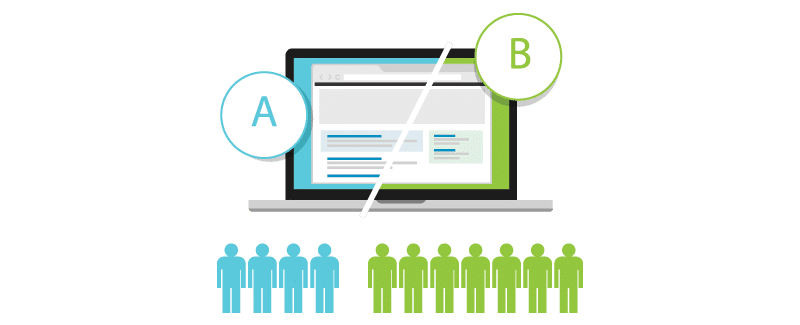
As with virtually everything else in digital marketing, continuously A/B testing your landing page is the key to ensuring that your landing page is maximizing the number of conversions it could potentially capture. It allows you to see what elements do or do not work and make any necessary changes.

creating an effective landing page

Process for Creating Landing Pages that Convert

The process for creating landing pages that convert can vary depending on your requirements for your page. For the most part though, you’ll want to start by creating a wireframe that outlines the page structure and layout.

If you choose to work with a professional designer, they will then be able to use your wireframe to come up with a clean, organized design with minimal elements and contents that is sure to convert. A developer can then use the design to code the website and get it to look and function as it should.

For the best odds of choosing a web designer that brings your visualizations to life, research some selection criteria that will help you identify the right fit.

How Long Does It Take to Create a Landing Page?

As with the process for creating landing pages, the time it takes to create a website landing page depends on several different factors: Is it a custom landing page, or a templated one? There are many benefits of custom web design, but completely custom landing pages take longer to create than a templated one.

The bigger the scope of the landing page, the more elements added to it, and the more complex the design, the longer it will take to create. Are you attempting to create it yourself or are you going through an agency? If you do go through an agency, the time it takes would depend on the agency’s process, their workload, and the speed of the individuals working on the landing page.

3 Examples of Landing Pages that Convert

Before learning how to create a converting landing page on your own, look at the following three examples of landing pages that convert. These companies have clearly been using a thoughtful landing page development process to hone their pages into what they are today.

1. Later
best converting landing pages

Source: Later

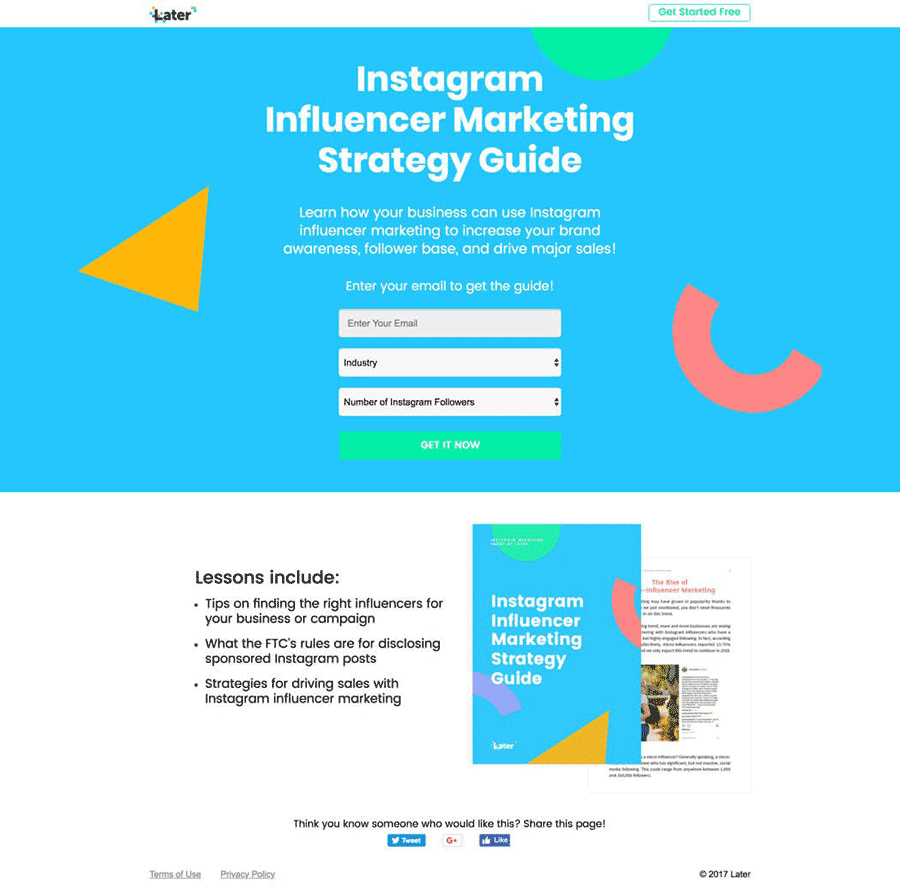
Later has does an excellent job creating an effective landing page that is sure to convert. At a glance, you can see exactly what the page is about, what you can expect to gain from it, and how you can convert via the form. The content is concise and straight to the point, giving you all the pertinent information.

The call-to-action “Get It Now” is also compelling and sure to get people to convert. If you look closely, you’ll also notice that there is no navigation menu. They utilize high quality images that gives you a clear idea of what you will get once you convert. While we can’t know if they are conducting A/B tests, they have included all the elements of a persuasive landing page.

2. Uber
high-converting landing page examples - Uber

Source: Uber

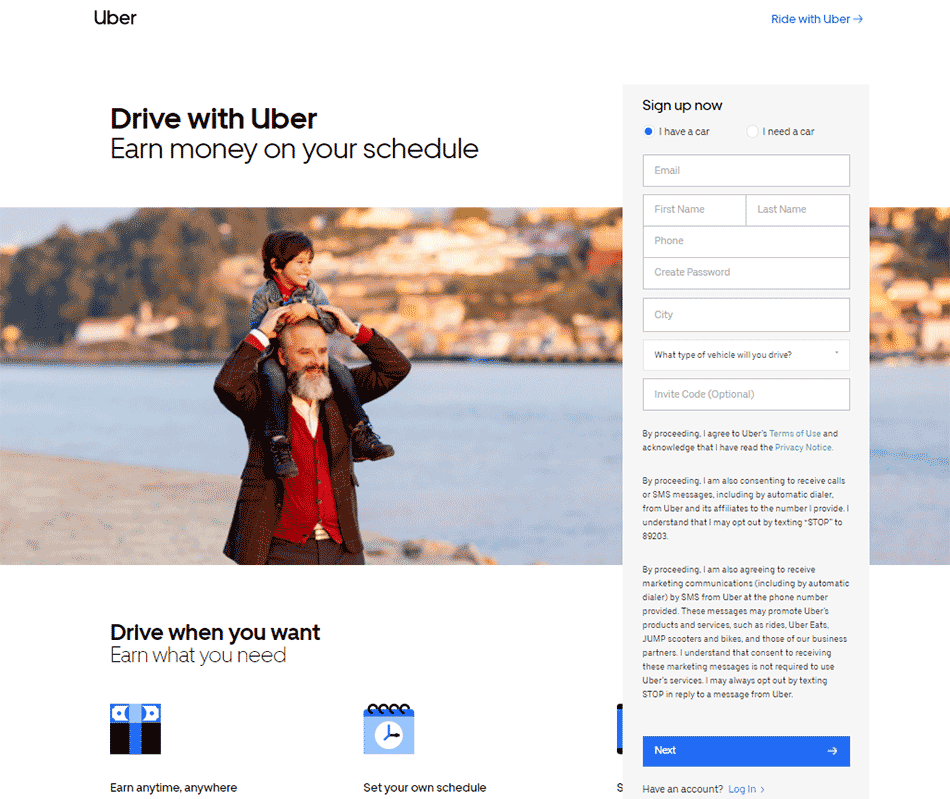
Though Uber’s landing page does not have as much content as the previous example, the content they do have is concise and to the point. You know exactly what the page is about, what you can expect to gain from signing up, and you can see immediately how to sign up.

3. Paycor
persuasive landing page - Paycor

Source: Paycor

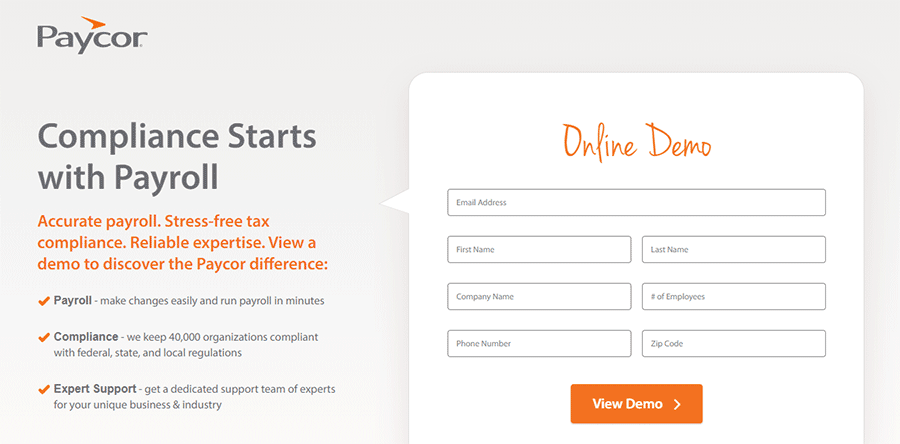
So, what makes a great landing page? Paycor definitely has the answer. This landing page is linked to a search ad, and their heading and subheading closely align the intent of the original search.

Right off the bat, they make their content compelling with a clear landing page value proposition. Their service is the solution to a common pain point of small business owners – compliance.

Their demo call to action is clear, and there is a highly-visible form near the top of the page. As a bonus, there is no top navigation to lead users away from the main CTA.

To improve one aspect of this landing page according to best practices, Paycor may benefit from adding supporting imagery or video.

MARION’s Web Design Team Can Help You Craft Effective Landing Pages

It’s clear that your business is a success, but growth has become a priority and landing page design is not your expertise. MARION has been around for nearly 40 years, and our Austin, DFW, and Houston web design capabilities have evolved to suit the needs of your business.

Schedule a free consultation today to learn more about how our web design services can amplify the effectiveness of your ad budget.

Marketing emails you’ll actually want to read.

Get marketing tips and news sent to 
your inbox.

This field is for validation purposes and should be left unchanged.
Name(Required)

5 Ways to Reduce Your Facebook CPL

If you’re a business advertising through social media, you know how important it is to closely monitor the performance of your account. Savvy business owners and managers know that you must set marketing KPIs and adjust your campaigns based on their performance.

Learning how to generate leads or how to get more followers on your Facebook business page can vastly improve your company’s bottom line, but it comes at a cost. The cost per lead of your Facebook Ads show how much you’re paying to acquire each lead. 

Databox found the average CPL for a Facebook campaign falls between the $0 and $25 mark. 

But if you’ve checked your reporting dashboard and realized you’re paying over the odds for each lead, you’ll have one question: How do you reduce your CPL?

How to Reduce Cost per Lead on Facebook

Here are five simple techniques you can use:

1. Use the Lead Generation Campaign Goal

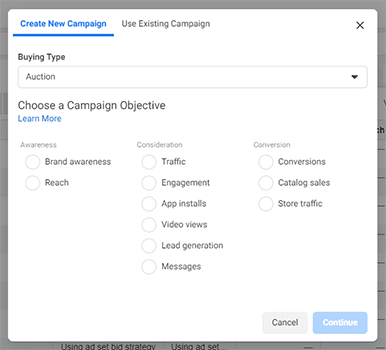
You’ll have to choose a goal for a Facebook campaign whenever you create new adverts.

reducing Facebook cost per lead

This is the main result you want from the ads, and impacts who the advertising algorithm shows your content to, such as:

  • Brand awareness (showing your ad to the largest group of people)
  • Link clicks (showing your ad to people likely to click on Facebook links)
  • Conversions (showing your ad to people likely to purchase items from Facebook)

Technically, you can use any of these goals to run your Facebook campaigns. But if your main goal is to increase lead quality and reduce the cost of each, it makes sense to set your goal to lead generation. That way, Facebook will be more likely to show your ad to people with a history of submitting forms.

Sean Collins of Barrel explains that this reduces your CPL “because the traffic never leaves the platform, we get some very low-cost leads.”

2. Think About Audience Targeting

The next stage of your Facebook campaign creation is to pick the people you want to target. But this goes beyond adding their interests and doubling-down on the age of your target lead. 

You can use two audiences to reduce your CPL, according to some experts:

  • Lookalike audience: A list of new Facebook users similar to those who’ve already filled-in your forms. Alejandro Rioja says: “Since you receive leads exclusively from Facebook, a lookalike audience derived from the lead ads will be higher quality.”
  • Retargeted audience: These might be people who’ve visited your website, liked your Facebook Page, or watched a video. According to Ali Rizvi of Dream Superhero, “using an engagement audience from the lead ads is the best way to lower your cost and increase volume.”

3. Play on Your Audience’s Pain Point

Talk to your sales team and really get to know what your ideal customer looks like. Chances are, these are the people you’re hoping to attract with your Facebook campaigns.

What pain point are they struggling with? Some examples include:

  • The product is too expensive
  • They can’t get buy-in from their boss
  • They don’t know anyone who can vouch for you/the product

Find the pain points your target leads are battling with, then use that within the copy of your Facebook ad to reduce its CPL, as POSH Digital Media’s Joe Karasin explains: “For example, when we are running FB ads for mortgage lenders, we start our ads with ”If you’re planning on refinancing…”

“By using specific language, we are able to both qualify and disqualify leads, so we don’t end up with a bunch of useless clicks,” Karasin adds.

4. Use a Giveaway as Your Hook

People are unlikely to fill in a form unless they’re really interested in what you’ve got to say, or you’re solving a pain point of theirs. Depending on your business, that might be a small portion of your audience—hence why the CPL of your Facebook campaigns is sky-high. 

You’re able to boost interest (and the number of people turning into a lead) by giving them an incentive, such as:

  • Entries to a giveaway or sweepstake
  • A free product
  • Vouchers or discounts on their next purchase

Michael Dinich explains that The Money Mix ads “were averaging a $2 CPA to gain email subscribers, but after implementing sweepstakes our CPA has an average 13 cents or less.”

5. Split-test the Number of Form Fields

“The best way to lower your CPL for Facebook Ads is to continually run an A/B test to optimize your ad,” says Katherine Hunter-Blyden of KHB Marketing Group.

how to reduce cost per lead on Facebook ads

You can split-test anything from your ad copy to your audience targeting. However, David Denning of Jumpstart Go thinks you should split-test the number of fields on your form because “the more questions and steps they have to take, the less will finish and come through as leads (which increases your cost per lead).”

Research backs this up: One company increased their conversions by 120% after dropping from 11 to 4 fields on their forms. 

Split-test to see whether your Facebook campaigns have the same impact.

Final Thoughts on Reducing Facebook CPL

The CPL of your Facebook campaigns is something you should be keeping a close eye on—no matter the goal of your campaign. It shows how much you’re paying to acquire each customer. 

Compare your CPL to other financial metrics, like your CLV, to see whether Facebook Ads are generating a return on your investment. If it isn’t, these five tips are bound to help you reduce your CPL (and start making a profit.)

Let MARION Help Improve Your Social Media Performance

MARION has been helping Texas businesses successfully market themselves for nearly 40 years. Our team of strategists offers branding, traditional, and digital marketing services that can grow your business into a revenue-generating machine.

Contact us today to schedule a free consultation if you need help with social media marketing in Houston, Austin, or DFW.

Marketing emails you’ll actually want to read.

Get marketing tips and news sent to 
your inbox.
This field is for validation purposes and should be left unchanged.
Name(Required)


How Much Should I Spend on Marketing? – Creating a Marketing Budget

Not having the appropriate marketing budget can do significant damage to your company’s potential. Like Henry Ford said, “The man who stops advertising to save money, is like the man who stops a clock to save time.” Cutting back your marketing and advertising costs is not the path to a prosperous business.

But how much do companies spend on marketing in your industry? Having an accurate estimate of what the average marketing budget can be important to know for several reasons.

Jump to Our Marketing Budget Calculator

Knowing your numbers matter whether you’re trying to structure your marketing plan, justifying a round of new funding, or approaching your boss about a marketing budget increase for the next fiscal year.

What Percentage of Revenue Should Be Spent on Marketing?

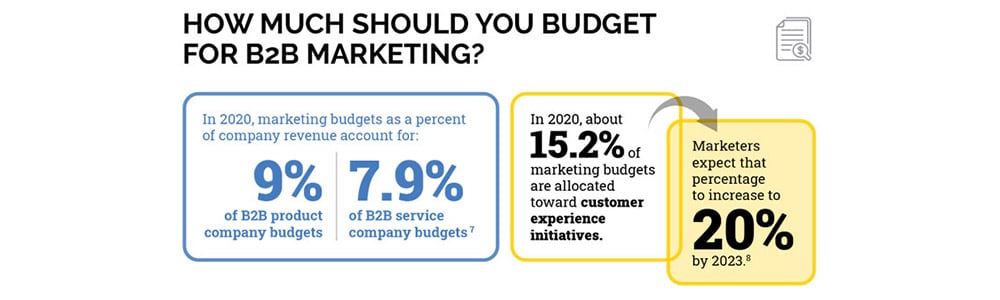
For years, the average marketing budget for small businesses was a recommended 7-8% of revenue, per the SBA. This marketing budget percentage supposedly held true if your revenues were under $5 million and your margins were between 10% and 12% of sales.

As a small business owner, including a marketing budget in your marketing plan is a necessary step toward raising funds for growth. However, there are several business factors that will affect this figure like your marketing goals, your industry, and whether you serve businesses or consumers.

However, since this figure was released, large strides have been made in the world of digital media and smartphones. Not to mention, a global pandemic rocked the world and has already changed what we know about face to face marketing initiatives and daily commutes.

The next sections show the average marketing budget breakdown for B2B vs. B2C companies, 13 different industry segments, and how these percentages will be affected by COVID-19.

B2B vs. B2C

Your average marketing budget will depend largely on whether your business serves businesses or consumers, and whether you offer mainly product or services.

B2B marketing budget breakdown

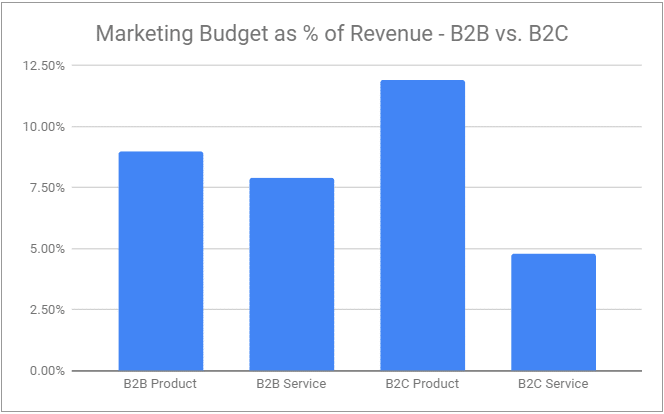
The following table and chart represent the average marketing budget for B2B companies and B2C companies segmented by product and service offerings.

Market Segment% of Revenue
B2B Product9.00%
B2B Service7.90%
B2C Product11.90%
B2C Service4.80%
how much does marketing cost - B2B vs. B2C

Average Marketing Budget by Industry

B2B marketing budget vs. B2C marketing budget comparisons only go so far when industry variation is added to the mix.

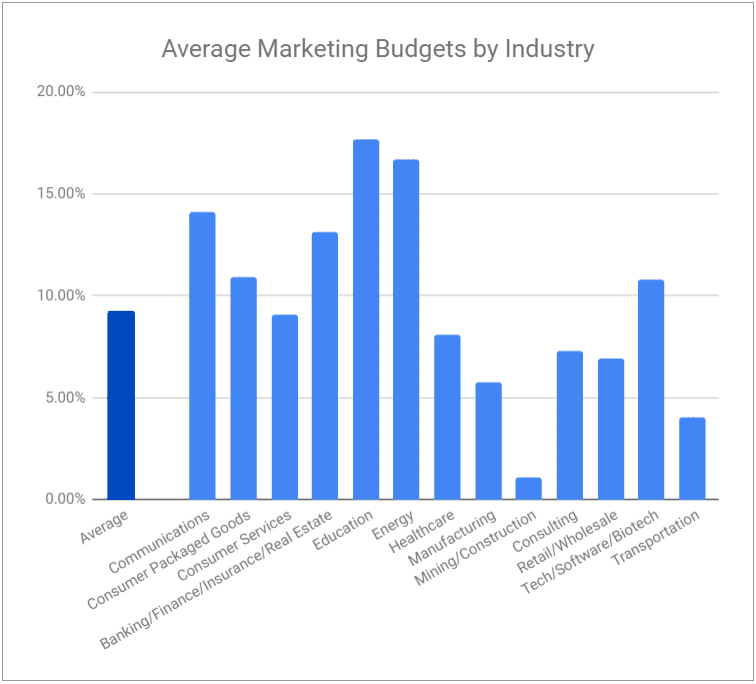
Case in point, the Manufacturing industry reports marketing budgets as 5.74% of revenue while Banking and Finance reports an average of 13.14% of revenue. With such a wide gap, it’s clear you must take a more granular look at the playing field before making an informed estimate about your own projected marketing expenses.

It’s important to recognize that about 79% these marketing budget percentages include the cost of marketing employees. For companies that use outsourced marketing services, their income statement doesn’t include a payroll expense that can be allocated to marketing workers.

The following data on the marketing budget as a percentage of revenue by industry was pulled and aggregated from an August 2019 and February 2020 report by CMO Survey.

Industry Segment% of Revenue
Communications14.09% 
Consumer Packaged Goods10.92% 
Consumer Services9.09% 
Banking/Finance/Insurance/Real Estate13.14% 
Education17.67% 
Energy16.70% 
Healthcare8.12% 
Manufacturing5.74% 
Mining/Construction1.10% 
Consulting7.28% 
Retail/Wholesale6.93% 
Tech/Software/Biotech10.78% 
Transportation4.02% 
Average9.25% 
marketing budget as percentage of revenue by industry

Marketing Budget Calculator

Your estimated annual revenue:

Choose industry segment:

Estimated Marketing Budget:

$0.00

Effect of COVID-19 on Marketing Budgets

So, how much should you spend on marketing your business… during or after a global pandemic? The above marketing budget figures by industry may have held true for the past several years, but are they representative of the world today?

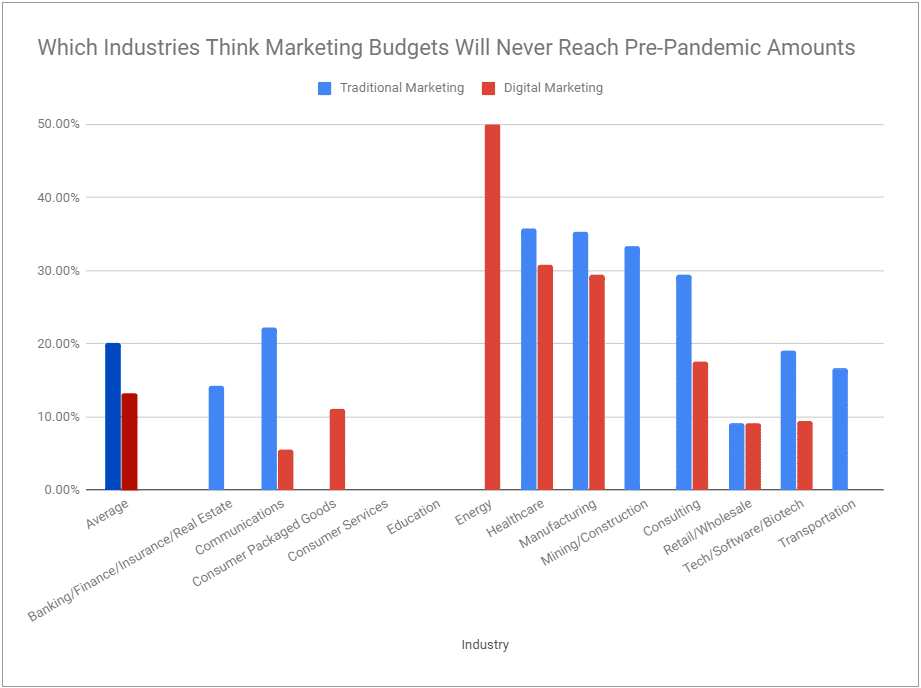
A June 2020 survey by CMO survey asked, “When will budgets return to pre-pandemic levels?” The following chart represents how many marketing leaders from each industry answered “Never” regarding traditional and digital marketing budget rebounds.

marketing budgets by industry - COVID-19 effects

Average Marketing Budget Allocation by Channel

By now, you should have a better answer to the question, “How much should a small business budget for marketing?” However, this doesn’t tell you which marketing strategies you should be executing with your newly established budget.

Benchmark Allocation

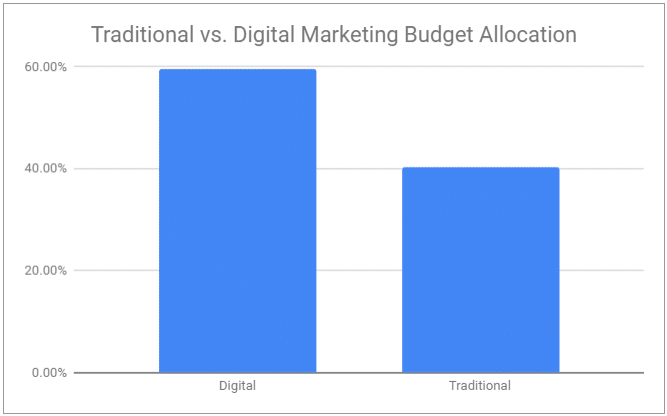
It pays to know (literally) where the rest of the U.S. invests their marketing dollars. Research from eMarketer paints us a picture of a projected 2020 marketing budget breakdown in the U.S.

ChannelAllocation (%)
Digital 59.60%
Traditional 40.40%
 TV26.40%
 Print4.90%
 Radio5.50%
 Out-of-home3.20%
 Directories0.40%

If you’ve been trying to answer the question, “How much should I pay for digital marketing vs. traditional marketing?” These numbers give you a better indication.

how much does marketing cost for a small business - traditional vs. digital

Keep in mind, there are huge national brands that can skew this data. Because of the expense of traditional TV advertising, it can appear disproportionately large. As a provider of both digital and traditional marketing in Texas, we get a large volume of requests for Austin and Houston print design.

It’s also important to recognize that many traditional channels have been migrating to digital. For example, the radio figures above don’t include digital radio and music streaming services which have become massively popular over the past several years.

For many businesses that have historically used traditional marketing, making the move over to a more digital approach doesn’t have to be painful. Our team has experience with B2B web design like industrial or manufacturing web design, that can help improve your digital presence. When you combine a polished site with digital marketing for manufacturers, like SEO for manufacturers or social media for manufacturers, your bottom line is sure to see growth.

Highest ROI Channels

There are several effective marketing channels you could include in your strategy, but we recommend scheduling a free consultation with our team to determine which channels are best for your business.

how much should I spend on marketing - B2B

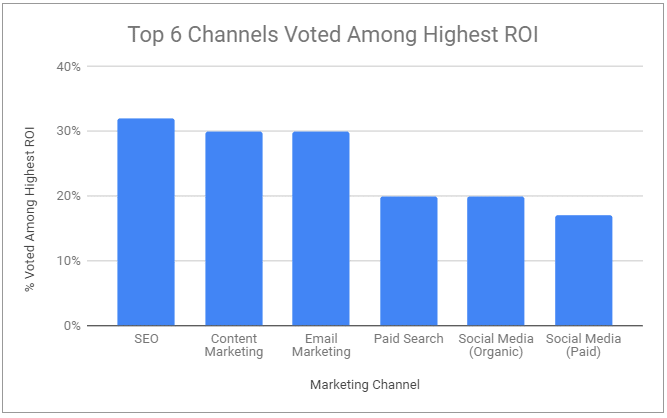
The following chart shows which channels were voted among the highest ROI at the companies of over 600 businesses. This data from a Smart Insights gives us a clear idea of the channels which may have the best return for your budget.

Marketing Channel% Voted Among Highest ROI
SEO32%
Content Marketing30%
Email Marketing30%
Paid Search20%
Social Media (Organic)20%
Social Media (Paid)17%
how much do companies spend on advertising

As a full-service, integrated marketing agency in Texas, MARION offers all of the above to help your marketing succeed across all relevant channels.

Sample Marketing Budget

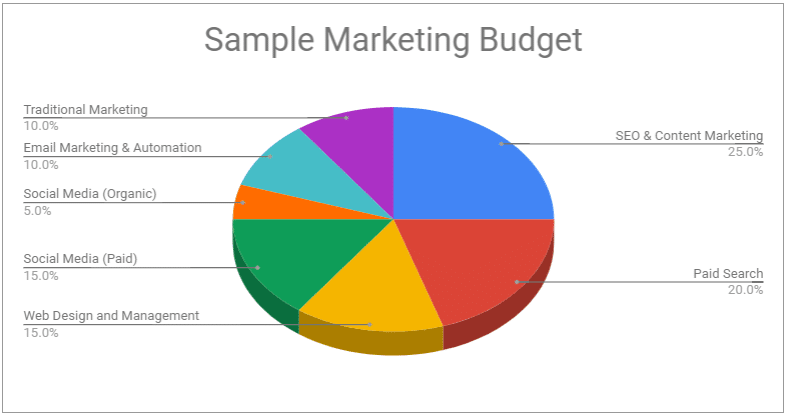
Trying to set and optimize a corporate marketing budget can be difficult. We’ve included a sample marketing budget breakdown in the pie chart below as a possible example.

sample marketing budget for small business

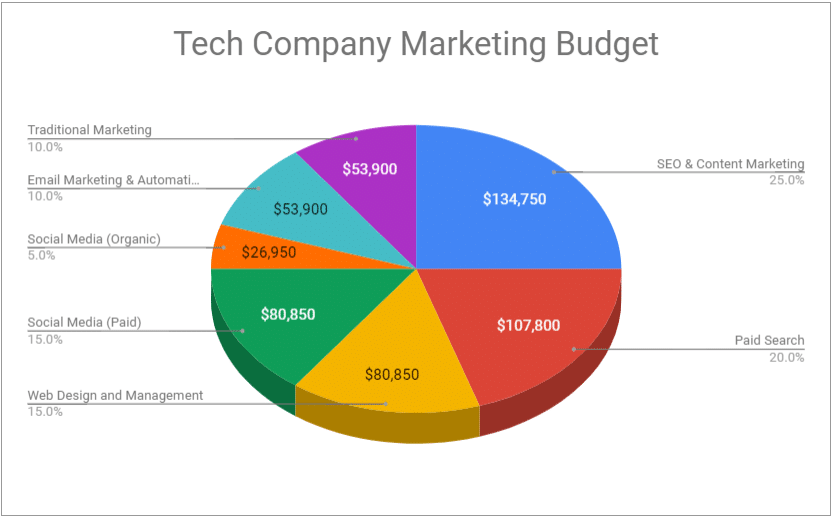
Use a tech company with annual revenues of $5 million as an example. If the average marketing and advertising budget in the tech industry is 10.78% of revenue, then the total marketing budget would be $539,000.

The breakdown for our tech company would be as follows.

Industry:   Tech

Annual Revenue:   $5,000,000

Marketing Budget:   $539,000

example marketing budget for B2B companies

Contact MARION for Expert Help with Marketing Your Business

MARION has been helping Texas businesses for nearly 40 years. We have the people and processes in place to serve your business needs for nearly any channel across most industries. Our competencies include SEO, web design, content marketing, email marketing and automation, PPC, social media marketing, trade show display design, and print and collateral design.

Contact a member of our team today for a free consultation, and we’ll implement a growth plan together.

Marketing emails you’ll actually want to read.

Get marketing tips and news sent to 
your inbox.
This field is for validation purposes and should be left unchanged.
Name(Required)

How to Target the Ideal Audience in Google Ads

Google Ads audiences can be a complex topic to understand. Each available audience type and its function differs depending on the type of campaign that you run. Finding the right audience to target can help you reduce ad spend, increase your ad conversion rate, and ultimately increase your company’s revenue.

For this blog, we have narrowed our focus to the two most common Google Ads campaign types – Search and Display.

What Are Audiences in Google Ads?

Google Ads audiences give you more context for users that are clicking on your ads. This includes their demographic information, what their interests are, what they actively search for, and in the case of remarketing audiences, how they have previously interacted with your business.

You can use audiences to narrow your scope so that your ads only target a specific audience, or you can put in place bid adjustments to drive a greater amount of higher-converting traffic.

For expert help with your PPC in Houston, contact MARION today.

What Is Audience Targeting in Google Ads

Audiences play a much more significant role in Google display campaigns than they do in search campaigns. Without audiences for Google display ads, you would ultimately target anyone and everyone in your specified location(s), as much as your budget would allow. Audiences in Google display ads function to narrow the scope and allow you to get more targeted with your ads.

When it comes to search campaigns, you can use search audiences in Google Ads to target users that are more likely to convert by setting bid adjustments. However, the main targeting in Google Ads search campaigns comes from the keywords you select, rather than from the audiences themselves.

The Austin PPC professionals at MARION can help you create and target a custom audience. Contact us for a free consultation today.

5 Types of Audiences in Google Ads

create an audience in Google Ads

1. Demographic Dimensions

Demographic audiences differ from all other audiences on this list. When it comes to demographics targeting, there are some things that you can exclude, and others that you can’t.

For example, you can specify the exact location that you want to target as well as exclude the geographic locations that you in no way want your ads to be served.

Under the “Audiences” tab, you can add or exclude specific demographic groups that fall under any of the following categories – parents, marital status, education, and homeownership status.

When it comes to the remaining demographic categories – age, gender, and household income – you do not have as much flexibility. While the categories are fairly inclusive of all demographics, you cannot exclude any group of people.

While bid adjustments are an option and help give you better control over how much visibility each group gets, the most you can decrease the bid by is 90%. In other words, while the group will likely still get some visibility, said visibility will be at a minimum.

Demographic audience targeting is available across Display, Search, and Video campaigns.

2. In-Market Audiences

In-market audiences are comprised of people that are actively searching for specific products or services. Keep in mind that Google’s machine learning systems determine if a searcher is in a particular in-market audience based on their recent activity. The exact criteria that these searchers must meet is not known outside of Google.

In-Market audiences are available across Display, Search, and Video campaigns.

3. Affinity Audiences

Affinity audiences enable you to target searchers based on their lifestyles, purchasing habits, and long-term interests. This isn’t necessarily what they are currently searching for (you would use in-market audiences for that), but things they have shown repeated interest in over time. “Coffee Shop Regulars,” “Do-It- Yourselfers,” “Bargain Hunters,” and “Sports Fans” are just a few examples of specific affinity audiences in Google Ads.

Affinity audiences are available across Display, Search, and Video campaigns.

4. Custom Intent Audiences

Google Ads custom intent audiences are currently available for Display & Video campaigns only. With custom intent audiences, you use keywords and URLs to create an audience in Google Ads based on products and services for which users are actively searching (like in-market audiences).

5. Retargeting Audiences

Retargeting audiences are made up of people that have already interacted with your ads or website before. This is considered direct behavioral targeting in Google Ads, because you have an explicit record of these users interacting with one of your web properties. You can create retargeting audiences with your Google Analytics audience builder, or with a Google Ads retargeting pixel.

Retargeting audiences are available across all campaign types.

How to Target an Audience on Google Ads

As we mentioned before, not all audience types are available nor will they have the same role across all campaign types.

When implementing certain demographic audiences, as well as affinity, custom intent, in-market, and remarketing audiences, you can either choose for them to be “Targeting” audiences or “Observation” audiences. Targeting audiences will limit your reach to only those that fall under any of the audiences that you select.

Observation audiences, on the other hand, don’t narrow the scope at all, but rather give you insights. This way, you can segment your audiences to see how they perform, then pursue the top performers more aggressively in the future.

Implementing Affinity, Custom Intent, & In-Market Audiences

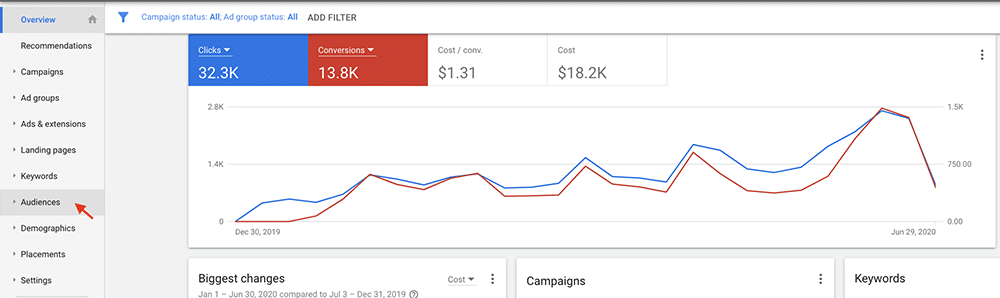
Once you log into your Google Ads account, find the “Audiences” tab in the left-hand menu.

search audience in Google Ads

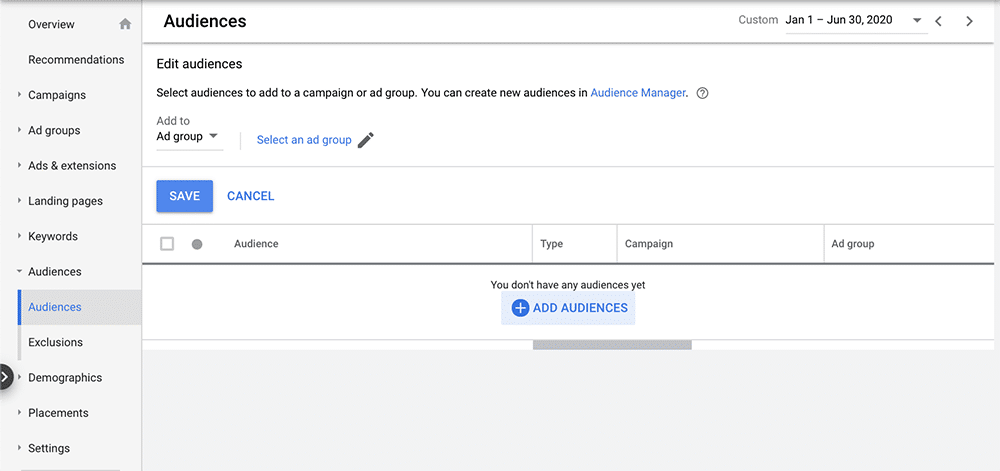
Select the Campaign/Ad group where you want to implement the audience(s) and then click on “Add Audiences”

behavioral targeting in Google Ads

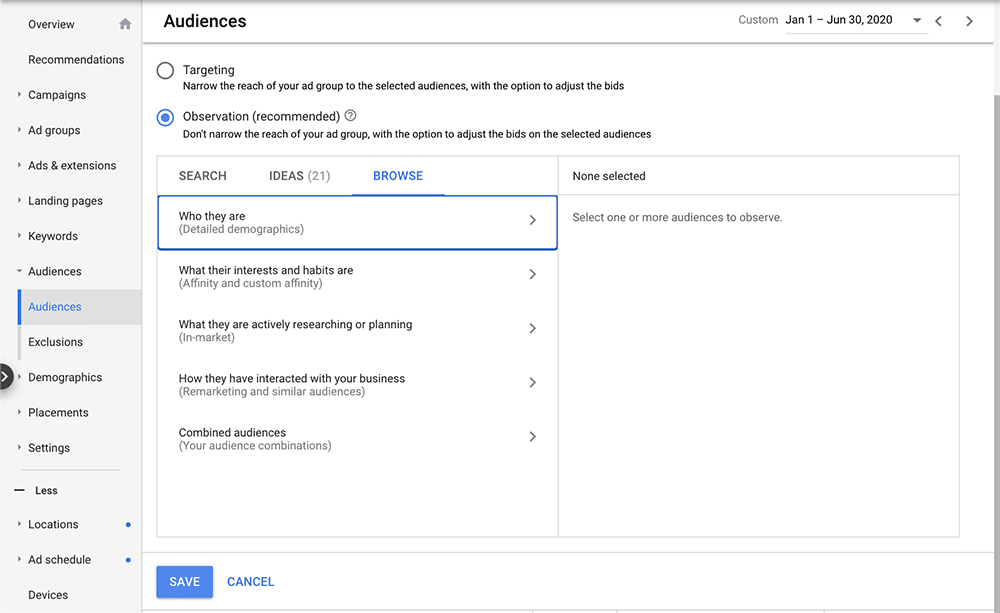
Here is where you can select whether the audiences you implement will be Targeting audiences or Observation audiences.

If you do not have a specific audience in mind that you want to target, you can click on the “BROWSE” tab to view the options that are available to you.

custom audiences in Google Ads

Once you have selected the audiences you want, click Save.

Implementing Remarketing Audiences

Though the steps to implement your remarketing audience is the same as what we outlined above, with remarketing audiences you must create them first before you can implement them into your campaign(s).

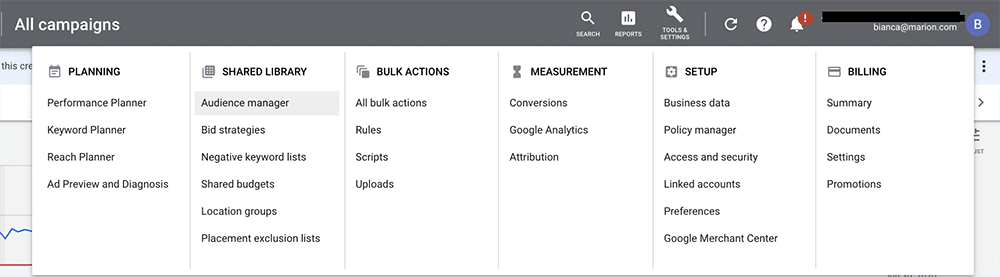
To start off, you must first ensure that your Google Ads & Google Analytics accounts have been linked or you have implemented a Google Ads tracking tag on your site. You will have to set up the audience source before you can implement any remarketing audience. Once that has been completed, click on the “Tools & Settings” wrench on the top right. Under “Shared Library,” click on “Audience Manager.”

how to target an audience on Google Ads

On the following page, click on the blue plus sign Google Ads interest targeting.

You may choose to create an audience list for all visitors or strictly for visitors that viewed certain pages on your site, depending on your campaign and goals. Once your remarketing audience list has been created, you can follow the steps we outlined previously for other audiences to implement your new remarketing audience.

Implementing Locations & Demographics (Age, Gender, & Household Incomes)

The age, gender, and household income demographics can be found under the “Demographics” tab on the left-hand menu. Location can also be found in its own separate tab on the left-hand menu.

MARION Can Help Your Paid Ads Reach the Perfect Audience

Implementing Google Ads audiences is just a small portion of running an effective PPC campaign. Our Texas marketing agency has the expertise needed to generate the results you are looking for.

Contact us today to schedule a free consultation with one of our Google Ads marketing experts!

Marketing emails you’ll actually want to read.

Get marketing tips and news sent to 
your inbox.

This field is for validation purposes and should be left unchanged.
Name(Required)


How to Increase Facebook Followers for Business Pages

In the first quarter of 2020, Facebook reported over 1.73 billion daily active users. Whether you’re employing B2C or B2B marketing strategies, Facebook can be an effective way to connect with your customers and target new audiences. Not having a Facebook Page for this community could cost you potential sales and clients.

In this blog post, we’ll discuss a few examples of how to grow followers on your Facebook Business Page.

Purpose of a Facebook Business Page

Having a Facebook Page creates a space for you to communicate with current and future customers. You can use it to post information about your business and highlight sales, events, products, and much more.

As you increase the amount of Facebook followers, your business’s exposure will grow and reach a massive number of engaged users. We’ll share some tricks of the trade we’ve picked up after years of providing Austin and Houston social media marketing services.

Where to See Facebook Business Page Likes and Followers

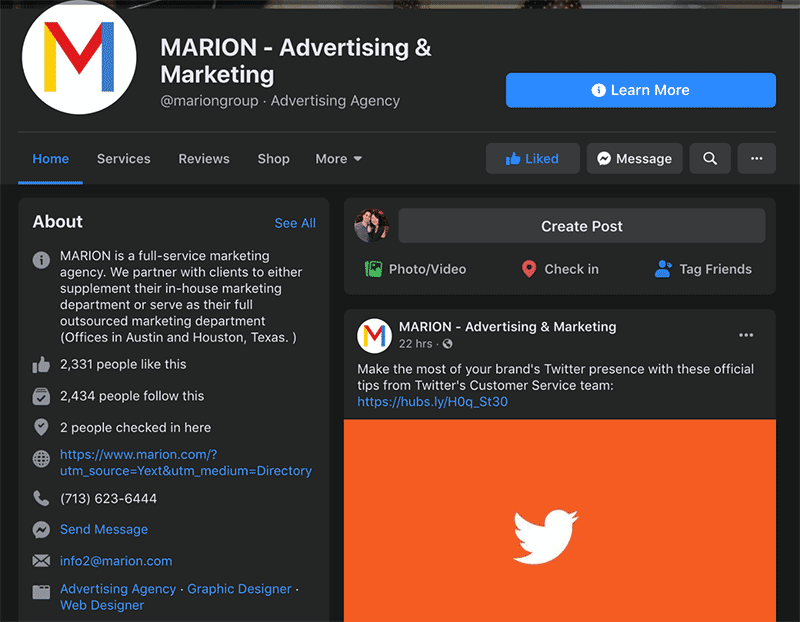
You can view your Facebook Business Page’s likes and followers under the “About” section. Wondering what the difference between “liking” and “following” a Page is? When you like a Page, you will start following updates from that page by default.

You also have the option to unfollow it so the content the Page posts won’t show up on your newsfeed. This way, you can show support for a Page without having it clutter your timeline. Following a page means you would like content to show up on your newsfeed.

how to increase Facebook followers for business

How to Get Followers on Your Facebook Business Page

There are several different methods you can try to boost the amount of Facebook followers on your page. Some approaches might work better depending on what type of business you have, but here are some tried-and-true strategies that will work for all types of Pages!

  1. Fill Out Your Profile
  2. Display Social Buttons
  3. Be Engaging and Responsive
  4. Run Ads
  5. Establish Posting Schedule

1. Fill Your Page Out Thoughtfully

People come to your Page searching for more information, so include all the details they could possibly need. This includes up-to-date links, photos, and contact information. For an extra competitive edge, include descriptive and on-brand company biographies and stories.

Your Facebook Page’s content should still feel familiar to your loyal customers. This way, they’ll be inclined to use your Page as a tool to keep updated on your business. Your followers might not be checking your website every day, but they’re most likely scrolling through Facebook multiple times a day.

2. Display Social Buttons

An easy way to advertise your company’s Facebook page and increase your followers is to display easy buttons on your website, other social profiles, and emails. Putting social buttons on your website and cross-promoting across different platforms also has an added benefit of “training” search engines into recognizing and associating your official Page with your business.

Along those same lines, if you’re familiar with Organization Schema Markup, you can use the sameAs property to tell search engines with social media profiles are tied to your business. In this way, search engines can understand which social profiles you maintain and how much of an authority you are across the web.

Contact MARION today if you’d prefer that a trustworthy SEO agency handle the technical details of optimizing your digital presence.

3. Be Engaging and Responsive

When a follower comments on a post or leaves a review, a great way to get more followers on your Facebook Business Page is to reply as soon as possible. A responsive Page provides a valuable way for customers to communicate with you so they’re more likely to interact with your Page. When you provide value and build relationships with your customers, your follower count will grow.

4. Run Facebook Ads

Having a Facebook Business Page makes it easy to run ads so you can boost your Page’s posts and reach more users that don’t follow you. You can even use their ad platform to target specific audiences and demographics, so you can tailor your search for more Facebook followers.

Advertising through social media requires a bit of investment, it is still relatively cheap and simple. This is possibly the most effective way to increase Facebook followers for your Business Page.

5. Create a Posting Schedule

how to get more followers on a Facebook business page

Posting quality content consistently on your Page is a requirement for a successful social media presence. Posting too infrequently is detrimental because your business will be easily forgotten or dismissed. However, this doesn’t mean you should post several times at 11 PM when you remember– you don’t want to spam or annoy your followers.

The best solution is to schedule your posts ahead of time, so they regularly go out at optimal intervals and times. There may be an ideal time for your customers to view your posts based on your industry.

For example, a non-profit might perform better posting on weekdays during work hours, while a retail company might perform better posting on afternoons on the weekend.

Do some research and determine what makes the most sense for your business and watch your follower count rise! Once you have a winning strategy in place, scale it out by creating a content marketing calendar for social media.

MARION Provides B2C and B2B Social Media Marketing Services

If you need guidance on how to increase Facebook followers for business or are too busy with other tasks to manage your social presence, MARION Integrated Marketing has the tools and expertise to help you reach your goals. Our social media team works closely with you to determine the best strategies for your business.

Contact us to schedule a free consultation today and learn more about our social media marketing in Austin, Houston, and DFW!

Marketing emails you’ll actually want to read.

Get marketing tips and news sent to 
your inbox.
This field is for validation purposes and should be left unchanged.
Name(Required)


How to Build a Digital Content Strategy That Dominates Your Industry

Now more than ever, the success of your business depends on your ability to reach potential customers through digital platforms. The Coronavirus pandemic showed the world that traditional, face-to-face marketing is not always possible. Meanwhile, creating an effective web presence for your business practically allows you to generate new business around the clock.

But, in a world where all businesses understand the importance of being found online, how do you transcend the noise? Building a well-researched content strategy for the web is your ticket to a sustainable competitive advantage in your market.

What Is Content Strategy?

Content strategy is the planning and management of all media assets, both traditional and digital, that your company owns. Content strategy is essentially the roadmap that your content marketing campaigns follow to drive results. A sound content strategy is the difference between a marketing department that is treated as a cost center vs. a profit center.

Is a Digital Content Marketing Strategy the Same?

A digital content strategy is part of your content strategy that plans and manages your digital media assets. Content planning in digital marketing has become markedly different from traditional content planning and strategy. Many times, traditional and digital content strategies are trusted to separate sub-units of a marketing department because of the required skill sets.

digital content strategy plan

Some of the main marketing activities of a digital-first content strategy include:

  • Web Design and User Experience (UX) Design
  • Search Engine Optimization (SEO)
  • Pay-per-Click (PPC)
  • Social Media Marketing (SMM)
  • Video Marketing

Why Is a Content Strategy Important?

Content marketing without a content strategy would look like a young child’s soccer game. The game has clearly defined rules and strategies for success, but the players are mostly unaware of them and exert themselves all the same. Your content strategy converts your marketing exertion (employee time, marketing budget, supporting software and marketing tools) into revenue from customer conversions.

Digital Transformation for Marketing

After serving East Texas customers for nearly 40 years, it was easy to identify which businesses were early adopters, majority, or laggards when it comes to building an online content strategy. Some businesses were active participants in trade shows and placing bids on public jobs but didn’t even have a website. Today, having a website and profiles set up on common social media platforms is expected for nearly all brands.

For help with the digital transformation of your marketing, speak with MARION about how our digital marketing agency can help!

Digital Content Types

Digital content isn’t strictly limited to the pages on your website. While many forms of online media are hosted on your site, others can be found across the web on third-party platforms. Some of the more common types of digital marketing content are listed below.

  • Web pages
  • Blog posts
  • Social media posts
  • Case studies
  • Infographics
  • Ebooks and whitepapers
  • Emails
  • Display ads
  • Videos
  • Podcasts

How to Create a Digital Content Strategy

Learning how to make a content strategy for your digital assets can be easy when you follow the right framework. In the sections below, we cover how you can build a digital content guide in five broad steps.

  1. Establish Goals
  2. Audit Existing Content
  3. Conduct Content Strategy Research
  4. Create Digital Content
  5. Publish and Promote

1. Establish Your Goals

Your marketing goals and objectives will frame your entire approach to building a content strategy. The following examples will illustrate very different business needs that will help create an appropriate digital marketing content plan.

content planning in digital marketing - goals

A B2C company that sells packaged food products to grocery retailers may be interested in developing a robust online presence, but it doesn’t need to generate sales with its internet content. They know they can stick to top-of-funnel educational content to build awareness with their target audience and demonstrate expertise to their potential distributors.

A B2B company that sells high-ticket industrial equipment can generate some sales through its existing network, but they count on their digital content to generate most of its leads. When digital marketing for manufacturers needs to generate business leads, a more inclusive digital content strategy is required. Top-of-funnel, middle-of-funnel, and bottom-of-funnel digital content must be included in a content strategy map that can meet customers at the awareness, consideration, and decision-making stages of their buying process.

When lead generation is the main concern of your digital content strategy, SEO will be a recurring theme that needs to be covered in your planning process. MARION can help deliver effective content marketing services and SEO services to breathe life into your strategy.

Another key part of your goal setting involves who you want to reach with your digital media. Creating buyer personas is a great way to paint a picture of your ideal customer so that you can shape your content to appeal to that persona. We cover the creation of buyer personas in our guide about marketing strategies to improve sales.

2. Audit Your Existing Content

After you’ve established your digital marketing goals, visit your existing base of digital media to see what can be used or reused to meet those goals.

For companies that have been entrenched in a purely traditional marketing approach, you may be able to transpose sell sheets into middle-of-funnel or bottom-of-funnel content assets.

For companies that have been engaging in business blogging without any underlying strategy, you may have plenty of insightful blog articles on your website that just need edited and updated to suit your goals.

digital marketing content plan

Whatever your situation, take inventory of your existing media and, at a minimum, label which stage of the customer journey (awareness, consideration, decision) it pertains to the most. You can also document whether it has a relevant call to action. For instance, if you turn a sell sheet into a web page about your products, you need to have clickable phone numbers or an online form embedded on your page.

3. Do Content Strategy Research

If you’re developing a content strategy that aims to generate customer conversions, your content strategy plan will involve a lot of SEO considerations. One of the best approaches for turning your website and digital marketing properties into an SEO powerhouse is to build the largest, most authoritative base of relevant content in your market.

The best tool to do this with is SEMrush. This video by the SEMrush team walks you through a method for identifying and building a digital-first content strategy that can help you outperform your competitors.

4. Create Your Digital Content

You can create your digital marketing content plan now that you know what topics you need to cover and which technical items you need to include in your digital content.

For blog posts and web pages, use the keyword research that you gathered using SEMrush to create a framework for your page or article. This framework should identify which subtopics you need to include (based on your research of top-performing competitors) and which keywords need to be used within the article.

online content strategy - research

For video content, feel free to use the same topic and keyword research while creating your script. If you’re using YouTube to host your video online, but sure to optimize the tagging section with relevant keywords and include your closed captioning. By seamlessly integrating relevant keywords from the start of your video creation process, you’re setting your production up for success. However, creating a quality video with real insights is a dimension that you’ll have to cover on your own.

IMPORTANT NOTE: Creating digital content that is technically optimized is a qualifying dimension in today’s competitive environment. For your content strategy research to pay off, the insights in your digital content need to be high-quality, and your writing or speaking needs to be engaging and professional.

5. Publish and Promote

Your digital content marketing strategy means nothing if it’s not being found by your target audience. Where are you planning to distribute your new digital content assets?

digital content strategy map for publishing

If you’ve properly optimized your content for search engines, your plan may not be distribution-heavy. Ideally, your new content will rank for relevant keywords and attract your target audience on its own. However, there are ways to supplement that traffic and improve your odds of being found.

For example, your social media posts don’t have to be stand-alone pieces of content. You can create a social media content calendar that systematically shares links to your new website content. You can send regular email updates to your list of subscribers that include references to your videos. You can run paid search ads to your newly minted case studies or whitepapers. You can learn how to advertise on social media so that your new digital content reaches a wider audience than you ever thought possible.

Keep in mind that your digital marketing content plan should include suggested distribution channels even before your content is created. By combining these forethoughts with your customer persona information, you can craft content that truly speaks to your potential customers.

MARION Can Help You Create a Winning Digital Content Strategy

When you’re in need of Houston or Austin web design, content marketing, SEO, social media marketing, or even just general marketing strategy, MARION can help. We have in-house experts that know how to drive results for both B2C and B2B clients in Texas.

Contact us today to schedule a free consultation and discover how we can turn your current marketing assets into a revenue-generating machine!

Marketing emails you’ll actually want to read.

Get marketing tips and news sent to 
your inbox.
This field is for validation purposes and should be left unchanged.
Name(Required)

Social Media for Manufacturers – How to Get B2B Social Media Marketing Results

Social media marketing for B2B may be less straightforward than B2C marketing, but it’s just as important in building your brand and business.

In this blog post, we’ll walk you through which platforms you need to be on as a manufacturer, why it’s an important part of marketing for manufacturing companies, and how to form a manufacturing social media strategy.

Why Social Media for the Manufacturing Industry is Important

Not too long ago, social media didn’t seem like a necessity for B2B companies. However, as the workforce shifts towards a more tech-savvy generation, more and more key decision-makers are going to be looking online for more information before they decide to work with you. This makes social media for manufacturing companies an indispensable channel.

Having a polished social media presence is beneficial for many other reasons. Social media activity can help boost your SEO efforts, generate leads, aid with customer service, and much more.

If your social presence indicates you are a leader in the manufacturing industry and care about communicating with customers, it’s more likely you’ll stand out from your competitors.

Best Social Media Platforms for Manufacturers

Some social media platforms make more sense for manufacturers than others. Your customers will be less inclined to interact on more casual or “trendy” platforms such as Instagram, Pinterest, or Snapchat.

Here are the best manufacturers social media sites to help with your B2B marketing strategies:

LinkedIn manufacturers social media

LinkedIn

LinkedIn is the best B2B social media site to pursue, with over 94% of B2B marketers on the platform. This is a great place for businesses to build thought leadership and develop significant connections.

LinkedIn also has a large number of decision-makers. 45% of LinkedIn members are in upper management. LinkedIn Ads allow for very precise targeting with filters such as job seniority, company size, member age, industry, and much more.

Most users on LinkedIn are on the site to connect with other people in their industry, so that’s already a key step in separating valuable leads from the crowd. LinkedIn also has a Groups feature where you can find, connect, and interact with potential clients in a very targeted pool. Joining a LinkedIn Group is a great platform to showcase content marketing for manufacturing companies, and a fantastic way to drive leads and traffic towards your company.

social media industrial marketing on Facebook

Facebook

Having a page presence on Facebook is still a must. Without a Facebook Page today, your credibility may be questioned. In fact, it could even have a negative impact on local SEO for manufacturing companies.

Many customers will go on your page to contact you through Messenger or public posts and comments. This is a great way to connect with people and direct them to exactly who they need to speak with. These visitors could be looking for quick clarifications and initial questions so it’s important to monitor this channel closely. With over 2.5 billion monthly active users, your social media industrial marketing is bound to reach your target audience through Facebook.

social media marketing for manufacturers on YouTube

YouTube

The possibilities of marketing for your manufacturing company on YouTube are endless. YouTube is a great way to showcase your company and its products to build brand recognition and improve SEO. The video assets you create on YouTube can also be included in your manufacturing website design. While YouTube technically functions as a search engine, many consider it a social media platform because of the engagement it facilitates.

Marketers could upload videos of customer testimonials, product tutorials and demonstrations, service walk-throughs, trade show appearances, and much more. Anything that tells your brand story is worth posting!

Twitter social media marketing for the manufacturing industry

Twitter

Social media marketing for manufacturers doesn’t always prioritize Twitter, but it’s still important to have a company Twitter account. Your role on Twitter should be an educator. Use this channel to share interesting and engaging information.

As a mobile-first platform, many of your clients on-the-go can view your posts easily. If there’s ever a crisis, Twitter is an excellent tool to get any message out quickly and promptly reply to others.

How to Form a Manufacturing Social Media Strategy

The first thing you should do when coming up with a social media strategy for manufacturing is to determine your audience. Which websites are they using the most and which ones are they interacting with you on? If you have no idea, it might be a good idea to investigate what your competitors are doing.

After you decide on which platforms to best reach your potential clients, it’s useful to come up with a content schedule. This way, you can post consistently and build a following that knows they can depend on you.

Make sure you monitor social media regularly so you can quickly respond to customer posts and inquiries. Spread out self-promotion amongst content marketing so long-term followers don’t get fatigued from the same content.

Struggling to Develop a Social Media Strategy? Call MARION Marketing Today!

MARION has years of B2B marketing experience from working closely with industrial manufacturers across Texas. If you need assistance with your social media strategy, our expert team of SEO and social media professionals knows exactly how to craft one customized for your business’s needs.

Contact us today to schedule a free consultation with a member of our marketing agency!

Marketing emails you’ll actually want to read.

Get marketing tips and news sent to 
your inbox.
This field is for validation purposes and should be left unchanged.
Name(Required)


So, Let’s Talk About the Peloton & Aviation Ads

If you haven’t seen the Peloton holiday ad yet (are you living under a rock?) we’ll give you a quick brief.

The ad, titled “The Gift That Gives Back” shows a husband gifting his slim wife a $2,000+ Peloton stationary bike for Christmas. It then shows a sequence of different scenes over the year as she documents her workout journey for her husband.

As Forbes put it, “The wife is oddly nervous as she tries the bike for the first time, and she also seems to be suffering when she wakes up at 6 a.m. to exercise on the bike.” At the end, we see that it is next Christmas and the woman is watching her “fitness journey” video with her husband. She then says “A year ago, I didn’t know how much this would change me. Thank you.” *Insert cringe here*

VIDEO NO LONGER AVAILABLE

The Peloton Advertisement’s Aftermath

The ad, which has been viewed more than 8.3 Million times on YouTube, has caused quite a bit of controversary, with many people viewing it as sexist, elitist, and cringe-worthy, saying the man gifted his wife the bike to send a message that she needs to lose weight. The actress’s face of fear as she rides has become a widely circulated meme, and the actor who played the husband is now worried he may never get an acting job again.

And while they say all publicity is good publicity, this has not been the case for Peloton. Since the release of the ad, Peloton’s stock has plunged 15 percent (at the time of this writing). The company has not done much in the way of damage control and has stayed relatively silent on the whole matter.

In a statement, the company said it was “disappointed in how some have misinterpreted [the] commercial.” Meanwhile, its CEO refused to answer questions about the ad in a recent press conference, saying only “it was in the news last week.”

A Storytelling Growth Opportunity

But as they say, one man’s loss is another man’s gain! Ryan Reynolds and his company Aviation American Gin saw an opportunity to piggy-back off Peloton’s video blunder and make it their success story. Within 36 hours of seeing the viral fail, Aviation released a sequel commercial that tells the story of where the woman from the Peloton ad is now.

In the ad, she’s throwing back Aviation Gin martinis with friends, sulking in the aftermath of Peloton’s ill-conceived commercial. Her friends tell her she’s “safe here” and “you look great, by the way,” as they toast to “new beginnings.” Absent a wedding ring, viewers are left to interpret that Peloton woman has taken the resounding advice of Twitter users everywhere and left her husband.

The ad, titled “The Gift That Doesn’t Give Back” quickly blew up and currently, there are 4.1 million views on YouTube and Ryan Reynolds’s original tweet of the video has 9.9 million views. The brand’s ability to seize this viral media opportunity and swiftly make the ad can only be described as a truly genius marketing move that is sure to be mentioned in case studies and lists of the best social media campaigns for years to come.

The ad put Aviation at the forefront of today’s meme culture and allowed it to capitalize on what should have been another brand’s moment. This is a prime example of how businesses use social media for marketing today.

The product message and the idea were simple — the success really lies in the timeliness of the ad. Social media users were left hungry for more Peloton gossip to talk about, and Aviation gave them that opportunity.

Aviation’s ability to produce this made-for-web commercial in nearly real time shows the opportunity we as marketers have to produce viral content today. This quick-whitted marketing move simply wouldn’t have been possible ten years ago, as old-school, traditional TV advertising has longer turnaround times and stricter regulations.

Take note brands everywhere: when your opportunity comes along, seize it — it might just make you the next viral sensation.

Let MARION Prepare Your Social Media Strategy for 2020

If you’re not experienced with marketing your business on social media, knowing where to start is difficult. Using Austin or Houston social media marketing services can help your Texas-based business build a winning strategy for the coming decade. Our digital marketing agency has helped business like yours thrive online.

Contact MARION today to schedule a free consultation and learn how we can work together to grow your business!

Marketing emails you’ll actually want to read.

Get marketing tips and news sent to 
your inbox.
This field is for validation purposes and should be left unchanged.
Name(Required)


LinkedIn’s New Forecasted Results in Campaign Manager

Learn how this new tool is helping marketers build better campaigns.

Last month, LinkedIn announced the release of new advertising tools designed to help marketers better target their paid campaigns. Among them is a feature that allows for much more robust audience forecasting. Read on to learn how LinkedIn has improved its Audience Forecasting tool with the introduction of the new “Segment Breakdown” feature.

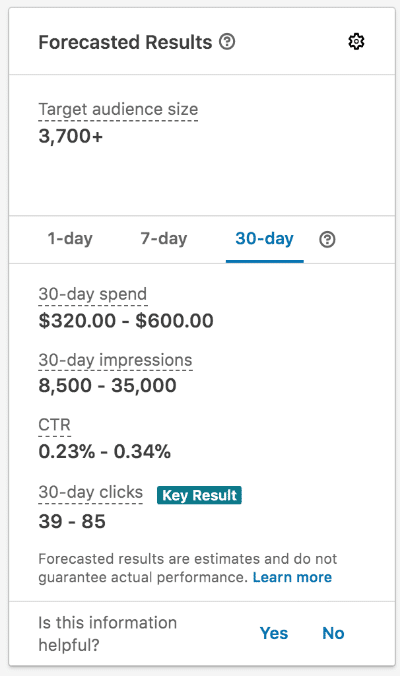
Forecasted Results Window in Campaign Manager

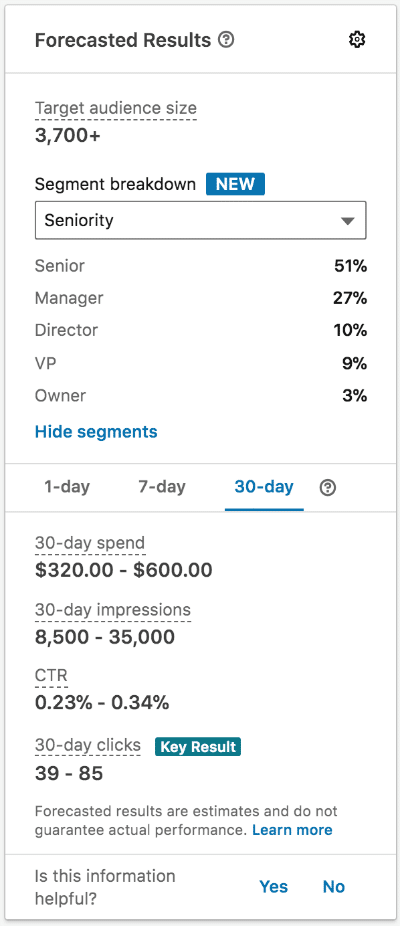
The Forecasted Results window appears on the ride side of the page when you are creating a new campaign in LinkedIn Campaign Manager. Previously, this window would only report on forecasted audience size, campaign spend, and campaign results. Thanks to LinkedIn’s recent “Segment Breakdown” addition, this panel now provides insights about your target audience including: Job Function, Job Seniority, Years of Experience, Company Size, Company Industries, and Interests.

[su_row]

[su_column size=”1/2″ center=”no” class=””]

Previous Forecasted Results Window

LinkedIn forecasted results

[/su_column]

[su_column size=”1/2″ center=”no” class=””]

New Forecasted Results Window

forecasted results breakdown LinkedIn

[/su_column][/su_row]

Build Better Target Audiences with the New Forecasted Results

This feature is such a great addition to LinkedIn Campaign Manager because it helps marketers improve their LinkedIn ad targeting and  increase their likelihood of reaching ideal prospects.

With better knowledge of the makeup of a forecasted audience, marketers are able to make strategic changes to audience targeting and see the effect it will have on the audience that will be reached in real time. Better initial audience forecasting means less time and money spent on A/B testing!

In addition, when a campaign is using a lookalike or matched audience, this feature will allow marketers to gain better insight into the types of people they are targeting. This insight will allow for the creation of social media marketing creative assets and messaging that will resonate best with the forecasted audience.

How to See the New LinkedIn Forecasted Results

If you go into your campaign manager and you are not seeing the audience breakdown view, make sure you have selected a location, language, and added at least one targeting segment or matched audience segment (as it will not show until these things are included).

If you still are not seeing this feature, you may need to click the text under “Target Audience Size” that says “show segments” to expend the segments tool.

Contact MARION for Help with Social Media Advertising

Struggling to hit the mark with your social media advertising? MARION’s social media marketing agency in Houston and Austin can help you streamline your efforts.

Our social media strategists can help you learn how to advertise your business on social media in a way that attracts the right people at the right time.

Contact us to schedule a free consultation today!

Marketing emails you’ll actually want to read.

Get marketing tips and news sent to 
your inbox.
This field is for validation purposes and should be left unchanged.
Name(Required)

Why B2B Businesses Should Be on LinkedIn

In today’s day and age, social media plays a major role in a business’s marketing strategy. For B2B companies, LinkedIn is woven into the fabric of the modern social media landscape — it’s the tool industry leaders turn to when they need to make meaningful business connections. Today, we’ll be discussing why your B2B business should embrace the “LinkedIn era.”

LinkedIn Is a One-of-a-kind Tool

When LinkedIn first came about in 2003, online social networks were used for connecting with friends and dating — not for networking and business. LinkedIn has revolutionized the way we think about business, networking, job searching, and so much more.

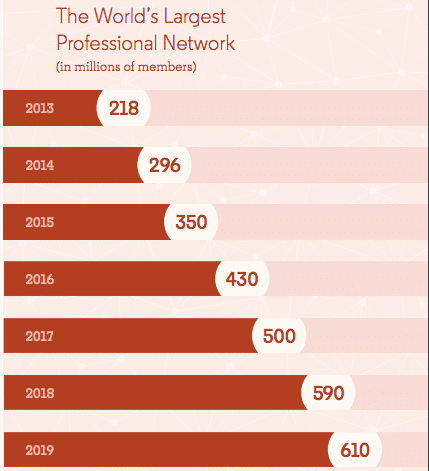
The fact is, LinkedIn is a one-of-a-kind online professional tool. It’s the world’s largest professional network, and there really is no other platform like it for businesses to reach qualified professionals and connect with potential customers.

In terms of advertising through social media, LinkedIn allows businesses to reach highly targeted professional audiences. Compared to other platforms like Twitter and Facebook, LinkedIn Campaign Manager provides a wealth of more in-depth targeting parameters, such as the ability to target a user based on job experience (seniority, skills, job title, job functions, etc.), company information (company name, size, industry etc.), education, interests, and demographics.

To learn more about LinkedIn’s advanced targeting capabilities, check out our guide to building LinkedIn Ad audiences.  

LinkedIn’s Audience Is Large — and Will Only Continue to Grow

LinkedIn has maintained an impressive growth rate since its inception over 16 years ago. In fact, over the last two years, LinkedIn has gained 123 million users (comparatively, Twitter has only gained 9 million users during the same time period).

With over 630 million professionals using LinkedIn and 50% of Americans with a college degree using the platform, it has become a major tool in the lives of today’s professionals. With two new users joining every second, LinkedIn’s popularity will only continue to boom over the coming years.

B2B marketing through Linkedin

Source: LinkedIn

Experts predict that LinkedIn will continue to grow and become an even more vital tool in the business landscape, saying that LinkedIn could one day become such a vital communication tool that it replaces the need for work email — seriously!

According to Forbes, LinkedIn will be adding many exciting features soon. Some of these may include building local connections through a location radius tool and putting more emphasis on using hashtags for building connections and fostering community discussions.

LinkedIn’s Users Are the Most Qualified Social Audience for B2B Marketing

LinkedIn’s user audience is not only large — it’s also very qualified. LinkedIn users are an educated audience who are far more likely to be experts in your field than your other social audiences, such as Facebook or Twitter.

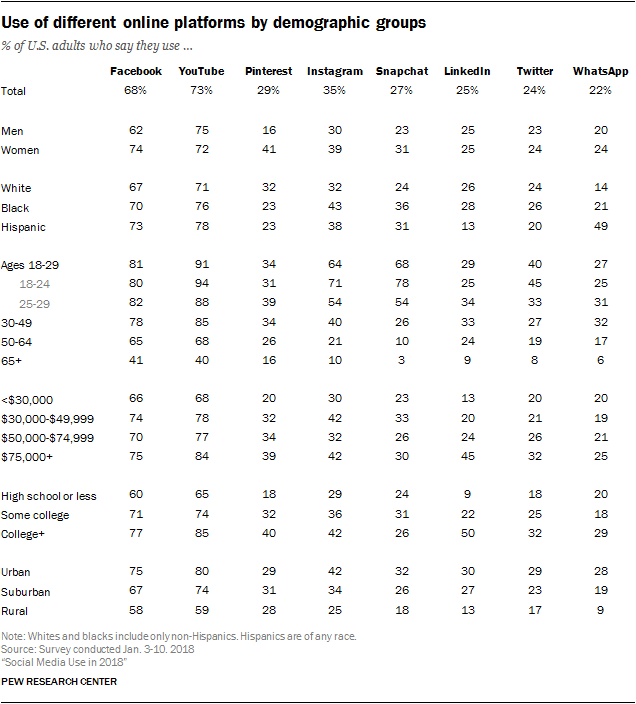
According to research conducted by Pew Research Center, LinkedIn is most popular among educated, urban, professional Americans from households earning more than $75,000 per year. It reaches a wealthier and more educated audience than Instagram, Snapchat, or Twitter.

Take a look at all the data to compare how LinkedIn performs against other popular social media platforms:

B2B marketing using Linkedin

Source: Pew Research

LinkedIn’s users also holds a lot of power within their respective organizations, with four out of five LinkedIn members driving business decisions. Furthermore, they hold two times the buying power of web audiences. LinkedIn’s audience is made up of 630 million members, including 180 million senior-level influencers, 63 million decision makers, and 10 million c-level executives.

In short, if you want to reach qualified B2B decision makers, LinkedIn is the effective and targeted social platform you need to be using!

Leading B2B Marketers Love LinkedIn

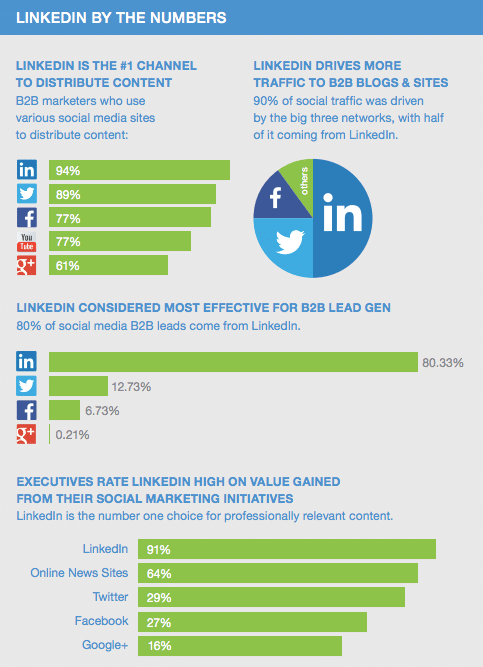
Did you know LinkedIn has been rated the #1 platform for B2B lead generation by marketers?  This is because LinkedIn allows businesses to reach a quality audience in a professional context, allowing B2B businesses to engage with users in a very meaningful way.

LinkedIn is also the #1 channel for B2B marketers to distribute content, as well as the highest traffic-driving social media platform, with half of all social traffic to B2B blogs and websites coming from LinkedIn.

Furthermore, a staggering 80% of all social media B2B leads come from LinkedIn, and executives consistently rank LinkedIn high on value gained from their social media marketing initiatives.  

Linkedin B2B marketing statistics

Source: LinkedIn

Everyone’s Doing It

Remember when your mom used to say “If ‘so and so’ were going to jump off a bridgewould you jump, too?” Well, if ‘so and so’ is 30 million companies and the bridge is over a pool of social media success, then we’d have to say yes!

The fact is, over 30 million companies have LinkedIn profiles — and while you may not be on LinkedIn yet, chances are, you competitors already are (and as we’ve learned, your ideal target audience definitely is).

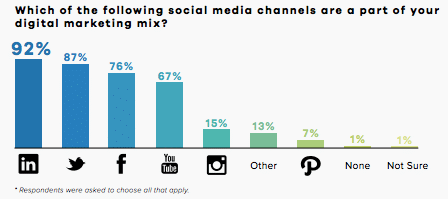
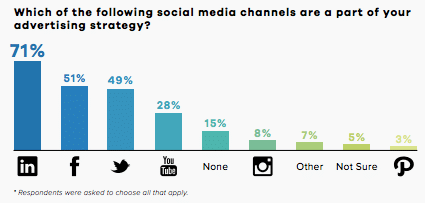
In fact, LinkedIn is the leading social media channel for B2B marketers, with 92% reporting that LinkedIn is a part of their digital marketing mix and 71% reporting that it’s a part of their advertising strategy. Frankly when it comes to other social media channels, they cannot match LinkedIn’s potential by a long shot and today’s business leaders understand that.

B2B marketing via Linkedin
effective use of Linkedin for business

Source: DemandWave

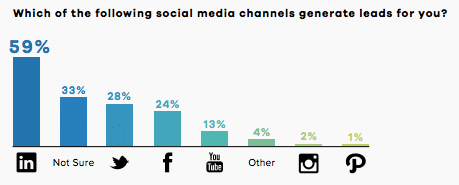
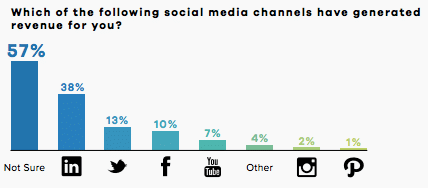
And when it comes to seeing actual, real results from using LinkedIn, B2B marketers like what they see, with 59% reporting that LinkedIn is the #1 social network for lead generation and 38% saying LinkedIn has helped their business generate revenue.

how effective is Linkedin
Linkedin stats for business

Source: DemandWave

Well, what are you waiting for? Take the first step to achieving B2B social media success and create your LinkedIn business page now!

Contact MARION for Social Media Marketing Help!

If you’re not sure how to use LinkedIn for your B2B marketing strategies, MARION’s social media marketing experts are here to help!

Contact us today to learn how we can help you reach your social media goals.

Marketing emails you’ll actually want to read.

Get marketing tips and news sent to 
your inbox.
This field is for validation purposes and should be left unchanged.
Name(Required)