Category: Digital Advertising

Shiny Object Syndrome – Every New Marketing Tactic Doesn’t Always Work

As a marketing strategist, it’s my job to understand new marketing trends and how they can/will affect our clients.

I do this by reading marketing blogs by industry leaders, downloading e-books, and reading books. Every morning, I log into my feed reader (yes, I still use one of those) and spend time digesting news about the marketing industry.

Throughout the day, I may log into Twitter or LinkedIn and check out marketing hashtags to see what’s being talked about in real time.

Many of our employees have similar routines. It’s how we are able to pivot when needed and have smart discussions internally about what we can do to help our clients get more leads, drive more website traffic, or increase brand awareness.

As a business owner or high-level executive, you may not have the time to do this. But, because you probably talk to your peers about business pains and are always interested in growing your business, you get nuggets of information that you feel you should act on — or at least consider.

You try something you’ve never done before, like advertising on Facebook, and it works. Great! You experimented with one of the new marketing strategies that work, and reaped the benefits. Traffic grew, leads came in, and sales went up.

Sometimes, seeing a shiny new thing that promises to bring you more business doesn’t quite pan out. Let’s look at example of this from the not too distant past: the introduction of Snapchat and its meteoric rise in the social media world.

SnapChat not effective for B2B marketing

For some early adopting businesses, it was smart to get in and test out how the new platform could affect their brand in a positive way. For those businesses in the consumer markets who partnered with Snapchat influencers, the benefits of this new brand building service were probably there. It’s hard to fully gauge based on the ephemeral nature of the platform, but branding is often hard to measure as it is.

There were success stories from marketers across the spectrum singing the praises of various Snapchat strategies. Behind closed doors, however, the tales were much different.

In speaking to many of my peers at various marketing functions, I had not run across a single marketer working with clients similar to ours who had been able to show any demonstrable success with their tests of using Snapchat as a marketing channel.That was our agency’s hypothesis from the beginning, but it was good to hear it from others who had gone into the trenches.

We researched Snapchat as a marketing channel on behalf of a few of our clients, and each time came away with the recommendation to not spend resources in that direction.

Understanding our clients’ target markets and goals allowed us to avoid spending time and dollars on a platform that would likely not move them towards their business goals.

As we collaborate with our clients, our ability to stay up to date on marketing trends has allowed us to jump in early when the opportunity presents itself and to stay the course when it’s warranted.

I was reminded of this when I logged on to LinkedIn recently and was presented with a new layout that is now emphasizing hashtags. It appears to be a good move by LinkedIn, and we’re already looking at how to utilize the new algorithms to benefit our clients.

We had tested out hashtags in LinkedIn posts in the past with mixed results. There wasn’t any conclusive data that LinkedIn users were using hashtag searches to find relevant information. Now, LinkedIn seems to be pushing it front and center, so it’s less about searching for hashtags and more about serendipitously being presented with relevant information based on your LinkedIn use. It’s pretty brilliant.

And it’s not just about social media marketing (although it often gets the most attention). Listening in on conversations between our search specialists can reveal changes in approach to website layouts, link building strategies, and other shifts needed to ensure our clients’ websites are beating the competition for search rankings.

Marketing, especially digital marketing, is an ever-evolving field. As user behavior changes and new platforms for attention are created, it’s easy to fall in love with every shiny object. Understanding how it may affect your business success is key to knowing which marketing strategies to deploy. Knowing your target customers helps in deciding which marketing tactics to change.

There is nothing static about modern marketing.

If you, like most executives, don’t have time to stay current on marketing trends to keep your business competitive, consider outsourcing your marketing needs to a marketing firm in Houston.

Marketing emails you’ll actually want to read.

Get marketing tips and news sent to 
your inbox.
This field is for validation purposes and should be left unchanged.
Name(Required)

The Facebook News Feed Update: What You Need to Know

A couple weeks ago, Facebook dropped a virtual bomb on the Social Media Marketing community, and it’s just a reminder that what happens in the real world often has consequences in the digital space as well.

Facebook has made its fortune on the idea of keeping you connected with friends, family, and in more recent years brands and news sources that you care about, or as Facebook would describe it “helping you find relevant content.”

The 2016 election brought a new concept into the public lexicon… “fake news.” If you’ve been living under a rock for the past 18 months, the concept of “fake news” is simple. Deliberately misleading content is created, often from dubious sources, and spread on the internet, primarily using social media, in an attempt to manipulate popular opinion.

Facebook has been caught in the middle of a very public conversation about the role that social media companies play in the dissemination of “fake news” and it appears that Facebook has decided to do something about it.

In this post, we’ll walk you through what Facebook is changing, why they are changing it, and what this means for your Social Media Marketing efforts.

What is the change?

Facebook has taken a lot of heat for their role in spreading “fake news” and now they are changing the way that they populate your news feed in an apparent reaction to the phenomenon.

According to Adam Mosseri, Head of News Feed for Facebook:

“With this update, we will also prioritize posts that spark conversations and meaningful interactions between people. To do this, we will predict which posts you might want to interact with your friends about, and show these posts higher in feed. These are posts that inspire back-and-forth discussion in the comments and posts that you might want to share and react to—whether that’s a post from a friend seeking advice, a friend asking for recommendations for a trip, or a news article or video prompting lots of discussion.

We will also prioritize posts from friends and family over public content, consistent with our News Feed values.”

That last sentence is a doozy. He is alluding to the fact that breaking into the news feed of your audience just got even harder than it already was. In fact, he goes on to say it outright:

“Because space in News Feed is limited, showing more posts from friends and family and updates that spark conversation means we’ll show less public content, including videos and other posts from publishers or businesses.”

Boom, virtual bomb dropped.

He does go on to say that highly engaging content will see less of a decrease than content that is less likely to create engagement or “spark a conversation.”

The bottom line is that the change effectively means that the content that you post for your business on Facebook is likely to be seen by fewer eyeballs than before.

Why is Facebook doing this?

You may, rightfully, be asking yourself why Facebook would do this when their main source of revenue is from business owners like yourself.

It appears that Mark Zuckerberg has had a change of heart where “fake news” is concerned. His initial reaction to the controversy was that it was a “pretty crazy idea.”

Rolling out this change and being rather frank about it’s impact to their advertiser base, signals that Facebook is taking the issue more seriously now.

Of course, Facebook may have other motives for making the change.  The less altruistic explanation stems from the fact that Facebook has, for years, claimed that they are not a media company and should not be regulated as one.

Despite their insistence to the contrary, Facebook faces a lot of pressure from regulators in the U.S. and overseas regarding the company’s role in disseminating information and the growing evidence that it’s leading to higher levels of depression, isolation, and device addiction.

This decision to change the way they populate your news feed could come from an altruistic desire to lessen the negative impacts that their platform has on the public, or it could come in the form of a preemptive attempt to avoid future regulatory burdens.  Either way, it’s happening.

What does this mean for your Social Media Marketing efforts?

I’ve been following this pretty closely.  I’ve read up on the subject, watched interviews, and watched closely how leading marketers are reacting to the news.

Most of what I’ve read expresses a pretty negative outlook, specifically for any business hoping to use Facebook as a marketing platform. With headlines like “The Real Losers In The News Feed Update Are Brands And Small Businesses,” you’d think Facebook just booted everyone off their platform.

I think it’s important that we pump the breaks a bit before jumping to the conclusion that this is somehow the end of marketing on Facebook.

It’s important that we avoid the mad rush for the doors and instead focus on how to play the game better. After all, there is much more to Social Media Marketing than simply posting on Facebook.

In the coming months, watch how your engagement changes. Keep an eye on your KPIs (Key Performance Indicators) like Audience Growth, Audience Engagement, and Content Reach. You may see declines in some areas while you see increases in others. It’s just too early to tell where the chips will fall from this change, just stay calm and post on.

At the end of the day, not a whole lot has changed. Sure, Facebook is prioritizing other content above your marketing efforts, but that’s not new.  Anyone who has spent even a small amount of time using Facebook to market their business knows that the real challenge is creating content that is clear, concise, engaging, and most importantly effective.  This new feed priority chips, both from an algorithmic and human nature standpoint, have been stacked against you from day one.

If you want to market your business on Facebook successfully, you aren’t going to get there by simply putting out ads all the time or posting only self-congratulatory posts. Those weren’t engaging before the change, and they aren’t engaging now.

Focus your attention on creating and distributing content that is geared towards engagement, and you will probably fare just fine. Who knows, this change may ultimately help to remedy the white noise effect that hurts even the best of Social Media Marketers. You may find that your content outperforms your competitors by an even greater margin.

The Take-Away

This change is a big one; there’s no doubt about it. But with every setback is a hidden opportunity for advancement. Focus on creating good, real, conversation-sparking posts that cast your brand in a good light and this change could very well lead to better results from your Social Media Marketing efforts.

If you’re a small to mid-sized business, it may sound like a daunting task to invest so much time and energy into your efforts. Focus on what you know, and in the areas where you aren’t the expert, seek one out.

There are plenty of social media marketing firms that specialize in the small to mid-sized market that can help you grow your online presence and make the most of your social media marketing efforts.

Marketing emails you’ll actually want to read.

Get marketing tips and news sent to 
your inbox.
This field is for validation purposes and should be left unchanged.
Name(Required)

Have You Been Instagram Shadowbanned?

Everything you need to know about the Instagram shadowban.

Have you been doing everything you possibly can to make sure that your Instagram post gets the most impressions and it just seems to be going nowhere? Or maybe you’ve been killing it on Instagram and recently noticed a sudden decline in engagements, even though you’re still posting similar content.

If these symptoms sound like symptoms affecting your social media marketing, you might have recently become a victim of the Instagram shadowban monster.

Shadowban is the act of blocking a user from a social media community in a way where it’s easily recognizable to the user that they have been banned. Although this act has been around since 2006, it’s recently gone mainstream with the social networks, especially with Twitter and Instagram.

How does shadowban affect your Instagram?

It’s important to know that when dealing with Instagram, your shadowban doesn’t apply to your entire account level. If you are affected by it, it would solely affect the posts that you make.

Having your Instagram posts shadowbanned means that your posts will not show up in search results for hashtags you’ve applied. Furthermore, the only people who may see your posts will be the people you are already connected with, thus making the use of hashtags on your posts completely irrelevant for growing your Instagram community.

Why is Instagram putting a shadowban on posts?

It’s no surprise that when Facebook bought Instagram, they would ultimately implement (what I like to call) their “algorithm-happy” strategy within a matter of time. According to Instagram, it appears they want to promote a constant flow of creative content and eliminate potential spam.

However, there are multiple theories from various social media professionals, including trying to target and limit influencer accounts.

instagram tips

How can you tell if your posts have been shadowbanned?

It can be hard to tell from Instagram itself if your content is being banned. One method is to have a friend unfriend you and then look up whichever hashtag you’re targeting and see if your content shows up.

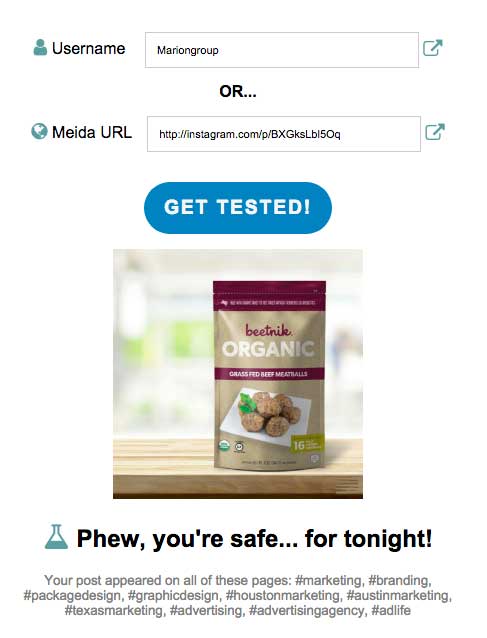
An easier way to do this is by using this awesome shadowban detector tool we found online which claims to be 100% confident in the accuracy of the results.

This is what happened when we used the tool with our own Instagram account.

instagram shadownban test

Help! I’ve been banned. What should I do?

First, relax. It’s not as uncommon as it may seem and the good news is, with the right social media strategy in place you can redeem yourself by following these tips.

Stop abusing hashtags.

Have you ever looked up certain hashtags in search of something, but kept finding completely irrelevant content? It’s a special kind of frustrating feeling, and Instagram doesn’t like frustrated users.

In addition, using the same hashtags repeatedly on each post for months is a big no-no. Even if you are posting similar content, you should be rotating your hashtag usage, so each of your posts are unique in searchable terms.

Also, it’s also important to make sure that you are never using hashtags that have been banned from Instagram. Be pre-warned; there are several hashtags that you might be surprised to learn are banned, like #adulting, #thought, and #TGIF. Many of these banned hashtags are NSFW, otherwise known as not-safe-for-work.

Emily Cain, spokeswoman from Instagram, said the following regarding this matter,

 “While our goal is to preserve hashtags on the platform, the safety of our community is our number one priority, so we will take steps to limit the spread of violating content and hashtags that are being abused by making them unsearchable.”

Be human. Act like a human.

Instagram has been particularly harsh on automation tools and bots. Many people and influencers were using bots to automate actions such as following and liking posts from accounts at all hours of the day so that they didn’t have to do it manually.

Many of these services have recently been forced to be shut down by Instagram in efforts to continue to promote real authentic engagements.

Even if you are not using bots, and automation tools for your Instagram account, you might be acting similarly without even realizing it. Are you following 100’s of people at a time? Are you commenting using single generic words like “Nice!” Or “I love this!” Believe it or not, you’re being “bot-like”.

Similarly, there are plenty of third-party automation apps today in the app stores. Anytime that you log your account into a third-party app to give it permission to do something, you’re using a bot and probably breaking Instagram’s Terms of Use, which states the following:

“You must not access Instagram’s private API by means other than those permitted by Instagram. Use of Instagram’s API is subject to a separate set of terms.”

According to Instagram’s API Terms, Instagram bots violate the following terms:

  • Don’t store or cache Instagram login credentials.
  • Don’t use the Instagram API to simply display User Content, import or backup content, or manage Instagram relationships, without our prior permission.
  • Ensure your comments are uniquely tailored for each person. Don’t post unauthorized commercial communication or spam on Instagram.
  • Don’t enable a business to take more than one action on Instagram at a time.
  • Add something unique to the community. Don’t use the Instagram APIs to replicate or attempt to replace the functionality or essential user experiences of Instagram.com or any of Instagram’s apps.

Switch your page to a personal account.

Although it’s awesome having that big contact button on your Instagram page, we already know that Instagram and Facebook love to give business pages the shortest crayon in the box.

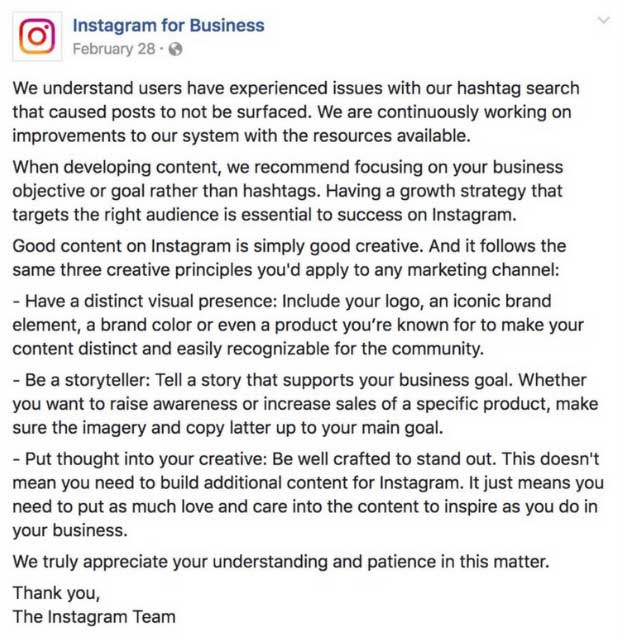
It wouldn’t be surprising if Instagram is intentionally luring people to switch to business accounts with post analytics and a big pretty contact button in exchange for reducing organic reach unless businesses start investing in ads to reach keywords.

The Take-Away

Even though our dependence on technology is increasing each year, one thing seems to be a common denominator in all aspects of marketing. We are moving out of the B2C and B2B business, and into the H2H business, otherwise known as Human to Human.

Humanizing the social media strategy for your business can be extremely time-consuming which is one of the main reasons why bots were created in the first place. Spending the extra time or working with a social media marketing agency to help humanize your marking efforts is the best practice for ensuring trust in your customers, and providing great long-lasting results.

Marketing emails you’ll actually want to read.

Get marketing tips and news sent to 
your inbox.
This field is for validation purposes and should be left unchanged.
Name(Required)

Should You Let Interns Handle Your Social Media?  

Each year more companies realize the importance of being on social media. For many small to mid-sized businesses, it has been a neglected piece of the marketing puzzle because managing each social media account can be very time-consuming.

Business owners would much rather spend that time closing the next major business deal instead of being on a computer monitoring social conversations or even going through the hassle of trying to learn how to do social media marketing themselves.

According to the PEW Research Center, the men and women between the ages of 18-29 years old are dominating each of the major social networks. Wouldn’t it just make sense to hire the people who statistically use social media the most to handle it for you?  The quick answer is not necessarily, but it’s important to understand why.

While interns can be a great asset to completing necessary tasks for your company, there are several things to consider before giving them full reins to your company’s social media accounts. In this blog post, we’re providing you five factors to consider before hiring an intern to handle your social media.

1. Handling social media for a brand is different than handling personal social media.

The intern you’re hiring may look promising because they have over 5,000 followers on each social network. They obviously are doing something right, right? Being successful at managing personal social media accounts doesn’t always translate well into managing a business account.

While they might be successful with their niche audience, they likely aren’t going to learn how to be successful with your ideal customer audiences overnight. For example, their audiences might be following them for posting hundreds of funny memes or selfies, while your audience might be looking for the latest innovation in healthcare technology.

Social media algorithms for business pages also work differently than personal social media accounts. Unfortunately, the algorithm does not work in favor of business pages. In fact, in 2014 organic reach for business pages were as low as 2% and an algorithm change late last year cut organic reach in half again.  Low organic reach ultimately means that more work, thought, and ad dollars must be put into a social media strategy than a personal social media page would require to get similar results.

Social Media Influencer taking Selfie

2. Social media is one of your company’s most public-facing assets.

Would you let an intern handle the contents on your website? If you answered no, then ask yourself why. Your social media pages will likely receive even more exposure than your company’s website.

Everything that is pushed out on your social media account will be accounted for in your overall brand image. You need to make sure that your social media content is in line with how you want the overall tone for your brand to be portrayed.

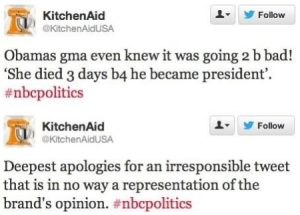
Remember, once something makes it to social media, it will remain on the internet forever, even if you delete the post right away. One tiny mistake can make national news.

Social Media fail.

3. You’re at Risk of Spending More Money on Ads

Without someone experienced handling your social media ads, it’s very easy to make a simple mistake that could end up costing your business hundreds, even thousands of dollars without noticing.

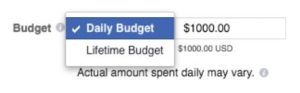
For example when handling Facebook ads, if you don’t flip the switch correctly from lifetime budget to daily budget, your $1000 Facebook ad budget for the month, could easily become a $30,000 monthly budget. This simple mistake might seem like a no-brainer, but it’s more common than you might think.

Ad spending dropdown bar

In addition to the setup of the ad sets themselves, experience is the number one factor that will give you more bang for your social media buck. No amount of Marketing 101 textbooks or online articles can give you the secret sauce for creating the most efficient social media ad campaign for your industry because it is constantly changing.

An experienced social media marketing expert can create social media ads for businesses that cost as little as $0.01 cent per engagement, while a less experienced social media marketer can struggle to get the same ad to cost less than $1.00 per engagement.  (Pro tip: You should always aim to get your cost per engagements under $1.00)

Anyone who continuously tests what is working for their social media ads each day can tell you that their secret sauce for lower cost ads mainly comes with experience.

4. Handling Negative Comments and Crisis Management

With every great social media account, comes great responsibility! Let’s be honest, every engagement on your social media page isn’t going to be a positive one. Will your intern have the professional customer service skills and social media skills to handle negative feedback properly?

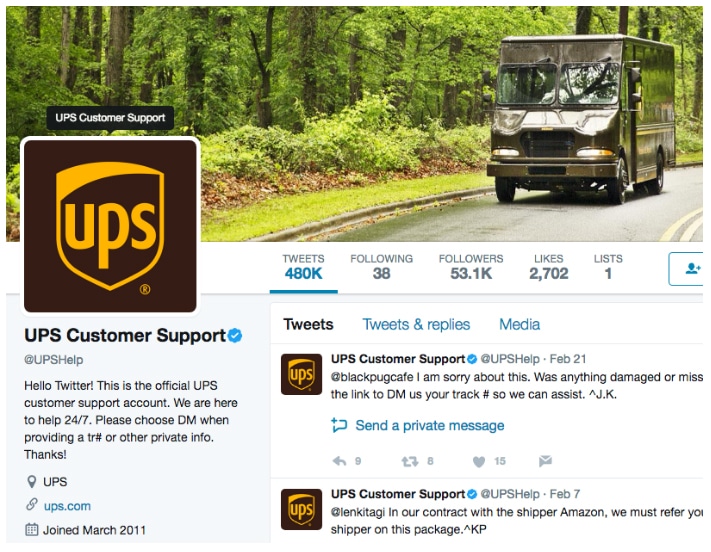
In some ways, social media has become the modern-day customer support call center.  Many large companies such as Apple, UPS, Amazon, Hulu and Postmates have even implemented secondary social media accounts strictly to handle complaints they receive on social media accounts.

UPS Customer Support Twitter Page

5. Transitioning 

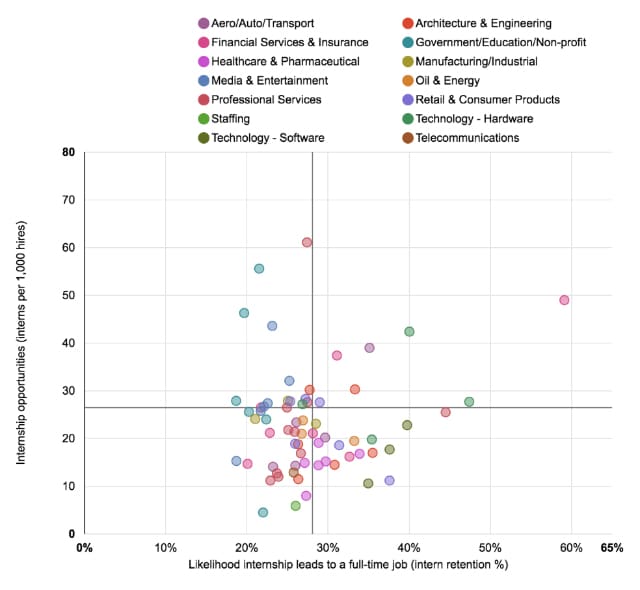
Many internships happen over summer break. In most cases they are meant to gain some real-life experience while still attending school. Many students don’t have the time to take on a full-time position once their next semester starts again. The graph below shows the typical internship retention rate across a variety industries.

Statistical Chart showing intern retention rate

As you can see, there is only one industry that has an intern retention rate of over 50%. What does this mean for you? This low rate of retention means that you will likely have a disconnect in your social media.

Unless you end up hiring your intern to work full-time (assuming they accept the offer) you will have to keep transitioning new people to handle your social media accounts.  Every new intern will likely have a different writing and aesthetic style, making it more difficult to hand off your social media accounts seamlessly and professionally.

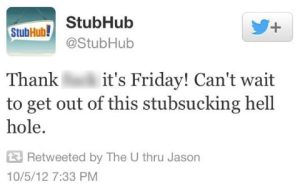
Although most likely a rare circumstance, you may also risk the possibility of having a salty intern who didn’t get the job offer they were expecting, sabotage your social media accounts.

Disgruntled job seeker social media sabotage example

THE TAKE-AWAY

We don’t want to discredit interns because we have all been at the starting points of our careers at some point in our lives. Hiring interns is a great way to gain real life experience outside of the textbook world while easing the workload.

It’s important to note that we strongly encourage hiring interns to help with your social media marketing efforts.  On top of providing them with a great opportunity to learn and hone their skills, they can bring a fresh take to your activities and with the proper direction can take on some of the more time-consuming tasks.  We just encourage you to give a second thought to turning the management of your social media marketing over to an intern.

Always remember that everything that goes out on social media stays on the internet forever. If you’re considering hiring an intern to handle your marketing efforts, it may be time for your business to consider partnering with an experienced and reliable marketing company to handle all your content marketing services.

Marketing emails you’ll actually want to read.

Get marketing tips and news sent to 
your inbox.
This field is for validation purposes and should be left unchanged.
Name(Required)

How to Hack the Facebook Algorithm to Your Benefit

Have you ever wondered why, every time you log onto Facebook, you typically see the same people, groups, and company pages showing up repeatedly on your News Feed whereas other people and pages you may be following are never there?

Or maybe you’ve got a business page that has over 10,000 followers, but you’re only getting 1-2 likes or comments on every post you make. As people and businesses continue to enter the world of Facebook, Facebook must decide what content gets that golden spot, which is your News Feed.

To do this, Facebook has an algorithm that it uses to gauge content you are following that will most likely interest you. Although Facebook is a great place to socialize with your friends, at the end of the day, they are still a business. Their business model? Simple! Keep people on Facebook as long as possible. To do so, they have to figure out what content to show that will continuously people interested. So how do they go about doing this? It’s all in the Facebook Algorithm.

Facebook is constantly altering their algorithm. What may be helpful advice on Facebook today, may be completely irrelevant in 6 months. Unfortunately, business pages on Facebook get the short end of the stick when it comes to having their content show up on their followers News Feeds. Why? Because, once again, Facebook is a business at the end of the day, and they want you to spend ad dollars to give you what you want.

In a similar process to how you would optimize your website with SEO to show up higher in Google search results, once you have a better understanding of how the Facebook algorithm works, you’ll be able to get more bang for your buck when it comes to how far your content reaches. Don’t worry; you don’t have to be a coding genius to understand the basics of how it works.

What Does The Facebook Algorithm Take Into Consideration?

No one is a 100% sure how Facebook or Google’s algorithms work. In fact, Lars Backstrom, Engineering Manager for News Feed Ranking at Facebook, estimated that there are as many as 100,000 individual weights which produce what users find in their daily News Feed.

Although it’s impossible to know the secrets to these 100,000 factors, social media marketing companies and top marketing agencies around the world will agree on the following, which can make your content benefit from the Facebook algorithm.

Reactions

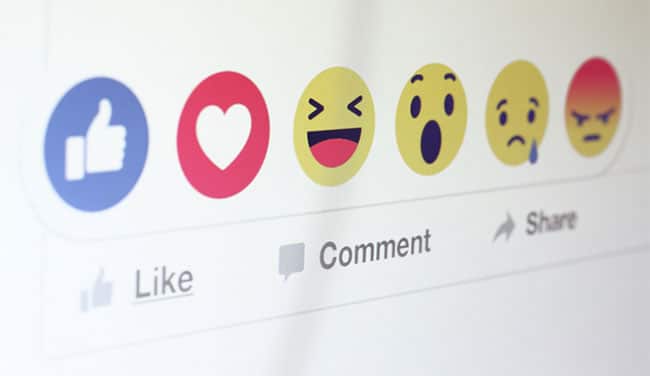
facebook post reations

Up until 2015, Facebook only had three options for engagements on a post. Like, Comment, or Share. On October 8th, 2015, Facebook released Reactions which added being able to love, laugh, cry, wow, and be angry at posts in addition to just being able to like it.

By offering these emotion-filled reactions, Facebook’s algorithm is gaining insights from users and your audience.

If one of your followers were to click the “love” reaction on one of your post, they have just tweaked their personal Facebook algorithm to show more of your content on their News Feed, without you having to sponsor that piece of content.

The same also works for the “angry” emotion. By giving Facebook the feedback that a certain post is making you angry, the algorithm will know not to show you more of that type of content so that you will ultimately stay on Facebook longer.

So what does mean for your business page? It means that you should optimize your content for getting better reactions out of your audience. Get creative! Think about how you can pull out emotions from your audience to react to your content.

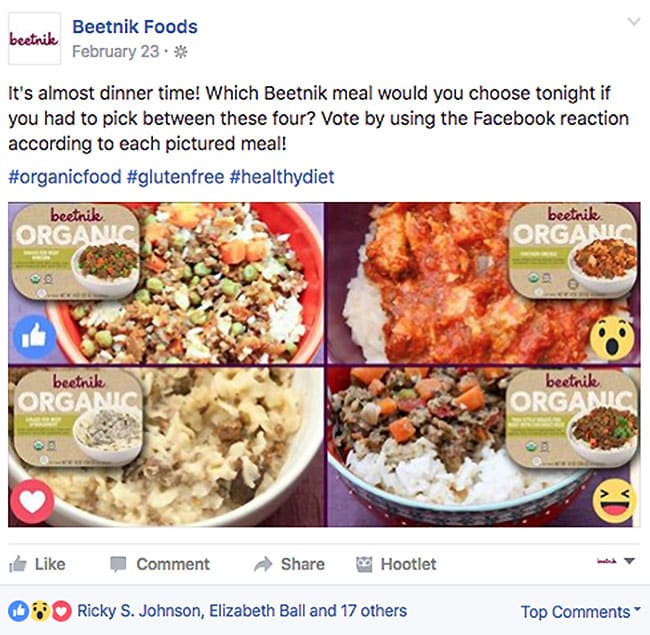
Humor is always a good start but doesn’t always work out if it’s not executed properly. One creative method we used for generating reactions without sponsoring the post, is by using a reactions poll for Beetnik. (Notice how we didn’t include the angry reaction as an option)

beetnik facebook poll post

Shares

While reactions may play a role in the Facebook Algorithm, shares are golden. When people share content on Facebook, they are essentially telling the algorithm that piece of content is so good they wished they would have posted it themselves.

How will I know that my posts will be engaging enough to gain shares?

In addition to optimizing your content for shares, you can also test content on other social media platforms that have less dependent algorithms such as Twitter and LinkedIn. If you see a decent response on those platforms, you will likely see it on Facebook too.

Videos

Although video content can be a challenge, it is one of the best pieces of content to gain organic impressions on Facebook. Facebook loves video content. Therefore, Facebook Live is ranking much higher in the News Feeds, which is a great way to get your content noticed and interact with your viewers live.

You may have noticed Facebook’s latest feature on your personal timeline known as “Facebook Stories.” Similar to Snapchat, it allows you to post videos which can be viewed for up to 24 hours before disappearing. Although this hasn’t been enabled through Facebook business pages yet, it’s very likely to happen in the near future.

Pro-Tip: Even if you can’t post video content, it’s crucial to always have a link or a photo at the bare minimum.

facebook post types

Boosting Posts

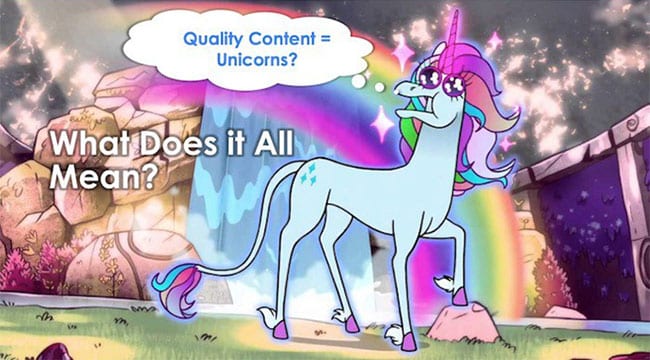
Many people make the mistake of just creating a post and boosting it right off the bat. By boosting posts in this manner, you will be spending more money for a lot less reach. The best practices for boosting a post on Facebook, from the words of Larry Kim, (founder of WordStream) is to “find the unicorn in your content, and boost it!”

facebook content unicorn

What all this unicorn talk means, is posting content to your Facebook organically and then analyzing throughout the week which piece of content you have posted that gained the most traction.

By boosting posts that have already received multiple engagements, you are multiplying the number of impressions the Facebook algorithm will show your content to, even if it’s paid content.

The Take-Away

Organic engagement on Facebook isn’t optimized for business pages. In fact, it’s less than 1%. Now that you have a better understanding of how the algorithm works, you can modify your content and social media marketing strategy to beat these algorithm odds for both your organic and paid reach.

Always keep in mind that all businesses are not one-size-fits-all. What may work for one company, may be completely ineffective for another. It’s always crucial to set up tests to any new strategy that you are implementing for your social media efforts to determine what fits right for your audience.

Marketing emails you’ll actually want to read.

Get marketing tips and news sent to 
your inbox.

This field is for validation purposes and should be left unchanged.
Name(Required)

What Is the Most Shareable Content?

If it isn’t already, social media is quickly becoming a necessity in modern business marketing. People are making connections, sharing tips and talking about companies they do and do not do business with on social media.

There are more than three billion people with internet access – and a whopping two billion of them have at least one social media account. “Every day there are over 500 million tweets, 4.5 billion likes on Facebook, and 95 million photos and videos uploaded to Instagram,” according to HootSuite.

With numbers like that, today’s companies have to interact on social media to be part of those conversations. However, it takes more than just creating an account for your business to see success in the fickle world of social media.

Perhaps more than ever before, when it comes to your business’s online marketing strategy, content still reigns king.

Likes Compared to Shares

Liking a post on social media indicates that the reader likes what you put up there or that they sympathize with its sentiment. However, shares are so much more valuable. Shares increase the reach of your posts exponentially, and they are tough to get.

“When we click share,” explains social media expert Brian Carter, “we’re obviously saying ‘I like this so much, I wish I had created it myself. I want everyone I’ve connected with on Facebook to see it. I’m ok with my family, coworkers, supervisors, bosses and anybody else I’ve friended knowing that I like it.”

So, how do you get your customers to share your content?

General Trends in Social Media

When looking at what gets shared the most on social media, you may have noticed some trends. For instance, people like to share positive news over negative and high-arousal posts over low arousal. In other words, something that makes you happy or angry or surprised (any intense emotion) is more impactful than something that makes the reader sad.

People also like to share content that serves to define who they are. Roughly 68 percent of people will share something because it aligns with a view or a cause they have. High-value content is also really important.

Differences Between Networks

Producing shareable content isn’t just about creating the highest value or most exciting content possible. Obviously, that helps, but there is another part of the equation – content type. From videos to quotes, photos to articles, the fact is that certain types of content are shared more than others, and this tendency varies by social network.

Here is what you need to know:


Facebook

inspirational facebook post

Facebook is very visual. According to Kissmetrics, while the posts most shared on the social media giant include a variety of content, from funny memes to inspirational photos, as well as posts that have an “I identify with that!” mindset, they all share one thing: they start with something visual. However, you need more than just a picture. Usually, the most-shared content on Facebook takes the form of a photo or graphic that has words on it.


Twitter

funny tweet

People on Twitter also tend to prefer images. While videos tend to be favorited more than a photo or graphic by an impressive 49 percent, images are retweeted 128 percent more than video. There is also a marked trend in the type of image. According to Neil Patel, roughly 62 percent of the most shared images on Twitter are funny. Food images are the next most popular at 9 percent and travel photos at 7 percent. In other words, make your followers laugh, show them appetizing pictures of food and let them live vicariously through your photos.


Instagram

good food on instagram

Instagram started as a photo-sharing site and is still the best platform for sharing photos, but video is gaining ground. While you can’t exactly share content on the app – you would need a third-party service to “regram” it – one thing that is clear is that video engagement is high. According to Contently, the total engagement on Instagram videos went up by 622 percent from the first quarter of 2014 to the first quarter of 2015.  If you are in a highly visual industry, like fashion, you should seriously consider using Instagram for your business.

What does this mean for your business?

So, the big question, and most likely the one that brought you to this article, is how you can most effectively use social media to promote your business.

Budget

The first thing you must determine is what you can afford to spend on social media.  The biggest mistake that business owners and marketers make when budgeting for social media is to equate managing their own social media with a low cost, or free.

You need to determine what value you should place on your time.  For those in the professional services industry, this should be fairly easy to calculate given that you most likely bill by the hour.  For everyone else, try to establish a realistic dollar amount to “charge yourself” per hour of social media work.

Plan to spend a bare minimum of 2 ½ hours a week managing your social media.  That’s just half an hour a day.  If your hourly rate is $25, then your monthly social media budget is $250.  If your hourly rate is $100, then your monthly social media budget should be around $1000.

Compare this against the cost of hiring a company to manage your social media marketing for you.  You may find that your money may go further in the hands of experts.

Platform

The next piece of the puzzle is determining which social platform is right for your business.  Think back to the types of content that are most successful with each platform.

If you are a lawyer, Instagram is probably not the best fit.  Instead, you are most likely to strike a chord with potential customers on Facebook or LinkedIn, depending on your area of focus.  However, if you own the hottest new bakery in your town, Instagram is your ticket – given the mouthwatering visuals you create every day.

Engagement

Once you have a budget in mind, and you’ve selected the platforms that are most likely to be successful for you, it’s time to get to work.

Engagement is where businesses succeed and fail in the world of social media.  Remember, content is king.  You need to post engaging content as often as possible to have the maximum impact.

There is no magic number when it comes to frequency of posts.  It is more important that you are consistent and creative with your posting.  Don’t post three times a day for a week and then let your accounts stagnate for three months with no posts.  If you post one time a week, try to be consistent with that schedule.

The more often that you post creative, thoughtful, appropriate, and engaging posts to your business’s social media accounts, the more returns you will see for your efforts. Don’t be afraid to reach out to marketing agencies for help with your content creation efforts. Contact MARION today for more information about how we can help grow your bottom line by creating content that your target audience will love.

Marketing emails you’ll actually want to read.

Get marketing tips and news sent to 
your inbox.

This field is for validation purposes and should be left unchanged.
Name(Required)

Instagram for Business – A Beginners guide

As humans, we love images; we can’t help ourselves. We are just visual creatures. As sharing images with the world has become easier and easier, it’s not hard to see why social media platforms have exploded in popularity, and social media marketing with them. And while Facebook and Twitter might seem to reign supreme, other social platforms may hold as much or more marketing value for your business. Platforms like Instagram present unique opportunities to connect with niche audiences or market your brand or products in a way that resonates more with your potential customers.

In our ebook 24 Website ‘Must Haves’ we discuss the importance of authentic imagery, citing a study that found photos of real people out-performed stock photos by 95%.  The bottom line is that images are indispensable in building a brand, and for many brands, Instagram should be a part of their social media marketing strategy. If you’re looking to ramp up your marketing game with Instagram, here’s some helpful info that will help you make the most of the platform.

The Importance of Instagram

Far too often, business owners and marketers alike can’t see past the social sites that they use personally. They’re comfortable using them and relate to others on the platforms, reinforcing the idea in their minds that their potential customers use the same social sites. In reality, though, every social site is different and presents its own marketing benefits.

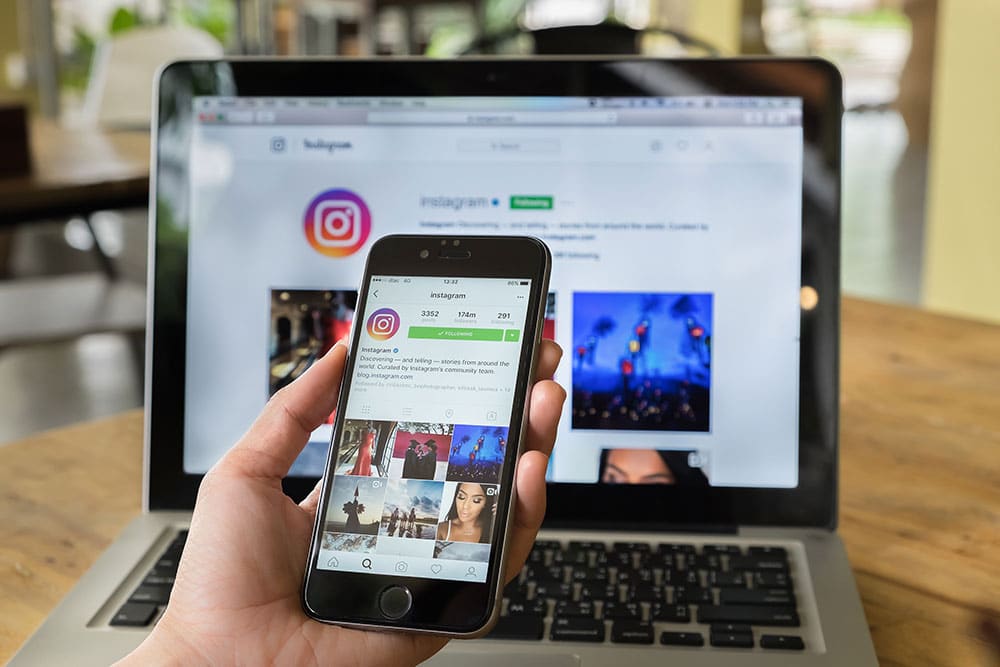
Instagram is primarily an app based image-sharing site that enables its users to take pictures, edit them and share them. Images can be shared on Instagram itself or through a variety of other social networking platforms, such as Facebook, Twitter, Tumblr, and Flickr. In 2012 Instagram was purchased by Facebook and has only continued to grow in popularity.

Over half a million businesses are advertising on Instagram, and it’s not hard to understand why. Sure, Instagram has less than half of the base of Facebook, but the photo and video-focused site appeals to a younger crowd. Additionally, Instagram has higher sharing and engagement numbers than other social platforms. In fact, people engage with businesses on Instagram at a rate of 10 times greater than Facebook. And according to Instagram:

  • Nearly 50% of users on Instagram follow a business
  • 60% of people say they discover new products on Instagram
  • 75% of users take action after being inspired by a post.

Add the fact that Instagram has the same targeting tools of other social platforms to its ability to better engage consumers, and it’s obvious why Instagram should be a consideration as a part of your social media marketing strategy. Keep exploring for more interesting Instagram stats.

Start SMART

You can find plenty of Instagram marketing tips online, but without the right goals, those tips likely won’t do you much good. Whether you want improved brand awareness or more clicks to your website, always remember the acronym SMART – Specific, Measurable, Action-oriented, Reasonable, and Time-bound.

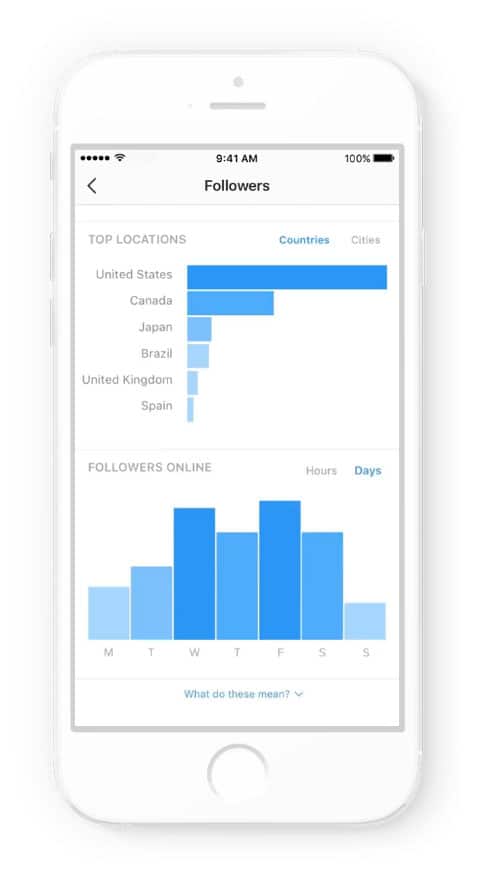
Statistics displayed on a mobile phone screen.

When you set your goals for any social media marketing strategy, it will be tempting to set revenue goals. We won’t tell you not to use revenue as a metric for measuring success on social media. Just keep in mind that it’s going to be tough to close the loop from a dollar spent on social media to a dollar in revenue gained. Instead, we recommend setting business goals that you believe will help drive revenue, like brand awareness, increased foot traffic in your store, or traffic to your website.

Let’s look at an example of a SMART Instagram goal. Maybe you want to drive 5% more traffic to your site next month by advertising on Instagram. It’s a specific and time-bound goal, but is it measurable? Yes, the Instagram business platform will give you metrics as to how many views and clicks your ads get. You can also see traffic statistics attributed to Instagram, most likely as referrals, in Google Analytics. Additionally, this goal relies on action on your part (action-oriented). It’s also a fairly reasonable goal, and you’ve set a time limit. You, my friend, have a SMART goal.

Instagram for your business – The basics

halo instagram post examples

Once you have a set your goals, you need to build an Instagram strategy that can achieve them.   Halo Top (Instagram posts featured above) is a small ice cream company with a seriously professional Instagram presence.  They’re a great example of the branding power that Instagram can offer if used correctly.  Here are the three rules that every well-managed business Instagram profile follows to achieve success. They keep their posts:

  1. On Story – Decide on a story for your profile to tell. Is your profile centered around sharing your products? Are you offering a behind the scenes look into your business? Are you sharing relevant aspirational messages? Find your story and tell it well. Use high-quality images and creatives to tell your story in a way that will attract and engage.
  2. On Brand – Decide on a look and feel for your profile that is consistent with your brand and stick to it. It could be vintage, modern, eclectic or minimalist. Always include your logo, colors and/or products in your posts. Whichever look and feel you choose, just make sure that it reinforces your brand and that you don’t deviate from it.
  3. On Time – Post consistently, at least every couple of days. Nothing is less engaging than a half filled, abandoned social profile. It’s the internet equivalent of an ‘out of business’ sign.

Instagram built it’s user base on creativity and beauty. Don’t be afraid to think outside the box and experiment with ways to grow your reach. Here are a couple of quick tips for expanding your reach:

  • Connect your Facebook account and use popular hashtags to build a following.
  • Hold photo contests to increase engagement and your audience.
  • Interact with followers to increase brand loyalty.

Get Help

Finally, if you’re new to social media, or even just new to Instagram, getting some help is always a good, if not necessary, way to get started. Whether this is just asking your nephew how to use the app or hiring an established social media management company, you’ll be glad you got the help.

If you’re looking for more information or ideas right from the source, Instagram publishes an excellent blog for businesses that are using its platform as well as offering a series of free training classes, including:

  • Introduction to Instagram
  • Instagram for Business
  • Facebook and Instagram
  • Instagram Ad Types
  • Instagram Buying Objectives
  • How To Buy Instagram Ads
  • Building Your Mobile Presence with Instagram Business Tools
Marketing emails you’ll actually want to read.

Get marketing tips and news sent to 
your inbox.
This field is for validation purposes and should be left unchanged.
Name(Required)