Category: Digital Advertising

8 Easy Ways to Grow Your Company’s LinkedIn Page

If your business is mostly B2B, LinkedIn is a necessary tool to connect with industry peers and potential clients. Whether you’ve just created a new LinkedIn company page or you’re looking for ways to grow your follower count, here are some LinkedIn company page tips to get you started.

1. Make Sure Your Page Looks Good

No one wants to follow a sloppy-looking business with an incomplete page. Your LinkedIn page should make sense aesthetically- take the time to write a good, concise description and use engaging visuals for your header and profile images. Remove as much clutter as possible to keep your page looking professional and streamlined.

Another thing that is easy to overlook is your custom URL. When you create a page, the default URL will include a group of random numbers at the very end. For example, our LinkedIn URL is www.linkedin.com/company/marionmarketing instead of a bunch of numbers at the end. You can customize your URL to look more professional and in control of your brand.

Keep in mind that your old URL will not redirect to your new URL if you change it. So, if you’ve linked to your LinkedIn page over the years on several websites, online profiles, or guest blogs, you will have broken links scattered across the web. Make sure you’re happy with your custom URL from the start so you don’t have to change it.

2. Get Employees Involved

One of the easiest steps to growing your company’s page is to have your employees list it on their personal profiles. Every time someone checks out their profile, it will lead back to your company’s LinkedIn page. They can also share company updates, blog posts, pictures, etc. to their own personal page. The more they engage, the more credibility it lends to the company’s page.

Another easy method is to have them add a small LinkedIn button at the bottom of their email signatures so that any time someone corresponds with your company’s members, they have an easy way to visit your company page.

3. Post Good Content Consistently
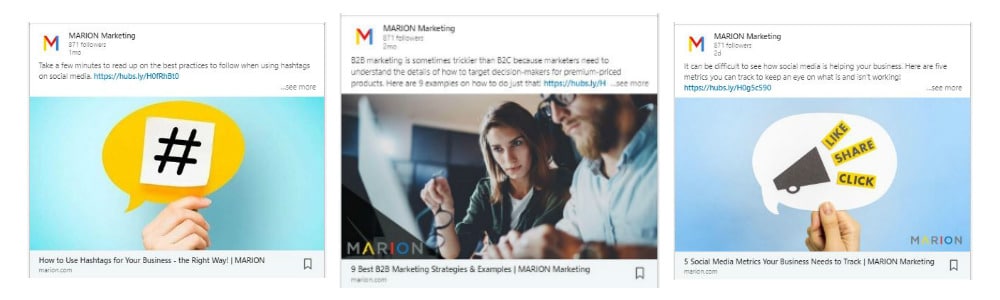
how to promote your company page on LinkedIn

One of the best ways to attract and retain followers is to share good content consistently, but not too often. Posting on a reliable schedule with content that is relevant and valuable to your audience is the best method of gaining followers in the long term. Relentless self-promotion will turn away most people, so make sure your B2B marketing through LinkedIn includes helpful links, videos, infographics, etc. that will give them a reason to keep following you.

For a more structured approach, consider learning how to curate content for social media and then create a content calendar with the best material you can find.

4. Craft a Showcase Page

Showcase Pages are extra pages that you can create from your main company page that show off specific products or services. Users are able to follow Showcase Pages without following the business, which means you can cater to specific audiences. There are countless ways you can set up a Showcase Page. They are also an excellent way to gradually attract people that wouldn’t normally follow your company page.

5. Use Existing Clients

Ask your clients to follow your page- after all, they’re already fans of what you do and are more inclined to share your posts and articles than someone who has just stumbled onto your page. It’s a no-brainer to tap into an audience you already worked hard to get.

6. Join LinkedIn Groups

LinkedIn Groups is a feature where professionals can gather to share insights and network with each other. Drive engagement by joining industry-related groups and actively participating by sharing your thoughts and joining discussions.

You can even make your own community by creating your own LinkedIn Group. The most important thing to remember is that to be successful using this method, you must be providing something of value for the members. Building trust and reputation in communities will drive visitors to your page.

7. Paid Advertising

how to promote your business on LinkedIn

LinkedIn allows pages to boost or “sponsor” their content or more straightforward options such as dynamic and text ads. Whichever you choose, your social media advertising campaign can be fine-tuned to be highly specific as LinkedIn can target people based on factors like:

  • Company name
  • Company size
  • Industry
  • Number of followers
  • Job title/function
  • Job seniority
  • Years of experience
  • Schools
  • Degrees and fields of study
  • Skills
  • Groups
  • Age
  • Gender
  • Location

With a combination of these factors (and even more that haven’t been listed), it’s easy to reach the exact audience that you are looking to attract.

8. Cross-Channel Promotion

Make sure you embed a LinkedIn button in all your relevant marketing channels. This includes emails, newsletters, business blog posts, other social platforms, company website, and more. You can even include the URL on business cards, brochures, etc. Any blog posts that you have on your company website should include an option to “share on LinkedIn” so the reader can post it onto their personal LinkedIn page if they’d like. This simple but ubiquitous presence can fill the holes in promoting your growing page.

Growing followers for your business can happen organically if you dabble in a few or all of these tips to increase visibility. For B2B marketing strategies, LinkedIn is extremely vital to your organization’s social media marketing success.

Looking for the best marketing company to put these LinkedIn marketing tips to use? Contact MARION today to learn how we can grow your business with our social media marketing services.

Marketing emails you’ll actually want to read.

Get marketing tips and news sent to 
your inbox.

This field is for validation purposes and should be left unchanged.
Name(Required)

5 Social Media Metrics Your Business Needs to Track

Social media is an excellent way to bring new leads to your business and build reputation. However, it can be tricky to see exactly how social media is helping your business. Take the confusion away by learning how to measure social media effectiveness with five essential social media marketing metrics.

5 Social Media Metrics that Matter Most to Your Business

These social media success metrics measure broadcasting effectiveness, interaction effectiveness, and ROI.

1. Post Reach

Post Reach indicates how many people have seen your post since you published it.

Not only does this measure how many people have seen your post, but it also tells you which times of the day are best for publishing. Post reach helps you keep an eye on which hours your audience is most active and which posts they’d like to see most.

Social platforms like Facebook and Twitter make post reach extremely easy to view by telling you how many people each post has reached. If you pay to “boost” an organic post, you can also see which unique viewers are from your paid campaign.

Want to be a marketing hero and grow your business in a noticeable way? Download this free eBook about the 6 marketing metrics your boss actually cares about!

2. Post Impressions

Post Impressions indicates how many times your content was viewed by a person.

Post impressions also measure the spread of your content by telling you how many times your post entered a screen. This can also include paid views, which most platforms will easily differentiate on your profile’s insights or analytics page.

Impressions can help you figure out what time or day is best to post on. Analyzing impressions data will show what time had the most impressions or which day had the least impressions and so on.

3. Average Engagement Rate

metrics for measuring social media effectiveness

Average Engagement Rate measures the level of engagement or interaction that a post is receiving.

This can include likes, shares, comments, reactions, replies and more. Social media engagement metrics are the most important because they are a demonstrable measure of social media success.

A low engagement rate might mean that you are reaching your audience on the wrong platforms or pushing out content that isn’t resonating with them. On the flip side, a high engagement rate means you’re doing something right, so you should pinpoint what it is!

If you’re trying to learn how to measure social media engagement easy, most social platforms already provide analytics. This makes data collection and analysis easy.

4. Click-Through Rate

Click-Through Rate is a ratio showing how many times people clicked on your ad after viewing it. It is calculated by dividing the number of clicks by impressions. (Clicks ÷ Impressions = CTR)

CTR is used to gauge how well ads are performing. Through testing various versions of ads, you can tweak and adjust until one campaign outperforms the other. Through this method, you can see what resonates with your audience and what types of ads they find valuable and worth their time.

CTR is one of the most important metrics to measure social media success because it measures real user actions. It’s great for a social post to have a broad reach and plenty of impressions, but you’ll struggle to generate a return on investment if users don’t click on your content. Optimizing your CTR is especially important if you plan to advertise on social media.

5. Cost-Per-Conversion

Cost-Per-Conversion is what it costs to land a conversion.

CPC can work in tandem with other metrics such as CTR. For example, if each click costs 10¢, but it takes 10 clicks to secure one conversion, your CPC is $1.

You can use this metric to view the actual costs of valuable actions such as customer conversions, instead of more impressive but (ultimately) less valuable metrics such as impressions and engagement. They are all related, but CPC can give you a definitive avenue of measuring social media effectiveness.

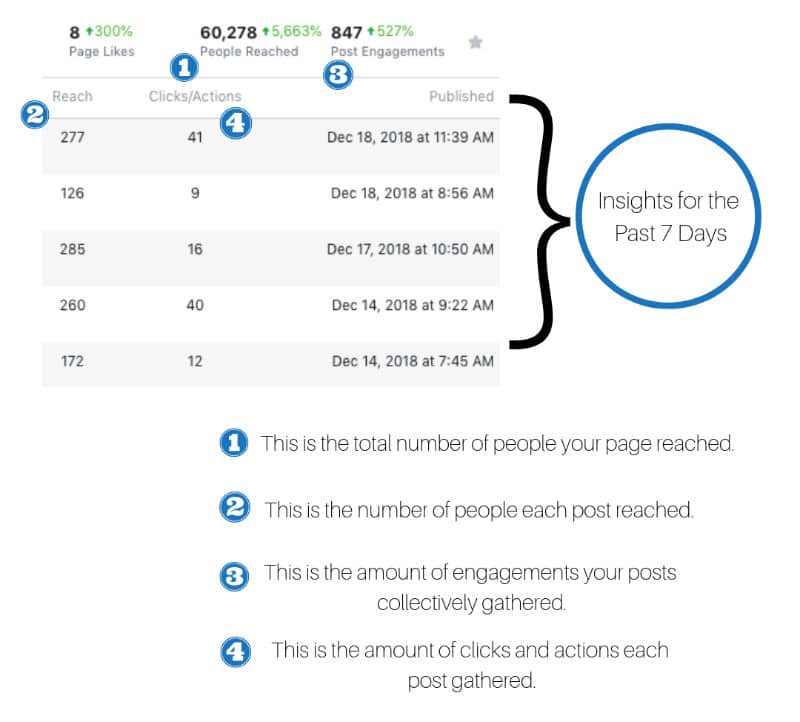
As mentioned above, larger social platforms such as Facebook and Twitter have analytics or insights pages where you can compare different posts and how they performed. For example, the screenshot below of a Facebook Insights section shows a lot of information and can help you track your metrics.

social media marketing metrics that matter

Every organization will have different goals, but these metrics are generally helpful for most businesses. However, a high rate does not necessarily mean everything is working- you must compile a group of metrics tailored to your strategy and keep an eye on them holistically.

As your social reach grows or if your company goes a different direction, there are countless more social media measurement metrics that will help you get a handle on more specific trends.

Get Social Media Marketing Help from The Experts

Social media marketing in Houston and Austin can be a huge driver for your business brand and bottom line. Don’t settle on sub-par results, let the MARION marketing company help you grow your business today. Contact our team today!

Marketing emails you’ll actually want to read.

Get marketing tips and news sent to 
your inbox.

This field is for validation purposes and should be left unchanged.
Name(Required)

An Introduction to Marketing on The Most Popular Social Media Platforms

Facebook

Active Users: 2.7 billion active users (as of October 2020)

Year Founded: 2004

Most Popular With: Everyone


Facebook is the largest social media site in the world with a whopping 2 billion+ users. Most people are familiar with this platform but in case you aren’t, this platform allows you to “friend” users, view their profiles, and share content that people can view on their Newsfeed.

Their Messenger service has over 1.3 billion active users and businesses have taken advantage of this by using their Chatbot feature (which allows organizations to reply faster and cut down on customer service costs).

Compared to other social media giants, the user demographics are pretty spread out so if you are looking to advertise to a wide audience Facebook is your one-size-fits-all social media platform. Most businesses that learn how to advertise on social media focus on Facebook due to its ubiquity. It is able to support some of the top social media campaigns for this reason.

Use social media to improve the results of your marketing campaigns. Download this free eBook today to learn how to run an online marketing campaign!

Twitter

Active Users: 335 million active users (as of October 2018)

Year Founded: 2006

Most Popular With: Younger people, mostly between 18-29


Twitter is one of the most effective marketing tools when used correctly. Users have profiles where they can send out “tweets” composed of up to 280 characters that appear on other users’ timelines. Videos, photos, and gifs can be attached to tweets and you can also create quick polls.

Trending topics often fall under hashtags, which are a great way to join a global conversation when appropriate and relevant. Users have the ability to “retweet” which is a seamless way to share other profiles’ content on your own.

Businesses can use Twitter to generate engagement and create conversations around their products and services. If you need to facilitate buzz with a younger audience under 35, Twitter is your answer.

LinkedIn

Active Users: 590 million active users (as of October 2018)

Year Founded: 2002

Most Popular With: College graduates and high-income earners


LinkedIn is the first stop you should make when trying to reach a professional audience. Most B2B marketing strategies include LinkedIn as their platform of choice to establish reputation and put out content. Using LinkedIn for B2B marketing is 277% more effective for lead generation than Facebook and Twitter combined.

LinkedIn personal profiles include the users’ work history and accomplishments, but business pages operate similarly to Facebook Pages. Users can follow businesses and see their posts on their timelines, which they can like, comment, and share.

Unlike other social platforms, text posts actually get viewed at a higher rate with more engagement. It’s best to put out content that is thought-provoking and connects professionals from across your industry. The business results driven from LinkedIn are frequently cited as a reason why your business needs social media.

Instagram

Active Users: 1 billion active users (as of October 2018)

Year Founded: 2010

Most Popular With: Younger audiences between 18-29


Instagram was acquired by Facebook in 2012, and while there is some crossover (you need to have a Facebook page in order to have a business profile on Instagram), the two platforms are very different.

Instagram is where you can let your creativity shine since it is all visual. Users can post photos and videos, share Stories (a feature made popular by Snapchat), and engage with other people’s content on their feed.  Like Twitter, you create a unique handle (username).

Instagram has blended numerous e-commerce features onto their service and users can bookmark and save photos to their collections. There are countless ways marketers can utilize Instagram to their advantage.

YouTube

Active Users: 1.9 billion active users (as of October 2018)

Year Founded: 2005

Most Popular With: People between 18-49


YouTube is the most popular video-based social platform where users can upload, watch, comment on, and share videos. Each day, people view over 1 billion hours of YouTube videos.

There are usually ads that you can skip after 5 seconds or unskippable ads that are around 15 seconds long. Beyond ads, however, YouTube videos are an effective way to lead viewers back to your website or to put out content that establishes your reputation as an industry expert.

YouTube is the second largest search engine in the world, so having a competent SEO company in your corner could help your results.

Snapchat

Active Users: 291 million active users (as of October 2018)

Year Founded: 2011

Most Popular With: People under 30, majority female teens


Snapchat is a “mobile-first” multimedia messaging app that started the 24-hour “story” feature that many other platforms have adopted. Snapchat’s ephemeral messaging can be altered with drawings, text, “Geofilters” (overlays that become available in particular locations), and “Lenses” (real-time effects and AR/3D elements).

These features have been instrumental in creating an extremely engaging avenue for marketing content since brands can collaborate with their own Lenses and Geofilters. There is also a more traditional “Discover” tab where organizations can put short ad content.

Snapchat leans extremely towards a younger audience who value the short-lived content for producing an air of authenticity and real-time feel. Now that Instagram has its own Stories feature, time will tell whether that will be enough to lure away Snapchat’s specific demographic.

Pinterest

Active Users: 250 million active users (as of October 2018)

Year Founded: 2010

Most Popular With: Females with an above-average income


Pinterest is a very unique social media platform. Think of Pinterest as a digital vision board. You can have multiple boards where you “pin” content to it, which makes it a very visual network.

Pinterest has the longest content longevity (half-life of a pin is 151,200 minutes, compared to a Facebook post’s 90 minutes and a tweet’s 24 minutes) which makes it an excellent place to post evergreen content. 87% of Pinners have reported they bought a product because of Pinterest and 93% stated they have used Pinterest to plan a future purchase. Your business can use Pinterest to its advantage by posting infographics, products, photos, and much more.

Now that you understand the audience types for each social platform, make sure your marketing message and delivery are polished. Experts at the MARION marketing company offer social media marketing in Houston and Austin that can help you reach your potential customers.

Contact MARION today to learn how we can help you improve your marketing results!

Marketing emails you’ll actually want to read.

Get marketing tips and news sent to 
your inbox.
This field is for validation purposes and should be left unchanged.
Name(Required)

What is Content Curation for Business Social Media?

With the glut of competition out there doing everything they can to get as much engagement on their social media pages as possible, keeping your audience entranced with a never-ending flow of quality content has become a necessity.

Coming up with original content on a regular basis isn’t an easy task. Content creation requires money, time, and creativity. Even if you’re able to come up with a steady flow of original content, there’s no guarantee it will resonate with your audience. That’s why it’s vital that you learn how to curate content like an expert.

What Is Content Curation Marketing?

Content curation is the act of identifying, gathering, and presenting carefully researched content to your audience that revolves around a specific niche or subject matter. Content curation is not the same as content marketing, because you’re not necessarily creating the content yourself.

Instead, you’re gathering content from handpicked, relevant sources and delivering it to your audience in an organized manner. Familiar content curators include RSS and social media feeds.

Why Use Content Curation for Your Business?

Content Curation graphic - MARION Marketing

Delivering curated content that’s relevant to your audience can benefit your business in a variety of ways. For one, you’ll position your company as an authority in your industry. Quality content curation means your customers don’t have to turn anywhere else for content in their niche — you should have all the answers to their questions carefully curated on your social media pages.

Another benefit is that it’s easier to curate content rather than create it. It takes time, energy, money and a constant flow of creativity to make new blog posts, YouTube videos, and Facebook posts for your brand.

There’s nothing wrong with creating and sharing your original content, but social media marketing takes less time when you share content that’s already been created.

Digital marketing can seem overwhelming, but it doesn’t have to be. Download our free eBook about how to run an online marketing campaign today!

How to Curate Content for Your Business Marketing

The content curation process isn’t complicated, but you’ll want to do it right to avoid wasting time and energy. Consider this multi-step process on the best way to curate content:

1. Determine How Much Content to Curate

First, determine how much original content you intend on creating yourself vs. how much you plan to curate from outside sources.  You’ll need to find the perfect ratio to keep your audience inundated with a nonstop flow of relevant content.

Keep in mind that each social media platform will require its own ratio. For example, Facebook, a slower paced platform, will need a separate ratio than Twitter, a faster-paced platform. There’s no magic number when it comes to finding the ratio of curated content vs. original content. As a rule of thumb, at least 25% of your content should be curated. However, this percentage will likely vary on a case by case basis.

2. Category Creation

Category creation is an essential step because it varies the type of content you’ll be sharing on your feed. To keep your engagement levels high, you should always have new content readily available. If you share the same material from the same categories for long periods, your customers will eventually become bored. Creating categories can remedy this problem.

There are a couple of ways you can go about creating categories to meet your social content curation goals. One option is to stick with content within your industry. For example, if you own a flower shop, you’ll likely only curate content that pertains to flowers.

You can also curate content that’s related to your industry. For example, let’s say you’re curating content for a computer hardware company. Computer hardware isn’t exactly exciting to look at, but posts about computer games that rely on computer hardware can be used instead. With this strategy, you can leverage the social media posts of a complementary industry to provide relevant content for your audience.

3. Find Sources

how to curate content

Once you’ve completed the above steps, you’ll need to learn where to find content for social media. Curating content from multiple sources will keep your feed energized and fresh.

Knowing how to find content for social media posts will require variety. It will also encourage you to build relationships with numerous content creators.

There are two primary ways you can find sources to curate content.

The first is to search for content manually. This process can be time-consuming, but if you enjoy reading/watching industry content in your free time, then it’s the perfect strategy.

Whenever you read a great article or watch a video that you know your audience will love, you can bookmark the page and come back to it later when you’re ready to share it on your feed.

Share from Your Feed

The second strategy, re-sharing other social media posts, is less time consuming and requires far less effort. With a few clicks, you can curate content in a matter of seconds.

How Is the Content Curation Process Different Between B2C and B2B?

The content curation strategy for B2C and B2B has several key differences. B2C marketing primarily focuses on driving consumers to make quick, impulsive purchases. On the other hand, B2B businesses tend to focus on content that engages stakeholders and builds brand equity.

B2C companies should focus on curating content that’s entertaining and easy to consume whereas B2B companies should curate content that’s informative and educational. Ultimately, running a successful content curation strategy comes down to understanding your audience.

Content Curation Tips

find content for social media

As a social media curator, learn the best way to curate content on a variety of social media platforms. Consider these content curation tips for Facebook, Twitter, and LinkedIn.

Facebook Content Curation

Facebook is the perfect content curation platform for B2C and B2B companies because it allows them to show the “human” side of their brand to their customer base. Facebook content curation should ultimately focus on improving your brand image.

Regarding frequency, Facebook curated content should be posted at least once a day.  Facebook’s feed takes a slower pace than Twitter’s, so posting too many times in a single day will overwhelm your audience.

Twitter Content Curation

Twitter works well for both B2C and B2B companies. B2C businesses excel on this platform when they push out easy to read content and hold tweet chats and contests with their customers.

Consumers of B2B content come to Twitter on the hunt for informative industry specific articles and video links.

LinkedIn Content Curation

Without a shadow of a doubt, LinkedIn is geared towards B2B businesses due to its vast user base of professionals. Content marketing curation on LinkedIn is about more than just posting to your feed. You’ll also want to take advantage of LinkedIn’s unique features such as industry groups and showcase pages which allow you to segment the type of content you can curate for your audience.

Curating Content the Right Way

Ultimately, content marketing curation comes down to understanding your audience and using the right platforms. Social content curation keeps your company feeds fresh, your customers engaged, and it saves you time and energy.

Want to save even more time and energy? Work with the MARION team! Our digital marketing agency can help you vastly improve your social media strategy. We’ll do all the heavy lifting. You focus on running your business and reaping the results of the hard work of our professional team of digital marketers.

Contact us today to learn how our social media marketing in Austin and Houston can help your business grow.

Marketing emails you’ll actually want to read.

Get marketing tips and news sent to 
your inbox.

This field is for validation purposes and should be left unchanged.
Name(Required)


Using SEO Vs. Social Media Marketing for Your Business

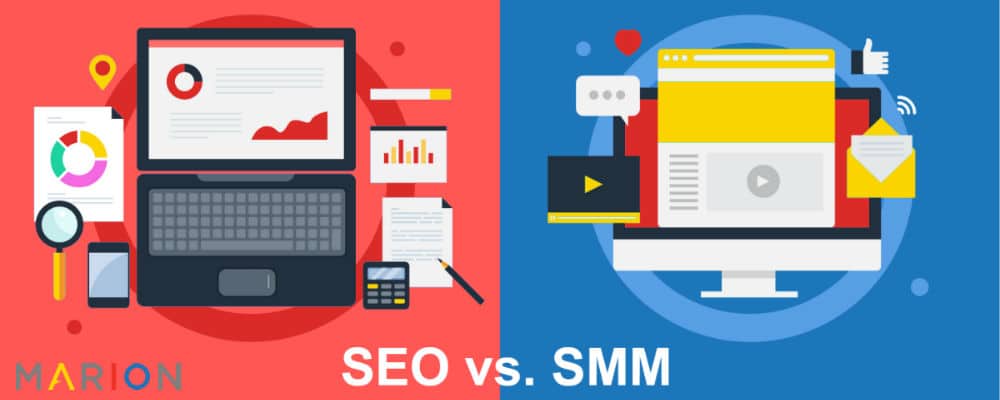
The fight for online traffic has come down to two primary strategies — Search engine optimization (SEO) and social media marketing (SMM). SEO and SMM are both inbound channels, and they’re both used for content marketing purposes. So what’s the big difference between them and which should you use for your business?

SEO vs. SMM

SEO draws in traffic from search engine rankings and excels at creating awareness of your brand. On the other hand, social media marketing is all about building deeper relationships with your audience and drawing in traffic from social media platforms such as Facebook, Twitter, and Instagram (to name a few).

Though they’re both used to draw in traffic, SEO and social media marketing have their differences. Examine the strengths and weaknesses of search and social to help you decide which strategy to spend the most time on, where you should invest your marketing funds, and how to set your expectations.

1. Which Topics Perform Well?

Which topic performs the best for SMM/SEO? As you become a better marketer, you’ll be able to “sense” the best place to promote your content.

SEO

Evergreen topics that are continually useful no matter how much time has passed tend to rank well on search engines. How-to guides and other researched-based content that address common questions also tend to rank well.

Want to generate new business? Download this free eBook to learn about 26 lead generation techniques you can’t afford to overlook!

Social Media Marketing

Posts that stir up emotions such as anger, anxiety, sadness, or awe tends to get the most likes and shares overall. Trending topics also get a lot of engagement on social media platforms.

2. Which Format Performs Best?

SEO vs. SMM

Whether it’s text, audio, images, or videos you need to know what format of content performs best on each channel. Note that performance depends on context and what your business goals are.

SEO

Search engines love long-form text. The longer and more informative the post (with well-placed keywords) the better. On average, pages that have 1,500+ words rank well on Google and Bing. Search engines also love keyword-inclusive headlines that are long and descriptive.

Social Media Marketing

Social media is a vastly visual platform. Video and images are shared far more frequently than posts purely composed of text. Frankly, the likelihood of receiving shares and likes are exponentially higher when a visual is attached. Emotional, concise headlines will serve you well here.

Read Now: Google Ads vs. Facebook Ads – Which is Better?

3. Does SEO/SMM Convert Better?

Does one channel convert better than the other? Make sure you set marketing goals and objectives and define what a conversion looks like for your company. Put a measurement system in place so that you can assess results and make improvements.

SEO

You can only drive in so much traffic before you hit the ceiling with SEO. You will never exceed more traffic than the number of people who are searching for a specific keyword every day.

Social Media Marketing

The number of conversions you can generate on social media is practically limitless. As long as you’re running an active campaign, your conversions will continue to flow without interruption.

4. Can You Grow an Audience Faster with SEO or Social Media?

SEO and social media marketing

Between search and social, how long will you have to wait to see the fruits of your labor? Which of the two is faster?

SEO

When it comes to SEO slow and steady wins the race. Competing for the most valuable keywords takes time and patience. It can take a year or more before you learn how to generate business leads through your SEO efforts.

Social Media Marketing

Where SEO is slow, social media marketing is practically instantaneous. Sure, it takes time to grow an audience, but social media posts can garner likes and shares right away and start generating results instantly.

5. How Long Do Results Last?

Just like everything else for search & social, the duration of results between the two is vastly different.

SEO

SEO requires a significant upfront investment which can be scary for many business owners because the results aren’t immediate. Once a page is ranked, it has lasting effects that can span for weeks, months, or even years.

Contact MARION if you’re in need of an SEO company in Houston or Austin that can provide lasting results from organic search.

Social Media Marketing

The investment for SMM is small when compared to SEO. Traffic generation begins the moment your ad becomes live. Despite this quick response rate, the moment your effort stops, the results instantly die away.

6. How to Measure Success for Search and Social

Measuring your analytics is the only way you can determine whether your current strategy is working, but how do you go about correctly measuring search outcomes?

SEO

Reach is easy to measure for SEO, but it’s much more difficult to measure engagement. There are plenty of tools out there, such as Google Analytics, that can help you identify the number of clicks and impressions you receive for a specific key phrase.

Unfortunately, Google Analytics does not measure behavior metrics per keyword, which means you’ll never truly know which keyword led to which action on your website without using advanced analytics.

If you don’t know how to gauge your efficacy, speak with a Houston or Austin SEO company for help.

Social Media Marketing

Social engagement is simple to measure on social media, but it’s more challenging to measure reach and impressions accurately. Most social media platforms provide users with their reporting, allowing them to view analytics such as likes, shares, and comments.

Measuring reach (the total traffic of social activity) is a more difficult task when compared to the simplicity of measuring other analytics. The right tool will do the job, but specific familiar tools like Google Analytics are known to provide inaccurate results when measuring social media reach.

7. Social Media and Search Engine Optimization are Interdependent

Despite their significant differences, social media marketing and search engine optimization often rely on each other in a variety of ways. Here are a few ways SEO and SMM are connected:

SEO

One vital aspect of SEO is building relationships (a chiefly social activity) which can lead to mentions, links, and ultimately better rankings. Reaching out to bloggers and online news outlets for PR often takes place on social media. Some of the most crucial skill sets for SEO success are outreach, backlink pitching, and list building — all of which can be done through social media marketing.

Social Media Marketing

Content that ranks well has the potential to swell your social media followers who will in turn like, comment, and share your content. SEO benefits social media growth over the long term which ultimately helps to build a lasting growth strategy.

As it turns out, learning how social media helps SEO (and vice versa) can significantly boost your marketing results.

Using the Right Strategies for Your Business

Social media marketing and search engine optimization have their differences. Knowing how to incorporate the strengths of both strategies into your marketing plan will benefit your business the most.

It takes expertise to leverage social media and SEO for your business successfully. That’s where we come into the picture. MARION is a full-service marketing firm that excels in growing small businesses through strategic SEO improvements and social media marketing. We’ll develop sound strategies that will drive traffic where you need it, allowing you to focus on what’s most important — running your business.

Contact MARION today for more information about how our SEO and social media marketing in Austin and Houston can significantly improve your marketing results.

Marketing emails you’ll actually want to read.

Get marketing tips and news sent to 
your inbox.

This field is for validation purposes and should be left unchanged.
Name(Required)

11 Reasons Why Your Small Business Needs Social Media (With Statistics)

Social media is cost-friendly, ubiquitous, and effective. So why aren’t you using it?

Many old-school business owners make claims that their audience isn’t on social media. Why? Because those business owners aren’t on social media, and assume that their target audience is just like them. The idea that at least part of your target audience isn’t using social media is high unlikely, considering that nearly 70% of U.S. adults use Facebook alone.

This is a frequent issue in homegrown or bootstrapped businesses. At some point, either because of business growth or the passage of time, business owners diverge from their target audience. There are several huge advantages of using social media for your business.

11 Social Media Stats for Business

Here are 11 benefits of using social media for business backed up with several statistics that show why you should be taking advantage of social media marketing starting yesterday.

1. Receive High Return for Low Effort

79% of marketers participating in a study reported increased traffic using social media marketing.

Spending as little as 6 hours a week on social media marketing, 92% of the same marketers reported that social media also increased exposure for their business. Simply having a Facebook or Twitter page that posts once in a while puts your business on the digital map and adds legitimacy to your operation.

SEO vs. social media marketing are very different in this respect, as SEO has a reputation for using a significant amount of marketing resources.

2. Your Business Can’t Afford to Miss Out

Digital ad spend will account for nearly 50% of total media ad spending by 2020.

Reports predict around $357.3 billion will be spent on digital media advertising, a significant portion of which will be invested into social media. More than half of marketers participating in a study reported reduced marketing expenses due to social media. Using social media to advertise your business is extremely cost-effective, and you can’t afford to miss out on this trend that clearly won’t stop anytime soon.

Want to learn how to monitor social media in only 10 minutes per day? Download this free eBook now for our social monitoring tips.

3. Use Existing Consumers to Gain New Ones

why businesses need social media

1 in 3 consumers would mention a brand when sharing a social media post about a life milestone.

79% of the same consumers said they have shared a life milestone on social media. Consumers primarily mention brands in the hopes of interaction with the business, whether it be acknowledgment or a discount. An easy way to interact with consumers is to share their post on your business’s social media. Considering that people tend to trust family, friends, and even acquaintances more than they trust businesses, this is a great way to convert more potential customers.

4. Reach a Diverse Audience Easily

52% of millennials credit social media advertising as influences when deciding to purchase a product.

Social media plays a big part in the younger generations’ shopping habits but the same study shows that baby boomers are not as digitally illiterate as you might think. 32% of baby boomers also credit social media advertising as influences when shopping. Your small business marketing strategy can reach different demographics online if you keep these statistics in mind.

5. Establish Your Brand’s Presence

30% of Gen X and millennials interact with brands at least monthly.

Make your business a part of the conversation to increase visibility. If your business has no social media presence, they might as well not exist in the eyes of digitally-savvy generations.

71% of customers stated that they were more likely to buy from a company after having a positive social media experience. This can be as easy as acknowledging the customer- 77% of Twitter users felt more positively about a brand when the brand responded to their tweet.

Good customer service via social media makes customers likely to spend 21% more. Not to mention, social signals for SEO can be very effective for improving your brand visibility.

6. LinkedIn Is Necessary for B2B Marketing

50% of social traffic to B2B websites are from LinkedIn.

LinkedIn is king in the land of B2B. 94% of B2B marketers rely on LinkedIn to market and distribute content.

If your business primarily uses B2B marketing, LinkedIn is a necessity. It generates 277% more lead generation than Facebook and Twitter combined. With over 562 million users, this professional platform can help build a quality reputation and is an effective way to generate leads for your business. Your business can’t afford to miss out on this trend that clearly won’t stop anytime soon.

7. Take Advantage of Other Businesses’ Missed Opportunities

importance of social media marketing

Only 5 out of 65 million businesses on Facebook actually advertise on Facebook.

Facebook is one of the most popular social media platforms with over 2 billion active users. With such a small fraction of businesses actually using Facebook advertising, it can be easier for your small business to cut through the noise and gain more visibility than your competition. Just using this one platform can easily put you a step ahead of another business that doesn’t.

8. Chatbots Are Cheap and Available 24/7

Facebook has over 300,000 active chatbots and growing.

Chatbots can be another way your small business can cut expenses while still delivering quick customer service. With automatic replies to frequently asked questions and concerns, chatbots can provide on-demand information without hiring someone to be monitoring messages 24/7. If you or your customers prefer an actual human being, a chatbot can still be an excellent way to let them know when they can expect to be in contact with a live person.

Internet users have 7.6 social media accounts on average. With over 4.2 billion and growing internet users (more than half the world’s population of 7.6 billion people), social media is an incredibly powerful tool to reach a wide audience. Establishing a space of your own in the social media landscape allows your business to dictate public perception of your brand. Over time (when utilized effectively) social media marketing can also increase engagement and help you win new consumers.

9. Higher Brand Loyalty

Studies show that 53 percent of all Americans and 66 percent of Americans age 18 to 24 who follow brands on social media are more loyal to those brands.

So yes, social media management IS a key piece in building brand loyalty. We’ve all heard the statistic: It’s five times more expensive to attract a new customer than to keep an existing one. In today’s market, where customers are bombarded with a variety of options, this adage has never been truer.

Back in the good old days, brand loyalty blossomed when a customer loved a product. Present day, things are not so black and white.

Customers today hold all of the buying power, and they know it. Now, brand loyalty is a two-way street, with customers expecting brands to provide them with something in return for their dedication. And this, my friends, is where social media lends a helping hand.

10. Humanize your company

Global PR firm Cohn & Wolf conducted a study of more than 12,000 people and found that the top qualities customers want to see from a brand are “communicating honestly about products and services” and “acting with integrity at all times.”

In addition, a separate study found that more than half of adults don’t trust a brand until they have seen “real-world proof” that the brand is keeping its promises.

Done correctly, social media can help humanize your brand and make it more authentic in the minds of consumers. And as it turns out, today’s consumers place a high value on authentic and honest brands.

So how are you to prove to wary consumers that your brand is trustworthy? Use social media to show the human side of your brand!

Pull back the curtain and allow users to see what your brand is really about. Show your audience how you are adhering to your brand’s mission and values, show the people behind your brand, show your regular day-to-day. This is one of the key advantages of using social media for business.

benefits of social media for business

Social also helps humanize your brand by allowing you to form real relationships with users by engaging with them, starting conversations, and responding to their concerns.

11. Establish credibility

When it comes down to it, having established and active social media accounts is a huge part of creating a brand, and makes your company look more professional, legit and in the know.

It’s not uncommon for prospects to look your company up on social media to see how active you are. They use your social profiles as a way of validating your authority—Because let’s be honest, a company with 5,000 followers seems a lot more credible than a company with only 50 followers.

At the end of the day, it really doesn’t matter if you’re selling hamburgers or multi-million-dollar equipment—Your brand belongs on at least one, if not more, social platforms.

Don’t trust the success of your business to any old partner. Contact MARION today to schedule a consultation with an award winning marketing company in Houston and Austin.

Marketing emails you’ll actually want to read.

Get marketing tips and news sent to 
your inbox.

This field is for validation purposes and should be left unchanged.
Name(Required)

Top Podcasts for Houston and Austin Business Owners

Let’s be honest, traffic in Houston and Austin can be a bear.

You live in Katy and work downtown Houston?

Sitting in traffic on I-35 at 7:30 in the morning?

You spend so much time stuck in traffic, you might as well put that time to good use. Exercise your brain and make your business, and life, better.

This is where podcasts come in handy. As technology has improved, more creators and producers have jumped into the podcasting space. Along the way, podcasts have gotten better.

More informative. More niche. Better production. You get the idea.

Here are our top business, marketing, and local podcasts to listen to on your long Houston or Austin commute — or while you go on a jog, ride your bike, whatever. Maximize your time and fuel your brain with these top picks from the MARION Marketing Agency.

Top Business Podcasts

top business podcasts

HBR IdeaCast – Harvard Business Review has had their long running IdeaCast, and it’s one of my absolute favorites. Sarah Green interviews top executives from large business and industry giants on a range of topics. It’s well produced and highly informative.

Inside LaunchStreet – A podcast on innovation with Tamara Kleinberg. Ensuring that your business is growing and innovating, whether through product, service, or culture, is a sure-fire way to get to the top of your industry.

Outside In – I love the approach of this podcast because it gets at the heart of how business can attract customers in this day and age. Put your customers first! Interviews with leaders from business, media, and academia discuss how consumers are changing and how businesses need to create a customer-inspired organization.

Business Wars – As the name suggests, in business there are sometimes winners and losers. Big brands battle each other for customers, dollars, and brand attention. David Brown hosts this amazing podcast with insights into what drives leaders, investors, and executives to new heights – or to ruin.

How I Built This – Guy Raz weaves great stories that take you through the journeys of some of the biggest innovators, entrepreneurs and idealists. This is how you turn a company or a brand into a movement.

Best Startup Podcasts

great business podcasts to listen to

Mixergy – In this startup and tech podcast, Andrew Warner interviews founders who have built successful companies. Guests can expect Warner to ask hard hitting questions about mistakes and revenue and does an amazing job of pulling back the curtain.

StartUp – From Gimlet Media, who puts out amazingly produced podcasts, comes a comprehensive look at what it’s “really like” to launch and run a startup. This is binge worthy.

Entrepreneur on Fire – With thousands of interviews from large and small companies alike, John Lee Dumas delivers the goods. If you’re looking for inspiration and strategies on getting your company to the next level this podcast is for you.

Masters of Scale – Want to learn how companies grow from zero to billions? This podcast, hosted by Reid Hoffman, has you covered. One of the things I love about this podcast is their commitment to a 50-50 gender balance for guests. We need to hear more from women who are doing amazing things and how they did it.

The Pitch – Another entry for Gimlet Media, and they do not disappoint. If you need funding for your next growth stage, this is where you get the insights to land your next seed round. The information is powerful and candid. I’m always amazed with this podcast.

Top Marketing Podcasts

best small business podcasts

Marketing Over Coffee – I start my day with coffee. And marketing. You should as well. John Wall and Christopher Penn discuss what’s new and trending in the marketing industry. You’ll be informed and inspired.

Duct Tape Marketing – You want your brand to be sticky. John Jantsch delivers interviews with thought leaders, experts, and authors on marketing and branding topics where they share their stories, tactics, and marketing secrets. This is on my must-listen to feed.

I Love Marketing – From the brilliant minds of Dean Jackson and Joe Polish, this podcast has been running steady for over 15 years! Was podcasting even a thing back then? It was, and they were. Marketing ideas from direct mail, lead generation, getting referrals, marketing psychology and more.

The GaryVee Audio Experience – If you’ve been around video and podcast space long enough, you’ve run into any one of Gary Vaynerchuk’s many content pieces. From marketing, branding, social media, to business and hustle he covers it all. He’s passionate and thrilling.

Social Pros Podcast – Social media marketing is still something that many business owners have trouble understanding. Jay Baer and Adam Brown break it down by interviewing real people doing real work in social media.

Top Houston Podcasts

#TwitterSmarter Podcast – Host Madalyn Sklar interviews social media powerhouses on working smarter, not harder, in social media marketing.  From tools and software, to tips and tricks, you’ll be an influencer in no time.

No Permission Needed – Ozeal interviews remarkable minds in business and self-development. This uplifting podcast will find you inspired and educated. This is the boost you need to get through the week.

The H – Luke Brawner interviews Houstonians. It’s a mixed bag that gives insight into what it’s like to live and thrive in Houston. With two seasons in the books, I’m looking forward to seeing this podcast grow an audience and thrive.

Working Wisdom – From C. T. Bauer College of Business at the University of Houston, this podcast focuses on work, life, and everything in between. You’ll find inspirational and practical tips on work/life balance and more.

Shrimp Tank – Admittedly, this was a new discovery for me as I was researching Houston based podcasts. Roundtable style interviews with business owners, many of whom are based in Houston, TX. I’m diggin’ the local love.

Top Austin, TX Podcasts

I Love You So Much – Looking for great things to do in this amazing city? This is your audible journey into Austin’s pop-culture and lifestyle. You’ll discover great gems that help you get the most out of being an Austinite.

The Feedbak – Navigating the ever-changing Austin scene can be daunting. A city that is growing this fast means you need a guide. This podcast is your guide to live music, festivals, and other entertainment options.

I Love Queso So Much – I cannot stress the importance of this podcast. It is life. Because queso is life. Their goal is to review every queso in Austin, one podcast at a time. May the gods bless them on their noble journey.

No Agenda – Adam Curry and John C. Dvorak have been doing this longer than anyone in the podcast game. They are podcast gods. It’s not for everyone, but everyone should try a few episodes.

Cool Things Entrepreneurs Do – Thom Singer interviews business owners on various topics from goal setting, marketing, sales, networking and more. It’s a smorgasbord of inspiration and information designed to help you get unstuck.

Did we miss one of your favorites that deserves to be on the list of best podcasts to listen to? Leave a comment or shoot me an email.

Marketing emails you’ll actually want to read.

Get marketing tips and news sent to 
your inbox.

This field is for validation purposes and should be left unchanged.
Name(Required)

How to use Social Media for Your Small Business

Roughly 94% of small businesses use social media — and there’s a reason. When done correctly, social media can be one of the most engaging ways to reach customers.

But if there’s one thing small business owners know, it’s that time is money. Your time is one of your most valuable assets, and you can’t afford to waste it willy-nilly. That is why social media poses a threat to you — when done incorrectly, it can be a time-sucking and distracting black hole for your business.

8 Steps to Effectively Using Social Media for Business

Fear not! I’m here to make sure the former happens. Learn these rules for social media marketing for small businesses, and you’ll be well on your way to achieving social media success!

1. Set clear goals and objectives

Before you even step foot into this social media journey, it’s important you know exactly what you are trying to accomplish. Understand the difference between marketing goals vs. objectives, then start setting your targets.

First, set an objective that establishes what social media will help your business achieve. Some broad objectives include:

  • Driving traffic to your website
  • Growing sales
  • Generating new leads
  • Increasing brand awareness
  • Boosting brand engagement

Whatever your goals, it’s important to go beyond just vanity metrics, such as likes and retweets. These may look good but think about whether they will help you reach your goals.

Next, set social media goals that represent how and when you’ll achieve your objectives. To do this, use the SMART goal-setting technique. The goals you set should be:

  • Specific: Make your goals clear and defined. Leave no room for interpretation.
  • Measurable: Ensure analytics can be used to track your progress on social.
  • Attainable: Keep your goals challenging, yet realistic for your business. If you have some goals that you have previously attained, use those as a benchmark to set new goals within your reach.
  • Relevant: Make sure the goals you set are relevant to your business’s success. For example, if one of your goals is to build your mailing list, you’ll want to focus on generating web traffic through social, rather than keeping track of your retweets.
  • Timely: Keep yourself accountable by setting a specific time frame to reach your goals.
how to manage social media for small business


An example of a good S.M.A.R.T. goal is: “We will gain 40 new visitors to our website from Facebook per week.” This goal includes all five elements of the S.M.A.R.T. framework — It’s specific, measurable, attainable, relevant, and timely. Remember: your goal must exhibit all five characteristics to be truly smart!

2. Know your audience

To truly appeal to your target audience, you have to know their traits like the back of your hand. You should be so familiar with these people that it’s scary.

To achieve this, you’ll need to create audience personas. According to Hootsuite, audience personas are “archetypes of your customers that include basic details about them, their goals, and their pain points.”

To create these personas, you’ll need to research your customers to collect demographic and behavioral data. Then, analyze trends to figure out who your customer really is and what their pain points and goals are.

You should treat your audience personas as real people, giving them each a name, age, alma mater, job title, hobbies, the whole shebang … or as Hootsuite puts it, “provide each persona with the kind of identifying information you might glean from someone during a short conversation in line for coffee or at a bus stop.”

3. Decide what platforms are fit for your business

I’ll keep this point short and sweet — not all platforms will be right for your business. Period.

Sometimes, small business owners get so excited about the idea of dominating social media that they forget to take a step back and think: “Should we really be doing this?” And sometimes, the answer is “no”!

There are many social platforms out there, and they all have unique uses, audiences, styles, etc. Do some research into these different platforms to truly understand them, and then decide which ones align with your business and its goals and objectives.

4. Create a social content calendar

how to run social media for a small business


Planning is an essential part of ensuring social media success. By planning your social posts ahead of time, you will be able to post more regularly, which in turn will lead to more consistent results. Creating a content calendar for social media allows you to hone in on your social efforts and create a well-thought-out strategy that can get you better results in less time.

Note that having a social calendar in place doesn’t mean you cannot deviate from it. If there’s a hot topic trending in your industry, add a post about it. Don’t be afraid to adjust your calendar when needed!

5. Monitor and respond to ALL social conversations

When it comes to creating a successful social media presence, you can’t just “set it and forget it.” This is one of the most common mistakes I see small businesses make, and it makes me CRINGE!

Social media success requires frequent, daily social listening; you have to go beyond simply posting updates. Always be on the lookout for any customer feedback or complaints, so you can thank your happy customers and make things right with your not-so-happy customers.

Learn how to monitor social media in only 10 minutes a day! Click here to download the eBook now!

Go beyond just responding to customer service issues and participate in conversations — if someone comments on your post or tweets at you, respond back! Engaging with your customers online helps your company form stronger relationships, leading to higher customer loyalty and retention.

6. Use photos and videos

Humans are visual creatures. Think about it — if you’re scrolling through Facebook after a hard day’s work, is your eye more likely to be caught by a simple text post or an engaging photo or video? Exactly. The engagement value on visual social media content is so high, 67% of marketing professionals use it just for that reason alone.

Make sure to use high-quality, royalty-free images that are relevant to the content you are posting. Some great, free resources are gifs on Giphy.com and pictures on Canva and Unsplash.

7. Don’t try to do it all by yourself

You’re a small business owner, and you probably wear so many hats that your collection could rival Spike Lee’s. Don’t be afraid to delegate social media work to someone on your team — or, if you don’t have the resources in-house, consider hiring an outsourced marketing agency, like MARION, to assist you.

Contact MARION today to learn more about how we can help your business start growing!

Learning how to choose a marketing company with social media experts can help you reach your social goals faster.

8. You should probably spend some ad dollars

You might be thinking: why should I pay for social media when it’s free? Well, as the saying goes, you get what you pay for.

Organic reach for businesses on social is at an all-time low. In fact, brands only reach 6% of their fans without using paid advertisements, and on Facebook, organic reach is lower than 2%. Social platforms like Facebook, Instagram, and Twitter, have all drastically changed their algorithms to show users posts they actually want to see.

In short, the days of sending out a post and simply expecting people to see it are over. It’s a pay-to-play game now.

Social media ads, sponsored content, and boosted posts are all great ways to get eyes on your content. And with tons of advanced audience targeting factors, you can use social media to advertise your business to the right people!

So, there you have it — how to use social media for your small business. Now get out there and get to work!

Marketing emails you’ll actually want to read.

Get marketing tips and news sent to 
your inbox.

This field is for validation purposes and should be left unchanged.
Name(Required)

Automotive Digital Marketing That Brings In Buyers

Is your company an automotive dealership that sells cars, trucks, vans and SUVs?  Perhaps your dealership sells tractors, mowers and farm equipment.  Even if you sell jet skis, 4 wheelers, ATVs and other off road vehicles, these automotive dealer marketing strategies can be used by your marketing staff to improve the overall amount of online leads and foot traffic your dealership receives.

Car Dealer Marketing Services

Every automotive dealer must participate in various forms of marketing to acquire new leads, and ultimately, buyers.  Most dealerships typically use a combination of traditional marketing tactics like TV commercials, radio advertisements, magazine advertisements, direct mail campaigns and even billboards.  While these options have worked in the past and continue to work today, they aren’t as effective as they once were.

Radio and television usage in its current state is declining rapidly.  Variety say’s that, “40% of all consumers in the U.S. by 2020 will show little interest in traditional media, having grown up in an on-demand digital environment.”

With that being the case, it is very important to transition your auto dealer advertising dollars into a digital marketing strategy that works for your dealership…and by “works”, we mean generate sales.  If resources allow, continue your traditional marketing efforts.  Be sure to be strategic and leverage whatever advanced targeting may be accessible.  However, if you’re looking to find this newer generation of buyers, a proper digital marketing strategy for dealerships will be necessary.

auto dealer marketing

Car Dealer Website

In order for the auto dealer digital marketing to be effective, you must have a responsive web design with a great user experience.  Page loading speed is extremely important. High quality vehicle images are imperative to the success of any car dealer advertising.  Include well written vehicle descriptions (consider re-writing the descriptions provided by the manufacturer) on the vehicle pages.

Your website needs to have prominent access to the main call to actions that convert visitors into buyers like:

  • Inventory Search – When the website receives visitors, hopefully they will be in one of two different scenarios. Ideally, they are looking for a vehicle to purchase quickly or have a specific vehicle they want, and they believe you carry it.  Either way, upon visiting the website, they’ll want to the search your inventory.
  • Virtual Demonstration – Include any videos (likely provided by manufacturer) that show the vehicle in use. This type of media helps push users along the sales path.
  • Credit Application – Make sure it’s available to submit online with quick approval or disapproval. This is usually the first step towards making the purchase official.
  • Schedule A Test Drive – Once the user has found the vehicle they want, and been approved, you want to get them into your dealership as soon as possible.  Depending on resources and location, you may offer a ride to expedite their arrival to your location.

Once you have the core foundation of the website in place, launch it.  Over time, consistently add your vehicles, dealership content and the proper CTAs. With testing and data-driven web design, you can make the adjustments and allow the growth of your company to drive the design of the website.

Add Google Analytics to effectively track where website visitors are coming from and how they engage with your website.  Within Analytics, create audiences based on website visitors and the pages they visit.  This will be important later.  Don’t forget to include backend marketing automation. We prefer Hubspot — It integrates seamlessly with WordPress, and creates the opportunity to enhance your customer relations and marketing.

Now, you have a new car dealer website and the tools in place to convert website visitors into online leads and foot traffic.  What kind of automotive digital marketing can be used to generate traffic to your new website?

Car Dealer SEO

Most small dealerships are in a certain area and generally serve the people in that community.  Bigger dealerships tend to be more accessible and attract buyers from further distances.  Dealerships that sell new cars typically have marketing support from the manufacturers of those cars.

There are franchise dealerships, like CarMax, that will deliver vehicles to the location of the buyer’s choice.  Newer companies, like Carvana, allow you to purchase a car online and have it delivered or pick up at a designated location.  Luxury dealerships, like BMW, provide rides to the dealership.

Regardless of the size, all dealerships want to be found online to showcase their inventory, and ultimately, sell cars. With so many options for purchasing a vehicle and an enormous amount of competition, how does a car dealership optimize their website to be competitive?

SEO for a dealership needs to be executed differently from most small businesses.  Normally, one could write high quality content, build high authoritative backlinks, showcase expertise in a certain area, and that would be enough to generate decent online traffic.  However, for a dealership this just the beginning.  Auto dealer marketing requires implementing local SEO best practices and strategic social media marketing.

car dealer marketing

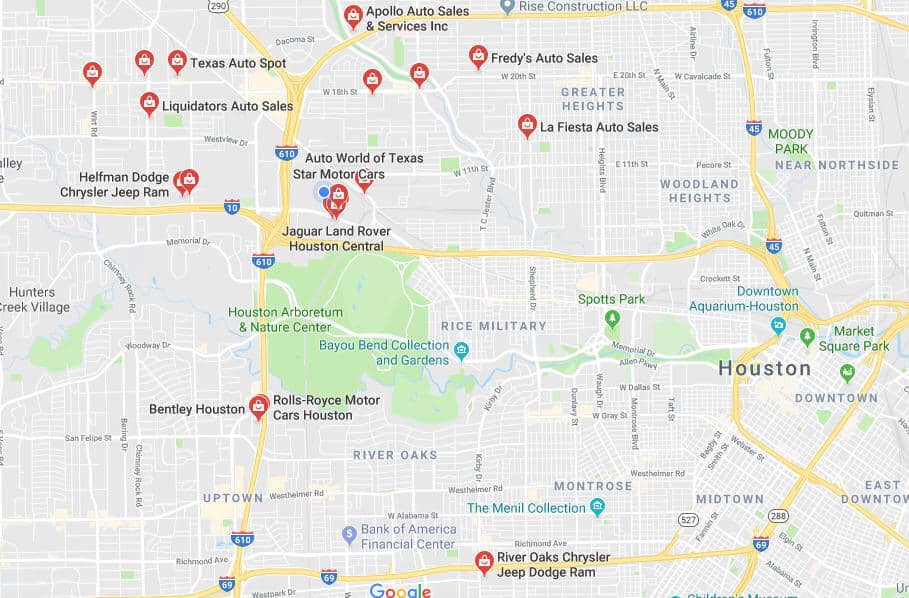
Local SEO for any company involves claiming and optimizing directory profiles like Google My Business.  There are hundreds of different directories available and, your company’s information must be consistent across them.  It’s a tedious process when done manually. Find a YEXT certified company (like MARION) to manage correcting your local listings.  Once these listings are claimed and updated with the correct business information, you can begin to market your cars, trucks, vans, tractors, mowers, or whatever type of dealership you have, within those directories.

**Check the accuracy of your local listings here**

Add the images, descriptions and prices of the vehicles to each directory.  Also include the offer you are promoting.  Consistent updates across all profiles with this information will bolster the traffic received from the internet.  This will require consistent management depending on how fast your vehicles sell.  Repurpose the same images, prices, descriptions and links to your website on your social media platforms.

If you don’t have the bandwidth to manage your own search engine optimization efforts, consider partnering with reputable SEO companies in your area.

Car Dealer PPC

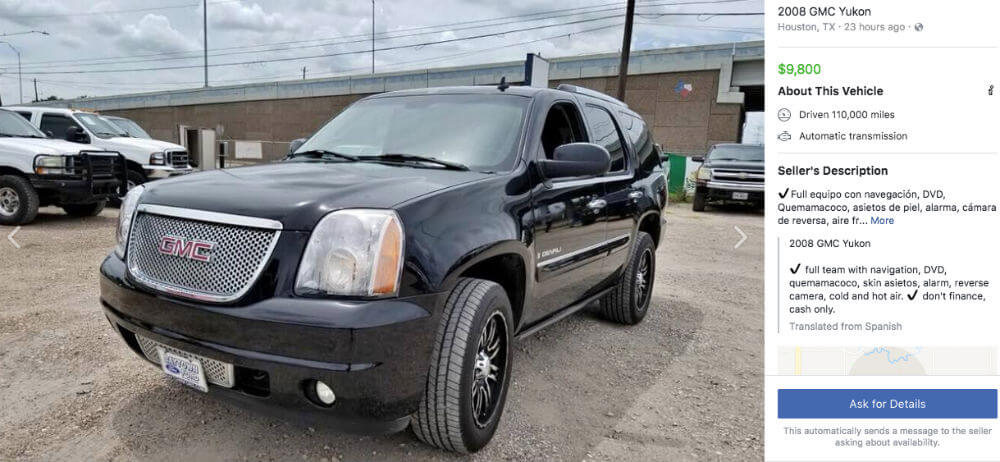
Paid search strategies for a dealership should be used to support the SEO and Social Media strategies that are in place.  Remember the “audiences” we established earlier in Google Analytics?  Using Google Ads, we can create promotions that target those audiences specifically.  For example, your dealership has GMC Yukon for sale on your website.  That website page gets found in a search by someone looking for a used GMC Yukon.  Once the user visited the webpage, they were added to the “audience” we created.  You create advertisements for a GMC Yukon that only display to that audience, so once the user has left your website, the ads will display to them.  This strategy is called remarketing and is proven to be extremely effective.  This can be done across websites that are in Google’s Display Network.

automotive digital marketing

Facebook and Instagram offer similar retargeting options.  Once the visitor leaves your website and begins swiping through their social media channels, your GMC Yukon ads will be displayed.

All of the platforms will charge you when someone clicks on the ads. Pay-per-click advertising is usually more targeted and costs less.

Review Your Current Auto Dealer Marketing Services

There are dealer marketing services that include an array of digital and traditional marketing strategies.  Which techniques you use will depend on the size of your dealership and the frequency at which you sell vehicles.  It also depends on resources and how fast you want to grow the dealership.

Billboards, direct mail and commercials can help market a dealership.  An aggressive digital marketing strategy for an auto dealer can prove to generate leads and potential buyers online. Any traditional marketing should be used to support the digital efforts.

If you represent a dealership and are looking for digital marketing techniques, try the strategies mentioned above for about six months and review your results.  Or, you can leverage the expertise and resources of a marketing agency to see faster results.

Contact MARION today for an analysis of your current automotive marketing strategy.

Marketing emails you’ll actually want to read.

Get marketing tips and news sent to 
your inbox.

This field is for validation purposes and should be left unchanged.
Name(Required)

How to Effectively Use Social Media Advertising for Your Business

Marketing strategies are a dime a dozen. Many of them can be effective if you implement them properly, but few are as effective and user-friendly as social media advertising.

With billions of users collectively using social media platforms such as Facebook, Instagram, Twitter, Snapchat, and more you would be crazy not to use social advertising to your advantage.

Why you should focus on advertising via social media

So, why advertise on social media in the first place? Advertising using social media can completely transform the face of your business.

Start social media advertising for your business! Texas-based businesses can schedule a free consultation with MARION to implement social media advertising and marketing into a comprehensive marketing strategy today!

Let’s consider a few reasons why you should use paid ads on social media to generate more leads for your business:

  • Some advertising channels will provide immediate results. However, these are often a one-off affair. Take influencer marketing for example in which you can yield high results quickly, but only for a single instance. Paid social media advertising will consistently deliver results consistently and affordably.
  • Many advertising channels require a significant amount of time before you can see any measurable results. Take content marketing for example. B2B content marketing takes quite a bit of time to pick up steam and you might not see results for weeks or even months. Social network marketing, if done right, can yield immediate results.
  • Knowing how to advertise on social media can make your life a lot easier because most online advertising platforms are intuitive. Take Facebook advertising for example. It’s incredibly simple to learn and you can set up an effective social media campaign in less than twenty minutes if you know what you’re doing.

The beauty of advertising through social media is that it can deliver immediate results. You can literally start an online business in a few hours and begin driving traffic to your site immediately.

That means social network advertising can facilitate consistent sales from day one. This is a massive advantage for e-commerce sites that lean heavily on social media marketing platforms such as Facebook advertising and pay per click services like Google Adwords.

best social media advertising for small business

Social media advertising effectiveness

If you don’t believe in the effectiveness of social media and advertising you just have to look at the numbers.

Facebook

Facebook is the most preferred social media platform for millennials, Gen Xers and baby boomers. Here are a few stats to digest:

Instagram

Facebook might be the most popular social media network out there, but that doesn’t mean Instagram isn’t slowly closing the gap. Instagram’s many updates include the addition of Instagram stories, Gifs, a new redesign and much more. Let’s look at a few Instagram stats.

  • 35% of Instagram users log into their Instagram accounts more than once a day. 51% of users open Instagram on a daily basis.
  • Instagram garners more engagement per post than any other social media platform — 54 times more than Pinterest, 84 times more than Twitter and 10 times more than Facebook.
  • In 2016 Instagram grew by 100 million users in only six months. This was also around the time the platform added Instagram stories.

Linkedin

Linkedin is the world’s largest professional network, and many businesses are just beginning to tap into the possibilities of using LinkedIn for B2B marketing. Here are a few stats.

  • Linkedin has more than 450 million
  • 94% OF B2B marketers use LinkedIn to distribute content.
  • In November 2017 US marketers were given a poll in which the results revealed that LinkedIn was the safest social ad platform for brands when it comes to being exposed to potentially damaging content such as fake news and divisive politics.

Let’s not forgot about the other major social media platforms such as Pinterest, Snapchat and Twitter. Each have equally astounding statistics that prove their effectiveness when it comes to social marketing advertising.

How do businesses use social media to advertise?

The best social media advertising gurus use a combination of tips and tricks to get the most out of their ad campaigns. If you’re going to invest your money in social media marketing you should focus on these six platforms:

  • Pinterest
  • Twitter
  • Instagram
  • Facebook
  • LinkedIn
  • Snapchat

Interested in learning more about how companies use social media to advertise and interact with their target audience? Download our ebook, and improve your social media management today!

New Call-to-action

Let’s examine how companies use social media to advertise.

Pinterest Advertising

You could easily draw comparisons between Pinterest and Instagram in that they’re both highly visual platforms. The primary difference is that Pinterest is more geared towards women. In fact, 81% of Pinterest users are female. Let’s look at a few advertising tips:

Be strategic with where you’re linking your pins

Each Pinterest pin can link back to a website of your choosing. Therefore, be strategic with your click-through link. Make sure your link sends users to relevant page that is capable of collecting their contact information.

Focus on trends

Pinterest is all about staying on top of the latest trends.  Follow what your competitors are doing. Look at the most recent trending posts. Identify the hottest products. Etc.

Be creative

Don’t forget — Pinterest users often view dozens if not hundreds of pins one after another every day. Think about what you can do to make your pin stand out. It’s all about grabbing their attention and not letting go.

Twitter Advertising

Twitter is often the preferred social media platform for those in the worlds of business and politics and has over 328 million monthly active users.

Twitter’s strong suit doesn’t lie in its advertising. Its greatest strength lies in its ability to grow organically. This is directly opposite to a Facebook fan page, for example, which typically takes money to grow quickly. E-commerce stores frequently use Twitter advertising to promote specific products for direct conversions and to build brand awareness.

Instagram advertising

Instagram is an image driven social media platform and is quickly becoming one of the more popular choices for younger Americans. Let’s look at a few techniques to advertise effectively on Instagram.

effectiveness of social media advertising

Don’t underestimate the power of hashtags

Hashtags have their uses on other platforms, but when it comes to Instagram, they’re a driving force so don’t underestimate their usefulness. Instagram does a fantastic job providing analytics for the number of users who use specific hashtags.

Avoid stock photos

Stock photos simply don’t work on Instagram. You’ll have to use a custom image of an actual photo for your advertising endeavors.

Use stunning images

Instagram’s is all about visual stimulation through images. That means you should focus your energy on posting very high-quality pictures that will draw the eye and captivate the attention of your audience.

Facebook advertising

When it comes to online advertising Facebook can’t be beat. Facebook has over 2 billion monthly users which means there’s enough room for everybody to get a piece of the pie. Let’s look at a few advanced tactics for Facebook advertising.

Test constantly!

Not every ad is going to work for you right away. In fact, some ads may not convert at all. Keep running and tweaking your ads. This includes changing the image, the copy, your target audience and so on until you start converting. The only way you lose is if you give up.

Don’t run the same ad to all your audiences

Each retargeting and prospecting ad you run should be unique in its own special way. You should create a new ad for each unique audience. Don’t expect one type of ad for a specific audience to yield the same kind of results for an entirely different audience.

Use emojis

Emojis have increased in popularity in Facebook advertising. Even big-name companies have begun to use emojis in their ad copy. Test, test, and test some more to see what works and what doesn’t. It’s all about resonating with your audience!

LinkedIn Advertising

LinkedIn is literally where the money is. 75% of LinkedIn users earn $50,000 per year or more. In terms of advertising, B2B services tend to do particularly well on this platform. Here are a few tips to advertise well on LinkedIn.

how to advertise on social media

Track ad performance constantly

You should always track ad performance no matter what social media platform you’re using. When it comes to LinkedIn, however, you should discontinue any ads that are performing under a 0.10% click-through rate (CTR). If your click-through rate is around 1% or higher scale up your budget.

Focus on the problems and challenges faced in the professional world

Since a good number of the users on LinkedIn are professionals in one field or another, you should focus on solving problems professionals face on a daily basis.

Target LinkedIn groups

LinkedIn groups are a powerful tool. This is where business owners and professionals congregate to discuss ideas and share information. Target these groups with your ads for better results.

Snapchat Advertising

Snapchat has one massive benefit that makes it invaluable for many businesses. More than 41% of all 18-34 year olds use Snapchat in the United States.

If you have a product or service that targets this demographic Snapchat is a necessity for your business.  However, when it comes to advertising, it can get expensive — extremely expensive.

Take Snap Ads for example, which are mobile, interactive video ads that can cost anywhere from $1,000 – $3,000 a month to run.

There are also Sponsored Lenses which allow businesses to deliver customer lenses their users can interact with. The cost for a sponsored lens can run anywhere from $450,000 – $700,000.

Snapchat Discover is another advertising option that allows businesses to push their story to the top of user feeds. This costs $50,000 a day.

Final thoughts on using social media to advertise your business

Figuring out how to successfully advertise on social media isn’t rocket science. It just takes the willingness to learn new platforms and plenty of experimentation. No other form of advertising can deliver quality leads with the speed and efficiency of social media marketing which makes it a necessity for your business in 2018 and beyond.

If you’re looking to take your social media marketing to the next level Marion offers world class social media marketing services for small to mid-sized businesses.

Contact MARION today for more information on how we can help your business thrive using social media marketing.

Marketing emails you’ll actually want to read.

Get marketing tips and news sent to 
your inbox.

This field is for validation purposes and should be left unchanged.
Name(Required)