Category: Digital Advertising

Advertising on Google vs. Facebook: What to Expect from Each Platform

The Google Ads vs. Facebook Ads debate has been raging since both titans began offering the option to advertise on their platforms.

The common belief has long been that brands must choose one over the other when plotting out their marketing goals. But the reality is that both platforms offer unique benefits, and the smartest tack you can take is to employ both to maximize brand awareness, boost conversions, and increase revenue.

This post will explain why there’s no need for a Facebook vs. Google marketing debate at all and how using both platforms in concert may deliver the best results.

Difference Between Both Ad Platforms: Google vs. Facebook

Even the most casual user can clearly see that there’s a stark difference between the two tech giants. For one thing, Google is a search engine, while Facebook is a social media platform.

How does this fundamental distinction affect the battle between Facebook ads vs. Google ads? Here are some key points.

Google Ads

Formerly known as Google AdWords, Google Ads is recognized around the globe as the most valuable and effective PPC ad platform. Paid searches on Google Ads work by using targeted keywords and text-based ads.

The basic idea is this: as a brand, you can increase visibility and harness lead generation by bidding on keywords. When your target audience searches for these keywords on Google, your ad will be displayed with the search results.

As a result, your ads may have the opportunity to appear in front of countless potential customers.

Facebook Ads

On the flip side, Facebook Ads functions as paid social, or the practice of paying for advertisements to be displayed on the world’s largest social media platform — and potentially reaching a segment of its nearly three billion monthly users.

When it comes to Facebook ads vs. Google ads, the two mediums may not seem all that different since both involve promoting brands and products online.

The biggest distinction is that Google shows users advertisements that align with their search queries, while Facebook features ads based on its users’ interests and online habits and behaviors.

Read now: How to Budget for Facebook Ads

Advantages of Google Ads

The advantages of leveraging Google Ads are innumerable.

Google’s Dominance as a Search Engine

To underscore Google’s true reach, consider the following eye-opening statistics:

  • 93.37% of all online searches are conducted via Google.
  • Google handles approximately 8.5 billion daily searches and manages 99,000 searches every second.

Together, this technology capability and worldwide reliance have the potential to place your advertisements in front of a huge portion of the population.

Google vs. Facebook ads

Google’s Auction Process is Quite Equitable

The bidding process at the crux of Google Ads isn’t as daunting as you might imagine. Here’s how it works:

  • Google’s algorithm prioritizes relevance in two primary ways: content and landing page experience. Consequently, larger companies don’t always outrank lesser-known brands, as the brand owner always maintains control over the quality of their content and the optimization of their landing page.
  • Google provides brands with a quality score, which enables you to assess and improve Google Ads click-through rates, keyword relevance, and user experience.

In other words, if your Google Ads campaign isn’t meeting your goals, it isn’t too difficult to enhance your landing page and ad content as needed.

Various Google Ad Platforms

Google offers many options for displaying your advertisements, including:

  • Search ads
  • Display ads
  • Video ads
  • Apps
  • Maps
  • Shopping

The broader your variety of ads, the greater your reach will be.

Advantages of Facebook (Meta) Ads

Facebook is the social platform of choice among 35–44-year-olds, the biggest spenders of all generations. This figure alone reveals the enormous advertising potential of Facebook Ads.

Let’s have a look at a few of its other key benefits.

Facebook Uses Detailed Interest and Demographic-Based Targeting

Seven in 10 American adults use Facebook, a statistic that stretches across all demographics, including age, income level, and geography.

With this audience comes detailed information about users’ preferences, interests, and behaviors, which can help you ensure that your ads are placed in front of the right people at the right time. In this way, Facebook ads are highly targeted.

“Lookalike” audiences are another stand-out feature that Facebook offers. It allows businesses to match their customer profiles with a wider audience with similar characteristics and interests. Doing so may enrich brand awareness and grow leads.

Facebook Ads Prioritizes Visual Ads

Nothing stimulates interest and spurs prospective consumers to action, like captivating images of your products or services. It’s a widely known fact that visual ads are substantially easier for the mind to process; they’re also more eye-catching and motivating.

Fortunately, Facebook is the perfect platform to showcase these images, along with more detailed videos. What’s more, Facebook ranks visual ads higher than text-based promotions.

Conclusion: Advertising on Google vs. Facebook — Which Platform Is Right for Your Business?

The short answer is both.

A multichannel approach to paid advertising may provide you with the broadest, most extensive reach and the best opportunity to entice new customers while reminding existing customers of your presence and quality.

To recap: Google Ads excels at furnishing searchers with relevant information that satisfies their queries. Facebook, meanwhile, appeals to particular user interests and behaviors, which could help you get your ad in front of your target audience.

Leverage the strengths of each platform, and you can not only meet but surpass your advertising goals.
Improve Your Paid Advertising Strategy with MARION

When it comes right down to it, there is no Google Ads vs. Facebook Ads competition. Both platforms complement one another brilliantly and may help you maximize conversions, boost sales, and increase visibility and engagement.

You could handle the many complex details of paid advertising yourself — or you can let the experts at MARION do the heavy lifting. As a full-service digital marketing agency, we offer the services you need to stand out in a hyper-competitive marketplace, from branding and design to digital marketing.

We take a comprehensive approach to marketing that blends creative prowess with raw data to strategize and execute campaigns that will strengthen and expand your business. And with over 40 years of experience, you can rest assured that you’ll be working with a team of proven experts.

Reach out today to propel your business toward a bigger, brighter future.

Marketing emails you’ll actually want to read.

Get marketing tips and news sent to 
your inbox.

This field is for validation purposes and should be left unchanged.
Name(Required)

What Is Social Media Management? [The Digital Marketer’s Guide]

With 4.76 billion people on social media — or more than half the global population — leveraging the medium in your digital marketing strategy is one of the golden tickets to a successful business. When used well, social media can encourage brand awareness, increase customer engagement, foster consumer loyalty, enable businesses to remain relevant, and much more.

However, a brand’s social media presence is only as strong as its social media management. This is an essential component of marketing that extends beyond content calendars and a streamlined publication schedule. It encompasses the entirety of a brand’s social presence and pays just as much attention to reputation management, data and analytics, SEO optimization, and other crucial areas.

This post seeks to answer an important question: “What is social media management?” With the basic practices outlined below, you can build a robust social media management strategy and dramatically improve your business outlook.

What Is Social Media Management?

Social media management uses data, insights, AI, and innovation to help a brand stand out on social media platforms. To expand brand awareness, generate leads, build credibility, and enhance connections with consumers, it concentrates on the following:

  • Posting content that aligns with your brand’s identity and message
  • Creating posts unique to different social platforms
  • Replying to comments and direct and private messages to ensure that consumers feel seen, heard, and understood
  • Managing your business’s overall character through social media monitoring, resolving issues that may impact your reputation, and practicing social listening
  • Tracking data and analytics to improve social media content and lead generation
  • Utilizing paid advertisements

Naturally, this isn’t an exhaustive list of what it entails. Each brand has unique social media account management needs, and yours can be tailored — and adjusted — to satisfy your objectives.

Social Media Management vs. Social Media Marketing

Social media management is often used interchangeably with social media marketing, but the two have distinct differences.

As discussed, social media management is the complete oversight of a business’s social presence. Social media marketing is the act of using social sites to accomplish the aims outlined in a social media management strategy. This includes creating and executing posts and ensuring consistency in voice and presentation.

what is social media management

Why Is Social Media Management Important to Your Digital Marketing Strategy?

The digital landscape is perpetually changing, and social media management is one of the keys to staying on top of it.

This process prioritizes consumer engagement, which affects everything from sales to customer retention. Furthermore, without social media content management, your brand’s image may be at risk, and a poor reputation can sink a brand swiftly — and sometimes irrevocably.

Long-Term Benefits

Well-executed social media management can also benefit your business in the long run by:

  • Strengthening brand visibility
  • Improving engagement rates and bolstering consumer loyalty
  • Boosting word-of-mouth referrals
  • Increasing revenue

It also subscribes to the tenet that what cannot be measured cannot be managed. The right social media manager will work toward reaping the most benefits from your social media campaigns.

What Is the Role of a Social Media Manager?

A social media manager oversees how a brand appears to the public on social media platforms. They handle many of the duties outlined above, as well as:

Additionally, social media managers are often responsible for running paid advertisements, a digital marketing staple that can increase website traffic and conversions.

What Makes a Successful Social Media Manager?

A social media manager can be enormously beneficial to a brand if they possess the following traits:

  • Excellent communication and writing skills
  • Outstanding creativity
  • Sound organizational and project management skills
  • Willingness to change and adopt the best, most current social media management trends

There may be someone on your team who has these characteristics in spades. However, brands save considerable time, money, and other resources by hiring a designated social media manager to handle the myriad and vital social media project management tasks. The last thing you want is to have one of your team members pulled in multiple directions and see their performance suffer. Their entire focus should be your social media management strategy.

Social Media Management: How to Get Started

In addition to finding and designating a solid social media manager, handling the many management tasks begins with getting to know your target audience exceedingly well. This might involve:

  • Identifying your audience’s key demographics
  • Implementing audience segmentation
  • Creating a buyer persona
  • Using Meta’s Lookalike feature to find audiences similar to your core demographic when conducting paid advertisements
social media management users

From here, you and your team can create social media content that will resonate with your target audience and propel them into action.

Choose the Correct Social Media Platforms for Your Brand

Not all social channels are created equal, and your target audience may favor one platform. Using the buyer persona you created, you can identify which platforms best suit your audience. For example:

Recognizing the social media platform that your audience uses the most can help ensure your posts and paid ads are seen by consumers who might convert.

Why You Should Hire a Social Media Management Agency

Social media account management is exceptionally comprehensive. It extends beyond merely responding to your followers or creating automated posts. Social media is often where consumers form their first impression of you. And remember: public perception of your brand is pivotal to your success.

Given how crucial it is, you should consider hiring a social media management agency. Why? Reputable social media management agencies are laser-focused on this public perception. They’re also filled with consummate professionals who have extensive experience in growing brands to their utmost potential.

MARION is one such agency. As a performance-driven, full-service marketing firm, we offer social media management for small and mid-sized B2B and B2C businesses to help you hone brand identity, boost visibility, attract new customers, and increase conversions. We’ll assign you a dedicated account manager so that all your social media marketing aims aren’t just met but are also executed with style, class, and perfection.

Allow us to be the first touchpoint with many of your existing and prospective consumers so that you can focus on fundamental business operations. Reach out to us today to learn more about our social media management services.

Marketing emails you’ll actually want to read.

Get marketing tips and news sent to 
your inbox.

This field is for validation purposes and should be left unchanged.
Name(Required)

Creating a Social Media Marketing Funnel that Converts

Within the past decade, social media has become the go-to place for people to socialize, find local entertainment, and discover new products to buy. Consider that the average user now spends nearly two and a half hours on various social media sites every day, and a lot of that time is spent shopping.

As social media has grown, so has social shopping. This means that businesses in every niche and of every size must now use social media to target an audience, drive interest in products and services, and convert them into customers.

While countless creative marketing strategies can help optimize your web presence, the social media marketing funnel should be at the top of your list.

This strategy is the one that can take your customer from the beginning of their social media journey to the end, with the goal of converting them into repeat customers and becoming advocates of your brand.

What Is a Social Media Marketing Funnel and Why Is It Important?

Before diving into a detailed social media funnel strategy, you should first understand what makes up the social media funnel.

What Is a Social Media Marketing Funnel?

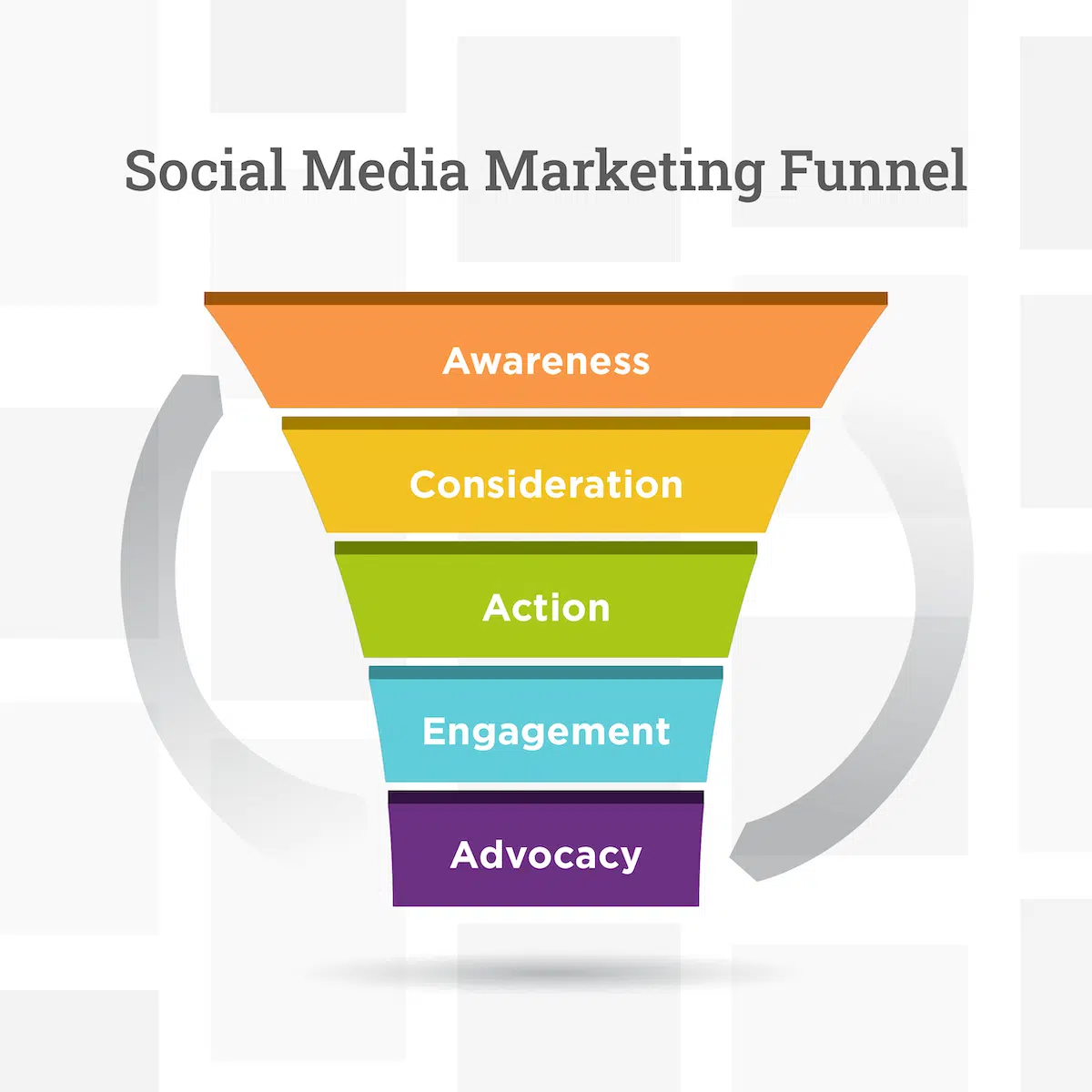
A social media funnel is a specific path your followers travel from the time they discover your brand on a social media platform to the time that they ultimately become fans and/or customers.

There are five stages in the social funnel system:

  1. Awareness
  2. Consideration
  3. Action
  4. Engagement
  5. Advocacy

Creating content that targets each stage is vital, as this is how you gain customer conversions and build brand loyalty.

How Is a Social Media Marketing Funnel Important in a Business’ Social Media Presence?

Social media can be a powerful tool for reaching your target audience, building brand awareness, and driving paid conversions. But if your social media strategy mostly consists of posting random content without a defined strategy, you won’t get the results you’re looking for.

That’s why the social media marketing funnel is key. In fact, a social media sales funnel is perhaps the single most important part of optimizing the social media presence of your business.

By using this digital content strategy, you’ll be able to tailor your content to meet the exact current needs of your audience while drastically increasing the likelihood of conversions. Not only does this create revenue and increase your ROI, but it also helps you build lasting relationships with your online customers.

What Are the 5 Stages of the Social Media Funnel?

Now that you understand why creating your marketing funnel is so important, it’s time to learn the specific stages and what you need to do within them.

Social_Media_Marketing_Funnel

1. Awareness

During this stage, social media users will have the opportunity to learn about your brand, your values, and your products. The awareness stage is when potential buyers evaluate your business to determine whether it aligns with their wants and needs.

This is not the point in the funnel to start pitching your products, however. Start with things that are more simple and offer users plenty of value to ensure that your brand sticks in their minds, and they’ll return later to learn more.

To do this, your content needs to be engaging and eye-catching. Regardless of the specific platform you’re using, begin by creating dazzling visuals. This is important because studies show that over 65% of people are predominantly visual learners.

Remember, visuals need to be more than just images — think photos, carousel posts, GIFs, illustrations, infographics, animations, memes, and videos. According to statistics, social media users will retain 95% of a message watched on video as opposed to only 10% when reading it in text.

2. Consideration

In this stage, leads should see your brand as a good fit for their needs. But it’s important to ensure that your brand stands out from similar businesses so leads remember you.

After reaching the right people in the awareness stage, you can interact with users who are now more likely to purchase from you.

During the consideration stage, users look for specific product information to decide whether your brand is a good fit for them. This stage also includes researching why your product is better than your competition’s.

To begin generating more leads, you want to provide details about what you’re selling. For best results, make it a point to share:

  • Explainer videos
  • Case studies
  • Guides
  • Product reviews
  • Influencer endorsements
  • Testimonials from happy customers

social marketing funnel

3. Action

This is where you want to get your social media audience to take action and become paying customers. When a user reaches this conversion stage, they already have a clear intent to purchase from you. And many will now transition from fans into customers if you direct them correctly.

One of the best social media funnel strategies in the action stage is to optimize each of your profiles with social shopping. By doing this, you make it possible for users to purchase from you without exiting the app.

Turn all your profiles into virtual storefronts, then make it easy for people to purchase your goods within the social media app. Start by:

  • Creating catalogs of your products
  • Including clickable links
  • Adding product stickers
  • Giving your followers exclusive promo codes and discounts

While you may be tempted to skip over the nurturing that needs to be done in the awareness and consideration stages, it will often result in a failure to convert your audience. It’s important to make your audience feel engaged with you before attempting to persuade them to buy.

Avoid jumping to the action stage without first building trust and awareness. Failure to do so will likely cause you to waste valuable time and money.

4. Engagement

The engagement stage is all about building long-term loyalty with customers after they’ve made a purchase from you through your social media sales funnel strategy.

This stage is essential for one simple reason: finding new customers will cost your business five times more than retaining existing ones. Because of this, you should never forget about your existing audience after they’ve made a purchase. Continue to nurture them and provide value in your content to make sure they won’t forget you.

It’s important to understand that your customer’s journey through the sales funnel isn’t linear. When you employ a solid social media funnel strategy, it’s more of a circular journey that they continue to travel with you.

One powerful strategy during the engagement stage is to provide customers with lead magnets. An example of a lead magnet would be offering an informative e-book to your social media customers in return for their email addresses.

5. Advocacy

Once you’ve gained a loyal following, you’ll certainly begin getting repeat buyers. But you should also encourage your customers to share positive recommendations about your brand with their friends, family, and social media followers.

It’s well-known that people trust word-of-mouth recommendations far more than marketing messages. That kind of enthusiasm is exactly what you need to engender during the advocacy stage.

To encourage advocacy, the first thing to do is give your buyers excellent customer service. Always focus on creating a positive experience for your customers that exceeds their expectations.

It’s also smart to incentivize advocacy by offering referral programs to customers who promote your brand to their social media followers.

social media funnel

Perfecting Your Social Funnel System

To increase brand awareness, drive engagement, and turn interested consumers into repeat customers, it’s critically important that you focus on each of the five steps of the social media funnel.

For best results, invest in each step equally rather than putting most of your time, effort, and money into only one or two areas. For example, you wouldn’t want to apply all your resources to the action stage. Your audience is smart enough to know when you’re trying to sell them something rather than offering a solution to their problem.

If your time and resources are limited, start at the beginning of the funnel and invest there to optimize your customers’ entire social media journey.

Start Building Innovative Social Media Campaigns with MARION Today!

So, you’re interested in building innovative and successful social media campaigns for your business — but where do you start?

MARION is a digital marketing agency that offers social media marketing in Houston and Austin, Texas. From creating compelling visuals to writing captivating copy, our experts can help you build campaigns that will engage your followers and grow your business.

Contact MARION today to schedule a free consultation!

Marketing emails you’ll actually want to read.

Get marketing tips and news sent to 
your inbox.

This field is for validation purposes and should be left unchanged.
Name(Required)

A Beginner’s Guide to PPC Campaign Management

So, you’re ready to launch a PPC digital marketing campaign. Great! But, where do you start? Pay-per-click — or PPC, for short — ads are a type of paid digital advertising option that allows you to hone in on your target audience. When used as a part of your overall digital marketing strategy, which can include search engine optimization (SEO)…

Which Online Marketing Strategy Has the Biggest Impact on ROI?            

Return on investment in digital marketing is an incredibly valuable business metric that should not be ignored. Several types of integrated marketing channels are available, from social media and email lists to paid ads and in-depth search engine optimization. In order to achieve consistent growth, companies must leverage these channels and follow the proper steps to maintain optimal return on investment.

But which marketing method has the highest impact on overall ROI? Let’s discuss.

What is Digital Marketing ROI?

In the world of digital marketing, Return on Investment (ROI) is known as the measure of profit or loss generated on your campaign efforts. A positive ROI essentially means that a campaign is making more money than what was spent—and vice versa for a negative ROI.

As a rule of thumb, digital marketers should aim for an average ROI of 5:1 — that’s $5 gained for every $1 spent on a marketing campaign.

And if this doesn’t satisfy you, set the bar a little higher! Exceptional marketing ROI is considered 10:1 or higher. It will likely require more resources and knowledge to achieve this goal, but it is possible, nonetheless. On the other hand, ROI below 2:1 is non-profitable and is indicative that your marketing strategy needs some work.

Why Measure ROI in Marketing?

Measuring ROI is critical in digital marketing to determine the success of your campaigns. Otherwise, you would be marketing “blind” and potentially wasting your budget. Obviously, ROI will vary depending on the campaign type and other contributing factors. But by analyzing the results, you will be able to confidently take actionable steps toward improvement. The more familiar you are with marketing ROI, the better your campaigns will perform. In this article, we will discuss which online marketing campaigns have the highest ROI so that you can plan your marketing strategy accordingly.

How To Calculate ROI in Marketing

Calculating ROI values in digital marketing is simple. A basic ROI formula would look something like this:

roi formula

Which Digital Marketing Strategy Has the Best ROI (1)

Top 4 Digital Marketing Strategies for Success

Now that we’ve explained what digital marketing ROI is and how to calculate it, let’s explore a few different campaign strategies that are known for their positive ROI. We’ll explain the pros and cons of each to ultimately decide which strategy offers the best revenue return.

  1. Search Engine Optimization (SEO)
  2. Email Marketing
  3. Social Media Marketing (SMM)
  4. Pay-per-Click (PPC)

1. Search Engine Optimization

Search engine optimization, or SEO, is one of the most successful and widely used digital marketing strategies for growth. When properly executed, SEO marketing can deliver impressive results at a very low cost.

SEO marketing has an average ROI of 22:1 — that’s 2,200 percent!

Effective SEO can give businesses huge opportunities for driving traffic to their website. Plus, the results are long-term. Your site has the potential to continually grow in rankings over the years, delivering positive ROI with little to no effort on your end. For these reasons and more, SEO remains one of the top online marketing strategies for ROI.

2. Email Marketing

Email marketing is reported as one of the highest ROI digital marketing strategies. It’s a well-known method that requires some initial investment but has high success when it comes to exposing your brand to customers.

Email marketing has an average ROI of 42:1 — that’s 4,200 percent!

So, in theory, for every $1 spent on email marketing, you’ll make $42 in return. It’s no wonder why this method is so popular amongst digital marketers. Creating contact lists and sending out emails is relatively cost- and time-effective when compared to other campaign methods. Also, campaign effeteness will only increase as you expand your audience and grow your email list. In addition, email marketing can be used in conjunction with other online marketing strategies for maximum effectiveness.

The primary drawback of email marketing is the fact that it requires having access to a substantial database of customer emails. Tips for building a sizable contact list include using subscription incentives, sign-up lists, and giving customers the ability to create on-site accounts. Follow these steps, and in time, you can expect results and substantial business growth.

If you are going to run an email campaign, you should consider measuring these metrics when calculating your digital marketing ROI:

  • Open rate
  • Conversions
  • Click-through rate (CTR)
  • Unsubscribe rate
  • Bounce rate
  • Leads acquired

3. Social Media Marketing

Social media marketing is another effective marketing channel that doesn’t require a huge budget or amount of time to succeed. Depending on the extent of your campaign, you can spend hundreds or thousands of dollars per month.

Social media marketing offers several valuable benefits that affect ROI, including:

  • Helps customers discover new products
  • Sparks positive interactions with consumers
  • Provides customer service and engages with followers
  • Increases brand traffic and obtains new customers
  • Contributes to overall marketing strategy

Measuring social media ROI is a bit more complex than measuring the results you’ll get from other types of digital marketing tactics. In social media marketing, you can determine campaign effectiveness by measuring specific metrics. Below we listed the top metrics marketers use to measure the ROI of social media campaigns.

  • Engagement rates
  • Click-through rate (CTR)
  • Clicks
  • Conversions
  • Leads acquired
  • New followers

4. PPC Marketing

When done right, PPC services will generate a positive ROI in digital marketing.

Return on ad spend (ROAS) is much simpler to calculate than the overall ROI for PPC campaigns. The formula is essentially the same as the ROI formula we mentioned previously; it just replaces “marketing” with “PPC.”

ROAS FORMULA

This value, however, does not factor in all costs—just the cost of the paid ads. If you want a more precise estimate of your PPC campaign’s profitability, you’ll want to factor in some additional costs, such as:

  • technology & equipment
  • credit card processing fees
  • fulfillment
  • employee salaries

Unlike SEO marketing, PPC advertising is not long-term; once you turn the ads off, the campaign is over. The only lasting value is the sales from the ads while they were still active.

Which Digital Marketing Strategy Has the Best ROI?

In conclusion, SEO and email marketing have the best reputation when it comes to ROI. However, keep in mind that PPC and social media marketing are also known to achieve positive ROI.

Now, it’s up to you to maximize the ROI of your online marketing campaign. Will you choose email marketing, PPC, SEO, SMM, or perhaps a combination? Be sure to consider your company, budget, and individual marketing style before making this decision.

roi marketing

Improve Your Marketing ROI With MARION Today

If your company is looking to optimize your digital marketing ROI, MARION is happy to help! We are a marketing agency in Texas with decades of experience delivering strategic search engine optimization, PPC services, and various marketing campaigns.

Contact our team of experts today and find out how we can help you get started with your online marketing strategy.

Marketing emails you’ll actually want to read.

Get marketing tips and news sent to 
your inbox.
This field is for validation purposes and should be left unchanged.
Name(Required)

Boost Conversions with Multivariate Testing for Digital Marketing

Multivariate testing helps businesses to make the most of each and every one of their website’s visitors by improving conversion rates by testing different web elements. In this article, we break down how to use digital marketing testing techniques to boost conversions and improve your digital strategy. 

What Is Multivariate Testing in Digital Marketing?

Multivariate testing is a technique used in digital marketing for testing different variables on a webpage to find the most effective combination. Elements such as images, copy, font or color can all be tested concurrently on audiences to determine which combination yields the highest results, such as click through rate or open rate.

In addition to web pages, multivariate testing is often used for other marketing channels such as PPC ads, social media marketing, email marketing and more. Regardless of the type of digital marketing campaign, the ultimate goal of multivariate testing is to help determine which variation is most successful out of all of the possible combinations.

A/B testing in digital marketing

Multivariate vs. A/B Testing in Digital Marketing

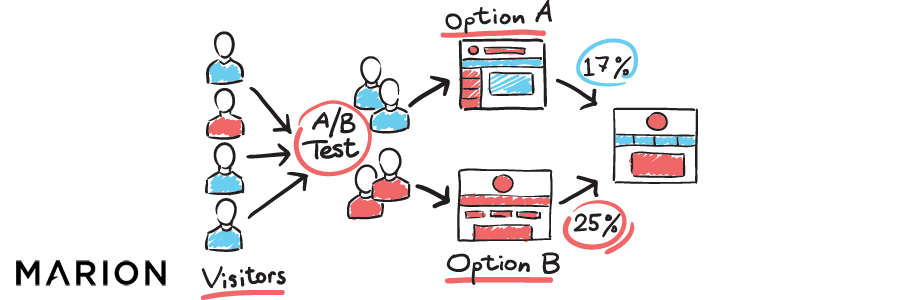
Multivariate testing and A/B testing are very similar. The only difference lies in the fact that multivariate tests involve testing the effects of changing more than one variable on your site, whereas an A/B test strictly tests the effect of changing only one variable. It’s common for both techniques to be used in UX design and web design strategies.

A/B testing, also referred to as split testing, is an approach to website optimization in which live traffic is used to simultaneously test two versions of a page to determine which version performs the best. In this method, site visitors are randomly sent to either version A or version B of a page, and their interactions are simultaneously tracked. A marketer will quickly be able to decide which version is most effective by seeing which page achieved the highest conversion rates.

Multivariate testing uses all these same core mechanisms, but compares several variables at once, therefore revealing more valuable information about how certain elements interact with one another. Data from each combination is compared to determine the most successful design, as well as reveal which components have the greatest impact on a visitor’s interaction.

Time and Traffic Requirements

The biggest difference between multivariate and A/B testing is the amount of traffic and time required to see results. Since you are only testing two versions with the A/B method, you’ll need a smaller amount of visitors before you start seeing results.

Meanwhile, the multivariate tactic needs several different versions to be tested, requiring a much larger number of visitors before obtaining accurate results. If you have a minimal amount of traffic, this system can take quite a while. However, if you’ve spent time building an online presence and your website has a high number of visitors per day, multivariate testing will be a quick and easy process.

A major benefit of multivariate testing on your website is that a winning variation could improve your marketing KPIs by leaps and bounds, while A/B testing usually delivers marginal improvements. This means that multivariate testing marketing elements on your site can accelerate your timeline for meeting marketing goals and objectives.

multivariate testing in digital marketing

How Does Multivariate Web Testing Work?

In multivariate testing, web analytics are used to determine the best combination of elements to maximize results. Here are the steps you should take when using multivariate testing for your business:

1. Determine Potential Pitfalls & Areas for Improvement on Your Website

Take an unbiased look at your site as if you were a potential customer. Go through the buyer’s journey and make notes of bad UX design examples, potential pitfalls and/or potential areas for improvement. Identify any problems that a visitor may come across when browsing your site.

2. Formulate a Hypothesis

With the notes you took in step one, think of ways in which you can solve the problems. For example, are visitors potentially deterred from submitting a form because the form isn’t visible enough? Maybe it’s placed below the fold and needs to be moved higher up the page, or maybe it doesn’t stand out enough, so visitors tend to gloss over it without taking any notice.

You can then hypothesize that moving the form up the page, and/or making it stand out more from the content would increase form submissions on the page. 

3. Create Variations

Once you know what different elements you need to test and what changes you need to make to test out your hypothesis, you can then create the different variables to test. Consider changing the text, location, size, font, color, images and other elements to make your call-to-action more noticeable and enticing.

multivariate web testing

If you’re not an expert at making website edits, don’t worry! Our experienced digital team offers Dallas, Houston, and Austin web design help to Texas businesses.

4. Determine Your Sample Size

It’s almost time to start driving traffic to your pages, but first you need to determine your sample size. How many visitors will each page need to generate before you can draw conclusions about your tests’ findings?

5. Test Your Tools

Test everything on your site before you start running tests, just to be on the safe side. Ensure that all links are correct, CTA buttons are working properly as well as any other important aspect of your campaign.

6. Start Driving Traffic

Now that you’ve completed your variations and know exactly how much traffic you need, it’s time to start running traffic to them. A downside to multivariate tests is the massive amount of traffic needed before seeing results, so you’ll have to be patient.

If you’re located in Texas, partnering with a Dallas, Houston, or Austin SEO agency can help build a strategy that attracts plenty of relevant users to your website.

7. Analyze and Learn from Your Results

Each of your tests can be used to learn something valuable about your pages and visitors. You can use this information to make changes and even for future tests.


3 Examples of Multivariate Experimental Design

When using multivariate testing, you can change several different design elements such as headlines, clickable links, and image placement. There’s no limit to the number of variations you can run. Let’s look at some examples of multivariate experimenting in digital marketing.

1. Example of Multivariate Testing Email Marketing

In multivariate testing, marketing specialists can experiment with different elements of their email marketing strategy in order to see which method gets the most attention from their audience. You can test several variables such as subject line, from name, content, phrasing, send time and more.

multivariate testing email marketing

Source: Campaign Monitor

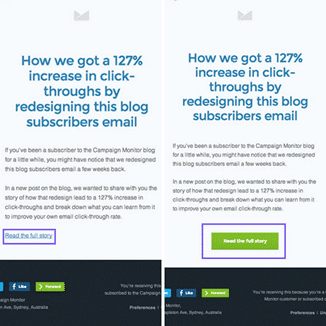
In the above email, Campaign Monitor tested which call to action readers preferred: link text or a button. After testing these two variations, results showed that there was a 28% increase in click-throughs on the email with a button CTA.

Here are a few ideas to consider for multivariate testing in your email marketing campaigns:

  • Are subscribers more responsive to emails with your company name in the subject line?
  • Will including images increase engagement?
  • Are your subscribers more likely to click linked text or a linked image?
  • Will newsletters with colored text increase click rate?

If you want help with professional web design in Houston, Austin, or Dallas/Fort Worth, our experienced team is ready to assist your Texas-based business!

2. Example of Multivariate Landing Page Testing

Multivariate testing allows you to develop high-converting landing pages by experimenting with the performance of different variables. Never underestimate the importance of landing pages—they’re what turns a visitor into a prospect and a prospect into a conversion.

With multivariate testing, a website’s landing page will be split into several slightly different versions to be randomly assigned to your site’s visitors. Each version’s success will be tracked, ultimately showing you the best way to run your site.

multivariate experimental design on landing pages

Source: Leadpages

Your landing page copywriting is key to persuading your audience to take action. Consider testing different lengths and tones and sentiments.

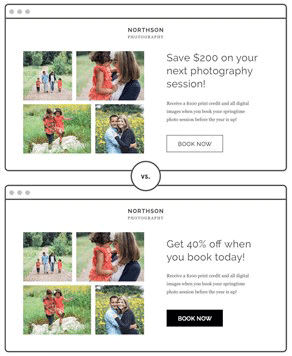
In this example, both landing pages’ headlines present the same offer while using unique language. The only way to know which one is better is by testing it.

3. Example of Digital Content Testing on Social Media

When testing your digital content strategy on social media channels, the goal is to determine which combinations are well-received by your audience. Consider these key metrics for social media marketing when running multivariate tests:

  • Engagement: Which version results in more likes, comments, shares, or clicks?
  • Impressions: Which version reaches the largest number of people?
  • Traffic: Which version drives the most visitors to your site?
digital marketing testing techniques

Source: Sprout Social

In this example, Entrepreneur is testing both the title copy and featured image. Note that the caption, subtext and link all remain the same. The goal of a test like this is to understand which combination will get the most clicks.

Here are a few other multivariable testing ideas worth trying:

  • GIFs vs. static images
  • Use the same content with different audiences
  • Change the tone of voice
  • Experiment with different CTA buttons
  • Incorporating videos vs. images

While testing content changes on your website, keep in mind that your page copy has an effect on maintaining an SEO-friendly website design. If you’re based in East Texas, an Austin, Dallas, or Houston SEO company can help reconcile your verbiage changes with your ongoing strategy.

MARION Can Help Your Business Create High-Performance Digital Marketing Assets

Multivariate testing can be a powerful optimization method, regardless of your business. It’s a sure-fire way to drive traffic to your website and improve customer experience. Not quite ready to take on multivariate testing on your own? We’re here to help! MARION is a Texas-based digital marketing agency that offers traditional and internet marketing services.

Marketing emails you’ll actually want to read.

Get marketing tips and news sent to 
your inbox.

This field is for validation purposes and should be left unchanged.
Name(Required)

Broad Match Modified (BMM) Keywords Are Being Merged with Phrase Match in Google Ads

Google Ads is making another change to the functionality of their keyword match types for Search ads. As of February 2021, phrase match keywords will absorb most behaviors of broad match modified (BMM) keywords for search campaigns.

Google purports that this change is an effort to “make it easier to reach relevant customers.” However, the full impact of this change has yet to be seen and could be considered a highly subjective matter.

You may not necessarily understand how this change impacts your Google Ads campaigns, as long as you continue to get good results. We’ll dive a bit deeper into what this keyword match type change means for your business, and what could come next.

Why Is Google Merging Broad Match Modified Keywords with Phrase Match?

There have been several keyword match type changes over the past decade that have impacted search campaigns in Google Ads. Consider the following important match type updates since 2014.

  • September 2014 – Google announced on the Google Inside AdWords blog that close variant keyword matching would be applied to exact and phrase match keywords. Advertisers would automatically start paying for things like plural or misspelled versions of your keywords without you needing to specify.
  • March 2017 – Google started ignoring function words (like “to,” “for,” “in,” “from”) if their system determined they were not important to meaning. The 2017 close variant announcement in the Google Inside AdWords blog also mentioned that exact match keywords would start matching user searches in different orders if the meaning was deemed to be the same.
  • September 2018 – Google announced their update to match “close variations that share the same meaning as your keyword,” through the Google Ads Help center. This change was meant to match implied words, words with the same intent, and paraphrased matches for exact match keywords.
  • July 2019 – Google announced on the Google Ads Help forum that BMM and phrase match keywords would start matching for words they perceived to have the same meaning. This equates to a search like “lawn mowing” to match a “grass cutting” phrase match or BMM keyword.
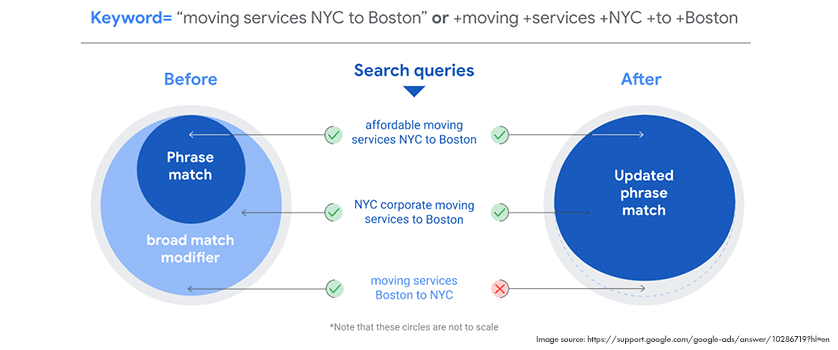
  • February 2021 – In the latest update, Google has announced changes to the phrase match and broad match modified keywords. In a manner of speaking, the broad match modifier keyword (a broad match keyword with a plus sign in front of it indicating close requirement) will now function as a phrase match keyword, and in July 2021 you will no longer be able to create BMM keywords.

So, why is Google Ads implementing this change to BMM and phrase match keyword types?

Pros of the BMM/Phrase Match Change

Some of the gradual changes above help advertisers attract relevant potential customers to their sites that they may have otherwise missed.

Years ago, advertising for the exact match keyword [running shoes] would have missed user searches for “running shoe,” “jogging shoes,” or “running footwear.” Now, a business can attract all these variations with the original [running shoes] exact match keyword.

Aside from exact match keywords, even the July 2019 update made it better for phrase and BMM keyword replacements when it makes sense. For example, a single BMM keyword for +lawn +mowing could now be triggered for a user search for “grass cutting.” In general, these people probably have similar potential to become a customer.

Cons of the BMM/Phrase Match Change

 These changes are dangerous to advanced advertisers. For example, after years of research and advertising, you may have determined that a customer that found your business by searching “lawn mowing” had a higher lifetime value than someone who found you by searching “grass cutting.” Different language carries different value perceptions, after all.

You may have created an entire Ad Group around lawn mowing that includes specific ad verbiage and landing page phrasing to capitalize on this nuance. Every time Google sends a “grass cutting” searcher to your “lawn mowing” ad, value is lost in the process and you spend ad dollars on less valuable customers at a higher cost-per-click since this mismatch could affect your quality scores.

Long story short – the BMM and phrase match combination eliminates another layer of control from savvy advertisers.

An analogy would be like taking your significant other out for ice cream. You order a medium butter pecan cone and a medium chocolate chunk. The cashier says your total comes to $12.99. You hand them a $20 bill… they keep the change and hand you back two medium chocolate sugar cones. While you did technically get ice cream, a LOT of liberties were taken here.

As advertisers, we can mitigate a lot of these liberties by being very diligent with our negative keyword lists, but that involves even more time and energy.

New BMM/Phrase Match Examples

In their announcement article, Google included a visual with some search query examples of keyword matching before and after the BMM/phrase match combination.

details of broad match modified (bmm) phrase match keyword change 2021

As a business that enjoys the benefits of Dallas, Austin, or Houston PPC management, you may not be interested in the specifics of this change. At the end of the day, there are still ways to get great results for your campaigns. Things like negative keyword lists and PPC audience targeting can elevate your results without changing your budget.

Let MARION Handle the PPC Details for Your Business

You’ve got a business to run and keeping up with the seemingly endless changes to Google Ads and inbound marketing can be exhausting. Our Texas marketing agency has been serving the community for 40 years, and we’ve evolved with the times to offer effective Houston, Dallas, and Austin PPC management for your business.

Contact us online today to schedule a free marketing consultation! If you have any doubts, check out this digital marketing case study to see how we’ve helped businesses like yours thrive in today’s competitive climate.

Marketing emails you’ll actually want to read.

Get marketing tips and news sent to 
your inbox.

This field is for validation purposes and should be left unchanged.
Name(Required)

How to Budget for Facebook Ads That Work

Facebook is the most popular social media platform in the world, with over 2.7 billion active users every day. When done the right way, advertising your local business on Facebook can quickly grow your audience and increase revenue.

In this article, we’ll teach you how Facebook ads work and how to run a successful campaign on a small business budget.

How Much Do Facebook Ads Cost?

Many small business owners struggle with figuring out how much to spend on Facebook ads, but in reality, these ads can cost as little as one dollar per day.

One of the most convenient parts about using Facebook ads is that you can choose how much you want to spend. Facebook will then take that amount and work to get you the best results possible. You can invest as little as $5 a week or as much as $50,000.

The good part about this approach to advertising using social media is that the time and knowledge barriers to entry are very low. You don’t have to be an expert in Facebook advertising to begin. The bad part is that you have little context about how your ad money is being spent. It’s kind of like a used car salesperson asking you how much money you have to your name after you ask them how much a particular car costs.

Your Facebook minimum campaign budget will depend on a variety of factors we’ll discuss below.

Minimum Budget for Facebook Ads

If you have a small- to mid-sized business or are new to Facebook ads, give yourself a budget of around $1.00-$3.50/day for your first few campaigns. Starting off with a low daily budget will allow you to see which ads are most effective, and you can later adjust your budget if needed.

When it comes to small businesses, organic social media posts reach only about 6% of their followers. It would be more beneficial to post occasionally with a small paid budget and ensure your content is reaching potential customers in addition to current followers.

How to Calculate the Best Facebook Ad Budget for a Small Business

how much to spend on Facebook ads

Before isolating your Facebook Ad budget, ask yourself – how much should a business spend on marketing?

Typically, businesses should allocate 5-12% of their revenue for their marketing budget. New companies that want to grow aggressively should spend closer to 12%, while companies that want to maintain their growth might spend only 5%.

Whatever your overall marketing budget, you may want to allocate around 17% to run a successful social media marketing campaign.

How to Run Affordable Facebook Advertising

Many small business owners struggle with advertising because they don’t know how to budget for Facebook ads. According to a new survey, 62% of small businesses feel like their paid Facebook Ads are failing.

how Facebook ads work

Small businesses often experience challenges such as low marketing allowance and even budget cuts. However, just because your business’ marketing budget has been cut doesn’t mean you have to stop advertising.

If you target the right audience with the right content and invest wisely, you should achieve a positive return on investment.

1. Establish Your Facebook Ads Budget

The first step to advertising on Facebook is establishing your budget. There are two types of budgets on Facebook:

  • Daily Budget – This is the average amount you want to spend on an ad each day. For example, if you set your daily budget to $10 over the course of four days, you will be charged up to $40 total.
  • Total Budget – This is the maximum amount you want to spend on an ad until it stops running. For example, if you set your total budget to $20, you’ll be charged no more than $20.

To preserve your budget, we recommend using the Lifetime Budget feature on your ads. This tool allows you to set a specific dollar amount you want to spend over the lifetime of an ad.

To determine the best budget for Facebook ads, you will need to consider a few factors, including your revenue, how aggressive you want to grow, and how much time you can commit to advertising. All of these should be taken into consideration when planning your Facebook ads budget.

Distribute Budget Across Different Ad Types

how much is it to run Facebook ads

It’s important to distribute your Facebook ad spend across different types of Facebook ads. Here are the three main types of Facebook ads you should be using:

  1. Offer Promotion – 60% of your Facebook advertising budget should focus on directly promoting your product or service. You need content-focused ads to get clicks and generate leads.
  2. Audience Building – 20% of your budget should focus on engagement, education, and audience building. This will help you establish an audience that you can continually target over time.
  3. Retargeting – 20% of your Facebook ad spending should be used for retargeting ads. When a potential customer visits your website, tracking cookies will follow them across the internet so that they will continually see your ad on other websites. Facebook is great for retargeting so it’s important to allocate a chunk of your budget for this method.

By splitting your ad budget across these three ad types, you will ultimately get the biggest bang for your buck.

digital marketing packages and pricing

2. Determine the Right Audience

Billions of people use Facebook every day, and your target customers are among them. Narrowing down your audience will help to reach the right buyers and grow your business.

If your audience is too wide, your ads won’t convert and you’ll just be wasting money. Determine who your ideal audience is by paying attention to your current customers’ unique behaviors and interests.

Once you figure out who your potential customers are, you can work on creating content that will resonate specifically with them. Knowing your customers and followers also allows you to create more personalized ad content. Studies show that 71% of consumers prefer personalized ads.

3. Create Effective Ads

When you know who you are trying to reach it’s much easier to create effective ads. Tailoring your content to your target customers’ interests will help you make the most of your small business budget.

The types of ads you run should reflect your business goals. Here are some common goals for small business owners:

  • Generate business leads and attract new customers
  • Build brand awareness
  • Increase new customer calls
  • Improve customer retention
  • Increase website traffic

4. Boost Engaging Posts

One of the cheapest ways to advertise on Facebook is by boosting posts. The boost feature allows you to widen the audience of a post exponentially, targeting relevant users. This tool is great for small businesses because it’s affordable and effective.

Facebook advertising budget for small business

Boosting engaging posts will increase your brand’s visibility and can even help combat algorithm changes. The amount you spend on boosting will be determined by the number of posts you want to boost, the posts’ performance and duration.

However, it’s important to pay attention to which posts you’re boosting. Paying to boost random posts just because it’s quick and easy isn’t the best strategy. Take the time to analyze your content and predict how it will be perceived by a new audience.

5. Identify Effective Ads & Focus on What Works

Once you’ve run a few campaigns, take some time to evaluate and determine which ads and boosted posts achieved the best results. Knowing which ads received the highest engagement will help you decide where to put your future efforts when it comes to creating content. You may even decide to increase your marketing budget.

MARION Can Help Make the Most of Your Small Business Budget

Just because your marketing budget is small doesn’t mean your results have to be. With the right marketing plan, Facebook ads can help you reach new customers and grow your audience while keeping costs low.

MARION is a full-service marketing agency in Texas that has been helping small businesses advertise big since 1981. Our social media marketing strategists in Houston, Austin, and DFW are experienced in working with small- to mid-market marketing budgets.

Marketing emails you’ll actually want to read.

Get marketing tips and news sent to 
your inbox.

This field is for validation purposes and should be left unchanged.
Name(Required)

How to Advertise a Small Local Business

Many B2C and B2B marketing strategies are focused on the local community and facilitate meaningful business growth. Depending on the size of your town or city, this can lead to stiff competition. However, learning how to advertise a small business locally is something a resilient entrepreneur like yourself is fully capable of.

This article will help you learn how to advertise your local business in a tactful and sustainable way.

7 Best Ways to Advertise Your Small Local Business  

As a small business owner, your chief marketing goal is probably to get more customers. Local advertising allows you to reach customers online when they’re searching for products or services in your area.

Make the most of your business marketing budget with these 7 local advertising strategies suited for small businesses.

  1. Local Social Media Marketing
  2. Local SEO
  3. Location-specific Landing Pages
  4. Paid Local Directories
  5. Local Influencer Partnerships
  6. Local Event Sponsorships
  7. Co-marketing with Relevant Local Businesses

Using a combination of several or all these local business advertising methods can help position your company as a leader in your community.

1. Local Social Media Marketing 

Advertising your business on social media is a golden opportunity to engage with your target audience and reach potential customers.

how to advertise small local business - social media

However, before you rush to create a profile on every social media platform in existence, it’s important to understand your target audience. When brands offer content curated to their audience’s needs, individuals will feel more connected to the brand. 

A recent study shows that 79% of marketers have used social media to increase traffic to their websites. While there are several reasons why small businesses need social media to win, it’s critical to make informed decisions before spending your hard-earned money. When deciding which social media platform to advertise with, it’s important to consider these factors: 

  • Where is your target audience most concentrated?  
  • Where is your target audience most accessible?  
  • Where does your target audience most actively engage with ads?  
  • How much time you must devote to your social media marketing strategy?

Reach out to MARION for expert help with social media marketing in your community.

 2. Local SEO  

If you have a local business, optimizing your website is also about making sure people can find you in real life. Local search engine optimization is all about targeting an audience that is in the same geographical area as you. 

Local SEO is an incredibly effective way to advertise your website locally, as it allows businesses to promote their products and services to local customers at the exact time they’re looking for them online. Don’t hesitate to get help from a local SEO company if you’re interested in long term growth.

Here are a few examples of Google searches with local intent: 

  • Composting drop-off near me
  • Plumbers in Houston
  • Houston sign companies

Essentially, local SEO is a strategic process that focuses on the optimization efforts of local businesses. MARION offers local SEO in Houston, Austin, Dallas, and Greater Texas if you’re in need of a helping hand.

3. Location-specific Landing Pages  

Having a location-specific landing page on your website that represents each of your stores is the first step to increasing brand visibility. 

how can I promote my business locally - landing page

A local landing page is any web page that your site visitors hit when they first arrive at your website. When optimized correctly, these local pages can even help you to show up for local searches. They are important for brick-and-mortar stores with multiple locations, or for service-based businesses that want to inform their consumers about the range of local areas they serve.

To take advantage of location landing pages and boost mobile visibility, your main website must be mobile-optimized and include a landing page for each location. To increase your chances of success, learn how to create landing pages that convert before you roll out any local pages.


4. Paid Local Directories

Customers need a way to find your business online. Many business owners know about online business directories but don’t realize how advantageous they are for advertising small businesses locally. 

Paid local directories are one of the best tools for bringing in new customers. Local directories list important information about your business including location, hours, and contact information along with pictures, reviews, and other relevant information. These listings pop up as organic search results on Google and other search engines.  

Getting listed on local directories is a great way to advertise your small business locally as it allows potential customers to discover you when searching for the services, categories, and amenities you provide. 

Here is a list of local business directories with great reputations:  

  • Google My Business  
  • Yelp 
  • Angie’s List
  • Houzz 
  • HomeAdvisor

If your competitors are listed on specific directories, you should consider listing with them as well. 

5. Local Influencer Partnerships  

When a close friend recommends their new favorite restaurant to you, chances are you’ll be enticed to stop by. Social media influencers have the same ability to do this but on a much larger scale. 

how to advertise a small business locally - influencer

Partnering up with local influencers is one of the best ways to advertise small local businesses. Not only do influencers have large social media followings, but most of their followers often live in the same area.

Influencers, especially local micro-influencers, have extremely high engagement rates with their followers and their audiences often trust their recommendations. The stronger relationship an influencer has with their audience, the more likely he or she can successfully promote your business locally.  

6. Local Event Sponsorships  

Whether you’re involved with a local charity drive or Little League tournament, the right event has the potential to attract highly interested customers.   

What is a local event sponsorship? An event sponsor is a company or business that supports an event, usually by providing funds or products, in exchange for something valuable. Whether it’s increased brand exposure, speaking opportunities at the event, or a chance to show off your product, event sponsorships are key to advertising local small businesses.

In addition, strengthening your business image is one of the most valuable benefits of event sponsorship. Customers love brands that care about spreading positive messages and helping the community. Virtuous local sponsorships can attract positive attention and support from the community and can be a cornerstone in your brand development strategy

7. Co-marketing With Relevant Local Businesses 

Co-marketing involves two or more businesses working together to reap the benefits of their combined marketing efforts. 

best way to advertise local small business - co-marketing

The most common way to co-market is for two complementary or supplementary companies with similar audiences to work together on a campaign and promote it to both audiences. When small local businesses combine their resources, skills, and ideas to create a powerful campaign, they can reach a much wider audience than each of them could ever achieve on their own. 

Each company in the partnership can reach outside their usual market to attract new customers. Even if people are unfamiliar with one business, it is granted credibility by its relationship with its partner.  

Here are a few ways to co-market your business locally: 

  • Blog posts
  • Email blasts
  • Webinars
  • Events (virtual or in-person) 
  • Social media campaigns

MARION Can Help Advertise Your Local Texas Business

As you can see, there are several budget-friendly strategies for advertising your small business locally. All of them have the potential to expand your audience and grow your business. Try them out to see what works best for you. 

Not sure which strategies are right for your business? MARION is here to help! Our Texas marketing agency has been serving local businesses for nearly 40 years with continued success.

Marketing emails you’ll actually want to read.

Get marketing tips and news sent to 
your inbox.

This field is for validation purposes and should be left unchanged.
Name(Required)


Demand Generation vs. Lead Generation in Marketing – How Are They Different?

Honing your product or service is a key element of running a successful business. However, contrary to Emerson’s adage, simply building a better mousetrap will not cause the world to beat a path to your door.

Today’s world is filled with marketing noise and competition. If you have a service or product that the world will love, you must make sure they’re aware of it before they can patronize your business.

This demonstrates why demand and lead generation are critical to the success of your business, but you need to understand what they are and how they work together.

Demand Gen vs. Lead Gen

It’s common for performance marketers to throw terms like “demand generation,” and “lead generation,” around, even using them interchangeably. While there is a lot of overlap in the goals and tactics used within lead and demand generation, they are distinct marketing processes.

It’s not critical for small business marketers to delineate the two as both functions are frequently managed by one person. However, larger businesses that separate the job functions are looking for employees that have a strength in one or the other. When you use MARION as your outsourced marketing department in Texas, we handle the details for you.

We will dive deeper into the differences in demand creation vs. lead generation in this article. For now, the concepts can be differentiated using these two questions about your audience:

  1. Do they know who you are?
  2. Do you know who they are?

If you answer “yes” to question one, but “no” to question two – that’s demand generation.

If you answer “yes” to both questions – that’s lead generation.

You’ve got a fundamental grasp on demand and lead generation already, now take a closer look at what they involve.

What Is Demand Generation Marketing?

demand generation vs. lead generation

Demand generation marketing is the comprehensive process of generating awareness and interest in your business’s product/service through different marketing channels. Demand gen makes up the first touchpoints that a potential customer will have with your business. However, not every person that is reached by your demand creation efforts will continue down your marketing funnel.

The chief aim of B2C and B2B demand generation is to set the stage for an individual to recognize and further engage with your business. Digital marketing KPIs for demand gen include reach, impressions, clicks, and visits. Awareness for the sake of awareness is rarely the goal, especially for small business marketers whose budgets demand they are much more targeted in their efforts.

Some examples of demand gen include blog and social media posts related to your product/service or industry at large that grab the attention of your target audience. We cover more examples of demand generation below.

Demand Generation vs. Marketing in General

Demand generation is a subset of marketing. If you’re familiar with marketing funnels, demand generation is represented by the top of the funnel, while the entire funnel is considered marketing. In short, all demand generation is marketing, but not all marketing is demand generation.

What Is Lead Generation in Marketing?

demand gen vs. lead gen

Lead gen is the process of attracting and stimulating the interest of your target audience to the point that they provide you with their contact information in exchange for something of value. For example, you can convert a stranger from your target audience into a lead by offering them a relevant free whitepaper or checklist in exchange for their name and email address.

Demand generation is a subset of lead generation. Demand gen grabs the initial attention of your target audience, while lead generation aims to grow that attention until contact information can be collected. The driving marketing goal behind lead generation is to fill your business’s sales pipeline so that you can further qualify and convert a lead into a paying customer.

We cover more examples of lead generation in the section below.

Lead Generation vs. Lead Qualification

Just because you’ve generated leads for your business through your site doesn’t mean that your new contact is interested in or capable of becoming a customer. For example, someone can subscribe to your weekly blog because they love learning despite not wanting your product or service. Someone interested in what your business can offer may also not have the budget to work with you.

Lead qualification is the process of connecting with leads, either manually or through an automated system, to see if they are truly a potential customer. Once a lead is qualified, it’s time to begin nurturing them toward a sale.

Lead Generation vs. Business Development

Business development is another function that is frequently mixed up with lead generation. The most important differentiating factor about business development is that it focuses on building strategic relationships to generate customer referrals, whereas lead generation is more of a one-by-one approach to identifying potential customers.

Here’s a situation that will help you draw the line. I used to work at a payroll software company where the marketing team and business development team were entirely separate.

  • The marketers tried to attract and convert individual businesses that needed payroll software.
  • The business development team tried to connect with accountants that had several business clients that needed payroll software.

Examples of Demand Generation Marketing

lead and demand generation

Demand generation takes many shapes and sizes. Popular types of demand gen content include but are not limited to the list below.

  • Blog posts on your website
  • Guest blog posts on external websites
  • Case studies
  • Podcasts
  • Co-marketing with supplementary/complementary businesses
  • Videos
  • Press releases
  • Free tools and resources
  • Infographics
  • Social media posts

Demand Generation Process

Demand gen can be broken up into two main sections:

  1. Identifying what content to create
  2. Determining how to distribute that content to the right audience

The list above are examples of content types that are frequently used for demand gen. The actual information and messaging that you share will require research of your target market and existing customers.

Once you create content assets, how will you distribute them? Most marketing experts recommend considering how your content will be distributed before you create it so you can tailor it to a specific channel.

For example, maybe your plan to get your blogs, videos, and infographics in front of your ideal audience involves targeted social media ads. Make sure your videos are short and engaging enough that a social media user would engage with your message.

Examples of Lead Generation in Marketing

B2B demand generation and lead generation

Lead generation requires an offer of perceived value to your target audience. This person has already engaged with your free content, but now it’s time to gain a direct line to their attention. The following lead magnets are common examples of content that will help you earn someone’s contact info.

  • Email subscriptions to a blog feed or newsletter
  • Gated eBooks, whitepapers, checklists, or cheat sheets
  • Webinars
  • Product or service demos
  • Contests
  • Free consultations or product trials
  • Free interactive tools relevant to your industry

Lead Generation Process

The process of lead generation requires a significant amount of research. You must have a deep understanding of your target customer and what drives them before you can create content for which they will willingly give you their contact information.

This can be done through competitor research (see what they are offering their audience), or customer surveys and interviews. Once you know what makes them tick, your demand generation efforts must gain enough audience exposure for your lead generation campaigns to seal the deal.

One popular form of lead gen campaign is the retargeting campaign. You can use retargeting display ads and social media ads to put your offer in front of people who have already visited your website but haven’t given you their contact information. The right offer to this already-engaged audience can be just what you need to secure a potential customer’s email address or phone number.

If you’re wondering how long this will take, consider the marketing rule of 7. Age old wisdom says that a stranger will need to see your business branding up to seven times before engaging. If your short term B2C or B2B demand generation campaigns haven’t led helped you generate any leads yet, you may need to accommodate more touches with your brand.

Trust MARION to Generate Interest and Leads for Your Texas Business

MARION has been serving Texas businesses since 1981 and has evolved with the marketing industry to best serve your needs. Our award-winning marketing agency in Texas offers a mix of branding, traditional, and digital marketing services to meet the broad range of needs that face today’s businesses face.

Check out our design portfolio and marketing case studies to see how we’ve helped businesses like yours!

Contact us today to schedule a free consultation and learn how we can help grow your business.

Marketing emails you’ll actually want to read.

Get marketing tips and news sent to 
your inbox.

This field is for validation purposes and should be left unchanged.
Name(Required)