Category: Digital Advertising

A Guide to Digital Marketing for B2B Manufacturers

It isn’t news that B2B manufacturing marketing is difficult. After all, your manufacturing marketing strategy has to bridge the gap between you, distributors, wholesalers, and users in an effective and cost-efficient way.

Targeting the right decision makers at the right time is a complex task that B2B marketing strategies need to address. Fortunately for you, there are ways to target a highly qualified audience with very granular messaging. How exactly?

Digital marketing for manufacturing companies.

How to Market a Manufacturing Company

Whether you’re relying on a marketing department in a manufacturing company or a marketing agency for the manufacturing sector, your whole marketing plan starts with a strong brand identity. Positioning your business is easier after you engage in research and discovery about your history, process, people, and differentiation.

Searching for the right digital marketing partner for manufacturers? Schedule a free consultation with MARION today to learn how we can help grow your B2B marketing operations!

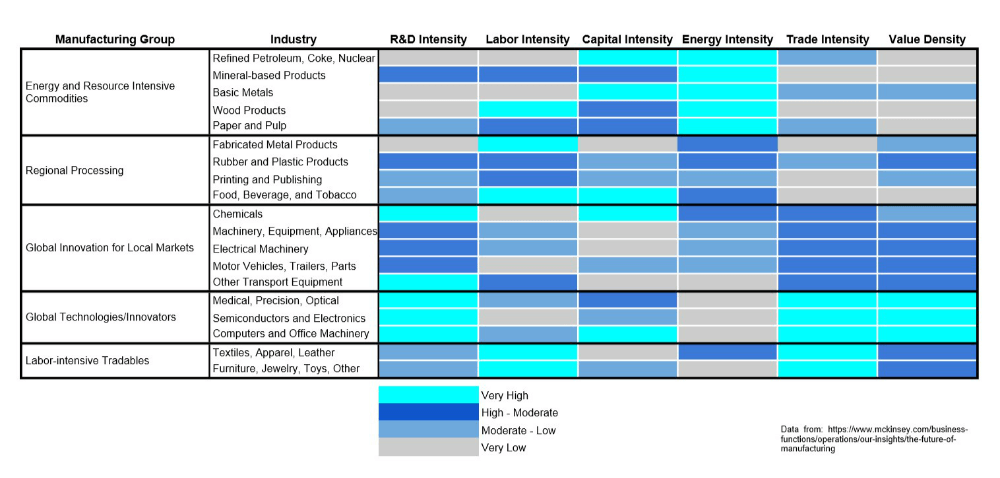
Being in the manufacturing industry can look very different depending on your product, but can actually be boiled down into five main groups. Use this table to identify which main group and industry sub-group your operation belongs to.
marketing for manufacturing companies

Data pulled from McKinsey

Once you’ve developed your brand identity and decided how to position your company in the minds of your distributors and users, you can begin to set marketing goals. In many cases, your goals will involve financial targets that are closely tied to your mission statement. Then, figure out which strategies you’ll target to achieve those goals.

The rest of this article will cover the five digital marketing tactics that are highly effective for manufacturer growth.

Digital Marketing Strategies for Manufacturers

The most complicated part of a digital marketing strategy for most manufacturers is presenting the right message to decision-makers. Internet marketing for manufacturers helps to effectively target B2B decision-makers with little budget waste.

These five B2B manufacturing marketing strategies can each be used to grow your market share in a cost-efficient manner.

  1. Content Marketing
  2. SEO Marketing
  3. PPC Marketing
  4. Social Media Marketing
  5. Marketing Automation

Look at each of the strategies, and decide on which method will best help you realize your goals.

1. Content Marketing for Manufacturers

In a 2018 survey of industrial marketers, 86% of respondents said they were using content marketing. Fortunately for you, only 22% of those manufacturing content marketers considered their organization to be “sophisticated” or “mature” at this skill. This Content Marketing Institute data indicates that you still have time to catch up if you aren’t leveraging the power of content marketing yet.

Content marketing strategies can take many different forms. Whether you’re distributing content through email marketing, social media marketing, or organic search, you can attract the right users by creating valuable content assets for your end users.

For example, a midstream pump manufacturer can use content marketing in Houston to write a blog post about the physics behind torque-speed curves to help midstream users determine how to select the right pump for their next application.

Solving Pain Points Through Strategic Content

The key to successful content marketing for manufacturers is identifying the pain points of your target audience, then building content assets that can ease that pain. If an industrial user isn’t sure how to choose between you and your competitors, put together a comprehensive list of performance factors for your product. If a heavy equipment user is struggling to choose between you and your closest competitor, write a detailed comparison piece to highlight the areas in which you come out on top.

By creating free value-added content for your potential customers, you can position your brand as an authority in your industry.

Contact MARION for help with B2B manufacturing content marketing in Austin or Houston today!

2. SEO for Manufacturing Companies

SEO for manufacturing companies

Manufacturing SEO is the practice of optimizing your website so that you show up at the top of search engine results when users are searching for the products you offer. For example, if you’re a chemical manufacturer, you want your surfactant web page to show up when a potential customer Googles “surfactant suppliers.”

According to a recent studyorganic search helps to generate nearly 53% of B2B revenue. This means that successful manufacturing search engine optimization can be the key to meeting and exceeding your marketing growth goals.

The Role of Web Design in SEO Success

Keep in mind that an SEO-friendly web design is paramount to ranking well in search results. If your website looks like it’s from the 2000s, users may hit the back button and visit your competitor’s site instead. It’s like showing up to a business meeting or interview in sweatpants. Doing some competitor research, customer interviews, and user testing will help you develop the best manufacturing website design possible.

Aside from design, the content on your website is highly important to your SEO for B2B manufacturing. Like we mentioned in the first section, by creating content that addresses the pain points of your target users, you can rank highly in the search results and generate more revenue today.

If you’re interested in trusting your organic growth to an SEO agency in Austin or Houston, contact MARION today to schedule a free consultation!

3. PPC Advertising in Manufacturing Industries

PPC in manufacturing industries

Over the past decade, several types of digital marketing campaigns have improved the scalability of manufacturing advertising. Before the internet, manufacturing outfits had to rely on direct mail, cold calls, and costly trade shows to generate new opportunities. While there are benefits to relationship-based selling once the ice has been broken, gaining that initial exposure is difficult.

Today, pay-per-click advertising for manufacturers allows you to target psychographically. You can serve an ad that targets a potential customer’s exact need for mere dollars. This flies in the face of trade events where the barrier to entry can be tens of thousands of dollars.

An Example of PPC in Action

For example, a powder coating manufacturer can run pay-per-click ads that appear when a search engine user looks for “high temperature powder coating.” When an interested potential customer clicks on your ad, it will cost you around $2. Depending on the size of your average sale, the profit margin on PPC for manufacturers can be massive.

If you’re interested in running pay-per-click in Houston or Austin, contact the strategists at MARION today to set up a free consultation.

4. Social Media for Manufacturers

social media for manufacturers
“My ideal customers aren’t on social media.”

Without fail, we hear this from industrial and manufacturing businesses about once per month. As of 2023, there are:

Without a doubt, your target customers are on social media. Whether or not they are in the mindset to buy while browsing social media is a different story. When it comes to social media marketing for manufacturing, the most relevant platform for a high return on marketing investment is LinkedIn.

LinkedIn

50% of Americans with a college degree use LinkedIn. This makes using LinkedIn for B2B marketing a no-brainer. Not only is LinkedIn a great place to post organic updates that your connections can see in their timeline, but its ad targeting capabilities grow more and more advanced each year.

Effective advertising on social media depends on the niche audience that you’re targeting. LinkedIn allows you to target by:

  • Job Function
  • Job Title
  • Job Seniority
  • Years of experience
  • Company Name
  • Company Industry
  • Company Size
  • Schools
  • Degrees
  • Fields of Study
  • Skills
  • Groups
  • Age
  • Gender
  • Location

Once you’ve refined your LinkedIn ad targeting options to reach the right decision-makers, you can begin generating a return on your manufacturing social media marketing efforts.

If you’re interested in exploring social media marketing in Houston or Austin, contact MARION to set up a free consultation with one of our strategists today!

At MARION, we pride ourselves on staying ahead of marketing trends to position your brand as an industry authority. Whether it’s designing campaigns that resonate with your audience or optimizing your digital presence to generate measurable results, our strategies are built to help your business thrive.

5. Marketing Automation for Manufacturing

Manufacturing outfits are moving to robotic process automation in an attempt to optimize costs and production. Doesn’t it make sense that your OEM digital marketing strategy makes use of automation too?

How Marketing Automation Simplifies Industrial Marketing

Digital marketing for industrial companies becomes dramatically easier when paired with the right marketing automation platform. Automation allows you to:

  • Seamlessly track qualified leads.
  • Identify which marketing messages are most effective.
  • Score which marketing materials have the best impact on your bottom line.

By identifying which B2B manufacturing marketing materials have the highest conversion impact, you can focus your efforts for compounding returns and overall business growth.

Choosing the Right Platform for Your Strategy

The strategy behind marketing and manufacturing automation will largely depend on the platform you choose. While our sales and marketing teams generally recommend using HubSpot, we can work with several different automation platforms to help you reach your goals.

How to Choose a B2B Manufacturing Marketing Agency
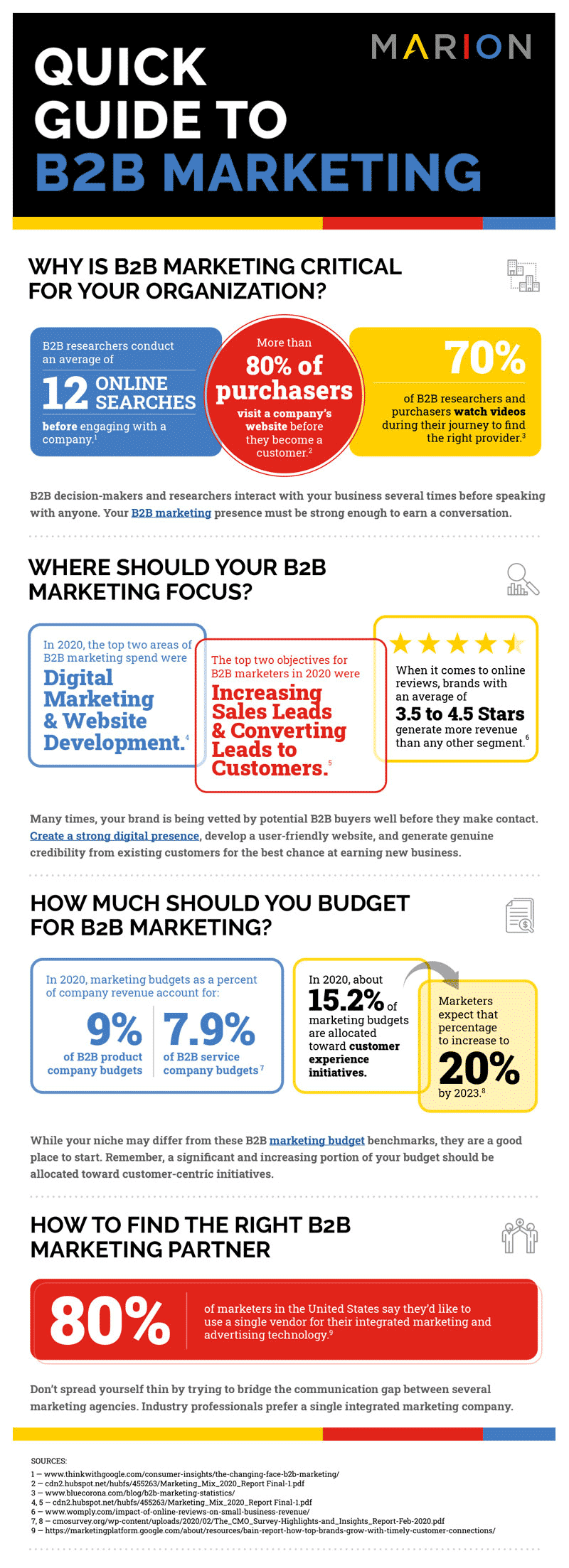
B2B digital marketing for manufacturing infographic

Now that you’ve been exposed to several digital marketing strategies for b2b manufacturers, you can choose the strategy or strategies that best match your B2B manufacturing marketing goals. Depending on whether you’re interested in mostly branding, SEO, web design, or outsourced marketing, the following resources will help guide you through the process of choosing a marketing partner:

The general process for choosing a marketing team will follow the same steps.
  1. Determine if the agency understands your business.
  2. Analyze the team and their past success. Do they have a portfolio or case studies?
  3. Do you get along with your future point of contact? This will affect the success of your partnership more than you know.
  4. Does the agency seem to have a curious spirit?
  5. Can the agency adapt to different circumstances?
  6. Are you able to effectively communicate with the agency?

MARION Makes Digital Marketing for Manufacturers Easy

For over 40 years, MARION has been a trusted partner to local manufacturers, helping them navigate the evolving marketing landscape. Our extensive experience in industries like Energy, Chemicals, and Industrial Equipment means we bring unparalleled technical expertise to every project. From contract manufacturers to large-scale industrial operations, our local team understands the unique challenges you face and is equipped to deliver solutions that drive sustainable growth.

Our approach to digital marketing is rooted in aligning sales and marketing efforts to maximize lead generation and customer loyalty. By combining inbound marketing strategies with targeted paid campaigns, we help you attract more website visitors from your target market and convert them into long-term customers.

Ready to see the difference MARION can make? Explore our portfolio and case studies to view examples of our work, then contact us today to schedule a free consultation. Let’s discuss how we can support your goals for lead generation, customer loyalty, and sustainable growth in today’s competitive market!

Contact us today to set up a free consultation, and discover if we’re a good fit for your goals!

Marketing emails you’ll actually want to read.

Get marketing tips and news sent to 
your inbox.

This field is for validation purposes and should be left unchanged.
Name(Required)

Digital Advertising: Is It Right for Your Business?

Demystifying the expansive world of digital advertising. 

With a powerful return on investment (ROI) opportunity — up to 200%, in fact1 — digital advertising can play an essential role in your integrated marketing strategy. But, just where to begin? Between social media, streaming content, responsive search ads and retargeting content, it can feel overwhelming trying to navigate the digital marketing landscape.

If you’re wondering whether digital advertising is right for your business, you’re in luck. With insights from our resident digital marketing strategist, we have outlined the elements of a digital ad campaign — from clarifying goals to the pros and cons of the most popular platforms — to make it easier to understand.

Define campaign objectives.

The first step in creating a successful digital advertising strategy is defining your campaign objectives. Begin by asking yourself these two questions: What do you want to achieve with the ad campaign? And, how will this campaign fit into your overall marketing strategy? Digital ads are one piece of the marketing puzzle, and a successful strategy uses each piece to complement the others. The answer to these questions will help you determine your primary campaign objective, allowing you to build your strategy around the right objectives and conversions. The most common campaign objectives are brand awareness, website traffic, online engagement, leads and sales.

Understand your audience.

Who are you going to target with this campaign? Understanding your audience — from their online habits to the language they use — allows you to tailor your campaign to make the biggest impact. For example, are you targeting new audiences who are unfamiliar with your brand or established customers who are already familiar with your offerings? For new audiences, your content would likely need to provide an overview of your services and what sets your business apart, while you could hone in on more detailed content for users that are already in the know. You could also consider targeting audiences in a specific location — this is especially valuable for brick-and-mortar shops — or reach users who work in a specific industry, such as construction, commercial real estate or chemical engineering. Not only does defining your audience help with your content messaging, but it also helps you select the platform more likely to reach them. Understanding how the audience would interact with the brand organically helps you determine how best to reach them through a sponsored ad — ultimately, you want to meet them where they are.


This sponsored ad for Food Town offers solutions to the grocery store audience’s primary pain point: price.

This LinkedIn ad campaign for security services provider SentriForce targeted decision-makers in key industries by job title.

Case in point: Google vs. LinkedIn ads.

To see how distinct audiences can shape an ad campaign, let’s take a closer look at two of our clients. First up: Food Town, a locally-owned grocery store wanted to reach repeat shoppers in the Houston area. Targeting an audience already familiar with the grocery store, and locations, we developed an integrated marketing strategy using digital display ads to drive in-store traffic, and sparking sales using local search Google ads.

Surveillance system provider SentriForce wanted to reach new prospective customers in the construction industry across multiple locations. To do so, we launched a comprehensive campaign on LinkedIn showcasing how their systems address theft on construction sites that targeted decision makers in the industry by job title.

Establish a timeline.

Next up, you’ll want to consider how long the campaign will run. Evergreen campaigns are ideal for brand awareness, maintaining visibility with users long-term. On the other hand, targeted drip campaigns or seasonal campaigns can be used to drive high-impact concentrated messaging around a more time-sensitive or relevant topic.


Over the course of six months, this digital ad campaign raised awareness of high commercial property taxes, thereby familiarizing audiences with the company’s services prior to tax season.

Case in point: Peak Season.

A dedicated ad campaign can help drive awareness leading up to and during your business’ peak season. For example, we launched a digital ad campaign for a commercial property tax company to boost brand awareness six months before tax season. This helped plant the seeds in potential clients’ minds over the months in advance, encouraging more conversions during tax season by strengthening name recall, brand awareness and authority. 

Set the budget.

Once you have clear goals, a target audience and a timeline, you’ll want to determine just how much to spend on your ads. While the specific number will depend on your goals and overall marketing strategy, your marketing spend should ideally be between 7 – 10% of your net profit.2 You can use this number as a starting point and adjust your spend, as needed, as you continue to optimize your campaign overtime.

Select ad platforms.

Last, but absolutely not least, you’ll determine where to launch your campaign. Reflect on all of the previous steps, from the overarching goals to where your audience is online to the timeline and budget. These elements can help to inform the best platform to initiate an integrated digital ad strategy that best supports your business’ marketing initiatives.

Pros and cons of digital advertising platforms.

While digital ads can support all businesses, selecting the right ad platform is essential for crafting a successful campaign. Learn more about the most common examples of digital advertising platforms below — and what type of campaigns each one is best suited for.

Search engine ads.

With an average ROI of $2 for every $1 spent3, Google Ads are a powerful tool in your digital marketing kit. From dynamic graphics to location-specific ads, search engine ads on Google and Bing offer a wide range of options to choose from — each with specific benefits depending on your business’ services and campaign goals.


Digital ad campaigns can be highly effective — when the right message is delivered on the best-suited platform.

Search ads.

Search ads are a great place to begin a digital campaign because of the wealth of in-depth data they provide. These sponsored text ads appear on search results pages and typically lead users to a dedicated landing page. Search ads can provide you with invaluable information such as the specific user search terms, how the user is navigating online and engaging with your content, and where they are in the sales funnel when they engage. This insight allows you to refine and optimize your campaign in real time, adapting to the language and phrases your real target audience is using.

Responsive display ads.

Display ads are dynamic, relying on native and responsive tools to create ads tailored to the platform where they are served up to your audience. These ads pull from a bank of images and headlines, pairing them together to best fit the platform or page. While these are designed to best suit the format used by your audience, there is limited control over how the various elements are combined, so you need to provide a flexible bank of images and content that can easily be mixed and matched together.

Video ads.

Video ads provide you with a lot of valuable information about users’ search behavior, making them a good choice for using at the start of a brand awareness or educational campaign. As you learn more about various behaviors and how users are engaging with your content, you can further refine your strategy across various platforms. While eye-catching, video ads can also be more time-consuming to create and maintain.

Local ads.

Local ads target users in a specific geographic area, which typically translates to a smaller, more concentrated audience. With these ads, businesses can target specific actions such as placing online orders, calling a business or getting driving directions, as well as monitoring foot traffic. Local ads are often a strong fit for established brands or familiar industries such as restaurants and retail, and can be used to generate high ROI conversions.

Remarketing.

Ever felt like an ad is following you around the internet? That’s likely a remarketing ad. These ad types use data collected during a previous campaign to remarket messaging to users who have previously engaged with your content. Remarketing ads are a visual reminder, keeping your brand top of mind for users and encouraging them to take a desired action.

Social media ads.

With 74% of shoppers researching products on social media before making a purchase4, social media ads are a powerful tool for direct-to-consumer and business-to-consumer brands. While these ads offer flexibility and can be relatively cost effective, they have relatively limited insights and can be difficult to target businesses through Meta. Platforms like LinkedIn, Pinterest and YouTube offer a variety of native tools that can be used to drive engagement with specific audiences, depending on where your target audience spends time online.


Before allocating resources to a social media ad campaign, it’s essential to understand where your audience spends its time — and how they engage with content on those platforms.

Instagram.

Instagram, which is part of Meta’s ad suite, is a popular choice for business-to-consumer and direct-to-consumer businesses. As a visual-first platform, video, photography and graphic elements help with brand education and driving sales — especially through the use of direct product shop links. However, the demographic reach for Instagram is relatively limited, with most users being under 50 years of age.

Facebook.

On the other hand, Facebook — also part of Meta’s ad suite — has a broader demographic range that engages with ads in a variety of ways, including Messenger, Stories and the in-platform newsfeed. The ads are integrated into users’ experiences more organically, which can help build trust. However, Facebook controls the view and advertisers do not have access to specific data sets or audiences, which can make it difficult to refine audience segments.

LinkedIn.

LinkedIn’s native tools are designed for targeting audiences by industry or profession, which makes this a good platform for brand awareness and engagement campaigns. However, it’s important to be flexible with audience segments, taking advantage of the platform’s built-in automation tools to guide the ads to potential customers and brand advocates.

Pinterest.

As a primarily visual platform, Pinterest is ideal for aesthetically pleasing photos and videos — especially content that can be repurposed or “pinned” for inspiration such as recipes, home décor or DIY projects. Advertising on this platform is akin to casting a wide net. While it can be difficult to zero in on the exact target audience you have in mind, there is opportunity to reach a large number of potential customers who are interested in your brand’s industry or niche.

YouTube.

Advertising on YouTube can help you better understand your target audience’s online behaviors. The platform shares a good amount of data about users’ search behavior, which provides insight into how users find your business online. The platform can also help you reach a large audience — however, on the flip side, it can also lead to ad fatigue when repeatedly served up to the same users. It can also be challenging to ensure your ads appear on content that aligns specifically with your brand’s mission or values.

Digital marketing campaigns continue to evolve over time, and you have the opportunity to continue finetuning them as you learn more about your audience members. As part of an integrated multi-channel marketing strategy, digital ads play an important role in keeping your brand top of mind, improving authority and brand recognition, and driving digital conversions. Talk to our digital marketing experts about crafting a marketing campaign designed around your business’ goals.


Sources:

  1. 46 PPC Stats to Empower Your Marketing Strategy in 2024, Techjury
  2. 7 tips to create an effective digital marketing budget, Spendesk
  3. Economic Impact: Methodology, Google
  4. 80+ Industry Specific Social Media Marketing Statistics For 2024, Synup

Go for the Gold with this Five-Ring Marketing Strategy

Outshine the competition, gain market share and make a name for yourself. A strong brand and marketing strategy helps your B2B business do all three — and then some. Especially when roughly 90% of business decision makers ignore cold outreach, having a solid multi-faceted marketing strategy can open the door to new connections. B2B marketing, or business-to-business marketing, is unique…

How to Connect with Customers with Hyperlocal Social Media Marketing

Ever wondered how to use the power of social media to connect with your local community and boost your business? One strategy that has gained a lot of traction is hyperlocal social media marketing. This approach focuses on reaching potential customers within specific locations, allowing brands to tailor their messaging and promotions to local communities.

What is Hyperlocal Social Media Marketing?

Hyperlocal social media marketing involves targeting potential customers within a particular geographic area — such as a neighborhood, city district, or even a single street. The goal is to deliver highly relevant and personalized content to individuals based on their location, interests, and behaviors. With social media platforms like Facebook, Instagram, and Twitter, businesses can reach local audiences with precision and efficiency.

The Rise of Hyperlocal Marketing

The rise of hyperlocal marketing can be attributed to several factors. Firstly, consumers are increasingly relying on their phones to search for local businesses and services.

According to a study by Think with Google, near me searches have increased by over 500% in recent years, highlighting the demand for local information. Additionally, social media platforms have evolved to offer high-level targeting options that allow businesses to reach users based on their location, making hyperlocal marketing more accessible and effective than ever before.

Connect with the team at MARION to learn about our social media marketing agency in Houston.

social media funnel

Benefits of Hyperlocal Social Marketing

Hyperlocal social marketing lets you connect with the people who matter most — your local community. From personalized promotions to community engagement, this marketing strategy offers a ton of perks that can take your business to the next level.

Targeted Reach and Relevance

Hyperlocal marketing enables businesses to target specific neighborhoods or communities where their ideal customers are. This targeted approach ensures that marketing messages are relevant and resonant, increasing the likelihood of engagement and conversions.

Enhanced Customer Engagement

Engagement is #1 in building relationships with customers. Hyperlocal social media marketing encourages interaction with local audiences through localized promotions, events, and community-focused content.

Cost-Effective Advertising

Hyperlocal marketing can be a cheaper alternative to broader advertising campaigns. By focusing resources on specific geographic areas, businesses can optimize their advertising spend and maximize ROI. Social media platforms offer flexible budgeting options that allow businesses to set precise targeting parameters and track campaign performance in real time.

Implementing a Hyperlocal Social Media Strategy in 10 Steps

Looking to implement a successful hyperlocal social strategy? Try out these tactics.

  1. Localized Content Creation: Create content that is tailored to your local audience’s interests, events, and community activities. Highlight local landmarks, businesses, and events to resonate with your target market.
  2. Geo-targeted Advertising: Use social media advertising platforms to target specific geographic locations. This lets you reach users based on their proximity to your business, increasing relevance and driving foot traffic.
  3. Community Engagement Campaigns: Launch social media campaigns that encourage participation from the local community. This could include contests, giveaways, or community-driven initiatives that foster interaction and brand affinity.
  4. Utilizing Location-based Features: Leverage social media features like geotags and location-based hashtags to increase visibility among local users. Encourage customers to check-in or tag your business in their posts to boost local awareness.
  5. Collaborations with Local Influencers: Partner with influencers or micro-influencers who have a strong presence within your target area. Their endorsement can help spread your message and reach a more targeted audience.
  6. Local Event Coverage: Provide real-time coverage of local events, festivals, or other happenings through social media posts and stories. This shows everyone your brand’s involvement in the community and keeps your followers from scrolling past.
  7. Engaging with Local Groups and Pages: Join and actively engage in local community groups or pages on social media platforms. Contribute valuable insights, answer questions, and participate in discussions to establish your brand as a trusted local resource.
  8. Customer Testimonials: Reviews are powerful tools for generating positive word-of-mouth within your local community. When people see positive experiences and recommendations from their neighbors, they are more likely to consider and trust your business.
  9. Promoting Local Partnerships and Collaborations: Showcase partnerships with other local businesses or organizations through collaborative content. This demonstrates your commitment to supporting the local economy and strengthens relationships within the community.
  10. Offering Location-based Promotions: Create special offers or promotions exclusive to residents of specific neighborhoods or ZIP codes. This encourages local customers to visit your business and increases brand loyalty.

Embrace Hyperlocal Marketing with MARION

Hyperlocal social media marketing offers businesses a powerful tool to connect with local audiences and drive meaningful interactions. By targeting specific geographic areas and tailoring content to local interests, businesses can enhance customer engagement, optimize advertising spend, and strengthen brand presence within their communities.

Ready to take your social media marketing to the next level with hyperlocal strategies? Contact MARION today to explore how we can help you use the power of social media marketing to connect with your locals. Let’s make your brand the talk of the town!

Marketing emails you’ll actually want to read.

Get marketing tips and news sent to 
your inbox.

This field is for validation purposes and should be left unchanged.
Name(Required)

Navigating the TikTok Ban for Marketers

The TikTok ban situation in the US involves government concerns about security and privacy, leading to proposed legislation and state-level actions to restrict the app. While TikTok has responded to global bans and made efforts to address concerns, opinions among the public are split right down the middle. As the dust settles, the ultimate fate of the ban remains up in the air.

Impact of the Ban on Marketing Strategies

The looming threat of a TikTok ban presents marketers with many hurdles to overcome, touching every aspect from advertising to audience engagement and influencer collaborations. Here’s how this potential ban could shake up marketing strategies:

  • Loss of a Major Advertising Platform – TikTok has become a dominant advertising platform, allowing marketers to engage a broad and active audience. If TikTok were to be banned, brands would lose access to this effective channel, prompting them to reconsider ad budgets and shift resources to other platforms.
  • Shift in Audience Engagement – TikTok’s popularity among Gen Z and millennial demographics means a ban could alter how audiences engage with content. Marketers may need to adjust target demographics and digital content strategies to resonate with audiences on different platforms.
  • Changes in Content Distribution and Influencer Partnerships – A TikTok ban would disrupt content distribution and influencer collaborations. Brands invested in TikTok marketing campaigns may need to collaborate with influencers on other platforms, while content creators may need to distribute their content across multiple platforms to maintain visibility.

Adapting to the New Landscape

In light of potential TikTok restrictions, marketers must be proactive in adapting their strategies to navigate the evolving digital landscape. Here’s how:

Step 1: Exploring Alternative Platforms

As the saying goes, “don’t put all your eggs in one basket.” In the wake of a TikTok ban, marketers must explore alternative platforms offering similar features and audience demographics. Platforms like Instagram Reels, YouTube Shorts, and Snapchat Spotlight present opportunities for brands to reach and engage with their target audience through short-form video content.

Step 2: Diversifying Social Media Strategy

Reducing reliance on a single platform is key to safeguarding your marketing efforts against potential disruptions. Diversify your social media strategy by expanding your presence across multiple platforms — Facebook, Twitter, LinkedIn, Pinterest, etc.

Step 3: Investing in Content Creation for Emerging Platforms

It’s important for marketers to stay ahead of the curve by investing in content creation for emerging platforms. Keep an eye on emerging trends and platforms that show promise for future growth. Experiment with new formats, engage with early adopters, and test different content strategies to determine what resonates with your audience.

TikTok

Strategies for Maintaining Audience Engagement

By embracing change and remaining flexible in your approach, you can handle any challenges posed by platform restrictions and continue to connect with your audience in meaningful ways.

Leverage user-generated content on other platforms.

By harnessing the power of user-generated content (UGC), you can maintain authenticity and trust with your audience while expanding your reach beyond TikTok.

  • Encourage your audience to create and share content related to your brand on platforms like Instagram Reels, YouTube Shorts, or Triller.
  • Consider running UGC contests or challenges to incentivize participation and keep your brand top of mind.

Focus on community building and engagement.

In the absence of TikTok, prioritize community building and engagement on other accessible platforms. Platforms like Facebook Groups, Discord, or Twitter offer opportunities to foster meaningful connections with your audience.

  • Create dedicated groups or channels where followers can interact with each other and with your brand.
  • Host live Q&A sessions, discussions, or virtual events to keep the conversation going and strengthen your relationship with your community.
  • Remember to listen to your audience’s feedback and adapt your content strategy accordingly.

Utilize cross-platform promotions.

You can also maximize your content’s visibility by implementing cross-platform promotions across your social media channels.

  • Share your brand’s content on alternative platforms like Twitter, Facebook, or LinkedIn to drive traffic and engagement.
  • Tailor your promotional efforts to fit each platform’s audience and format, ensuring that your content resonates with the specific demographics and preferences of each platform’s user base.

The Takeaway

The possibility of a TikTok ban presents a unique challenge for marketers — but it’s also an opportunity to demonstrate agility and innovation in your digital marketing strategy. As the social media world continues to evolve, we as marketers must remain informed and proactive in response to changes.

So, follow relevant hashtags, set up Google alerts, and stay up-to-date with industry news to ensure you’re equipped with the latest information. Keep an open mind, experiment with new strategies, and don’t be afraid to think outside the box!

Keep Your Brand’s Momentum Going with MARION

Don’t let this potential TikTok ban derail your marketing efforts. Stay agile, stay informed, and stay ahead of the curve to ensure your marketing efforts remain effective in an ever-changing digital landscape — partner with MARION to explore alternative platforms and maintain audience engagement. Reach out to us now to discuss your strategy.

Let’s chat.

Marketing emails you’ll actually want to read.

Get marketing tips and news sent to 
your inbox.

This field is for validation purposes and should be left unchanged.
Name(Required)

March Madness Marketing Opportunities Brands Need to Know

With its widespread popularity and huge fan base, it’s no surprise that March Madness presents a prime opportunity for companies to connect with consumers on a personal level and drive meaningful engagement. In this blog, we’ll share insights into why March Madness is a fantastic business opportunity and provide examples of successful marketing campaigns to inspire your own strategies.

Why March Madness Matters

To some, March Madness is just about basketball. But to marketers, it’s a once-a-year phenomenon that captivates the eyes of millions of prospects across the country.

According to statistics, the NCAA generated nearly $1.3 billion in revenue for 2022-23 alone, underscoring its significance as a marketing powerhouse.

Examples of Successful March Madness Marketing Campaigns

Buffalo Wild Wings

The popular sports bar chain launched its “B-Dubs Bracket Challenge,” inviting customers to predict tournament outcomes for a chance to win prizes. This campaign not only drove foot traffic to Buffalo Wild Wings locations but also increased brand engagement online.

Capital One

The financial services company has become synonymous with March Madness through its sponsorship of the Capital One NCAA March Madness Bracket Challenge. By offering cash prizes and exclusive experiences, Capital One successfully capitalized on the tournament’s excitement to promote its brand.

Capital One March Madness Challenge

Coca-Cola

Coca-Cola® Zero Sugar launched the “Debate the Goatness” campaign during NCAA March Madness. The campaign encouraged basketball fans to debate who they believed was the greatest of all time (GOAT) player in college basketball history while enjoying a Coca-Cola Zero Sugar. Fans were encouraged to share their opinions on social media using the hashtag #DebateTheGOATness, sparking lively discussions and engaging with the tournament’s excitement. This social media campaign effectively integrated Coca-Cola Zero Sugar into the March Madness conversation while leveraging the passion of basketball fans to drive brand engagement and awareness.

march madness marketing coke

Ideas for Capitalizing on March Madness

  1. Themed Promotions: Create March Madness-themed promotions or discounts tied to game outcomes, halftime scores, or buzzer-beaters to incentivize customer participation.
  2. Host Viewing Parties: Organize viewing parties at your business location or partner with local venues to create a festive atmosphere where fans can gather to watch games together. Virtual viewing parties are an option as well!
  3. Bracket Contests: Launch a bracket challenge for customers, employees, or social media followers, offering prizes for accurate predictions or creative entries.
  4. Social Media Engagement: Hop on your social media platforms to share behind-the-scenes content, live updates, and interactive polls related to March Madness, encouraging fans to join the conversation.
  5. Collaborate with Influencers: Partner with sports influencers or local personalities to promote your brand during March Madness, leveraging their reach and credibility to connect with a broader audience.

March Madness presents many opportunities for businesses to showcase their creativity, engage with customers, and drive sales. By drawing inspiration from successful campaigns and implementing innovative strategies tailored to their target audience, brands can capitalize on the excitement surrounding the tournament and elevate their marketing efforts to new heights.

Win the Marketing Game with MARION

Ready to score big with your marketing campaigns in Texas? Let MARION be your strategic partner in reaching your marketing goals and objectives. From creative campaigns to comprehensive digital marketing solutions, we have the expertise and resources to help your brand stand out in the competitive landscape.

Contact us today to learn more about our tailored marketing services in Texas and beyond.

Marketing emails you’ll actually want to read.

Get marketing tips and news sent to 
your inbox.

This field is for validation purposes and should be left unchanged.
Name(Required)

How to Plan Your Social Media Strategy 

Whether you’re a B2B or B2C company,
a thoughtful approach to social media
can build awareness and generate leads. 

A little more than a decade ago, spreading the word about your business involved press releases, advertisements and word-of-mouth marketing. While these channels remain important, social media has evolved into an equally critical marketing tool. Knowing how to plan your social media marketing strategy is essential to making the most of its potential. 

 
With a carefully considered plan, you can relate to new audiences in different and more targeted ways. Facebook users, for example, tend to be methodical shoppers who skew older, while Instagram remains a haven for aesthetically motivated consumers between the ages of 18 and 24. Determining where your audiences spend their time — and what types of content encourage them to stop scrolling — will allow you to connect with key segments, develop brand awareness and build a loyal following. 


Social media demographics and usage by platform.
To determine which platforms offer the most engagement potential for your business, start by
understanding the audience profiles of each.

 
In this article, we’ll help you determine which social media platforms are best for your business — and how to create content that delights and engages audiences. 

How to Choose the Right Social Media Platforms. 

When choosing which social networks are best suited to your business, it’s important to remember that not all platforms are created equal. Different platforms appeal to different demographics, and the same message might not resonate across all social media channels. Make sure you consider the following:

Your Target Audience. 

Understand who your target audiences are and find out which platforms they use most. For instance, younger demographics gravitate towards Instagram, Snapchat and TikTok, whereas professional audiences spend their time on LinkedIn. Facebook, Instagram and X (formerly known as Twitter) have a broad user base and can cater to most demographics — but each is geared toward particular types of content. 

Your Content Mediums.

Different platforms are better suited for different types of content. For example, Instagram and Pinterest are designed to highlight photos and videos, whereas LinkedIn is a great place to share insightful, long-form content. Keep in mind that the capabilities of each network are constantly changing, so it’s important to stay up-to-date as new mediums emerge. 

Your Business Type. 

B2C companies may find more success on Instagram or Facebook, which allow for a more personal connection with customers. Conversely, B2B companies may be better served by LinkedIn or X, which are more conducive to sharing industry news and professional content. 

Your Resources. 

Whichever platforms you choose, all social channels require a significant investment of time and effort to achieve a significant ROI. Be realistic about how much time you can devote to social media. It’s better to share incredible content on one channel than mediocre posts on several. 

Crafting Your
Content Strategy.

Once you’ve chosen the right platforms, it’s time to think about content. Your content strategy should be informed by your overall business goals. Are you looking to drive sales, increase brand awareness, engage with customers or position your brand as a thought leader? No matter your objectives, the following best practices are foundational to most successful strategies. 

Share Valuable Content. 

Share content that’s genuinely useful or interesting to your audience. This could be information or entertainment in the form of blog posts, infographics, how-to videos, industry news or thought leadership articles. Just make sure every piece of content you share aligns with your overall brand storytelling strategy.


Screenshot of blog posts shared on Design At Work’s Google Business Profile.
Your Google Business Profile is a great place to share informative content, such as recent blog posts.

Engage with Your Audience. 

Social media isn’t just about broadcasting your message; it’s about fostering a two-way conversation. Ask questions, seek feedback, respond to comments and engage with your audience in a meaningful way. 

Promote Your Products or Services
(In Moderation). 

While it’s okay to promote your products or services, make sure it’s balanced with other content. A good rule of thumb is the 80/20 rule — 80% of your content should inform, educate or entertain your audience, while only 20% should directly promote your business.


Design At Work Facebook post promoting the marketing agency’s services.
As long as you follow the 80/20 rule, promotional content like this Facebook post can generate leads
without overwhelming your audience with salesy messaging.

Leverage User-Generated Content. 

Encourage your customers to share their experiences with your brand or products. This not only allows you to aggregate free content, but also fosters a sense of community and trust around your brand.

Use Visuals. 

Humans are visual creatures, so it’s no surprise that visual content tends to outperform text-based content on social media. Try to incorporate photos, infographics, animation and videos into your content. 


Video and animated graphics like this stop viewers from scrolling past your content and encourage engagement.

Consistency is Key. 

Posting consistently not only keeps your audience engaged but also helps to improve your visibility and reach on social media. Create a content calendar to ensure regular posting and plan your content in advance. 


Social media content management platform.
Social media content management platforms such as Sendible and Sprout Social can help you keep track of when and what you post.

If you’re feeling overwhelmed by the prospect of deploying a social media game plan, let’s talk! Design At Work can help you develop an approach that will generate awareness and drive sales. 


Sources:

  1. Social media demographics to inform your strategy in 2023 | Sprout Social

How to Detect Fraudulent Facebook Messages

Many business owners use social media platforms like Facebook to engage with their audience and gain brand exposure. But with any online endeavor, there are risks involved. Fake Facebook messages can pose a significant threat to your business’s reputation, finances, and customer trust. Learn how to detect and protect your business from potential scams.

Examples of Common Facebook Messenger Scams

Fraudulent messages on Facebook can come in many forms — phishing attempts, fake offers, requests for sensitive information, etc. Scammers may even impersonate your brand or employees to exploit unsuspecting customers or compromise your business’s security. Recognizing these risks is the first step in guarding your business against potential threats.

Facebook scammers are continually evolving their tactics as the years go by. Here’s what to look out for.

  • Phishing Scams: Scammers create fake login pages or apps that mimic Facebook’s official login to steal your credentials.
  • Impersonation Scams: Facebook scammers impersonate friends, family members, or coworkers to request money or personal information.
  • Survey Scams: Users are asked to participate in surveys that collect personal information or lead to malicious downloads.
  • Tech Support Scams: Scammers pretend to be from Facebook or another trusted tech company and offer assistance resolving a non-existent issue for a fee.
  • Investment Scams: Facebook scammers promote fake investment opportunities that promise high returns, convincing users to invest money.
  • Charity Scams: Scammers pose as charitable organizations, soliciting donations for fake causes.

REMEMBER: Never share personal or financial information with unknown individuals or engage in suspicious requests. If something seems too good to be true or raises suspicions, report it to Facebook and avoid further interaction. Here’s how to report a message on Facebook.

fake facebook message

How to Protect Your Business from Facebook Scams

In the digital age, businesses rely on Facebook for customer engagement and communication. However, the platform is not immune to fraudulent messages and scams. To safeguard your business from such threats, follow these steps:

1. Educate Your Team

Ensure that your employees, especially those responsible for managing your Facebook page, are well-informed about the risks associated with fraudulent messages.

Train your team to recognize potential scams, suspicious links, and phishing attempts.

Emphasize the importance of not sharing sensitive information through Facebook messages.

2. Secure Your Account

Activate two-factor authentication (2FA) for your Facebook account. This adds an extra layer of security and makes it harder for unauthorized users to gain access.

Utilize Facebook’s business verification process to confirm the legitimacy of your business page. Verified pages have a higher level of trust.

3. Monitor Messages

Regularly check your business’s Facebook messages. Be vigilant in reviewing the content and the identities of the senders.

Consider using automated tools to filter messages and flag potentially harmful content.

4. Verify the Sender

Always verify the identity of the message sender. Look for mutual friends or prior interactions with your page.

If a message appears to be from an employee or a client, double-check the authenticity of the message through another trusted communication channel.

5. Be Cautious of Links and Attachments

Never click on suspicious links or download attachments from unknown sources.

Hover over links to see the actual URL before clicking. If it seems dubious, refrain from opening the link.

6. Beware of Phishing Attempts

Exercise caution when a message requests personal or financial information. Scammers may use urgent or enticing language to lure you into their trap.

Avoid sharing sensitive information via Facebook messages. Legitimate organizations would typically use more secure communication methods for such requests.

7. Report Suspicious Activity

If you encounter fraudulent messages or accounts, report them to Facebook immediately. Reporting helps Facebook take appropriate action against scammers.

8. Stay Informed

Keep yourself and your team updated on the latest Facebook security features and potential threats. Facebook often releases security updates, and knowing what you’re up against is the best line of defense.

9. Limit Admin Access

Restrict the number of people with admin access to your Facebook page. Grant this privilege only to trusted employees to minimize the risk of unauthorized changes or fraudulent activity.

10. Review Message Requests

Facebook allows message requests from people who are not on your friends list. Be cautious when accepting such requests, as scammers often use this feature to target businesses.

11. Be Cautious of Unsolicited Offers

Approach unsolicited offers with skepticism. If a deal seems too good to be true, it likely is. Verify the legitimacy of any business proposition.

12. Develop a Response Plan

Create a clear plan for how your business will respond to fake Facebook messages, including communication with affected clients, submitting a report, and improving your security measures.

Protect Your Digital Presence with MARION

At MARION, we understand the importance of a strong online presence for your business. If you’re looking for expert social media management services in Houston and Austin, we can help you navigate the digital landscape. Our experienced team is dedicated to enhancing your online reputation and engagement.

Contact us today to learn more about how to protect your business from Facebook scams.

Marketing emails you’ll actually want to read.

Get marketing tips and news sent to 
your inbox.

This field is for validation purposes and should be left unchanged.
Name(Required)

Instagram Threads: What is it & How Does it Work?

Threads is a new app developed by the Instagram team that allows users to share text updates and engage in public conversations. It is a spin-off app from Instagram tied to users’ Instagram accounts, making it easy to create an account by logging in with existing Instagram credentials.

What is Threads?

Similar to Twitter, Threads features a feed of short text posts with a maximum of 500 characters, which can include links, photos, and videos. This text-based platform offers a new way for users to stay connected, share moments, and have enhanced communication in close-knit circles. Threads aims to provide a streamlined and focused experience for users who prefer conversations over visual content.

Features and Benefits of Threads

  • Direct Messaging with Close Friends – This allows users to have meaningful conversations with their inner circle, fostering closer connections and more personal interactions. Threads is designed to prioritize communication with close friends, making it easier to stay connected and engaged with those who matter most.
  • Automatic Status Updates – Users can opt-in to have their status automatically updated based on their location or other factors. This feature allows friends to see what their close friends are up to without the need for constant updates or check-ins. Additionally, updating a Threads status automatically updates the user’s Instagram bio, making it a convenient way to remind close friends of important updates or events. This feature enhances communication and provides a seamless way to share important moments with close friends.
  • Easy Photo and Video Sharing – Users can easily share posts with their close friends, including text updates, links, photos, and videos. This makes it simple to share moments and experiences with a select group of people, creating a more intimate and personal sharing experience. Furthermore, Threads provides a platform for users to express their ideas, opinions, and creativity with the world, allowing for a broader reach beyond their close friends. This combination of features makes Instagram Threads a versatile and user-friendly app for connecting and sharing with both close friends and a wider audience.

How to Sign Up for Threads

Here are the steps to sign up for Threads:

  1. Download the Instagram app from your device’s app store.
  2. Open the Instagram app and log in to your account.
  3. Go to your profile page and tap on the three horizontal lines in the top right corner.
  4. Tap on “Threads from Instagram” in the list of options.
  5. Tap “Get started” and follow the on-screen prompts to create a new account or use your existing account to log in.
  6. Allow Threads to access your camera and microphone (if prompted).
  7. Adjust your notification preferences and personalize your profile by adding a profile picture and bio.
  8. Start using Threads by choosing your closest friends and creating your Close Friends list.

That’s it! You are now all set to use Threads.

How to Use Threads

Seamlessly integrated with Instagram, Threads offers a dedicated space for meaningful interactions and sharing moments with your inner circle.

What Are You Allowed to Post on Threads?

  • Text of up to 500 characters
  • Photos and images (up to 10)
  • Videos (up to 5 minutes)
  • External Links
  • Carousels
  • .Giphs

What Can Threads Not Quite Do Yet?

  • Hashtags
  • DMs (Direct Messages)
  • Advertising within the platform
  • Pinned posts

For these reasons, we encourage businesses to wait to join Threads until we can get the most out of the platform. Right now, it’s only good for brand awareness, but we can’t use hashtags to increase reach or discoverability. We also can’t monetize on the platform.

Easy Ways to Create Content for Threads

  • Cross-promote your posts between Threads and Instagram
  • Introduce yourself and why you started your business
  • Repost content that relates to your business
  • Share memes relevant to your business

Additional Things to Note About Threads

Before Getting Started: When someone creates a Threads account it automatically connects to their Instagram. If you try to delete your Threads account, it will also delete your Instagram account. If someone wants to get rid of their Threads, they can only “deactivate it,” which will allow the Threads to be disabled and their Instagram account to stay active.

Navigating Settings

You can change your notifications, privacy, and account settings in the profile section by clicking the globe on the top left or the two-dash icon on the top right.

Notifications

Notifications are pretty straightforward. Turn off push notifications for threads and replies and following and following. You can also just pause them all.

Privacy

An interesting aspect of Threads is its emphasis on privacy. In Privacy, you can make your profile private so only approved followers can see and interact with your posts. You can also choose who mentions you, mute accounts, and hide offensive words. You’ll see two settings: one for blocking profiles and one for hiding likes. Changes you make to either of these settings will apply to Threads and Instagram.

Account

Account is where you can set reminders to take a break and deactivate your account. Both Threads and Instagram have other settings, like two-factor authentication and password changes.

In summary, Threads offers a more intimate messaging experience for users who want to stay connected with their closest friends. With its focus on privacy, automatic status updates, and seamless photo/video sharing capabilities, it provides a convenient platform for fostering meaningful connections within a smaller social circle.

Is Your Business Ready for Threads?

While Instagram Threads can be useful for connecting with close friends and a potential audience, it may not be the best fit for every business. If your business doesn’t have a personal or social aspect, Threads may not be the best platform to showcase your brand. It’s essential to focus your social media marketing efforts on the platforms that align with your target audience and business goals. Plus, adding another platform to the mix may stretch your resources thin if you don’t have a dedicated team to manage your online presence. Ultimately, it’s important to weigh the pros and cons of any platform before jumping in, and make sure that it aligns with your business objectives.

Are you looking to take your business’s social media presence to the next level? Look no further! MARION is here to help you unlock your brand’s true potential on platforms like Facebook, Instagram, Twitter, and more.

Take the first step towards social media success and get in touch with MARION now!

Marketing emails you’ll actually want to read.

Get marketing tips and news sent to 
your inbox.

This field is for validation purposes and should be left unchanged.
Name(Required)

Boost Your Organic Social Media Marketing with These 12 KPIs

There are nearly five billion social media users worldwide. Business owners are keenly aware of this, as social media has overtaken paid search as an advertising channel by $2 billion. More of this generation anticipates spending their money on products found via social media platforms.

While social media marketing is crucial for today’s businesses, staying on top of the most critical social media KPIs is essential as platform algorithms and popularity fluctuate.

What Are Social Media KPIs?

Key performance indicators (KPIs) are metrics businesses use to measure performance over a specified period. Social media KPIs, then, are used to measure the effectiveness of your social media marketing strategy.

Before setting and tracking your KPIs, be aware of your overall business and marketing goals — you can only develop a solid strategy if you can pinpoint what you want to accomplish.

How to Set & Track Your Social Media KPIs

Before you learn how to set and track your social media KPIs, you should know there’s no one-size-fits-all process. The appropriate KPIs will differ depending on the business goal, initiative, audience demographics, and other variables.

Identify What You Want to Measure

Start by identifying what you’re trying to measure before choosing your KPIs. For example, you might track likes and shares to measure how social content resonates with your audience. You wouldn’t measure impressions for this purpose, as it wouldn’t tell you how your audience feels about the content, only how many people have seen it.

Determine Measurement Frequency

Once you’ve decided what to measure, you need to determine what frequency works best. You can calculate your progress monthly, quarterly, or yearly.

Having a specific time frame for measurement helps you better track time-bound KPIs and ensure your business continues to meet its goals.

Other Considerations

As you consider which KPIs you’ll use to track your social media performance, keep the following tips in mind:

  • Make sure your social media marketing KPIs align with your business goals
  • Confirm your KPIs are measurable outcomes required to reach your objectives
  • Evaluate your past performance to create a baseline for future progress
  • Regularly review your KPIs to ensure you’re making progress

When you select and manage your KPIs using these parameters, you’re more likely to create a meaningful strategy and progress steadily.

Social Media KPIs

Top Organic Social Media KPIs to Track

The KPIs you choose to track will depend on your overall goals for your campaign and business. If you don’t know where to start, here are a few social media KPI examples to help you build your marketing strategy.

If Your Objective Is Engagement

Engagement refers to any action your audience takes to interact with your content. Some common engagement KPIs include:

  • Likes: Users reacting to your post to signal their approval
  • Comments: Users replying to your post
  • Shares: Users reposting your content or sending it to someone else
  • Engagement rate: How often your audience interacts with your content

One of the most popular methods to calculate your engagement rate is to divide your total number of engagements (likes, shares, and comments) per post by your reach per post (how many people see your content), then multiply the number you get by 100.

If Your Objective Is Awareness

If you want more people to know about your brand, you may want to start tracking the following KPIs:

  • Impressions: How many times your content is displayed
  • Reach: Number of unique users who see your content

Remember that the same person can display your content more than once, so it’s essential to track both indicators.

If Your Objective Is Reach

Although brand awareness is essential, it’s equally crucial that people beyond your current audience learn about what you have to offer. Use the following KPIs to track the effectiveness of your reach-oriented social media campaigns:

  • Follower count: Total number of unique users following your account
  • Audience growth rate: How quickly your follower count increases
  • Reach: Number of unique users who see your content
  • Share of voice: How many times users have mentioned your brand

One of the most widely-used formulas for calculating audience growth rate is dividing your total number of new followers in a given period by your total follower count and multiplying by 100.

Social share of voice is calculated by adding the total number of brand mentions (including direct mentions, hashtags, reach, and impressions) to your competitor’s mentions and dividing your mentions by that total.

You’ll get the most out of this KPI by comparing it to your competitors. You may need to use an additional tool (aside from your social media platform) to calculate this accurately if the platform doesn’t provide this information.

social media monitoring guide

If Your Objective Is Leads or Conversions

If your specific goal is to increase your sales through social media, these KPIs will help you evaluate your progress:

  • Conversion rate: How often your audience responds to your call to action
  • Bounce rate: How many times someone visits your page and quickly leaves

To calculate your conversion rate, divide the number of conversions (specific desired actions) by the number of visitors coming to your page from social media. To determine your bounce rate, divide the number of one-page visits to your website by the total number of entries from social media.

Now that you know these 12 KPIs, you can implement and measure them in your social media marketing!

MARION Can Help You Accelerate Growth with Social Media Marketing

Social media marketing is an essential tool for any business looking to stay competitive in their industry. For many business owners, the challenge lies in the time and effort it takes to manage campaigns, create content, and measure success. With MARION Integrated Marketing, businesses can now accelerate growth with effective campaigns more than ever before.

Contact MARION today for a free consultation!

Marketing emails you’ll actually want to read.

Get marketing tips and news sent to 
your inbox.

This field is for validation purposes and should be left unchanged.
Name(Required)