Category: Branding Design

How to Nail Your Email Marketing Strategy in 2023

Email marketing is one of the best B2C and B2B marketing strategies for 2023. With the power of an effective email marketing strategy, you can create more revenue for your brand, attract new customers, and build solid relationships with them.

Having a high return on investment makes it one of the most rewarding marketing strategies in the market. To get ahead of the game, take advantage of the email marketing steps below and watch your brand skyrocket in 2023.

It can be hard, but with the correct guidance, we can build a strong foundation from the beginning. So, let’s explore how to succeed in email marketing in 2023.

9 Email Marketing Tips to Drive Conversions

Every marketing campaign is different and has some unique elements that need to be implemented to be successful. For performance-based email marketing, these are the most crucial tips that every marketer should know.

  1. Create an Email Marketing Strategy
  2. Write a Compelling Subject Line
  3. Be Persistent
  4. Pay Attention to Preheader
  5. Make Contextual CTAs
  6. Write for the Web
  7. Don’t Spam
  8. Use Personalization
  9. Use A/B Testing

These nine steps will help you learn how to email market effectively in no time.

1. Create an Email Marketing Strategy

effective email marketing tips

Successful email marketing strategies can only be built after identifying the goals and objectives that your brand wants to achieve. Email marketing in digital marketing is just one piece of the overall puzzle, so it cannot act in a silo.

Define your audience and segment them into potential and existing customers. You will send different emails to each group, so it is a crucial part of the process.

When you have your target audience, you’ll need to build your list. You can do it from your social media channels, with opt-in forms on your website, or even by using an existing customer list.

The last step for building an effective email marketing strategy is to craft a content marketing strategy to drive conversions. It can be a newsletter, a welcome sequence, or a cart abandonment email.

The moral of the story is, to create your plan, and set your goals with corresponding content in mind.

2. Write a Compelling Subject Line

email strategy - subject line

The subject line is the number one element your recipient will see in their inboxes. Having a weak (or spammy) subject line will immediately move your email to the trash.

What you put in that 60-character space could be the difference between someone opening your message, deleting it, and even reporting it as spam. If too many receivers mark your message as spam, it can have lasting negative effects on your email strategy.

A consumer will open your email if they:

  1. Find value in your title
  2. Have the fear that they will miss out on something important (FOMO)
  3. See their favorite emojis

These three elements are probably the most important elements when it comes to subject lines.

 

3. Be Persistent

The more people who open your emails, the more potential conversions your business will generate. A great way to ensure this outcome is by leveraging the “double opens strategy”.

Use your email automation service to track which emails didn’t open and send the exact same email with a different subject line.

People receive many emails every day, so it can be that they didn’t catch their attention or they were just busy. Make some small changes to change the outcome.

  • Use a different subject line and preheader
  • Change your send time
  • Wait 3-5 days before resending your message

Adding this little-known trick to your email campaign strategy can foster engagement at a level you’ve never experienced.

4. Pay Attention to Your Preheader

email campaign strategy - preheader

The subject line is vital, but don’t forget the preheader text! This is the preview text that a recipient can see before deciding whether or not to click your email. Using this space to increase your open rate and engagement numbers is one of the most effective email marketing techniques.

Craft your message in a way that will maximize the chances of a click while keeping in mind that you can have 35 to 150 characters of preview text.

5. Make CTA Buttons Contextual

Every part of an email is equally crucial for the success of your campaign. Without a strong CTA in your email marketing approach, you will have significantly fewer conversions. That’s because a CTA helps your reader take action.

The best email marketing strategies use calls-to-action that guide the subscriber to take the desired action. Focus on making CTAs as creative and descriptive as possible, and avoid generic text.

Remember to combine active verbs with the sense of time. A great example would be “Get This Ebook Now”.

6. Write for the Web

Most digital marketers create complicated email messages. Craft your copy for emails similar to the tone of articles for the web. It should be engaging, conversational, and organized. Email strategies that work generally avoid sophisticated business jargon and use an appropriate opening line for your audience.

To make your life easier, most email marketing services provide you with email templates. These email marketing strategy examples can be a great starting point.

Your email should:

  • Have short paragraphs (plenty of white space)
  • Follow a clear structure
  • Use visuals whenever appropriate
  • Implement bullets and subheadings to make emails scannable

Focus on providing the most value possible and answer the questions of your audience.

7. Don’t Be Spammy

performance-based email marketing - spam

There are people out there that will tell you that email marketing is sales-y and can be annoying for the recipient. Like every marketing tool, it depends on the professional that uses it.

To avoid being a spammer and building a bad reputation for your brand, avoid exclamation points and writing with caps, and try to express the values of your brand as you would do in a normal conversation. Using a brand development strategy that isn’t overly aggressive will set your emails up for long-term success.

8. Use Personalization

If you have to implement one of the tips in this article, this should be hands-down personalization. It is the most effective way to upgrade your email marketing strategy.

Leverage your high-converting landing pages, opt-in forms, and gather as much information for your users. Create segments of your list and send personalized content to each potential client.

You can take it one step further and use dynamic personalization, which is and will continue to be a trend in 2023.

Dynamic personalization adapts to each customer and understands their buying habits and customer journey. It modifies their experience appropriately so that you can generate more business leads.

9. Leverage A/B Testing

how to email market effectively - a/b test

Hitting “send” and hoping that your email will convert will not work effectively in the long run. The best email strategies are those that test emails by using all the features that email providers offer. 

Use analytics to collect data on the performance of different variations of your message and landing pages to identify your best-performing combination. Multivariate testing is a valuable technique.

Elevate Your Email Marketing Campaigns in 2023

Email marketing is not simply another strategy to add to your arsenal. It is one of the most rewarding marketing tools out there and has the potential to increase your revenue to unprecedented levels.

Take advantage of all the tips we discussed in this article, and if some of them sound too basic, it’s because most mistakes happen to the things we think we know. Track your records and pivot towards the best-performing tactics.

Trust the MARION team if you need help with your email marketing in Houston, Austin, or DFW. MARION Integrated Marketing has been serving Texas businesses for 40 years. We have evolved to provide your business with effective marketing regardless of industry.

Marketing emails you’ll actually want to read.

Get marketing tips and news sent to 
your inbox.

This field is for validation purposes and should be left unchanged.
Name(Required)

5 Ways to Wow Your Customers with B2B Marketing

Outshine the competition, gain market share and make a name for yourself. A strong brand and marketing strategy helps your B2B business do all three — and then some. Especially when roughly 90% of business decision makers ignore cold outreach, having a solid multi-faceted marketing strategy can open the door to new connections. B2B marketing, or business-to-business marketing, is unique…

Keep Your Brand Top of Mind with Email Marketing

Today, our lives are more tethered to the digital realm than ever before — thank you, smart phones, Zoom meetings, cryptocurrency and the Metaverse. So, it’s probably no surprise that digital tools play an important role in your business’ marketing strategy. Email marketing is just one such tool that’s invaluable to have in your toolkit.

Combining speed and flexibility with a relatively small price tag, email marketing offers businesses of all sizes and in all industries the chance to get valuable facetime with customers. At the same time, it strengthens brand awareness with each eblast. If you ask us, that sounds like a win-win. Of course, there are a few pitfalls to avoid to keep you from being relegated to the dreaded “spam” folder. That’s why we’re here to walk you through a few ways to make the most of your email marketing journey.

Less is More.

While it might be tempting to send out back-to-back eblasts to your entire email list — we’re going to stop you right there before you hit “send.” Think about all the unread emails piling up in your inbox from retailers, community organizations, apps and social media platforms. Even if you’ve opted into the list, having your inbox flooded with messages can be annoying at best. Instead, think about frequency strategically. Set a cadence that keeps your brand on your audience’s radar without overwhelming them. This might take the form of a monthly newsletter, quarterly recap or seasonal sale. 

Get Personal.

With nearly 60% of email marketers citing personalization as one of the best ways to increase engagement, it makes sense that we’re seeing a trend toward personalized messages. If you’re asking customers to share personal information with you, it’s a great way to show them that you’re listening. Segment your list according to their personal details — for example, by industry or title — and create targeted content for each segment. Celebrate birthdays with a quick note or special discount, call people by their first names in the body or subject line and craft customer journeys that are relevant to where they are in the sales process.

Highlight Your Brand.

When it comes to building brand awareness, consistency is key. For example, Forbes reported that brand consistency across platforms could boost revenue by up to 23%. A big part of this is pretty simple: As people become more familiar with your brand elements — colors, logo, tagline and even stylistic voice — it’s easier for them to remember it in the future. Email marketing offers a great way to reinforce those elements. Each piece of email marketing should align with your overall brand messaging, helping build recognition and encourage connection.

Be Real.

Brand loyalty is driven by emotional connection. Showcasing the people, processes, traditions or values instilled in your company can help tell your story in a way that resonates with your audience. This may take the form of team spotlights, Q&As, community initiatives or time lapse videos of a special project. While this may look different, depending on your industry and business model, all companies have a story to tell. Email marketing offers an avenue for sharing a behind-the-scenes look at the things that bring your business together.

Don’t Wait, Authenticate.

Don’t let all that hard work end up in the junk folder, never to see the light of day. Before you send your very first campaign, you’ll want to make sure you authenticate your domain. Without getting too into the technical weeds, email authentication essentially acts as a “digital signature” to show that your emails are legit. This helps with deliverability, making sure you’re reaching the inboxes of most, if not all, of the recipients on your list.

These steps can help you get started developing a strategic plan — but this is still just the tip of the iceberg. Email marketing is multifaceted and offers numerous options for engaging with customers, showcasing your brand and building awareness. If you want to learn more about how these tips — and more — can help you grow your business, let us know. Our team is here to help.

Tips for Getting Started with Marketing Services in Houston

Marketing services in Houston are a great way to get your brand out there. These services can help you multiply your reach and generate more revenue for your business.

How? There are a number of ways that Houston marketing services can help you with your business, from SEO to social media marketing. There is no one-size-fits-all solution, so it is important that you meet with a company and have a conversation about what makes the most sense for you and your business.

There are many benefits to getting marketing services in Houston from an experienced company, but the best is the expertise that professional marketers have in their field. They know what works best for different industries, so they will be able to offer advice on how to get started correctly and maximize ROI (return on investment).

4 Simple Steps To Get Your Company’s Marketing Services Business Going

It is not enough to just think about marketing. There are some key steps that you need to take before you start marketing your business.

Below are four simple steps that will help you get your company’s marketing services business going.


  1. Commit To Investing In It: Despite what some might say, marketing is not a luxury for businesses with deep pockets. It is a necessity for all businesses who want to succeed and grow their revenue.


  2. Create A Marketing Strategy: You will need a solid, documented strategy for how you plan to market your company’s products and services going forward. This should include the tactics you plan on using as well as an estimate of the resources it will take to implement those tactics on an ongoing basis over the next 12 months.


  3. Partner with Experts: Whether you hire in-house or outsource, you have to rely on experts in today’s digital world to see success with marketing.


  4. Start With Your Website: This is your digital storefront. If you’re overwhelmed and not sure where to start, begin with optimizing your website.


Internet Marketing Services Secrets That Will Help Your Brand

Brands need to have a clear strategy for their marketing activities and this section will give you the most successful internet marketing tactics that work best for brands.

The first thing to do is create a brand image for your company with a strong message and personality. Every company needs to have a clear strategy from the beginning, so they can establish their identity on the Internet. The next step is to create quality content that is engaging and shareable in order to get more followers on social networks. You should also establish partnerships with other companies in order to increase exposure for your brand outside of the internet world. The rest? Well, they’re secret for a reason. 

How To Partner with the Right Marketing Agency in Houston

The idea of partnering with an agency is that they will take care of all the hard work and focus on your marketing needs. Actually, it’s just the opposite. The best agencies and partners understand that you’re not in this alone and they’re there to help you succeed. So don’t just blindly find a marketing agency and partner with them without knowing what they can do for you.

If you want to work with the right Houston marketing agency, then you need to know what types of services they provide so you can determine if they are the best fit. To review MARION’s marketing services, click here.

Marketing emails you’ll actually want to read.

Get marketing tips and news sent to 
your inbox.

This field is for validation purposes and should be left unchanged.
Name(Required)

Why Outsourcing Is A Cost-Effective Way of Marketing Your Business

Outsourcing your marketing tasks can be a cost-effective way to market your business.

Outsourcing has the potential to save you time, money, and resources when it comes to marketing. Oftentimes you will need outside help when it comes to marketing your business, but sometimes the best thing for you is if you outsource part of your marketing process.

This article will explore some of the most important benefits that come with outsourcing your marketing tasks.

Why You Need to Outsource Your Marketing Tasks

In today’s market, companies have to be on their toes from the moment they start operations. They have to be competitive and innovative in order to stay afloat. In previous times, marketing was confined to a company’s four walls. Today, marketing has become a top concern for business owners who want their brands to reach a wider audience and achieve greater success.

The best way for a company to grow is by outsourcing some or all of its marketing tasks – starting with tasks that can be outsourced – such as data analysis, social media management, content management, and virtual assistant services.

3 Best Ways to Outsource Your Marketing Tasks for Less Time & Money

Marketing is a time-consuming and expensive endeavor for most small business owners. You can outsource the marketing tasks to other specialists, but you need to know how to go about it.

Here are three ways you can outsource your marketing tasks and save time and money in the process:

1. Hire a Marketing Agency: You can hire a full-service marketing agency that specializes in services such as content writing, SEO optimization, etc. They would take care of all your marketing needs at a fixed monthly cost which is much lower than hiring an employee for each task or paying hourly rates for freelancers.

2. Hire Freelancers: The other way to outsource your marketing tasks is by hiring freelancers who specialize in specific areas of work.

3. Do a Hybrid Approach: This might be the best option, as you can enjoy the benefits of both freelancers and a marketing agency.

Why Outsourcing Your Marketing Work is the Key to a Productive Workflow

Outsourcing marketing work can help you to create a better, more productive workflow.

The conventional way of marketing is no longer as effective as it once was. Technology has changed the world and the way people view things. In the olden days, advertisers only had to make sure that they were reaching their target audience by broadcasting their message through on-air media and print advertisements. Nowadays, it becomes a challenge for marketers to reach out to people who can be interested in their products or services due to the change in communication habits and platform use.

Outsourcing your marketing work can help you with a variety of things: from creating a content calendargenerating more leads, improving customer engagement rates, increasing organic traffic from search engines, managing social media campaigns and so much more!

Other Advantages of Outsourcing Your Marketing Tasks

Marketing outsourcing can provide a unique solution to many of the problems faced by marketing teams, such as time and labor constraints, lack of in-house expertise, and lack of budgets.

As an example, you might outsource your advertising campaigns to an agency that specializes in that area. This ensures that you’re not wasting time with skillsets that you don’t have and instead focusing on what you’re best at – creativity, emotions, and your brand.

To learn more about outsourced marketing servicescontact us today.

Marketing emails you’ll actually want to read.

Get marketing tips and news sent to 
your inbox.

This field is for validation purposes and should be left unchanged.
Name(Required)

6 Steps To Designing the Perfect Business Card

A business card is more than just your contact details—it’s a visual representation of you and your company. Effective business cards fulfill a number of marketing needs, including brand recognition, advertisement, call to action, and important contact information.

Keep reading to find out how to design a business card that will leave a lasting impression.

How To Make a Great Business Card in 6 Easy Steps

So, what makes a good business card? Everyone has their own opinion when it comes to crafting the perfect card. Lucky for you, we’ve compiled a list of tips and tricks from the leading marketing experts and skilled graphic designers to help you out. Follow these steps to learn how to design a great business card for your company.

  1. Organize Your Information
  2. Choose Your Size and Shape
  3. Decide On A Typeface
  4. Follow Basic Design Principles
  5. Include A Call To Action
  6. Finalize Your Design

1. Organize Your Information

The first step of business card basics is to decide what to include on your business card. The point of a business card is to provide customers with everything they need to know about your business. This includes your name and job title, business name, logo, phone number, physical address, website, email, social media profiles, and more.

You’ll also want to establish the hierarchy of these details. What should be at the top? What should be the largest? What is the most important for your customer to know? Once you have determined which pieces of information you want to feature on your card, it’s time to start designing!

2. Choose Your Size and Shape

How do you want your business card to appear? You’ll need to decide on an orientation: horizontal or vertical. You will also need to choose the shape and size before starting your business card design.

You can’t go wrong with a classic business card. However, if you want to stand out from the competition, you may want to consider experimenting with the shape of your card. Different shapes of business cards include:

  • Standard
  • Square
  • Rounded Corner
  • Square Rounded Corner
  • Folded
  • Circle
  • Oval

In North America, the standard business card size is 3.5 × 2 in. (88.9 × 50.8 mm). This should give you plenty of space to include your business information, contact details, logo, and more. Here are some additional dimensions you’ll want to consider when creating an effective business card design:

Bleed Area: 3.61 × 2.11 in.

When designing your business card, make sure your background color or pattern (if you have one) extends beyond the actual size of the card. This way, you won’t have to worry about getting your cards back from the print shop with white borders or misplaced design elements.

Safe Printing Area: 3.36 × 1.86 in.

Sometimes printers get misaligned, or the print shop cuts your cards slightly off-center. To make sure that nothing gets cut off, try to keep your design within these dimensions. All important text and design elements should remain in the innermost 3.36 × 1.86 in. of your card template.

Business Card Size in Pixels: 1050 × 600 pixels

If you are using a design program or software to create your business card, these pixel measurements will come in handy. Take note that the actual size of the card is 1050 × 600 pixels, the full bleed size is 1083 × 633 pixels, and the safe printing area is 1008 × 558 pixels.

3. Decide On A Typeface

Now it’s time to decide on a typeface! If there’s a specific font incorporated into your website, logo, or other marketing materials, we recommend using that same font on your business card for uniformity purposes. The typeface you choose should represent your brand. If your company is in tech, you should opt for technical, modern fonts. If you’re a writer, consider a serif or typewriter-themed font.

Regardless of the font you choose, it must be easy to read. Never use a font size smaller than 8pt. Additionally, it’s recommended to make your company name and logo at least 12pt, but preferably larger.

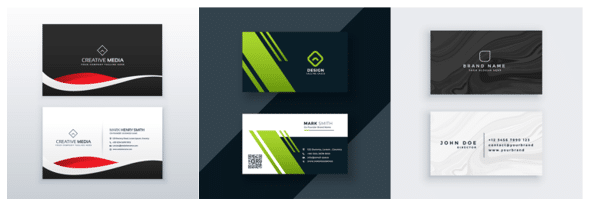
Business Cards Examples

4. Follow Basic Design Principles

The most effective business cards follow the basic principles of design. Take into consideration design principles such as emphasis, hierarchy, pattern, white space, and unity. These all work in tandem to create functional, visually appealing designs. Check out our blog to learn how to choose your brand colors.

When it comes to good business card design principles, often less is more. Some of the most effective business card design concepts are the simplest ones. Busy or cluttered designs can overwhelm the eye, so it’s best to focus on simplicity and stray from unnecessary text or graphics.

5. Include A Call To Action

While a call to action (CTA) isn’t a universal business card requirement, it can be helpful when encouraging potential clients to take the next step. Entice customers with a special offer, discount code, social media shoutout, useful tip, or any other incentive that will get them interacting with your business. You can find fun or clever ways to incorporate the CTA into your design or simply place a QR code on the backside of your card and leave the front as-is.

6. Finalize Your Design

The last thing you want is to open a freshly-printed box of new business cards only to discover there’s a typo. One of the most crucial business card design tips is to proofread, proofread, PROOFREAD! Ask a coworker or friend to double-check your card design for spelling errors or anything else that may look a bit off. It never hurts to enlist the help of a second set of eyes! Additionally, double-check and adequately label your final files to avoid any printing confusion.

Once you’re 100% positive that your design is ready to go, send it off to the print shop! Make sure you choose a trusted establishment with experienced professionals who will do your design justice. As we previously discussed, quality is what makes a great business card. Check out these tips for deciding how much to spend on your marketing budget.

Business Cards Agency

Choosing The Right Design Agency For Your Custom Business Cards

Business cards will always be a must-have marketing tool, because nothing beats the first impression of custom branded identity print pieces. Don’t settle for a premade template that thousands of companies are already using—you deserve a design that is unique to your business!

At MARION, our design studio is skilled in digital and conventional mediums to effectively communicate every aspect of your business strategy. We custom design and print business cards on a range of paper stock options and print finishes to grow your brand awareness and satisfy your marketing needs.

Schedule a free consultation today to learn more about our graphic design services in Houston, Texas.

Marketing emails you’ll actually want to read.

Get marketing tips and news sent to 
your inbox.

This field is for validation purposes and should be left unchanged.
Name(Required)

How to Build a Digital Content Strategy That Dominates Your Industry

Now more than ever, the success of your business depends on your ability to reach potential customers through digital platforms. The Coronavirus pandemic showed the world that traditional, face-to-face marketing is not always possible. Meanwhile, creating an effective web presence for your business practically allows you to generate new business around the clock.

But, in a world where all businesses understand the importance of being found online, how do you transcend the noise? Building a well-researched content strategy for the web is your ticket to a sustainable competitive advantage in your market.

What Is Content Strategy?

Content strategy is the planning and management of all media assets, both traditional and digital, that your company owns. Content strategy is essentially the roadmap that your content marketing campaigns follow to drive results. A sound content strategy is the difference between a marketing department that is treated as a cost center vs. a profit center.

Is a Digital Content Marketing Strategy the Same?

A digital content strategy is part of your content strategy that plans and manages your digital media assets. Content planning in digital marketing has become markedly different from traditional content planning and strategy. Many times, traditional and digital content strategies are trusted to separate sub-units of a marketing department because of the required skill sets.

digital content strategy plan

Some of the main marketing activities of a digital-first content strategy include:

  • Web Design and User Experience (UX) Design
  • Search Engine Optimization (SEO)
  • Pay-per-Click (PPC)
  • Social Media Marketing (SMM)
  • Video Marketing

Why Is a Content Strategy Important?

Content marketing without a content strategy would look like a young child’s soccer game. The game has clearly defined rules and strategies for success, but the players are mostly unaware of them and exert themselves all the same. Your content strategy converts your marketing exertion (employee time, marketing budget, supporting software and marketing tools) into revenue from customer conversions.

Digital Transformation for Marketing

After serving East Texas customers for nearly 40 years, it was easy to identify which businesses were early adopters, majority, or laggards when it comes to building an online content strategy. Some businesses were active participants in trade shows and placing bids on public jobs but didn’t even have a website. Today, having a website and profiles set up on common social media platforms is expected for nearly all brands.

For help with the digital transformation of your marketing, speak with MARION about how our digital marketing agency can help!

Digital Content Types

Digital content isn’t strictly limited to the pages on your website. While many forms of online media are hosted on your site, others can be found across the web on third-party platforms. Some of the more common types of digital marketing content are listed below.

  • Web pages
  • Blog posts
  • Social media posts
  • Case studies
  • Infographics
  • Ebooks and whitepapers
  • Emails
  • Display ads
  • Videos
  • Podcasts

How to Create a Digital Content Strategy

Learning how to make a content strategy for your digital assets can be easy when you follow the right framework. In the sections below, we cover how you can build a digital content guide in five broad steps.

  1. Establish Goals
  2. Audit Existing Content
  3. Conduct Content Strategy Research
  4. Create Digital Content
  5. Publish and Promote

1. Establish Your Goals

Your marketing goals and objectives will frame your entire approach to building a content strategy. The following examples will illustrate very different business needs that will help create an appropriate digital marketing content plan.

content planning in digital marketing - goals

A B2C company that sells packaged food products to grocery retailers may be interested in developing a robust online presence, but it doesn’t need to generate sales with its internet content. They know they can stick to top-of-funnel educational content to build awareness with their target audience and demonstrate expertise to their potential distributors.

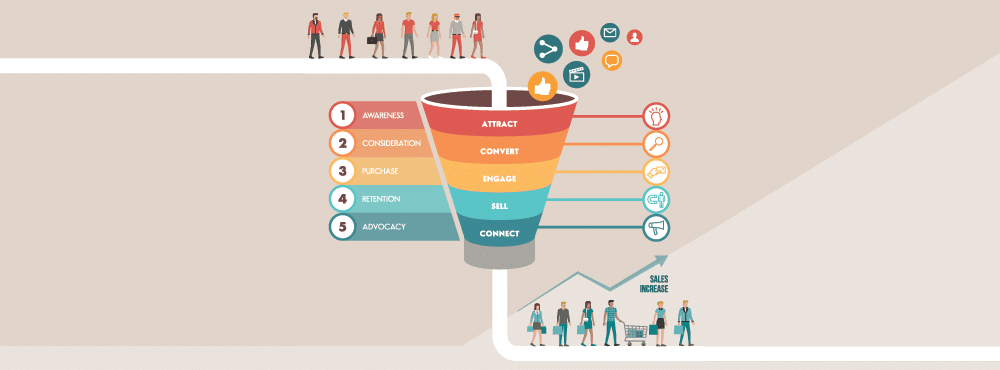
A B2B company that sells high-ticket industrial equipment can generate some sales through its existing network, but they count on their digital content to generate most of its leads. When digital marketing for manufacturers needs to generate business leads, a more inclusive digital content strategy is required. Top-of-funnel, middle-of-funnel, and bottom-of-funnel digital content must be included in a content strategy map that can meet customers at the awareness, consideration, and decision-making stages of their buying process.

When lead generation is the main concern of your digital content strategy, SEO will be a recurring theme that needs to be covered in your planning process. MARION can help deliver effective content marketing services and SEO services to breathe life into your strategy.

Another key part of your goal setting involves who you want to reach with your digital media. Creating buyer personas is a great way to paint a picture of your ideal customer so that you can shape your content to appeal to that persona. We cover the creation of buyer personas in our guide about marketing strategies to improve sales.

2. Audit Your Existing Content

After you’ve established your digital marketing goals, visit your existing base of digital media to see what can be used or reused to meet those goals.

For companies that have been entrenched in a purely traditional marketing approach, you may be able to transpose sell sheets into middle-of-funnel or bottom-of-funnel content assets.

For companies that have been engaging in business blogging without any underlying strategy, you may have plenty of insightful blog articles on your website that just need edited and updated to suit your goals.

digital marketing content plan

Whatever your situation, take inventory of your existing media and, at a minimum, label which stage of the customer journey (awareness, consideration, decision) it pertains to the most. You can also document whether it has a relevant call to action. For instance, if you turn a sell sheet into a web page about your products, you need to have clickable phone numbers or an online form embedded on your page.

3. Do Content Strategy Research

If you’re developing a content strategy that aims to generate customer conversions, your content strategy plan will involve a lot of SEO considerations. One of the best approaches for turning your website and digital marketing properties into an SEO powerhouse is to build the largest, most authoritative base of relevant content in your market.

The best tool to do this with is SEMrush. This video by the SEMrush team walks you through a method for identifying and building a digital-first content strategy that can help you outperform your competitors.

4. Create Your Digital Content

You can create your digital marketing content plan now that you know what topics you need to cover and which technical items you need to include in your digital content.

For blog posts and web pages, use the keyword research that you gathered using SEMrush to create a framework for your page or article. This framework should identify which subtopics you need to include (based on your research of top-performing competitors) and which keywords need to be used within the article.

online content strategy - research

For video content, feel free to use the same topic and keyword research while creating your script. If you’re using YouTube to host your video online, but sure to optimize the tagging section with relevant keywords and include your closed captioning. By seamlessly integrating relevant keywords from the start of your video creation process, you’re setting your production up for success. However, creating a quality video with real insights is a dimension that you’ll have to cover on your own.

IMPORTANT NOTE: Creating digital content that is technically optimized is a qualifying dimension in today’s competitive environment. For your content strategy research to pay off, the insights in your digital content need to be high-quality, and your writing or speaking needs to be engaging and professional.

5. Publish and Promote

Your digital content marketing strategy means nothing if it’s not being found by your target audience. Where are you planning to distribute your new digital content assets?

digital content strategy map for publishing

If you’ve properly optimized your content for search engines, your plan may not be distribution-heavy. Ideally, your new content will rank for relevant keywords and attract your target audience on its own. However, there are ways to supplement that traffic and improve your odds of being found.

For example, your social media posts don’t have to be stand-alone pieces of content. You can create a social media content calendar that systematically shares links to your new website content. You can send regular email updates to your list of subscribers that include references to your videos. You can run paid search ads to your newly minted case studies or whitepapers. You can learn how to advertise on social media so that your new digital content reaches a wider audience than you ever thought possible.

Keep in mind that your digital marketing content plan should include suggested distribution channels even before your content is created. By combining these forethoughts with your customer persona information, you can craft content that truly speaks to your potential customers.

MARION Can Help You Create a Winning Digital Content Strategy

When you’re in need of Houston or Austin web design, content marketing, SEO, social media marketing, or even just general marketing strategy, MARION can help. We have in-house experts that know how to drive results for both B2C and B2B clients in Texas.

Contact us today to schedule a free consultation and discover how we can turn your current marketing assets into a revenue-generating machine!

Marketing emails you’ll actually want to read.

Get marketing tips and news sent to 
your inbox.

This field is for validation purposes and should be left unchanged.
Name(Required)

Generate ROI with Content Marketing for Manufacturers [W/ Examples]

Too many B2B marketers aren’t taking advantage of content marketing, which can cost less than other traditional marketing methods and generate more business leads.

According to DemandMetric, content marketing costs over 60% less than traditional marketing and creates three times as many leads. Discover how your industrial company can develop and leverage a content strategy for better ROI.

Why Is Content Marketing Difficult for Industrial Companies?

Content marketing is a marketing methodology that concentrates on providing valuable information to potential customers and a targeted audience. Inbound marketing agencies use content marketing to create solutions, then let the right prospects find those solutions and request to become a paying customer. Instead of pushing your solutions, you’re providing part of them for free and pulling qualified leads to you.

Content marketing strategies for industrial and manufacturing companies differ from an average business. It can be difficult to come up with engaging content due to the niche content and often “dry” subject matter. Your audience will also be much smaller and more knowledgeable.

Why You Need a Content Strategy for Manufacturing Marketing

According to the Content Marketing Institute, only 51% of North American manufacturing marketers (compared to 73% of B2B content marketers) prioritize their audience’s content needs. From a search engine optimization (SEO) standpoint, putting out optimized content can also increase your organic rankings and drive more traffic to your website. Get ahead of the curve in your industry by creating an effective content marketing strategy.

Content marketing is a cost-effective method of reaching consumers. Your target clients are most likely high-level decision-makers that conduct a lot of research before making any final choices. Build trust and create loyalty through content marketing by providing value to your customers. By answering their questions and solving their issues, you are establishing your company as a thought leader and demonstrating that you are a better, more experienced option than competitors.

manufacturing content marketing strategy

Examples of Manufacturing Content Marketing

When it comes to the inbound marketing methodology, there are three main steps in your customers’ journey:

  1. Awareness
  2. Consideration
  3. Decision

During each phase, the customer has different needs and goals to consider as you develop your industrial content marketing.

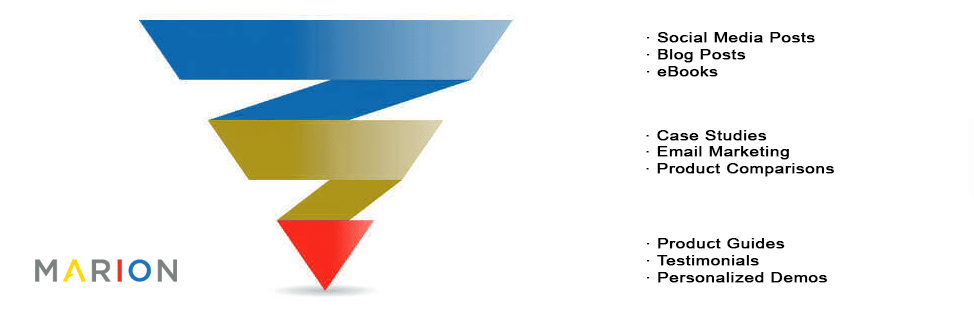
Top of Funnel Examples

content marketing for industrial companies

At the top of the funnel, you are primarily focused on fostering awareness. Your potential client is starting to realize they have a problem and they are looking to find out what it is. Your goal is to educate them and position your offering as (at least part of) the solution.

Blog Posts

Blog posts are a great way to distill complex information into an accessible and approachable format. New visitors will be more likely to engage with your website and start a conversation with new topics and issues for them to consider. Over time, it will also help drive traffic as your industrial or manufacturing SEO improves.

Social Media Posts

Promote your blog posts and other content you create via social media, an inexpensive and effective method for disseminating information and increasing brand visibility. Social media for manufacturers provides opportunities for your audience to discover more information. Your followers are already interested in what you have to say, so you’re always reaching the right audience.

eBooks & Whitepapers

If a topic requires more in-depth treatment, eBooks are a great way to provide value to potential customers. Your B2B customers typically enjoy eBooks because it feels like they are receiving something very useful for free.

Middle of Funnel Examples

content marketing for manufacturing companies

This is the “consideration” stage, where your potential clients are conducting research on who to give their business to. The goal of your manufacturing marketing strategy during this stage is to demonstrate that you are the best fit for their needs.

Case Studies

Case studies are a great way to persuade potential clients that your business is the right choice. Analyze previous success stories so your audience can see how you solved problems for similar customers.

Email Marketing

Email marketing is an inexpensive yet effective method to nurture your leads. With this B2B marketing strategy, you can target different groups by segmenting your email list. Use a drip email marketing campaign to regularly send prospects educational content and develop trust in your brand over time.

Product Comparisons

In the middle of the funnel, buyers know they need a product or service but aren’t sure which one to choose or which features even matter. A buyer’s guide for your solution can help reduce their friction.

Use comparisons of your solutions and your competitors’ offerings to help prospects identify the difference in value. This tool helps highlight your advantages in advance and hopefully moves your would-be customers closer to a purchasing decision.

Bottom of Funnel Examples

industrial content marketing

At the bottom of the funnel, your prospective customers enter the “decision” stage. Your goal is to convert them into a customer by convincing them to choose you over your competitors with all the right targeted content.

Product Guide & Videos

Videos are a great way to showcase your products, services, or testimonials in a visual manner. Some products or services need to be demonstrated, and videos help you answer any remaining questions in a more personal and engaging medium.

Customer Testimonials

Testimonials straight from your previous customers tell your prospective clients that you value customer experience and work to deliver a quality solution. Make it as easy as possible for past customers to share their experience working with you to ensure authenticity.

Personalized Demonstrations

One of the most effective ways to use content marketing to convert your customers is a personalized demo. Create a video that demonstrates exactly how your business can provide the solution to their specific issue. Personalized videos help your lead feel like you are invested in them and are willing to go above and beyond.

Contact MARION for Help with Your Industrial Content Marketing

If your manufacturing company is looking to get started with content marketing, MARION is happy to help! We have decades of experience delivering high-quality manufacturing web design, print design, and marketing campaigns for Texas-based businesses.

Contact our team of experts today and find out how we can help you get started with content marketing for manufacturers.

Marketing emails you’ll actually want to read.

Get marketing tips and news sent to 
your inbox.
This field is for validation purposes and should be left unchanged.
Name(Required)

7 Tips on How to Give Helpful Graphic Design Feedback to Your Agency

For the best results, a graphic design firm should not be at the mercy of their client when it comes to properly performing their jobs. Professional agencies that offer graphic design services tend to work best when there is respectful and clear communication between themselves and their customers.

As the client, knowing what feedback to offer will greatly improve the quality of the project you currently have on the chopping block. There’s nothing wrong with giving feedback when it’s warranted – it just depends on how you say it.

7 Tips for Giving Graphic Design Feedback

Here are 7 tips on how you can give helpful graphic design feedback to your agency.

1. Be Clear with Your Expectations

Feedback is only useful when it’s specific. If it’s vague, you can’t blame your agency for producing less than desirable results. For example, you can provide a graphic design brief or links to a competitor’s website to give your agency a visual idea of what you’re after. Try to focus on communicating as much information as possible to avoid frustrating, and potentially unnecessary rounds of revisions.

2. Research, Research, Research

Good feedback often requires copious research. There’s no reason to be ashamed if you have no clue what makes a good business website or how to make a good logo. Online research can give you some of the context you need.

For example, you could pull up samples for layouts, colors, or design inspirations; anything you feel can help the project along. Take your existing brand guidelines into consideration during this time to keep the project on track.

3. Be Direct and Honest

graphic design feedback

Don’t be afraid of restraining your feedback in fear of hurting someone’s feelings. Professionals should be more than capable of taking your feedback and molding it into exactly what you need for your business. Be direct and honest with your expectations, but be kind and courteous with your words

4. Ask Questions

It’s okay if you’re unsure how to approach a project. If there are specific aspects of the project you’re confused with, make sure you ask questions. Remember, no question is a stupid question (no matter how ridiculous it may seem), because it only increases your own knowledge. If you have a question, don’t be afraid to ask!

5. Stay Focused on the Goal

What’s your end goal? Does it align with your brand guidelines? It may be difficult, but you must leave your personal likes and tastes at the door and make sure you’re focusing solely on the interests of your business.

Just because you personally don’t like purple doesn’t mean a purple logo for your business is a bad idea especially if it matches the tone of your brand. Remember that you and your business are two separate entities. Keep your personal bias out of the equation and stay focused on your goals.

6. Don’t Involve a Lot of People in the Decision-making Process

Nothing’s worse than bringing in a group or committee to come to a decision on a graphic design project. Heads will inevitably butt, feelings will become involved, and worst of all the decision-making process will be prolonged and delayed. Sure, you could always try to compromise to accommodate everyone’s opinions, but that may lead to even more disagreements amongst the group.

how to give feedback on a website design

With that being said, sometimes you have no choice but to work with a group or committee. In such instances try to ask direct questions to keep the project on track such as “does this color show empathy and compassion” or “does our logo appeal to an older audience?”

Asking questions such as “what do you think” will only prompt a wave of personal opinion which may or may not be beneficial to the project.

7. Consolidate Your Feedback from All Sources

It’s important to pool feedback from all sources, especially if you’re working with a group (as explained in tip 6. Sure, not all of the feedback suggestions you receive may be the best ideas for the project as a whole, but presenting your compiled list to your graphic designer will allow you both to sit down and find what’s best for your brand, and what needs to be thrown out to the trash bin.

Final Thoughts on Feedback for Graphic Design

Communication between clients and agencies are a must for any successful graphic design project. It all boils down to what you communicate and how you communicate it. If you’re clear, concise and respectful, your feedback should be well-received, and the changes incorporated into your project with no problems.

Are you in search of a top-rated marketing agency? We can help. MARION has decades of experience and houses a team of graphic design professionals ready to take on any project you need. Our graphic design firm in Austin & Houston is on standby to meet your graphic design needs.

Contact us today to learn more about the services we can provide for your business.

Marketing emails you’ll actually want to read.

Get marketing tips and news sent to 
your inbox.
This field is for validation purposes and should be left unchanged.
Name(Required)

How to Write a Design Brief for Graphic Designers [w/ Template!]

A good design brief template is like a map. Without it, you’re going to get lost. Writing a design brief for graphic designers requires attention to detail as you attempt to communicate the scope and goals of your project.

Before jumping in with both feet, you need to have a firm understanding of what’s required on your end to craft a highly effective graphic design brief.

At the end of the article, we will provide a template you can use for your own projects in the future.

What Is a Design Brief in Graphic Design?

A design brief is an outline that focuses primarily on the business objectives, outcomes, and results of project design, rather than the actual design itself.

You, as the client, are not responsible for creating the design (leave that part to the professionals at MARION). It’s your job to focus on your objectives and to provide guidance for the graphic designer.

What Information Is Included in a Design Brief?

what information is included in a design brief?

Design briefs are straightforward. The information you need to provide will give your graphic designer an intimate look into your business. As a general rule of thumb, the more information you provide the better.

What does a design brief include?

  • Who your audience is
  • The scope of the project
  • The tone of the project
  • Due dates
  • How you intend on measuring the success of the project
  • The problem you’re solving
  • Your competition
  • Aesthetic design ideas
  • Any other relevant information about your business

Your graphic design brief should give your graphic designer everything they need to hit the ground running.

Want to work with the professionals? Take your project to the next level by working with MARION for graphic design in Houston.

5 Tips for Writing a Design Brief for Graphic Designers

Now that you have a firm understanding of what a graphic design brief entails, let’s look at 5 tips for successfully writing a design brief for graphic designers.

Keep in mind that you may need to specify the channel you intend to communicate with the design. For example, our Houston web design process may end up looking very different from a design intended for print collateral.

1. Highlight your specifications

What are the specifications of your project? Do you have a brand style guide that must be followed? What size do you need the design to be? Will you require business cards? Flyers? Posters? Web banners? Car decals? Do you have any existing .PSD files from previous designs?

Provide as many specifications as you can. The more details, the better. Chances are, if you leave some important details out for the sake of being concise, you’ll end up with more time-consuming back-and-forth later.

2. Identify your target audience

creative brief examples graphic design

Give an in-depth breakdown of your target audience. What is their income bracket? Do they own businesses? Where do they shop? How often do they purchase from your business? What’s their age range?

Try to paint a customer profile so vivid that your graphic designer can practically see the faces of your clientele.

3. Set a budget

One of your top goals should be to maximize the amount of money you intend on pouring into your project. Setting a budget lets your graphic designer know what they can and can’t do.

Having a budget in place also lets your graphic designer know if you can afford their time and creativity – top freelancers and agencies won’t consider your design brief if you don’t have an adequate budget.

Your project deserves a top tier graphic design team. Why don’t you try working with Houston marketing agencies like MARION! Our design team has been serving Texas-based businesses for nearly 40 years. We have provided countless Houston and Austin custom website designs, collateral creation, branding services, and more!

4. Create a corporate profile

Identify as many details about your business as possible. How long have you been in operation? What’s the size of your business? What’s your reputation? The best design briefs get into the nitty-gritty when it comes to in-depth details about your business.

Make sure you leave the sales pitch at the door. You’re not trying to sell your business in your design brief; you’re making sure your graphic designer understands every aspect of your business so they can sell it visually.

5. Set a deadline

As with any project, you should set a realistic deadline for work completion. Consider every step along the way and give your graphic designer plenty of leeway to finish the project without feeling rushed (that way they’ll deliver a higher quality end product).

You should avoid rush jobs if possible. However, if you need a project done ASAP, be upfront with your expectations. That way your graphic designer will know what they’re signing up for.

Creative Brief Examples for Graphic Design Projects

It’s one thing to explain the details of a creative brief. It’s quite another when you can see examples for yourself. If there was any singular theme in this article, it’s that the more details you add to your brief the better. Here are a few examples we’ve found that will give you a good idea of what an excellent creative brief entails.

Design Brief Case Study #1:

graphic design brief template
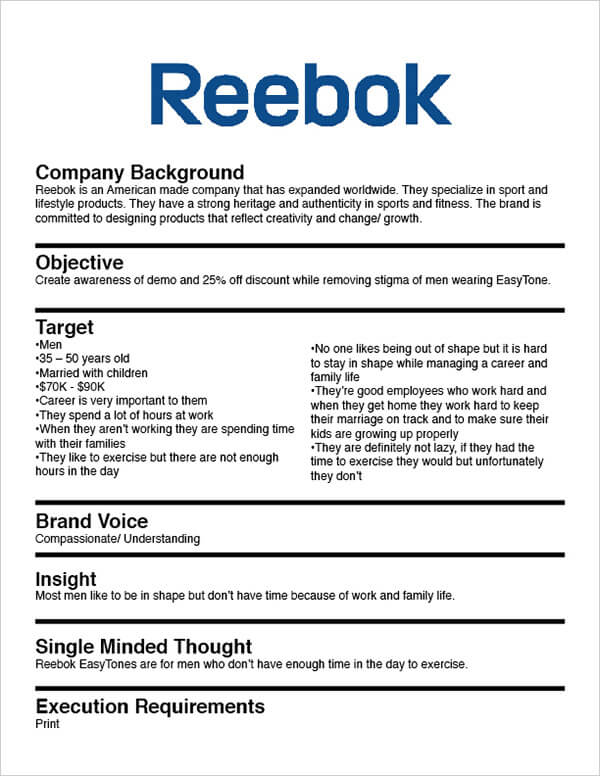
Reebok Shoes

This example does a lot of things right. It gives an adequate company background, notes the objective, highlights the execution requirements and more. What this creative brief accomplishes exceptionally well is the description of the target audience. In essence, this brief is “customer-centric.”

Design Brief Case Study #2:

writing a design brief for graphic designers
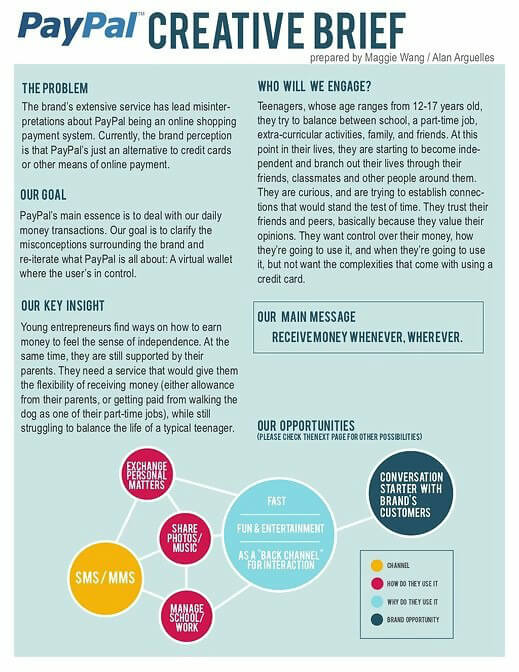
PayPal

This particular example hits all of its pain points pretty well, but where it stands out is its unique design. This creative brief makes it clear that it doesn’t matter how the content is presented. What matters is that the information is communicated effectively.

Get Expert Graphic Design Help Today!

Knowing how to write a brief for a graphic designer requires attention to detail to ensure your project is completed to your specifications.

If you’re in need of graphic design in Austin or Houston that will breathe life into your projects reach out to MARION today to see what we can do for you.

Marketing emails you’ll actually want to read.

Get marketing tips and news sent to 
your inbox.

This field is for validation purposes and should be left unchanged.
Name(Required)