The heartbeat of Houston reverberates through the dust clouds kicked up at the Houston Livestock Show and Rodeo, an iconic event that consistently ropes in massive crowds year after year. As experienced marketing creatives in Houston, the team at MARION has had the privilege of witnessing firsthand the marketing brilliance behind this annual spectacle.
Houston Livestock Show and Rodeo Success
In 2022, the Houston Rodeo had an incredible year, pulling in a whopping $190 million in revenue. It’s a testament to the event’s popularity and the fantastic experiences it offers to the community.
2023 was another huge hit, bringing together over 2.5 million attendees! The exciting mix of rodeo fun, great entertainment, and community spirit made it a must-attend event for folks in and around Houston.
Marketing the Houston Rodeo
As many of us already know, the Houston Rodeo is a cultural phenomenon, blending traditional rodeo events, world-class entertainment, and a carnival atmosphere. But what keeps this colossal event at the forefront of the city’s consciousness? It’s the rodeo’s unwavering commitment to strategic advertising.
Multiple Demographic Appeal
The Houston Livestock Show and Rodeo isn’t only about bull riding and country music. It brings together people from all backgrounds. Some come for the action-packed rodeo events. Others love the concerts, carnival rides, or family exhibits. And let’s be honest—the food is a huge draw. No matter what brings people in, the event keeps them coming back. That’s why rodeo advertising works. It reaches a wide audience with different interests.
Scholarships & Grants
The Houston Rodeo’s annual distribution of millions of dollars in scholarships serves as a marketing strategy by not only demonstrating a commitment to community welfare and education but also fostering a positive and loyal relationship with the local population.
This philanthropic effort not only enhances the rodeo’s reputation but also generates positive publicity, attracting sponsors and attendees who appreciate the organization’s dedication to supporting educational opportunities for the community’s youth. When people see an event investing in the future, they support it!
Partnerships & Sponsors
The Houston Rodeo brings in major sponsors like Coca-Cola and Verizon, but local businesses play a huge role too. National brands add credibility and funding, while hometown sponsors make the event personal. When a Houston-based company partners with the rodeo, it deepens its roots in the community. Rodeo advertising creates an opportunity to connect with an audience that’s already engaged.
Diverse Entertainer Lineup
Country, hip-hop, Tejano, pop; the Houston Rodeo lineup has something for everyone. A mix of artists means more ticket sales, media coverage, and social media buzz. Every night draws in a different crowd, keeping energy high throughout the event. For businesses, rodeo advertising taps into that excitement, giving brands exposure to thousands of attendees from all over.
Pre-Rodeo Events
Engaging activities like the Annual Go Texan Parade and Bar-B-Que Contest generate positive word-of-mouth advertising. Attendees share their experiences with friends and family, creating a buzz that extends beyond the event itself, effectively promoting the rodeo.
Additionally, these pre-rodeo events typically attract media coverage, providing the Houston Rodeo with additional exposure. News outlets — both local and potentially national — cover these festivities, further amplifying the rodeo’s reach and generating interest among a broader audience.
Make Houston Work for Your Business with MARION
Houston is full of opportunity. The Houston Rodeo proves how the right marketing can bring people together and build lasting connections. Imagine what a smart strategy could do for your business.
MARION helps businesses connect with the right audience through digital marketing, branding, and strategic partnerships. Local shop or growing company, we create marketing that sticks.
Local lead generation can be a game-changer for businesses looking to attract nearby customers. But is it the right approach for your business? The short answer: most likely, yes.
Let’s break it down and see why local lead generation is a smart investment.
What is Local Lead Generation?
Local lead generation is the process of attracting and converting potential customers in a specific geographic area. This strategy is essential for businesses that rely on foot traffic, local services, or community engagement.
Examples of Businesses that Benefit from Local Lead Generation:
Home service providers – Plumbers, electricians, and landscapers
Retail stores – Boutiques, furniture shops, and grocery stores
Medical professionals – Dentists, chiropractors, and physical therapists
Restaurants and cafes – Local eateries looking to bring in more customers
Law firms and financial services – Attorneys, CPAs, and insurance agencies
If your company depends on local customers, investing in business lead generation is a no-brainer.
How Does Local Lead Generation Work?
The key to local lead generation is making sure your business gets found by the right people at the right time. Here’s how it works:
1. Optimize for Local SEO
Local SEO helps your business get found when people search for services in your area. Start by claiming and optimizing your Google Business Profile. This is one of the most important steps for showing up in local searches.
Next, make sure your website includes local keywords like “roofing services in Dallas” instead of generic terms. Also, get listed on local directories like Yelp, Angi, and the BBB to improve credibility and visibility.
2. Run Targeted Ads
Paid ads can put your business in front of the right customers fast. Google Ads allows you to target people searching for your services in real time, while Facebook and Instagram ads help you reach potential customers based on their interests and location. If you’re looking for an extra local push, try Nextdoor advertising, which focuses on connecting you with people in your immediate neighborhood.
3. Engage with Your Community
Building a strong local presence isn’t just a marketing strategy. It’s also about real connections. Here are some great ways to get your name out there:
Attend local networking events
Partner with other local businesses
Sponsor community events and sports teams
4. Encourage and Manage Reviews
Customer reviews can make or break your local reputation. The best way to build trust is to ask satisfied customers to leave reviews on Google and Yelp. Most people are happy to do it if you make it easy for them. But reviews aren’t just about word of mouth marketing; how you handle them matters too. Always respond professionally to both positive and negative feedback.
A simple thank-you goes a long way for happy customers, while a thoughtful response to criticism shows potential customers that you care. And make sure you don’t let great reviews go unnoticed; showcase testimonials on your website and social media to build credibility and attract even more business!
Fact: 76% of people who search for a local business on their smartphone visit a business within 24 hours. (Source: Google)
Expert Tips for Better Local Lead Generation
No fluff, no gimmicks – just real strategies that help local businesses get found and get customers.
Tip #1: Be Active on Google Business Profile
Make sure your business profile is always up-to-date with accurate information, such as your hours, address, phone number, and services. Regularly updating this information ensures potential customers can easily find and contact you. In addition to keeping the basics updated, take the time to post weekly updates, promotions, or special offers.
This helps your business stay relevant in search results and signals to Google that your profile is active, which can improve your visibility. Engaging with customer reviews and responding promptly also adds credibility and trust to your profile, encouraging more interaction and conversions.
Instead of “best plumber,” try “best plumber in Austin, TX.” It makes a huge difference in rankings.
Tip #3: Test Different Ad Platforms
Google Ads work for immediate results but don’t sleep on Facebook, Instagram, and Nextdoor.
Facebook and Instagram let you target people based on interests, location, and behaviors, while Nextdoor helps you specifically reach people in your local area. Trying out different platforms can help you find where your ads work best and connect with more potential customers.
Tip #4: Build Relationships with Other Local Businesses
Cross-promote each other’s services. A coffee shop and a bakery? Perfect referral partners. This kind of collaboration not only drives more foot traffic but also strengthens relationships with other local business owners.
Tip #5: Track Your Results
Use tools like Google Analytics, Facebook Insights, and call tracking to measure what’s working. Tracking your results helps you see which integrated marketing campaigns or strategies bring in the most leads, so you can invest more in what’s effective.
Common Questions About Local Lead Generation
Q: How long does it take to see results?
A: SEO and organic efforts can take 3-6 months, while paid ads can generate leads in days.
Q: Do I need a website for local lead generation?
A: Yes. A website builds credibility, improves SEO, and acts as a hub for your marketing efforts.
Q: What’s the best platform for local lead generation?
A: Google Business Profile is essential, but Google Ads, Facebook, and local directories are great too.
The bottom line is: more people than ever are searching online for local businesses. If your company isn’t showing up where customers are looking, you’re losing business to competitors who are actively advertising their small local business.
Final Thoughts: Is Local Lead Generation Worth It?
If you want more local customers, the answer is yes! A well-executed local lead generation strategy puts your business in front of people who are actively searching for your products or services.
High-impact, low-budget methods that drive results.
It’s hard to decide what we love more about the Super Bowl — the game or the ads. Seeing what companies do with massive advertising budgets can provide creative inspiration, a preview of trends for the year ahead and, of course, entertainment.
Here, we give you our playbook for marketing that helps you connect with customers throughout the sales cycle — from first down to touchdown. And here’s the really great news: you can run these plays without a million-dollar budget.
The answer is: you can’t. So, here’s how your business can benefit from email marketing plus a few more ways your email marketing can be more effective and cut through the clutter.
Zero in on your target audience.
When resources are limited, the key to success is focusing on the right audience instead of trying to reach everyone. By understanding who your ideal customers are — where they spend their time, what matters most to them, and how they engage — you can allocate your budget more effectively and ensure your message resonates.
To achieve this, start by exploring the information you already have. Review your social media platforms for insights into engagement. What content do customers engage with the most? What channels do they spend the most time on, and when are they the most active? Investigating your email marketing analytics can also provide useful insights. Focus on data such as open rates and click-throughs, with particular attention paid to the pages of your website they click on the most. It’s also important to understand how customers behave after you’ve guided them to your site. Heat map tools such as Hotjar and Microsoft Clarity can help you to analyze trends and patterns in user behavior — and tweak your website to make it easier to use, if necessary.
Once you have a clear picture of your audience, it’s time to craft messaging and campaigns tailored to their specific needs and interests.
Leverage Social Media (Strategically).
Social media is a powerful tool for building connections, sparking engagement and amplifying your brand — often with minimal cost. Standing out doesn’t require a massive budget, but it does demand consistency, creativity and intentional strategy. By focusing your efforts where your audience is most active, you can create meaningful interactions that strengthen relationships and grow your presence.
To make the most of social media, share content that resonates with your audience and provides real value. Short videos, infographics, behind-the-scenes glimpses and client success stories are great ways to engage followers and showcase your brand’s personality. By maintaining a steady flow of authentic, relevant content, you’ll build trust and keep your audience coming back for more.
Through giveaways and strategic influencer partnerships, we helped to expose unfamiliar audiences to our client Kountry Boys’ products.
Embrace Email Marketing.
Email marketing remains one of the most effective and budget-friendly ways to nurture leads and keep your brand top-of-mind. Unlike other channels, email allows you to communicate directly and personally with your audience, delivering valuable content right to their inbox. With a well-crafted message, you can build relationships, drive engagement and encourage action — all without the need for a massive budget.
To make your email marketing impactful, focus on delivering regular updates, promotions or thought leadership that resonates with your audience. Use attention-grabbing subject lines, clear calls to action and visually appealing designs that are easy to navigate, especially on mobile devices. By consistently offering value and maintaining a polished, professional format, your email campaigns can strengthen connections and keep your brand at the forefront of your audience’s mind.
Get creative with content Marketing.
Content marketing is a powerful way to build trust and position your business as an authority in your industry. By creating valuable and engaging content — such as blogs, landing pages and case studies — you can educate and entertain your audience while showcasing your expertise. The added bonus? Great content is shareable, helping you expand your reach and attract new potential customers organically.
To make content marketing work, focus on solving your audience’s problems and answering their questions. Whether it’s through blog posts, how-to guides or bite-sized tips for social media, your content should deliver value in a way that resonates with your audience. By staying creative, relevant and consistent, you can stay top-of-mind with your audience and drive meaningful results for your business.
We created informational landing pages — such as this one on the subject of severe autism — to help users searching for information about the condition to connect with our client, Nexus Health Systems.
Be bold and authentic.
The most memorable Super Bowl commercials stand out not because of their big budgets, but because they’re gutsy and authentic. You don’t need millions of dollars to make an impact — just a willingness to tell your story in a relatable, genuine way. When your message feels real, it resonates with your audience and sets you apart from the competition.
Start by leaning into what makes your brand unique. Share your history, highlight customer testimonials or showcase fun, behind-the-scenes content that brings personality to your business. People connect with authenticity, and seeing the faces, stories and values behind a brand builds trust and loyalty. Being bold doesn’t mean being flashy; it means being confident in your business’ identity and the value you offer.
At the end of the day, connecting with your audience doesn’t require the scale of a Super Bowl ad. It takes intention and a focus on what truly matters: building genuine relationships. Because when it comes to marketing, real connection always beats flash.
Ready to make your message heard — without breaking the bank? Contact us to get started.
If you want to drive more organic traffic and make your content work smarter, not harder, it’s time to take a closer look at how these strategies work together. Here’s everything you need to know about content mapping and SEO.
What is Content Mapping?
Think of content mapping as a way to deliver the right content to the right person at the right time. It’s all about creating content that aligns with your audience’s journey, from first discovering your business to becoming a loyal customer.
Key Components of Content Mapping:
Buyer Personas: Who is your audience? What are their goals, challenges, and pain points?
Customer Journey Stages: What are the steps your prospects will take? (awareness, consideration, and decision)
Content Alignment: How can you match your content to specific personas and their stage in the journey?
Why It Matters: Content mapping makes your digital marketing more efficient and focused. Instead of guessing what your audience wants, you’re delivering exactly what they need when they need it.
The SEO Side of the Equation
Search Engine Optimization ensures that the content you create gets found. Without it, even the best content can sit unseen. Pairing SEO with content mapping means you’re not only creating content for your audience but also optimizing it to rank well on search engines.
How SEO Complements Content Mapping:
Keyword Research: Identify what your audience is searching for at each stage of their journey.
Content Structure: Use headings, subheadings, and metadata to make content easier to read and index.
Search Intent: Understand why someone is searching for a term and create content that answers their query.
How to Build a Content Map with SEO in Mind
Here’s a 5-step guide to successfully combining your content mapping and SEO efforts:
Step 1: Know Your Audience
Start by truly getting to know who you’re talking to. Who are your ideal customers? Researching buyer personas can help you understand their goals, challenges, and what drives their decisions. If you can, use tools like surveys, interviews, or analytics to gather insights that paint a clear picture of your audience. The better you know them, the easier it is to create content they’ll care about.
Now it’s time to dig into what your audience is searching for. Tools like Ahrefs or SEMrush can help you uncover the terms and questions your potential customers are typing into search engines. Focus on long-tail keywords (specific phrases that match their concerns or interests.) This approach helps you align your content with the exact topics your audience wants to learn about.
Step 3: Map the Customer Journey
Stage
What They Need
Example Content
Awareness
General information about a problem or goal
Blog posts, infographics
Consideration
Comparisons, pros and cons, how-to guides
eBooks, case studies, white papers, videos
Decision
Proof of your value and why they should choose you
Testimonials, free trials, demos
Step 4: Create Content That Ranks
When it’s time to start writing, focus on making your content as useful and actionable as possible. Do your research, and don’t skimp on providing real value. Keywords are important, but they should feel like a natural part of the flow (not crammed in awkwardly.) Boost your content’s credibility with link building. Include both internal links to your own pages and external links to trusted sources.
In short, you should:
Write actionable, well-researched content
Include keywords naturally without forcing them
Add internal/external links to improve credibility
Once your content is out there, keep an eye on how it’s performing. Use analytics tools to monitor traffic, engagement, and conversions. If something isn’t clicking with your audience, tweak your content map and adjust your strategy to focus on what’s working best. This ongoing process helps you stay aligned with your audience’s needs.
Tips to Get Ahead:
Conduct a content audit: Review existing content to find gaps and opportunities.
Cluster your topics. Group related topics and keywords to create a series of content.
Repurpose your content. Turn a webinar into a blog post, infographic, or social media series.
Collaborate across teams. Involve sales, customer service, and marketing to gather diverse insights.
The key to long-term success? Keep refining your strategy as your audience evolves. The more you adapt, the better your results will be.
Let MARION Guide Your Content Strategy
Not quite confident in your content strategy? At MARION, we specialize in everything digital marketing – content marketing, SEO, social media, PPC services, internet marketing audits and more. Our team understands how to align your content with your business goals, ensuring every piece you create works harder for your brand.
One of the best ways to ensure you have a consistent marketing strategy is to engage in integrated marketing.
But what is integrated marketing? It’s the process of unifying various advertising mediums in order to seamlessly deliver a cohesive message. This means that whether you visit the organization’s website, browse its social media accounts, or receive its emails, you’ll see similar content that demonstrates the brand’s core values or messaging.
So what does this look like in practice, and what popular channels can be used to accomplish an integrated marketing campaign?
The Effectiveness of Integrated Marketing Campaigns
Integrated marketing campaigns are highly effective for several different reasons. Since you’re using multiple channels to communicate with your customer base, you’ll reach a larger audience than you would with a single channel. Most of your audience will also likely see your messaging on various platforms, which keeps your company top-of-mind for customers who may need your products or services in the future.
Furthermore, an integrated marketing strategy can save you money since you can reuse much of the advertising content you create on different platforms. Minor modifications can keep content fresh and ensure it’s suitable for a particular channel.
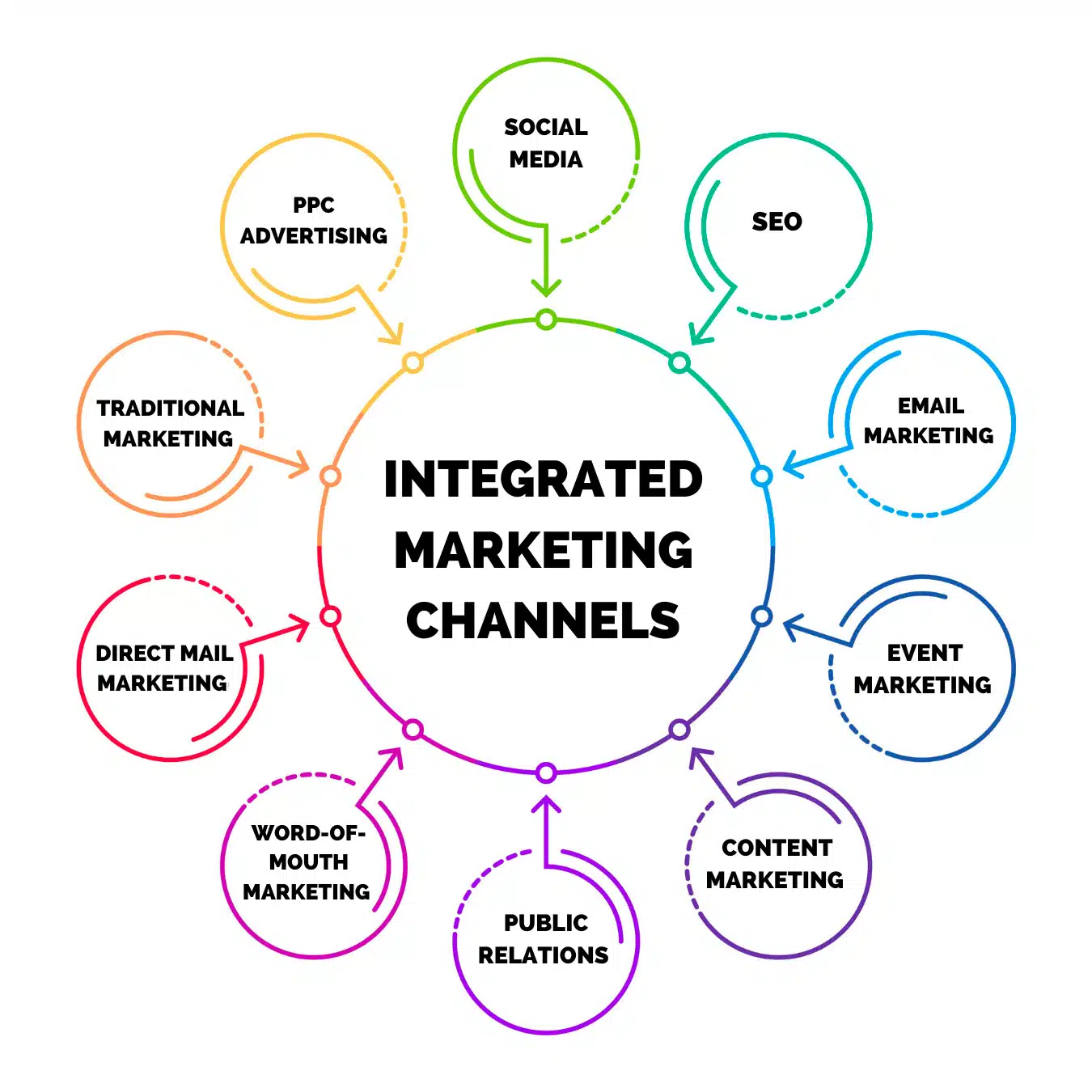
Top 10 Integrated Marketing Channels
There are several integrated marketing channels to choose from. Here are ten of the most common that companies rely on.
Email marketing is a time-tested integrated marketing tool that continues to be one of the most effective for driving conversions and building brand awareness. It lets you communicate directly with people who have signed up for your marketing list.
With the right tools, you can tailor your emails to match each customer’s interests and preferences, making your messages more relevant and impactful.
2. Social Media (Organic and Paid)
Social media platforms are powerful tools for displaying ads and content to your audience, including your followers and others who match your target. You can use your social media accounts organically to engage with followers or invest in paid ads to expand your reach. Organic content helps build trust with your current customer base, while paid social media ads are ideal for attracting new followers, increasing conversions, and boosting brand awareness.
A successful integrated marketing strategy includes both organic and paid social media efforts. Organic content can help nurture customer relationships, while paid ads drive wider visibility and more conversions.
Here’s how you can get the most out of social media marketing:
Organic Content: Builds trust and keeps your current audience engaged.
Paid Ads: Helps grow your reach, increase brand recognition, and boost conversions.
Targeted Campaigns: Ensure you’re reaching the right audience through precise targeting.
Content Variety: Use a mix of visuals, posts, stories, and videos to keep your audience interested.
By using both organic and paid strategies, you can connect with customers at different stages in their buying journey and keep your marketing efforts consistent across multiple channels.
3. Search Engine Optimization
Search engine optimization (SEO) is all about making sure your website shows up when people search for what you offer. It’s like putting your business on the map, but online. By using the right keywords and optimizing your site’s structure, you increase your chances of being seen by potential customers. It’s not an overnight thing, but over time, good SEO builds trust and helps your site rank higher in search results, which means more visibility and traffic.
Plus, it’s a long-term strategy – once you’re ranking, it’s easier to stay there.
4. PPC Advertising
Pay-per-click (PPC) advertising involves placing ads where your audience is likely to see them, such as on search engines. While many advertising options require paying for mere placement, PPC only bills you when a customer clicks on your ads. Though its costs can escalate quickly, PPC advertising benefits companies seeking quick sales or other conversions.
5. Content Marketing
Content marketing is all about creating useful, relevant content for your target customers. It’s a way to show that you understand their needs and can offer real solutions. Whether it’s blogs, videos, or infographics, content helps build your credibility in your industry.
In a B2B integrated marketing strategy, content can position your business as an authority, helping you stand out from competitors. By consistently sharing valuable content, you can attract more organic traffic and keep customers engaged across multiple channels – like your website, social media, and email.
Ultimately, content marketing is about building trust and loyalty, leading to more sales and stronger relationships with your audience. It’s a powerful tool that supports your overall marketing efforts and helps you connect with customers in a meaningful way.
6. Direct Mail Marketing
Direct mail marketing is ideal for companies with customers in a limited geographic area. Using this channel, you can mail advertisements directly to clients who fit your target audience and are most likely to need your products and services.
For instance, a local restaurant may use direct mail to advertise its opening day to people within a five-mile radius.
7. Traditional Marketing
Traditional marketing encompasses a variety of advertising techniques, like commercials, print collateral, and billboards. While traditional marketing is losing ground to the popularity and potential of digital strategies, many brands still incorporate it into their integrated marketing plans.
8. Event Marketing
In event marketing, a company showcases its products and services at a tradeshow or another similar event. Event marketing often combines information and learning with product demonstrations.
In this format, it’s common for a company representative to speak at the main event, then later demonstrate the organization’s products on the trade show floor.
9. Public Relations
Public relations includes press releases and public company meetings, like shareholder events. Press releases are ideal when the company introduces a new product or has a significant change they want their clientele to know about. Ideally, news organizations, websites, or journals will pick up these press releases and reprint them, increasing your brand visibility and potentially growing your client base.
10. Word-of-Mouth Marketing
Word-of-mouth marketing has always been the most powerful form of marketing because it gives individuals a chance to spread the word to their acquaintances and give an honest recommendation, usually without the interference of the brand. It’s, therefore, crucial for companies seeking to expand their audience and enhance revenue.
Influencer marketing is a form of word-of-mouth advertising, but it’s less powerful than genuine, organic word-of-mouth. For example, organizations can pay for a partnership with an Instagram or TikTok influencer, using the influencer to promote their products or services to their audience.
It’s difficult, however, to control word-of-mouth marketing enough for integrated marketing strategies. Brands must rely on more involved (and therefore less effective) approaches, such as influencer marketing, to deliver a cohesive message.
Where to Begin with Your Integrated Marketing Campaign: Best Practices
If you’re interested in building an integrated marketing plan, here’s how to get started:
Decide on a universal message you can promote to your target audience
Determine the most suitable integrated marketing channels for your brand
Try your strategy out on a few channels before adopting it widely
Introduce more integrated marketing channels over time
It’s not an easy task, but there’s another solution that can deliver fast, effective results: working with a talented marketing agency.
Grow Your Business with MARION Integrated Marketing
Looking to grow your business? MARION has your back with integrated marketing strategies that work. If you need to boost your online presence, increase customer loyalty, or support your in-house team, we’ve got the tools and expertise to help. Let’s chat about how we can make your web marketing efforts more effective and drive better results. Reach out today!
Contact us today to learn more about our integrated marketing services.
From emails to images, here’s how AI helps to jump-start our workflow.
When ChatGPT burst onto the scene in November 2022, there was a lot of talk about generative AI rendering human creatives obsolete. While we haven’t found a tool that can match the nuanced output of experienced marketers, we do find ourselves using it to supercharge idea generation and speed up mundane tasks.
If you’ve been meaning to incorporate AI into your routine but haven’t found the time to do so, we encourage you to take the plunge. The new year is the perfect time to play around with AI tools and see what works best for you. We promise, you’ll be glad you did.
Here, we share some of the tasks we use AI for — so we can spend more time on the stuff that demands a human touch.
Writing complex emails.
Have you ever sat down to write an email and felt overwhelmed by the complexity of the message you need to convey? Say it’s 4:00 on a Thursday afternoon and you need to update a diverse group of stakeholders on the status of a project that affects each of them in different ways. Rather than writing five different introductions before you find the tone and structure that feels right, you can simply prompt a generative pre-trained transformer (GPT), such as ChatGPT or Gemini, to generate a first draft, then refine the text from there.
90% of SMB leaders say AI has helped streamline and improve their day-to-day operations.1
It’s important to note that the quality of the output you receive is only as good as the level of detail you provide. In this example, you would want to tell ChatGPT what you want to do (write an email), what you want it to say, how you want it to sound and who your audience is. If you have a sample of an email that mimics the style and tone you’re looking for, attach that, too, so the GPT can use it as a template. The more information you input, the better your output will be.
Remember the adage “garbage in, garbage out” when crafting AI prompts. The more detail you include in your instructions, the better the output will be.2
Brainstorming ideas.
Whether you need a new company name or a theme for your next event, AI can help to get the ball rolling. At Design At Work, we rarely experience a “eureka” moment based on the original output, but we have found that AI tools sometimes spark ideas we might not have had otherwise.
98% of senior executives report experiencing at least some benefit from generative AI in improving the volume and speed of content ideation and production.3
Think of AI as a team member you’re inviting into the brainstorm. Even if all its suggestions end up on the cutting room floor, it can still add valuable perspective and get other participants’ juices flowing.
Generating topics.
Looking for ice breakers for an upcoming networking event? Perhaps you want to sponsor a panel discussion at an industry conference, but you’re not sure what topic to cover. With a detailed prompt, GPTs can help you consider your audience and offer suggestions that get you thinking.
“Some people call this artificial intelligence, but the reality is this technology will enhance us. So instead of artificial intelligence, I think we’ll augment our intelligence.”
— Ginni Rometty, Former CEO, IBM
As marketers, we sometimes use AI tools to help us develop prompts or ideas for blogs, eNewsletters and social media. As with brainstorming, the ideas may not be usable as generated, but they can serve as helpful thought starters.
Translating text.
Depending on the word count, translation services can be costly. GPTs can quickly translate large amounts of text for free, or as part of a monthly subscription. As with any prompt, it’s important to provide all the relevant details, including (of course) the source language and the language you want it translated into. Stipulating the persona you want the tool to adopt and how you want it to handle idiomatic expressions will help to refine the quality of the results. For example, do you want the GPT to find an equivalent idiom in the new language, or find another way to express the idea without using an idiom? The more details you provide, the better.
Editing photos.
Generative AI offers a wealth of ways to streamline the photo editing process. Have a product you want to showcase? With an AI photo editing tool such as Adobe Photoshop’s Generative Fill, you can situate images in any context — such as a kitchen, office or worksite — to show your products in their best light and connect with your target audience. If you have an image that’s been cropped in an unhelpful way, AI tools can also expand the image and fill it in with whatever you dictate.
“Although you can AI-generate a great image of yourself, you’re not going to get that confidence and approachability. Those are things that take a trained professional.”
— Zach Dalin, Professional Photographer
While we always recommend using a professional, human photographer for headshots, if you’re in a pinch and just need something that looks polished, GPTs can help. Upload as many photos of the subject as possible, provide instructions about clothing, lighting and background, and you’ll be amazed at what AI can create.
We used AI to generate a concrete chipping robot for an April Fool’s Day eBlast for our client General Chipping.
Why you should incorporate AI into your daily routine.
We know — life is busy. It can be hard to set aside time to familiarize yourself with a new tool, but the long-term benefits are so worth the initial investment of personal resources. One way to start the process is by making a list of the mundane tasks you don’t enjoy. Start with your least favorite and experiment with different prompts in your preferred GPT. Before you know it, you’ll be saving time left and right.
Looking for a crew of efficient marketing professionals to help with your branding and marketing needs? Contact us to learn about partnering with Design At Work.
Marketing emails you’ll actually want to read.
Get marketing tips and news sent to your inbox.
Sources:
Salesforce, Small & Medium Business Trends Report, 6th Edition, 2025
Forbes, A Guide to Writing ChatGPT Prompts That Work, November 19, 2024
Digital marketing audits are an essential process for any business looking to evaluate its strategies and uncover ways to improve performance. Think of it as taking a moment to step back, analyze your efforts, and identify opportunities to grow your online presence.
By systematically examining your campaigns, channels, and platforms, you can create a clearer path forward for achieving your marketing goals.
What is a Digital Marketing Audit?
A digital marketing audit involves analyzing all aspects of your online marketing efforts to determine what’s working well, what needs adjustment, and where there are opportunities for growth. It includes everything from website performance and SEO to social media engagement and paid advertising campaigns.
This process helps you gain clarity on your strengths and areas for improvement, while also ensuring that your strategies align with your business goals.
Why Conduct a Digital Marketing Audit?
Digital marketing is a constantly evolving field, which means that what worked last year (or even last month) might not be as effective today. Conducting an audit allows you to:
Evaluate Performance. Understand how your campaigns are performing and where adjustments can yield better results.
Stay Competitive. Gain insights into how your competitors are approaching digital marketing.
Increase ROI. Use data to make informed decisions about where to allocate resources for maximum return.
Refine Your Strategy. Adjust your marketing tactics to better reach your audience and meet their needs.
What Does a Digital Marketing Audit Include?
A full digital marketing audit can give you a clear picture of how all your marketing efforts are performing together. It’s like a health check for your entire digital strategy, covering everything from SEO and content to social media and paid campaigns. However, you don’t always need to tackle everything at once. Sometimes, focusing on individual audits for specific areas — like your website, email marketing, or social media — can be a smart way to start addressing problem spots or fine-tuning a particular aspect of your marketing.
Whether you’re diving into a full audit or honing in on a specific area, the goal remains the same: to uncover what’s working, identify areas for improvement, and create actionable steps to move your business forward. Below, we’ll break down the key areas a digital marketing audit can include, so you can decide the best approach for your needs.
1. Website Analysis
Your website is often the first impression potential customers have of your business. A website audit evaluates its design, functionality, and user experience.
Navigation – Is your site easy for users to explore and find information?
Mobile-friendliness – Does your site display properly on smartphones and tablets?
Conversion elements – Are calls to action (CTAs) and forms optimized for engagement?
Security – Is your site using HTTPS, and are security measures in place to protect user data?
2. SEO Assessment
Search engine optimization plays a critical role in driving organic traffic to your site. An SEO audit examines factors like keyword usage, link building, and content relevance.
Focus areas for SEO audits:
Keyword rankings – Are you targeting and ranking for relevant search terms?
On-page optimization – Are titles, meta descriptions, headers, and image alt text optimized?
Technical SEO – Are crawl errors, broken links, or poor site structure hindering search engines?
Backlink profile – Do you have a strong mix of high-quality, relevant backlinks?
Local SEO – Are your Google Business Profile and local citations accurate and consistent?
Content performance – Does your content align with user intent and rank for target queries?
Competitor analysis – How do your SEO efforts stack up against industry competitors?
3. Social Media Review
Social media marketing platforms are a key part of engaging with your audience and building brand awareness. During a digital marketing audit, assess your social media presence by looking at engagement metrics, follower growth, and the performance of individual posts.
Questions to ask:
Are you posting regularly?
Are your posts generating likes, shares, and comments?
Are you reaching your target audience?
4. Paid Advertising Analysis
PPC advertising, such as Google Ads or social media ads, can generate fast results when executed properly. Analyze your campaigns to ensure they’re delivering a good return on investment.
Key metrics to review:
Cost per click (CPC)
Click-through rate (CTR)
Conversion rates
The Technical Side of Digital Marketing Audits
Tools to Consider
Performing a digital marketing audit requires tools that provide reliable data and insights. Some of the most commonly used tools include:
Google Analytics tracks website traffic, user behavior, and conversion rates.
SEMrush and Ahrefs help analyze SEO performance, track keywords, and monitor backlinks.
Hootsuite and Sprout Social provide insights into social media engagement and performance.
Google Ads Dashboard offers detailed metrics for paid advertising campaigns.
These tools help ensure that your audit is based on measurable data rather than guesswork.
Metrics That Matter
Certain KPIs and metrics provide the clearest picture of how your digital marketing efforts are performing. Pay close attention to:
Bounce rate – the percentage of visitors who leave your site after viewing only one page)
Time on page – how long users stay on your site, which indicates engagement levels)
Lead conversion rate – the percentage of visitors who take a desired action, such as filling out a form or making a purchase)
How Often Should You Perform a Digital Marketing Audit?
The frequency of audits depends on the scale of your campaigns and how quickly your industry changes. A quarterly audit works well for many businesses, while some may only need one every six months or once a year. Regular audits ensure you’re adapting to changes in algorithms, trends, and audience behavior.
Taking Action on Audit Findings
Once your audit is complete, it’s time to act on the insights you’ve gathered. Prioritize changes based on their potential impact. For example:
Update underperforming web pages with better content or design.
Adjust ad targeting settings to improve campaign performance.
Create fresh, engaging content to address gaps in your SEO strategy.
The key is to approach these updates strategically, focusing first on the changes that will provide the most significant benefits.
Why Work with MARION for a Digital Marketing Audit?
Conducting a digital marketing audit requires time, expertise, and attention to detail. MARION has been helping businesses navigate the complexities of digital marketing for over 40 years.
It isn’t news that B2B manufacturing marketing is difficult. After all, your manufacturing marketing strategy has to bridge the gap between you, distributors, wholesalers, and users in an effective and cost-efficient way.
Targeting the right decision makers at the right time is a complex task that B2B marketing strategies need to address. Fortunately for you, there are ways to target a highly qualified audience with very granular messaging. How exactly?
Digital marketing for manufacturing companies.
How to Market a Manufacturing Company
Whether you’re relying on a marketing department in a manufacturing company or a marketing agency for the manufacturing sector, your whole marketing plan starts with a strong brand identity. Positioning your business is easier after you engage in research and discovery about your history, process, people, and differentiation.
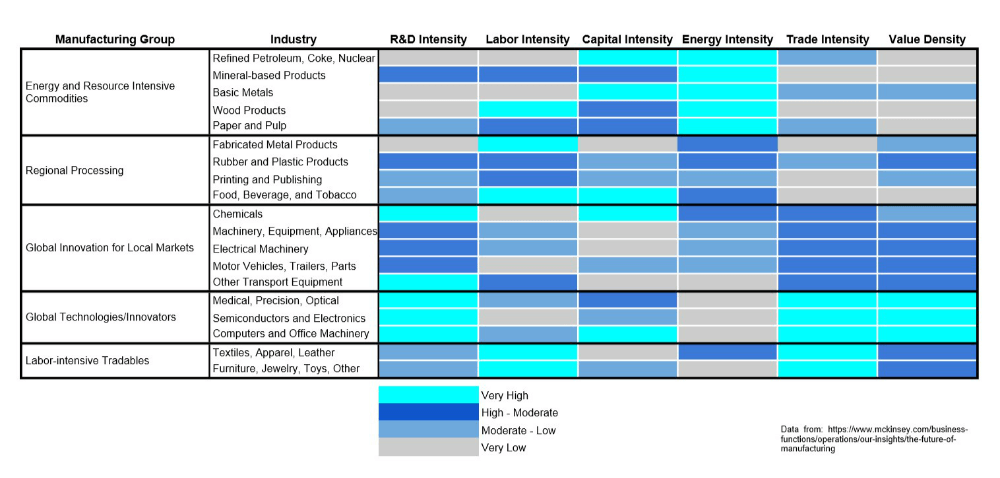
Being in the manufacturing industry can look very different depending on your product, but can actually be boiled down into five main groups. Use this table to identify which main group and industry sub-group your operation belongs to.
Once you’ve developed your brand identity and decided how to position your company in the minds of your distributors and users, you can begin to set marketing goals. In many cases, your goals will involve financial targets that are closely tied to your mission statement. Then, figure out which strategies you’ll target to achieve those goals.
The rest of this article will cover the five digital marketing tactics that are highly effective for manufacturer growth.
Digital Marketing Strategies for Manufacturers
The most complicated part of a digital marketing strategy for most manufacturers is presenting the right message to decision-makers. Internet marketing for manufacturers helps to effectively target B2B decision-makers with little budget waste.
These five B2B manufacturing marketing strategies can each be used to grow your market share in a cost-efficient manner.
Look at each of the strategies, and decide on which method will best help you realize your goals.
1. Content Marketing for Manufacturers
In a 2018 survey of industrial marketers, 86% of respondents said they were using content marketing. Fortunately for you, only 22% of those manufacturing content marketers considered their organization to be “sophisticated” or “mature” at this skill. This Content Marketing Institute data indicates that you still have time to catch up if you aren’t leveraging the power of content marketing yet.
Content marketing strategies can take many different forms. Whether you’re distributing content through email marketing, social media marketing, or organic search, you can attract the right users by creating valuable content assets for your end users.
For example, a midstream pump manufacturer can use content marketing in Houston to write a blog post about the physics behind torque-speed curves to help midstream users determine how to select the right pump for their next application.
Solving Pain Points Through Strategic Content
The key to successful content marketing for manufacturers is identifying the pain points of your target audience, then building content assets that can ease that pain. If an industrial user isn’t sure how to choose between you and your competitors, put together a comprehensive list of performance factors for your product. If a heavy equipment user is struggling to choose between you and your closest competitor, write a detailed comparison piece to highlight the areas in which you come out on top.
By creating free value-added content for your potential customers, you can position your brand as an authority in your industry.
Manufacturing SEO is the practice of optimizing your website so that you show up at the top of search engine results when users are searching for the products you offer. For example, if you’re a chemical manufacturer, you want your surfactant web page to show up when a potential customer Googles “surfactant suppliers.”
According to a recent study, organic search helps to generate nearly 53% of B2B revenue. This means that successful manufacturing search engine optimization can be the key to meeting and exceeding your marketing growth goals.
The Role of Web Design in SEO Success
Keep in mind that an SEO-friendly web design is paramount to ranking well in search results. If your website looks like it’s from the 2000s, users may hit the back button and visit your competitor’s site instead. It’s like showing up to a business meeting or interview in sweatpants. Doing some competitor research, customer interviews, and user testing will help you develop the best manufacturing website design possible.
Aside from design, the content on your website is highly important to your SEO for B2B manufacturing. Like we mentioned in the first section, by creating content that addresses the pain points of your target users, you can rank highly in the search results and generate more revenue today.
If you’re interested in trusting your organic growth to an SEO agency in Austin or Houston, contact MARION today to schedule a free consultation!
3. PPC Advertising in Manufacturing Industries
Over the past decade, several types of digital marketing campaigns have improved the scalability of manufacturing advertising. Before the internet, manufacturing outfits had to rely on direct mail, cold calls, and costly trade shows to generate new opportunities. While there are benefits to relationship-based selling once the ice has been broken, gaining that initial exposure is difficult.
Today, pay-per-click advertising for manufacturers allows you to target psychographically. You can serve an ad that targets a potential customer’s exact need for mere dollars. This flies in the face of trade events where the barrier to entry can be tens of thousands of dollars.
An Example of PPC in Action
For example, a powder coating manufacturer can run pay-per-click ads that appear when a search engine user looks for “high temperature powder coating.” When an interested potential customer clicks on your ad, it will cost you around $2. Depending on the size of your average sale, the profit margin on PPC for manufacturers can be massive.
If you’re interested in running pay-per-click in Houston or Austin, contact the strategists at MARION today to set up a free consultation.
4. Social Media for Manufacturers
“My ideal customers aren’t on social media.”
Without fail, we hear this from industrial and manufacturing businesses about once per month. As of 2023, there are:
Without a doubt, your target customers are on social media. Whether or not they are in the mindset to buy while browsing social media is a different story. When it comes to social media marketing for manufacturing, the most relevant platform for a high return on marketing investment is LinkedIn.
LinkedIn
50% of Americans with a college degree use LinkedIn. This makes using LinkedIn for B2B marketing a no-brainer. Not only is LinkedIn a great place to post organic updates that your connections can see in their timeline, but its ad targeting capabilities grow more and more advanced each year.
Once you’ve refined your LinkedIn ad targeting options to reach the right decision-makers, you can begin generating a return on your manufacturing social media marketing efforts.
If you’re interested in exploring social media marketing in Houston or Austin, contact MARION to set up a free consultation with one of our strategists today!
At MARION, we pride ourselves on staying ahead of marketing trends to position your brand as an industry authority. Whether it’s designing campaigns that resonate with your audience or optimizing your digital presence to generate measurable results, our strategies are built to help your business thrive.
5. Marketing Automation for Manufacturing
Manufacturing outfits are moving to robotic process automation in an attempt to optimize costs and production. Doesn’t it make sense that your OEM digital marketing strategy makes use of automation too?
How Marketing Automation Simplifies Industrial Marketing
Digital marketing for industrial companies becomes dramatically easier when paired with the right marketing automation platform. Automation allows you to:
Seamlessly track qualified leads.
Identify which marketing messages are most effective.
Score which marketing materials have the best impact on your bottom line.
By identifying which B2B manufacturing marketing materials have the highest conversion impact, you can focus your efforts for compounding returns and overall business growth.
Choosing the Right Platform for Your Strategy
The strategy behind marketing and manufacturing automation will largely depend on the platform you choose. While our sales and marketing teams generally recommend using HubSpot, we can work with several different automation platforms to help you reach your goals.
How to Choose a B2B Manufacturing Marketing Agency
Now that you’ve been exposed to several digital marketing strategies for b2b manufacturers, you can choose the strategy or strategies that best match your B2B manufacturing marketing goals. Depending on whether you’re interested in mostly branding, SEO, web design, or outsourced marketing, the following resources will help guide you through the process of choosing a marketing partner:
The general process for choosing a marketing team will follow the same steps.
Determine if the agency understands your business.
Analyze the team and their past success. Do they have a portfolio or case studies?
Do you get along with your future point of contact? This will affect the success of your partnership more than you know.
Does the agency seem to have a curious spirit?
Can the agency adapt to different circumstances?
Are you able to effectively communicate with the agency?
MARION Makes Digital Marketing for Manufacturers Easy
For over 40 years, MARION has been a trusted partner to local manufacturers, helping them navigate the evolving marketing landscape. Our extensive experience in industries like Energy, Chemicals, and Industrial Equipment means we bring unparalleled technical expertise to every project. From contract manufacturers to large-scale industrial operations, our local team understands the unique challenges you face and is equipped to deliver solutions that drive sustainable growth.
Our approach to digital marketing is rooted in aligning sales and marketing efforts to maximize lead generation and customer loyalty. By combining inbound marketing strategies with targeted paid campaigns, we help you attract more website visitors from your target market and convert them into long-term customers.
Ready to see the difference MARION can make? Explore our portfolio and case studies to view examples of our work, then contact us today to schedule a free consultation. Let’s discuss how we can support your goals for lead generation, customer loyalty, and sustainable growth in today’s competitive market!
Keyword research is the backbone of any successful SEO strategy. Whether you’re new to the game or looking to refine your skills, mastering keyword research can significantly boost your website’s visibility and drive targeted traffic. Now, here’s how you can conduct keyword research like a pro.
Understand Your Audience
The first step in keyword research is understanding your audience. Who are they? What are their interests, needs, and pain points? Create detailed buyer personas to get a clear picture of your target market. This will help you identify the search terms they’re likely to use.
Brainstorm Seed Keywords
Start by brainstorming a list of seed keywords. These are the basic terms related to your business or industry. For example, if you run a pest control company, your seed keywords might include “termites,” “spiders,” “pest infestation,” and “extermination.” Think broadly at this stage and write down anything that comes to mind.
Use Keyword Research Tools
Once you have your seed keywords, it’s time to expand your list using keyword research tools. Here are some favorites:
Ahrefs: Offers extensive data on keyword difficulty, search volume, and competitive analysis.
SEMrush: Excellent for discovering related keywords and analyzing your competitors’ strategies.
Ubersuggest: A user-friendly tool that provides keyword suggestions, search volume, and more.
Analyze Search Volume and Competition
When evaluating potential keywords, look at two main factors: search volume and competition. Search volume indicates how often a keyword is searched for, while competition shows how difficult it will be to rank for that keyword.
Aim for a balance. High search volume is great, but if the competition is too fierce, you might struggle to rank. Conversely, low-competition keywords might have less traffic, but they’re easier to dominate.
Look for Long-Tail Keywords
Long-tail keywords are longer, more specific phrases that often have lower search volumes but higher conversion rates. For example, instead of “pest control,” a long-tail keyword might be “commercial pest control houston.” These keywords are less competitive and can help you attract highly targeted traffic.
Take a peek at what your competitors are doing. Tools like Ahrefs and SEMrush allow you to analyze the keywords your competitors are ranking for. This can give you insights into their strategy and help you identify gaps in your own.
Focus on User Intent
Understanding user intent is crucial for effective keyword research. Are people looking for information, trying to make a purchase, or seeking a specific service? Tailor your keywords to match the intent behind the searches. For instance, “how to get rid of pests” indicates informational intent, while “hire pest control” shows transactional intent.
Create a Keyword Plan
Once you have a list of potential keywords, organize them into a plan. Group similar keywords together and map them to specific pages on your website. This will help you create targeted content that aligns with your audience’s search queries.
Monitor and Adjust
Keyword research isn’t a one-and-done task. Regularly monitor your rankings and adjust your digital content strategy as needed. Use analytics tools to track which keywords are driving traffic and conversions. Be ready to tweak your approach based on what’s working and what’s not.
The bottom line is that conducting keyword research like a pro takes time and practice — but the results are well worth it.
Get Started with MARION
Looking to boost your SEO rankings? Or do you need year-round marketing support? Either way, MARION can help you identify the most effective keywords to target your ideal audience. Our Houston SEO company will get you started on the path to online success.
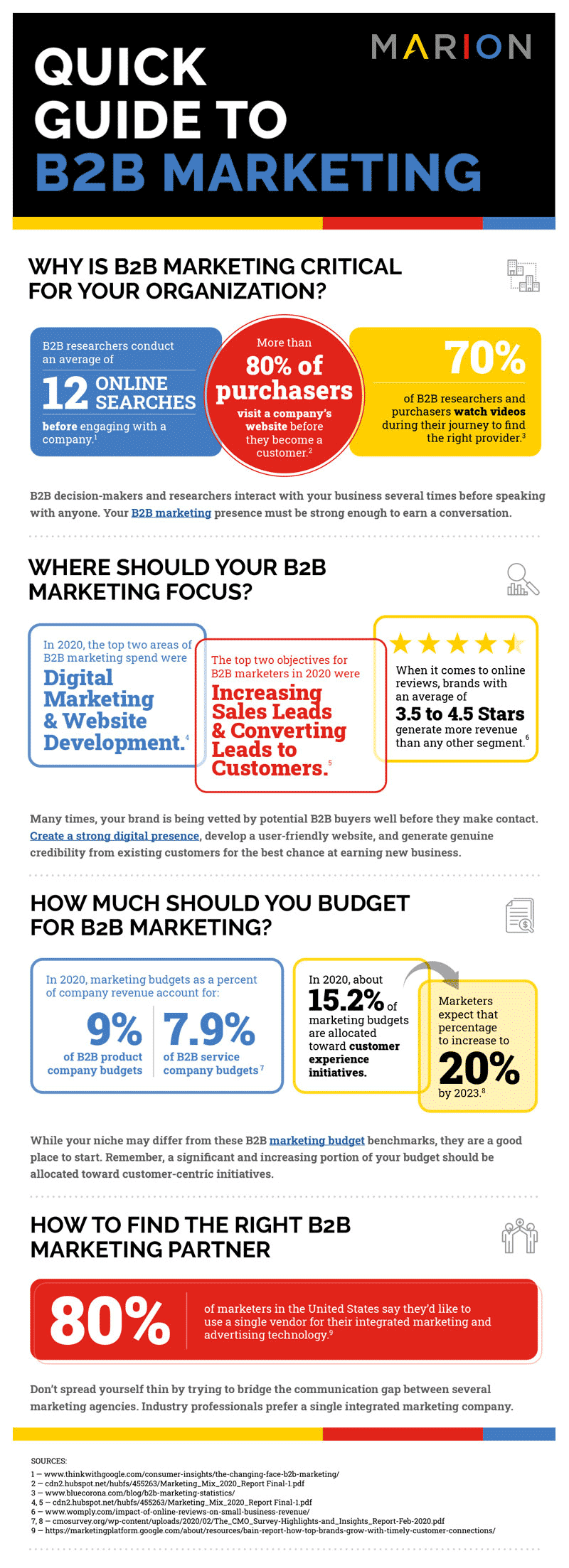
Outshine the competition, gain market share and make a name for yourself. A strong brand and marketing strategy helps your B2B business do all three — and then some. Especially when roughly 90% of business decision makers ignore cold outreach, having a solid multi-faceted marketing strategy can open the door to new connections. B2B marketing, or business-to-business marketing, is unique…