
Category: Search Optimization (SEO)

Are Keywords Still Important for SEO?

Words, and more specifically written words, have a lot of meaning.  They can describe simple ideas or convey complex concepts.  They are at once regional and universal.  Written words are increasingly how we interact with each other and what allows us to live in an informational world without borders.

So, when we ask the question as to whether keywords still matter for your website, we must consider the question from the perspective of the year 2017 and not the year 2007.

Not to get too philosophical here, but we should consider what we mean by “keywords” and what role, if any, they should play in our online marketing strategy.

The long and sordid history of Keywords

If you are interested in, or have researched Search Engine Optimization (SEO) at all, then you’re almost certainly familiar with the term PageRank.  For those who are not familiar with it, a quick Wikipedia search will tell you that

“PageRank is an algorithm used by Google Search to rank websites in their search engine results.”

A funny thing about PageRank – it wasn’t named for its page ranking system, but rather got its name for being a ranking system developed by Larry Page, co-founder of Google.  See, words can be tricky.

PageRank, in short, is a system for ranking your website in comparison to other websites according to, essentially, how popular it is and then determining how close to the top of a given search result it is based on that ranking.  But, as only one of the many factors that Google takes into account, PageRank does not address a very important aspect of Google’s algorithm, what is your website about?

Keyword Meta Tags

Back in the late 1990s search engines relied heavily on a piece of HTML code called meta tags, specifically the keyword meta tag, to determine what a web page and therefore a website was about.

As you can imagine, enterprising business owners and webmasters quickly started abusing the keyword meta tag by adding a ridiculous number of keywords or simply using every possible keyword phrase related in any way to the content of their web page.  Ultimately, search engines had to rethink how they would determine a page’s content.

In today’s SEO climate meta tags have gone the way of the dodo.  It’s not that you shouldn’t use them, they are fine to include in your HTML markup, just don’t expect any great SEO boost from them.

Keyword Density

By the early 2000s search engines, including Google were using something called “keyword density” to determine what a web page was about.  It’s very true to how it sounds; they measured how many times certain words or phrases showed up on a page compared to other words.

If you used the internet in the early 2000s, you might remember encountering a lot of website content that read very awkwardly:

Here at Carl’s Used Cars, we specialize in the purchase and sale of used cars.  Our used cars are rigorously inspected.  If you are interested in buying a used car or selling a used car, you won’t find a better used car dealer in town.

Any guess as to which keywords Carl wanted his website to show up for in search results?  We used to call this “keyword stuffing,” and it kinda worked for a while – as long as you didn’t care about the experience a user had once they reached your site.

But just like keyword meta tags, search engines found a way to go beyond the obvious and improve how they viewed your website and its content.

Latent Symantec Indexing

Sometime before 2010 Google started relying more heavily on Latent Symantec Analysis, or Latent Symantec Indexing (LSI) to more accurately determine what a web page’s content was about.  LSI essentially helped search engines understand that content can be about the same thing without using the exact same words or phrasing.

For example, LSI would help Google recognize that an article entitled “How to grow green tomatoes more quickly” is probably going to cover a very similar topic as “Learn to raise green tomatoes faster” and should both be returned for the search “growing green tomatoes.”

In many ways, with LSI came the end of “keyword stuffing.”  It brought with it the return of content sanity and good copywriting and the inevitable question we face today, do keywords still matter for your website?

So, why have I droned on about the history of keywords?  For two reasons:

  1. When it comes to keywords, history teaches us that if you try and beat the system, you will lose. Search engines will find a way to adjust their algorithm to ignore whatever “trick” you implore.
  2. Google has continuously demonstrated that they are committed to returning the most reputable and relevant web pages for any given search. If you want to do well in search results, now and in the future, don’t waste your time on gimmicks.  To perform well in search engines, find a web designer that can build an attractive, engaging website, then it’s your job to create strong content for users to find.

How keywords should fit into your modern online marketing

Given the long and winding road we have taken from keyword meta tags to Latent Symantec Indexing, do keywords still matter and how should they be incorporated into your modern marketing strategy?

The answer is of course, yes, keywords still matter.  They may not matter in the same sense that they did 15 or 20 years ago, but they should still play a role in your online marketing strategy.

Identifying Opportunities with Keyword Research

One of the most powerful insights you can get into how your customers find you online and how you want them to find you online is by doing keyword research.  For the keyword research uninitiated, HubSpot has a great article on how to do keyword research for SEO. You can also conduct a website and SEO analysis to figure out where you stand today.

Here is the 6-step process that they outline:

  1. Make a list of important, relevant topics based on what you know about your business.
  2. Fill in those topic buckets with keywords.
  3. Research related search terms. – These are found at the bottom of search results in Google.
  4. Check for a mix of shorter and longer keywords (head terms and long-tail keywords) in each bucket.
  5. See how competitors are ranking for these keywords.
  6. Use a keyword tool, like the Google AdWords Keyword Planner, to cut down your keyword list.

This process will give you a good start.  You may find that some alternative words may present more of an opportunity than others.  For example, if you are running a business that serves ads on websites you may find that you might have more opportunity calling the service “online advertising” versus “digital advertising” or vice versa.

In addition to the initial keyword research you do, you will want to continue to do keyword research regarding topics that your target audience has an interest in.  Follow competitor’s blogs, join social media groups, and read the news to get an idea of which topics are trending in your industry.

These topics can be used to create blog posts, or content offers like e-books, white papers, or webinars that have high keyword value for popular or recently relevant topics and therefore popular searches.

Are keywords still relevant? – How keywords still matter in SEO

After you have completed your initial keyword research, you will want to incorporate those keywords into your content and HTML markup.

While keyword meta tags have become more or less irrelevant, there are still key places where search engines will look to find keywords in your HTML markup.  Google identifies all of the following areas in their beginner’s guide to SEO.

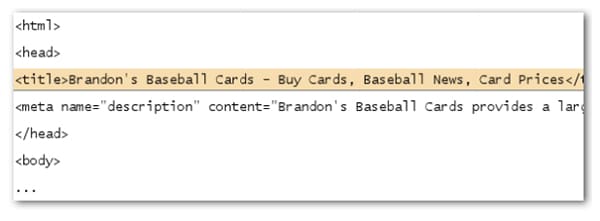
  • Title Tags – Title Tags tell search engines what the name of your page is, and they tell browsers what to display for the tab.
    Title tag code example
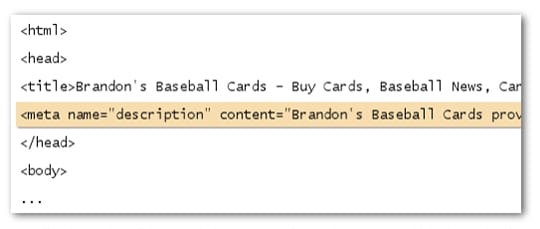
  • Description – The meta description tag is still used by search engines to identify what your page is generally about. Include keywords in this description, but keep in mind that this description is what gets display below your page title in search results, so make sure it’s written for humans.  Don’t keyword stuff.  It will do you no good.
    Meta description code example
  • URL Structure – Use clear, concise, and keyword-rich URLs for your web pages. Take the example below.  It is an example of a URL for a blog article about link building strategies. Notice that it is simple and contains relevant keywords.

    URL example
  • Link Text – Use appropriate keywords in linking to articles and pages on your website. Again, be natural and don’t force keywords where they don’t belong.  However, whenever possible, include keywords in your link, or anchor text.

    Link text example
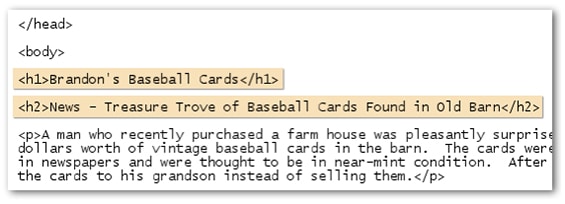
  • Heading Tags – Heading tags, or hierarchy tags as they are sometimes called, are a great place to include keywords from a user experience perspective. Because Google is always striving to return the best results possible they look for these headers as key topic points making them a great place to include keywords.
    Heading tag example
  • Image Alt Tags – Alt tags were created to help the visually impaired by describing what an image is a picture of. While you should not abuse alt tags to by stuffing irrelevant keywords, including relevant keywords in alt tags is a great practice.

    Alt tag example

Including keywords that you have identified in these key areas of your HTML markup is what we would call on-page SEO, and if done correctly will give you a solid foundation on which to build your SEO strategy.

Keywords and Pay Per Click

Finally, keywords will play a major role in Pay Per Click (PPC) campaigns like Google AdWords.

Search engine optimization is a long and arduous process.  For many small to mid-sized businesses, there is a gap between the initial stages of investing in their online marketing and when they can realistically expect to see results from SEO efforts.

PPC is a wonderful way to fill this gap.  PPC, specifically Google AdWords, allows you to bid against other websites in an attempt to be displayed first in search results for specific terms. SEO and PPC campaigns go hand in hand for lead generation in this way.

Because you are targeting the same keywords that you identified in your research, you can gain great insight rather quickly as to how your website fills the need of those searching for your identified keywords.

Also, the quality score that Google will assign each of your pages can give you valuable insight as to how Google might see that page’s relevance to a keyword in organic searches as well.  A page with a higher quality score and a higher AdWords click-through rate is more likely to be returned higher in results organically for a keyword than a page with a lower quality score.

PPC campaigns can be an invaluable tool in optimizing the keywords that you want to target as well as the pages you are using to target them.

The Take-Away

Since the dawn of the internet, we have been trying to find ways to use it to our advantage.  Internet searches are like an ecosystem, and we are all competing, struggling to get to the top of the food chain.

Our relationship with keywords has changed a lot since search engines started using the keyword meta tag over 20 years ago, but keywords are still a tool to be used in our struggle for online dominance.  Keywords should not be the bulk of your online strategy, but they should be an important cog in the wheel.

As with anything that is as complex as search engine optimization and pay per click in Houston, unless you have the time and desire to learn, implement, and manage your campaigns for yourself, we highly recommend that you find a reputable company to provide search engine optimization in Houston.

Marketing emails you’ll actually want to read.

Get marketing tips and news sent to 
your inbox.

This field is for validation purposes and should be left unchanged.
Name(Required)

Do you have a link building strategy?

If you own a small business or are a marketer for a small business, then you know how important it is to show up for relevant searches.  For years, backlinks have been a staple of SEO strategies for large scale websites.  Does your small business have a strategy for building quality backlinks?

Do backlinks still matter?

When Google first got started, they had a revolutionary idea.  They viewed the internet as a giant popularity contest.  When websites linked to other websites, they were casting a vote that the website they were linking to was a good one.

This strategy for incorporating inbound, or backlinks into their website ranking algorithm is what separated Google from the other search engines of the time, like Yahoo and Ask Jeeves.  This system of “voting” helped Google return better results for users, and so their user base grew.

Over time web developers started manipulating the system but trading and buying links from other websites.  “Link farms” sprung up on the internet and backlink strategies got a bad wrap.

Over time, Google has fine-tuned their algorithm to consider other factors like how “popular” the site that is linking to your site is.  They went on to punish links from sites that were “unpopular” or untrustworthy like “link farms”.

Because so many backlinking practices had become “black hat” or considered against best practices, many people abandoned their backlinking strategies for other strategies that they saw as less risky.

So, the question we have to ask is, with so many people abandoning them, do backlinks still matter? The answer is an unequivocal yes.  They still matter in a big way.

In a study analyzing 1 million Google rankings, a group of SEO experts determined that “Backlinks remain an extremely important Google ranking factor. We found the number of domains linking to a page correlated with rankings more than any other factor.”

How to Implement a Small Business Link Building Strategy

There is a lot of advice on the internet for businesses like yours who are beginning to consider the state of their website’s SEO seriously.  Most of it is good, but not all of it.

The Don’ts

Let’s begin with the don’ts of link building.

  • Don’t buy links. Seriously, don’t buy links.  If a company is offering you a large number of inbound or backlinks for a small price, run.  There are reputable ways to pay to play, but generally buying links is a bad idea.
  • Don’t trade links. If you want another site to link to your website, give them a reason to and not by offering to link back to them.
  • Don’t bother with shady or paid directories. There are legitimate directories that exist, like DMOZ, from which you can gain some link juice, but most are not worth your time.  If anything, focus your directory efforts on local business directories.

Ok, so we’ve covered the basics of what not to do.  But wait, we’re not quite ready to dive into the things that you should do yet.  There is one topic that we absolutely must cover before we can dive into how you can build backlinks successfully.  We need to go over your SEO foundation first.

Submit Your Site

If you’re just starting out with your website, or have never done anything to optimize your site, this is where you need to start.  We’ve covered this in our article on how to get your business online in five steps, but we’ll do a quick review here.

At this point in the process, you have a website, but you’re going to have to let everyone know where to find you. To do this, you will want to submit your website to local business directories and mapping sites like Google My Business.

Doing this will ensure that you show up in local search results, and more importantly Google map results.

On-page Optimization

On-page optimization is the HTML foundation for your search rankings.  Google is specific about how to format your site so that they can correctly understand for which topics and keywords you should show up.

On-page optimization will include things like ensuring that you have proper title tags, page descriptions, header tags containing keywords, and that you are using properly structured URLs.

If this is all brand new to you, you may want to start by reading Google’s beginner’s guide to SEO.

Building backlinks for your business

We’ve covered the things to avoid, we’ve discussed the first steps you should take to get your site online, we’ve gone over your site’s structure, now it’s time to build backlinks.

It’s important that we make quick note of the language that we use around your link building strategy.  It is truly about “building” something.  Successful websites are not stagnant pieces of marketing collateral.  They are living breathing things that are constantly growing and evolving.

If you want to be successful with your SEO, then you have to start thinking of your website as an outlet to grow an audience.  Quality backlinks, and therefore your website’s search engine rankings are built using a two-step process.

Step 1: Create quality, relevant, keyword rich content designed for your target customer

Your content may come in the form of blog posts, ebooks, videos, podcasts, or any number of creative vehicles.  Regardless of the form, however, it needs to be valuable to your target customers.

Think about the sites that you visit.  Why do you visit them?  Most likely it’s not because all they do is try and sell you something.  Well, ok, maybe Amazon, but they’re an anomaly.

You need to create valuable content to engage your visitors, but also to create something that other sites want to link to.

Step 2: Promote your content tirelessly

Once you’ve created your content, it’s time to get it out into the world.  Remember, SEO is essentially a giant popularity contest.  You need to get out there and convince people that your content is worth their vote, or link.

Use every tool at your disposal, post it on social media, submit it to relevant sites that curate content, whatever it takes.  Don’t be bashful about your content, believe in it and that will shine through.

As you build a library of quality cvontent and relationships with various channels in which to distribute your content, you will find that the links will begin to build and with it your rankings for relevant searches.

The Take-Away

If you think that you can create a website and pay to have it show up well in search results, you can, but that’s called Pay Per Click and it’s a whole different beast.  If you want to show up well in search results naturally, or “organically” as they say in the biz, you’re going to have to put in the work.

If you are limited in your time, experience, or expertise, you can work with a reputable SEO company to help you create, distribute, and promote the content that it will take to get your website to number 1.  We recently posted a video from Google offering advice on how to choose the right SEO company.  If you are considering this route, it is a must watch.

Marketing emails you’ll actually want to read.

Get marketing tips and news sent to 
your inbox.

This field is for validation purposes and should be left unchanged.
Name(Required)

6 Overused Words To Remove From Your Marketing

As a business owner, you know that it can be difficult to differentiate your business from your competitors.  You’re constantly looking for new and interesting ways to make your business stand out.

You may find yourself writing copy a sales collateral or website design project, and for some reason, you keep falling back on certain words or phrases to fill your product or service descriptions.  There’s a good reason for this.

Just as we do on social media, or in certain social circles, the professional community popularizes words and phrases that they see as “hip.”  These phrases become part of your “professional vernacular,” and inevitably end up in your marketing collateral.

The question is, are these words helping you differentiate yourself?  It’s more likely that they are only working to dilute your message, adding it to the sea of people who are all shouting the same “groundbreaking” words at their potential customers.

The Dreaded Gobbledygook

In 2007, David Meerman Scott published The Gobbledygook Manifesto, shining a light on poorly written marketing content everywhere.  Ten years later and the gobbledygook has changed, but the practice itself hasn’t.

To Scott, the problem was obvious, writing in his manifesto that “Because these writers don’t understand how their products solve customer problems, they cover by explaining how the product works and pepper this blather with industry jargon.”

If you can successfully explain how your product can solve your potential customer’s problem, or fill a need that they have, then you won’t need words like “innovative.”  In fact, gobbledygook words will only work to hide the true value of your product or service offering.

Do you use Gobbledygook?

Curious if you’re guilty of writing gobbledygook into your content?  Try this exercise:

  1. Go to your “About Us” page on your website, or similar verbiage in your print collateral.
  2. Copy your “elevator pitch” statement into a word document (you do have some form of an elevator pitch statement, right?).
  3. Remove your company name from the statement and replace it with Company-X.
  4. Print the statement out and take it around with you for an informal survey.

Can a friend, colleague, employee, or customer identify Company-X as your company from this statement?  Can they accurately explain to you what Company-X does?

Let’s look at a real-life example.  I pulled this statement directly from a current corporate about us page:

Through innovative, reliable products and services, talented people, a responsible approach to business and global citizenship, and collaboration with our partners and customers, Company-X is taking the world in imaginative new directions.

Can you identify the company?  Can you explain the point or meaning of this statement?  The company is Samsung, and to be fair, the paragraph before this reads much better:

For over 70 years, Company-X has been dedicated to making a better world through diverse businesses that today span advanced technology, semiconductors, skyscraper and plant construction, petrochemicals, fashion, medicine, finance, hotels, and more. Our flagship company, Company-X Electronics, leads the global market in high-tech electronics manufacturing and digital media.

Now, that’s a pretty good elevator pitch.  You can at least make an educated guess that Company-X is Samsung.  So, why did they follow it up with such a gobbledygook-laden non-statement?  Who knows, but it’s a great way to illustrate Scott’s point.

So, How Can You Avoid Gobbledygook?

You’ve probably got a good idea of what gobbledygook is at this point.  The question remains, how can you avoid it?

Scott offers sage advice on this front as well, writing “Here’s the rule: when you write, start with your buyers, not with your product.”

Start by creating one or even multiple buyer personas that describe, in as much detail as possible, your target customer.  Once you have successfully segmented your target audience into appropriate buyer personas, then you can focus on clearly communicating how your product or service solves a problem or fills a need that they have.

Your marketing should be structured in a way that focuses on their needs at a high level and then allows them to narrows down on specific pain points.  Being too broad at the higher levels is where you will often find yourself reaching for meaningless adjectives to fill the void.

6 Time-Tested Gobbledygook Words to Avoid

In the ten years since Scott introduced us to his concept of gobbledygook, the buzz words have changed, but some have withstood the test of time and continue to plague the professional world still today.

Weather dated or not, avoid these six words in your marketing content, no one wants to read them:

  1. Innovative – Defined as “featuring new methods; advanced and original.” Innovative has become an oxymoronic indicator of an uncreative writer.  It distracts from your point, don’t use it.
  2. Cutting Edge – There is nothing wrong with using this term if in fact, your product is truly cutting edge. The sad truth is that the majority of the time, cutting edge is used to describe a product or service that is decidedly not cutting edge.  That makes it a lie, so don’t use it.
  3. Outside The Box – By the time Taco Bell co-opted this for their “Think outside the bun” campaign it had become meaningless. Its very existence screams “we conform to non-conformity.” Don’t use it.
  4. Robust – If we only from where the term robust crept into our lives. Using it only indicates that your catalog of adjectives is less than, well…  Avoid if possible, or maybe if you’re describing wine.
  5. Unique – The over-used cousin of cutting edge, unique should only be used for offerings that are truly unique. Avoid unless truly unique.
  6. Leading provider – Unless you’re willing to back this statement up with something other a data point that indicates that you lead your industry in some obscure quantitative area, just steer clear. If you are going to use it, back it up with the data after every use, otherwise it’s worthless.

The Take-Away

When it comes to creating marketing content for your company you should follow three simple rules.  If you do, you will find yourself creating clear and concise messages that resonate with your target audience.

  • Focus on the buyer, not your product or service
  • Be clear, not clever
  • Keep it short

Try writing, or re-writing, your company’s elevator pitch with these principals in mind.  Then rerun the experiment we described earlier and see how it works out for you.  Was your message more clear and concise?  If not, rinse and repeat, or employ the expertise of MARION’s outsourced marketing services so that you can optimize your business operations.

Marketing emails you’ll actually want to read.

Get marketing tips and news sent to 
your inbox.

This field is for validation purposes and should be left unchanged.
Name(Required)

Google explains how to avoid a bad SEO company

There are a ton of choices when you are considering hiring an SEO company.  Prices and offerings range so drastically that it can be somewhat difficult to determine what it should cost and what you should get for that cost.

Knowing how to choose an SEO company is tough. It can be difficult to determine if an SEO company is offering a legitimate approach to improve your rankings, or if they are pushing outdated, frowned upon, or even flat out potentially harmful techniques.

As Maile Ohye of Google puts it in the video below, in your search for the right SEO you are trying to avoid paying a lot of money for bad results or “shady practices.” If you’re asking yourself – how much should I pay for SEO? – consider the following.

Good SEO is not “black magic,” Google says.  There are no quick tricks for success in search engine rankings.  “In most cases, SEOs need four months to a year to help your business first implement improvements and then see potential benefits.”  This is sage advice straight from the horse’s mouth.

The bottom line is your company’s SEO potential is only as high as the quality of your website and content that you put out there.  Finding the right company to work with to ensure that your site is technically sound and your content is focused is a challenge, but Google offers a 4-step process that will help you narrow down the field.

Google’s advice:

  1. Conduct a 2-way interview with your potential SEO company. Check that they seem genuinely interested in you and your business.
  2. Check their references.
  3. Ask for (and you’ll probably have to pay for) a technical and search audit.
  4. Decide if you want to hire them.

Google goes in depth on each of these steps.  If you are currently in the market for an SEO company, or curious if you’re currently working with the right one, watch this video:

Marketing emails you’ll actually want to read.

Get marketing tips and news sent to 
your inbox.

This field is for validation purposes and should be left unchanged.
Name(Required)

Seriously, What is Content Marketing?

Sometimes in the realm of online marketing, we can get a little caught up in our own vernacular. In a world where acronyms abound, a person who doesn’t spend all their time working with PPC, SEO, or SMM may latch on to something like content marketing services as an online marketing strategy that sounds more palatable. Before you decide to jump into content marketing with both feet, you need to ask, do you really understand what content marketing is? What if we told you that PPC, SEO, and SMM could all play important roles in your content marketing strategy?

Don’t worry; while content marketing isn’t as simple as it may sound; it doesn’t require a Ph.D. to understand. We’ll walk you through what it is, why it’s important, and send you on your way with a few tips to help you get started.

There are a number of ways to market your business online, and some will work better for your business than others. Content marketing, if done correctly can be an effective strategy for establishing an online presence. Once you see how content marketing works, you’ll want to take advantage of its benefits.

What is Content Marketing?

Content marketing is a form of B2B brand building that involves the development and sharing of quality media and published content in order to attract, engage and retain customers. It can help raise awareness for companies (particularly B2B companies), and differentiate them from competitors by making them the go-to authority for technical help and industry information.

In the Search Engine Optimization (SEO) world where content is king, content marketing is the gold standard of SEO practices. Google’s latest algorithm updates have made it clear that producing and publishing audience-focused, relevant content is one of the most important factors in ranking highly in search engine results, and updating content frequently is a guaranteed way to get search engines to crawl your site for new data frequently. Additionally, customers are making it increasingly clear that they want more information to help them make important buying decisions, and less information focused on marketing and sales.

Interested in content marketing services? Contact MARION today to get a quote and discuss a unique strategy for your business.

what is content marketing?

Benefits of Content Marketing

  • Higher rankings on search engine results pages (SERPS)
  • Increasing
    • Number of keywords for which a site ranks
    • Number of first-time visitors to the website
    • Total page views
  • Lowered bounce rates
  • Improved social metrics
    • Video views
    • RSS feed subscribers
    • Number of likes, +1s, upvotes, etc.
    • Number of followers
    • Increasing RSS subscriber growth
  • Increased conversion rate as measured by leads or sales

In many cases, achieving a higher SERP (another great acronym!) position will contribute to higher amounts of traffic and conversions. SERP positions depend on several factors, but inbound links continue to play a significant role in Google’s algorithm. If Google sees that a lot of other websites are linking to your content, then the search engine assumes that you have reliable information to offer other readers.

Creating content that other sites link to or content that gets shared on social media can do wonders for your search engine optimization.

Content marketing is also a great way of improving your company’s brand recognition. Traditionally, advertisers believe that it takes about seven interactions before a potential customer recognizes a company’s brand. You can arrange interactions through social media posts, pay-per-click (PPC) advertising and a few other tools. When it comes to educating potential customers about your company’s services and products, though, you need informational content that’s fun to read.

While promoting your brand with content marketing, you can also establish yourself as an authority in your industry. When you give your readers in-depth how-to articles, instructional videos, product comparisons and trend forecasts, you show them that your business has an insider’s perspective on the services that they need. Standard advertising alone can’t do that very well.

How to Use Content Marketing Effectively

A lot of companies that try to use content marketing fail because they don’t know how to create effective content strategies. Building a good strategy does require some trial and error, but you can follow some basic rules to help your content do its job well.

  1. Create great content.
    This may seem obvious, but most content marketing strategies that fail, do so at this crucial step in the process.  You should expend 75% of your effort on crafting valuable content and 25% on distributing it.
  2. Use social media to spread your content (SMM – Social Media Marketing).
    Social media platforms like Facebook and Twitter have become indispensable tools for content marketers. As companies like Facebook adjust their algorithms to make sure users receive high-quality content instead of “fake news,” you can look forward to well-written articles to get even more attention through social media marketing in the near future.
  3. Make search engine optimization (SEO) work for you.
    Today’s search engine algorithms don’t reward you for keyword stuffing. Using some SEO tricks, however, can help your content reach higher SERP positions. Always write a meta description that’s between 135 and 160 characters; give each page a unique title that includes keywords; and create a sitemap that helps search engines locate your content. A small effort can go a long way when it comes to SEO.
  4. Pay for people to find your content (PPC – Pay Per Click).
    Sure, it’d be great if all you had to do was post great content and people would find it. Unfortunately, the Field of Dreams approach (“if you build it, they will come”) isn’t a reliable approach, at least not at first. With SEO in mind, and enough effort and time, you should be able to generate traffic by creating content. In the meantime, PPC is an excellent way to pay to distribute your content to people who are searching for it.
  5. Measure the effectiveness of your content.
    Google Analytics is the most effective free tool for measuring the effectiveness of content. Look for the statistics labeled as “organic traffic” to determine how well your content performs. Knowing what pieces of content do well will make it easier for you to choose topics that interest your readers.

You don’t have to abandon other marketing and advertising strategies to use content marketing. In fact, content marketing often works well in coordination with your existing SEO, PPC, and SMM strategies as well as email marketing services. Before you embark on a new campaign, talk to an expert who can help you develop a strategy that will work for you.

The Content Marketing Process

Audience Analysis

Before implementing a content marketing strategy, we do a thorough analysis of your company’s target audience. Who are they? What kind of content is most relevant to them? What are they hoping to gain from the content? Where do they look for content? Which social media sites are they on?

On-Page Implementation

The foundation of a B2B content marketing strategy is a blog. A blog integrated into your website will allow you to engage your audience, and will ultimately lead to more traffic, increased brand exposure, and higher search engine rankings.

MARION’s in-house team of expert web designers and developers can transition your company’s website to responsive design, allowing your clients to access your content regardless of the device they’re using. We can then create and integrate a unique blog into your website.

Once the blog has been added, our team of experienced content developers and SEO strategists can create one-of-a-kind, audience-focused and relevant content designed to draw in and educate your customers.

Off-Page Implementation

Social media is at the core of any good content marketing strategy. Social networking sites like Facebook, LinkedIn, Twitter, and Instagram allow you to reach new audiences who are poised to engage.

MARION has an experienced team of internet marketing and social media specialists who will help amplify your content and build your brand. Once your content has been published to your blog, we increase your exposure by promoting this content on social media sites that are relevant to your audience, and through RSS feeds. Additionally, we will integrate social media profile and share buttons on your blog to encourage social sharing.

Why MARION for Content Marketing?

MARION Integrated Marketing is a full-service advertising agency, graphic design, and marketing firm. Our in-house team of experienced content writers and website developers work with you to produce and promote various types of content, including blogs, videos, white papers, e-books, infographics, case studies, how-to guides, Q&A articles, photos, and more. We accomplish this through a detailed content marketing strategy, which includes:

  • Developing and integrating a blog into your website
  • Creating and managing a content calendar
  • Developing high-quality, editorial content
  • Sharing and promoting content on relevant social media channels
  • Measuring success through improved social metrics, higher rankings on search engine results pages, and increased conversion rates
Marketing emails you’ll actually want to read.

Get marketing tips and news sent to 
your inbox.

This field is for validation purposes and should be left unchanged.
Name(Required)