Category: Marketing Campaigns

How to Nail Your Email Marketing Strategy in 2023

Email marketing is one of the best B2C and B2B marketing strategies for 2023. With the power of an effective email marketing strategy, you can create more revenue for your brand, attract new customers, and build solid relationships with them.

Having a high return on investment makes it one of the most rewarding marketing strategies in the market. To get ahead of the game, take advantage of the email marketing steps below and watch your brand skyrocket in 2023.

It can be hard, but with the correct guidance, we can build a strong foundation from the beginning. So, let’s explore how to succeed in email marketing in 2023.

9 Email Marketing Tips to Drive Conversions

Every marketing campaign is different and has some unique elements that need to be implemented to be successful. For performance-based email marketing, these are the most crucial tips that every marketer should know.

  1. Create an Email Marketing Strategy
  2. Write a Compelling Subject Line
  3. Be Persistent
  4. Pay Attention to Preheader
  5. Make Contextual CTAs
  6. Write for the Web
  7. Don’t Spam
  8. Use Personalization
  9. Use A/B Testing

These nine steps will help you learn how to email market effectively in no time.

1. Create an Email Marketing Strategy

effective email marketing tips

Successful email marketing strategies can only be built after identifying the goals and objectives that your brand wants to achieve. Email marketing in digital marketing is just one piece of the overall puzzle, so it cannot act in a silo.

Define your audience and segment them into potential and existing customers. You will send different emails to each group, so it is a crucial part of the process.

When you have your target audience, you’ll need to build your list. You can do it from your social media channels, with opt-in forms on your website, or even by using an existing customer list.

The last step for building an effective email marketing strategy is to craft a content marketing strategy to drive conversions. It can be a newsletter, a welcome sequence, or a cart abandonment email.

The moral of the story is, to create your plan, and set your goals with corresponding content in mind.

2. Write a Compelling Subject Line

email strategy - subject line

The subject line is the number one element your recipient will see in their inboxes. Having a weak (or spammy) subject line will immediately move your email to the trash.

What you put in that 60-character space could be the difference between someone opening your message, deleting it, and even reporting it as spam. If too many receivers mark your message as spam, it can have lasting negative effects on your email strategy.

A consumer will open your email if they:

  1. Find value in your title
  2. Have the fear that they will miss out on something important (FOMO)
  3. See their favorite emojis

These three elements are probably the most important elements when it comes to subject lines.

 

3. Be Persistent

The more people who open your emails, the more potential conversions your business will generate. A great way to ensure this outcome is by leveraging the “double opens strategy”.

Use your email automation service to track which emails didn’t open and send the exact same email with a different subject line.

People receive many emails every day, so it can be that they didn’t catch their attention or they were just busy. Make some small changes to change the outcome.

  • Use a different subject line and preheader
  • Change your send time
  • Wait 3-5 days before resending your message

Adding this little-known trick to your email campaign strategy can foster engagement at a level you’ve never experienced.

4. Pay Attention to Your Preheader

email campaign strategy - preheader

The subject line is vital, but don’t forget the preheader text! This is the preview text that a recipient can see before deciding whether or not to click your email. Using this space to increase your open rate and engagement numbers is one of the most effective email marketing techniques.

Craft your message in a way that will maximize the chances of a click while keeping in mind that you can have 35 to 150 characters of preview text.

5. Make CTA Buttons Contextual

Every part of an email is equally crucial for the success of your campaign. Without a strong CTA in your email marketing approach, you will have significantly fewer conversions. That’s because a CTA helps your reader take action.

The best email marketing strategies use calls-to-action that guide the subscriber to take the desired action. Focus on making CTAs as creative and descriptive as possible, and avoid generic text.

Remember to combine active verbs with the sense of time. A great example would be “Get This Ebook Now”.

6. Write for the Web

Most digital marketers create complicated email messages. Craft your copy for emails similar to the tone of articles for the web. It should be engaging, conversational, and organized. Email strategies that work generally avoid sophisticated business jargon and use an appropriate opening line for your audience.

To make your life easier, most email marketing services provide you with email templates. These email marketing strategy examples can be a great starting point.

Your email should:

  • Have short paragraphs (plenty of white space)
  • Follow a clear structure
  • Use visuals whenever appropriate
  • Implement bullets and subheadings to make emails scannable

Focus on providing the most value possible and answer the questions of your audience.

7. Don’t Be Spammy

performance-based email marketing - spam

There are people out there that will tell you that email marketing is sales-y and can be annoying for the recipient. Like every marketing tool, it depends on the professional that uses it.

To avoid being a spammer and building a bad reputation for your brand, avoid exclamation points and writing with caps, and try to express the values of your brand as you would do in a normal conversation. Using a brand development strategy that isn’t overly aggressive will set your emails up for long-term success.

8. Use Personalization

If you have to implement one of the tips in this article, this should be hands-down personalization. It is the most effective way to upgrade your email marketing strategy.

Leverage your high-converting landing pages, opt-in forms, and gather as much information for your users. Create segments of your list and send personalized content to each potential client.

You can take it one step further and use dynamic personalization, which is and will continue to be a trend in 2023.

Dynamic personalization adapts to each customer and understands their buying habits and customer journey. It modifies their experience appropriately so that you can generate more business leads.

9. Leverage A/B Testing

how to email market effectively - a/b test

Hitting “send” and hoping that your email will convert will not work effectively in the long run. The best email strategies are those that test emails by using all the features that email providers offer. 

Use analytics to collect data on the performance of different variations of your message and landing pages to identify your best-performing combination. Multivariate testing is a valuable technique.

Elevate Your Email Marketing Campaigns in 2023

Email marketing is not simply another strategy to add to your arsenal. It is one of the most rewarding marketing tools out there and has the potential to increase your revenue to unprecedented levels.

Take advantage of all the tips we discussed in this article, and if some of them sound too basic, it’s because most mistakes happen to the things we think we know. Track your records and pivot towards the best-performing tactics.

Trust the MARION team if you need help with your email marketing in Houston, Austin, or DFW. MARION Integrated Marketing has been serving Texas businesses for 40 years. We have evolved to provide your business with effective marketing regardless of industry.

Marketing emails you’ll actually want to read.

Get marketing tips and news sent to 
your inbox.

This field is for validation purposes and should be left unchanged.
Name(Required)

How the Best Taglines Make a Splash

You’ve heard it from us before, but we’re here to say it again. Every business needs a brand. And, in addition to the visual identity — we’re talking logos, color palettes, typography and textures — a tagline is an essential element of your business’ brand. It works in tandem with your visual identity and your stylistic voice to set the…

5 Ways to Wow Your Customers with B2B Marketing

Outshine the competition, gain market share and make a name for yourself. A strong brand and marketing strategy helps your B2B business do all three — and then some. Especially when roughly 90% of business decision makers ignore cold outreach, having a solid multi-faceted marketing strategy can open the door to new connections. B2B marketing, or business-to-business marketing, is unique…

Keep Your Brand Top of Mind with Email Marketing

Today, our lives are more tethered to the digital realm than ever before — thank you, smart phones, Zoom meetings, cryptocurrency and the Metaverse. So, it’s probably no surprise that digital tools play an important role in your business’ marketing strategy. Email marketing is just one such tool that’s invaluable to have in your toolkit.

Combining speed and flexibility with a relatively small price tag, email marketing offers businesses of all sizes and in all industries the chance to get valuable facetime with customers. At the same time, it strengthens brand awareness with each eblast. If you ask us, that sounds like a win-win. Of course, there are a few pitfalls to avoid to keep you from being relegated to the dreaded “spam” folder. That’s why we’re here to walk you through a few ways to make the most of your email marketing journey.

Less is More.

While it might be tempting to send out back-to-back eblasts to your entire email list — we’re going to stop you right there before you hit “send.” Think about all the unread emails piling up in your inbox from retailers, community organizations, apps and social media platforms. Even if you’ve opted into the list, having your inbox flooded with messages can be annoying at best. Instead, think about frequency strategically. Set a cadence that keeps your brand on your audience’s radar without overwhelming them. This might take the form of a monthly newsletter, quarterly recap or seasonal sale. 

Get Personal.

With nearly 60% of email marketers citing personalization as one of the best ways to increase engagement, it makes sense that we’re seeing a trend toward personalized messages. If you’re asking customers to share personal information with you, it’s a great way to show them that you’re listening. Segment your list according to their personal details — for example, by industry or title — and create targeted content for each segment. Celebrate birthdays with a quick note or special discount, call people by their first names in the body or subject line and craft customer journeys that are relevant to where they are in the sales process.

Highlight Your Brand.

When it comes to building brand awareness, consistency is key. For example, Forbes reported that brand consistency across platforms could boost revenue by up to 23%. A big part of this is pretty simple: As people become more familiar with your brand elements — colors, logo, tagline and even stylistic voice — it’s easier for them to remember it in the future. Email marketing offers a great way to reinforce those elements. Each piece of email marketing should align with your overall brand messaging, helping build recognition and encourage connection.

Be Real.

Brand loyalty is driven by emotional connection. Showcasing the people, processes, traditions or values instilled in your company can help tell your story in a way that resonates with your audience. This may take the form of team spotlights, Q&As, community initiatives or time lapse videos of a special project. While this may look different, depending on your industry and business model, all companies have a story to tell. Email marketing offers an avenue for sharing a behind-the-scenes look at the things that bring your business together.

Don’t Wait, Authenticate.

Don’t let all that hard work end up in the junk folder, never to see the light of day. Before you send your very first campaign, you’ll want to make sure you authenticate your domain. Without getting too into the technical weeds, email authentication essentially acts as a “digital signature” to show that your emails are legit. This helps with deliverability, making sure you’re reaching the inboxes of most, if not all, of the recipients on your list.

These steps can help you get started developing a strategic plan — but this is still just the tip of the iceberg. Email marketing is multifaceted and offers numerous options for engaging with customers, showcasing your brand and building awareness. If you want to learn more about how these tips — and more — can help you grow your business, let us know. Our team is here to help.

The Ultimate Guide to Hiring & Working with Local Internet Marketing Agencies

A marketing agency is a business that helps organizations increase the sales of their products and services. Futhermore, there are two ways to categorize marketing agencies: in-house and external. The former deals with the company’s marketing efforts internally, while the latter works with the company’s marketing externally.

Additionally, there are three main types of digital advertising agencies: performance-based, traditional, and integrated. Performance-based agencies provide services like search engine optimization (SEO) or pay-per-click (PPC) advertising; traditional agencies offer services like print or broadcast media; integrated agencies provide both performance-based and traditional marketing services. So, which one is best for your business? Keep reading to find out.

Why Hire a Local SEO Agency in Your Area?

If you’re looking for internet marketing services in your area, these are a few of the biggest reasons why you might want to hire a local SEO agency, regardless of your industry. 

  • SEO Optimization: Agencies would be able to understand the nuances of your industry and help with local optimization.
  • Keyword Research: Agency experts know what kind of keywords and key phrases to target and how to rank well on search engines so that your business will be seen by more people who are looking for products or services like yours.
  • Local Knowledge: Digital marketing agencies near you will know what searches and trends people in your area are searching for. You also can’t beat face-to-face interactions.
digital marketing packages and pricing

How to Find the Best Local SEO Agency for Your Business in Houston

A local SEO marketing agency will have in-depth knowledge of your industry, be close to you geographically, and have the dedication to work with you long-term. The right agency experts will help you build a digital content strategy that dominates your industry.

So, what are the best practices for finding a marketing agency that can help your business grow? Of course, it’s important to find an agency that understands your industry, has strong local connections in Houston, and has the patience to work with you for years to come. But how do you know which one is right for you?

How Much Should You Budget for an Online Marketing Campaign?

Marketing costs can seem daunting. But it is essential to budget correctly so you can be successful at marketing your business online.

The first step to determining your marketing budget is to look at your company’s revenue and growth goals. If you are expanding, there should be an equal investment in growth and marketing if you want the business to grow exponentially.

After assessing growth goals, you need to take into account the cost of customer acquisition. Customers are expensive — it costs about five times more than what it takes to retain a customer through marketing campaigns or by providing excellent service.

Finding the Best Marketing Agency in South Texas

If you are looking for a top marketing agency in South Texas, look no further. You have come to the right place! You will find all kinds of information about marketing agencies here—from tips for getting started with marketing services in Houston to online marketing strategies with the biggest impact on ROI, top questions to ask a branding agency, and more.

In conclusion, the best way to choose a marketing agency that’s perfect for your business is by following these simple steps. First, ask them about what they do for clients with similar businesses to yours or who have an equivalent budget size. Then ask them about their experience working with your particular market or industry. Finally, see if they offer free consultations so you can meet them in person and see if it’s a match!

Ready to hire and work with the best internet marketing agency in Houston? MARION has been helping Texas businesses advertise big since 1981. We work with our clients to manage their entire online presence, from social media and web design to email marketing and reputation management.

Contact our team today and schedule a free consultation to learn more about our services.

Marketing emails you’ll actually want to read.

Get marketing tips and news sent to 
your inbox.

This field is for validation purposes and should be left unchanged.
Name(Required)

Tips for Getting Started with Marketing Services in Houston

Marketing services in Houston are a great way to get your brand out there. These services can help you multiply your reach and generate more revenue for your business.

How? There are a number of ways that Houston marketing services can help you with your business, from SEO to social media marketing. There is no one-size-fits-all solution, so it is important that you meet with a company and have a conversation about what makes the most sense for you and your business.

There are many benefits to getting marketing services in Houston from an experienced company, but the best is the expertise that professional marketers have in their field. They know what works best for different industries, so they will be able to offer advice on how to get started correctly and maximize ROI (return on investment).

4 Simple Steps To Get Your Company’s Marketing Services Business Going

It is not enough to just think about marketing. There are some key steps that you need to take before you start marketing your business.

Below are four simple steps that will help you get your company’s marketing services business going.


  1. Commit To Investing In It: Despite what some might say, marketing is not a luxury for businesses with deep pockets. It is a necessity for all businesses who want to succeed and grow their revenue.


  2. Create A Marketing Strategy: You will need a solid, documented strategy for how you plan to market your company’s products and services going forward. This should include the tactics you plan on using as well as an estimate of the resources it will take to implement those tactics on an ongoing basis over the next 12 months.


  3. Partner with Experts: Whether you hire in-house or outsource, you have to rely on experts in today’s digital world to see success with marketing.


  4. Start With Your Website: This is your digital storefront. If you’re overwhelmed and not sure where to start, begin with optimizing your website.


Internet Marketing Services Secrets That Will Help Your Brand

Brands need to have a clear strategy for their marketing activities and this section will give you the most successful internet marketing tactics that work best for brands.

The first thing to do is create a brand image for your company with a strong message and personality. Every company needs to have a clear strategy from the beginning, so they can establish their identity on the Internet. The next step is to create quality content that is engaging and shareable in order to get more followers on social networks. You should also establish partnerships with other companies in order to increase exposure for your brand outside of the internet world. The rest? Well, they’re secret for a reason. 

How To Partner with the Right Marketing Agency in Houston

The idea of partnering with an agency is that they will take care of all the hard work and focus on your marketing needs. Actually, it’s just the opposite. The best agencies and partners understand that you’re not in this alone and they’re there to help you succeed. So don’t just blindly find a marketing agency and partner with them without knowing what they can do for you.

If you want to work with the right Houston marketing agency, then you need to know what types of services they provide so you can determine if they are the best fit. To review MARION’s marketing services, click here.

Marketing emails you’ll actually want to read.

Get marketing tips and news sent to 
your inbox.

This field is for validation purposes and should be left unchanged.
Name(Required)

Why Outsourcing Is A Cost-Effective Way of Marketing Your Business

Outsourcing your marketing tasks can be a cost-effective way to market your business.

Outsourcing has the potential to save you time, money, and resources when it comes to marketing. Oftentimes you will need outside help when it comes to marketing your business, but sometimes the best thing for you is if you outsource part of your marketing process.

This article will explore some of the most important benefits that come with outsourcing your marketing tasks.

Why You Need to Outsource Your Marketing Tasks

In today’s market, companies have to be on their toes from the moment they start operations. They have to be competitive and innovative in order to stay afloat. In previous times, marketing was confined to a company’s four walls. Today, marketing has become a top concern for business owners who want their brands to reach a wider audience and achieve greater success.

The best way for a company to grow is by outsourcing some or all of its marketing tasks – starting with tasks that can be outsourced – such as data analysis, social media management, content management, and virtual assistant services.

3 Best Ways to Outsource Your Marketing Tasks for Less Time & Money

Marketing is a time-consuming and expensive endeavor for most small business owners. You can outsource the marketing tasks to other specialists, but you need to know how to go about it.

Here are three ways you can outsource your marketing tasks and save time and money in the process:

1. Hire a Marketing Agency: You can hire a full-service marketing agency that specializes in services such as content writing, SEO optimization, etc. They would take care of all your marketing needs at a fixed monthly cost which is much lower than hiring an employee for each task or paying hourly rates for freelancers.

2. Hire Freelancers: The other way to outsource your marketing tasks is by hiring freelancers who specialize in specific areas of work.

3. Do a Hybrid Approach: This might be the best option, as you can enjoy the benefits of both freelancers and a marketing agency.

Why Outsourcing Your Marketing Work is the Key to a Productive Workflow

Outsourcing marketing work can help you to create a better, more productive workflow.

The conventional way of marketing is no longer as effective as it once was. Technology has changed the world and the way people view things. In the olden days, advertisers only had to make sure that they were reaching their target audience by broadcasting their message through on-air media and print advertisements. Nowadays, it becomes a challenge for marketers to reach out to people who can be interested in their products or services due to the change in communication habits and platform use.

Outsourcing your marketing work can help you with a variety of things: from creating a content calendargenerating more leads, improving customer engagement rates, increasing organic traffic from search engines, managing social media campaigns and so much more!

Other Advantages of Outsourcing Your Marketing Tasks

Marketing outsourcing can provide a unique solution to many of the problems faced by marketing teams, such as time and labor constraints, lack of in-house expertise, and lack of budgets.

As an example, you might outsource your advertising campaigns to an agency that specializes in that area. This ensures that you’re not wasting time with skillsets that you don’t have and instead focusing on what you’re best at – creativity, emotions, and your brand.

To learn more about outsourced marketing servicescontact us today.

Marketing emails you’ll actually want to read.

Get marketing tips and news sent to 
your inbox.

This field is for validation purposes and should be left unchanged.
Name(Required)

Why Your Business Needs A Lead Scoring Strategy

  • Every business has leads. It doesn’t matter what type of industry you’re in, whether you sell online or at a physical location, or whether your sales cycle is four months or a year… you have potential customers out there. What you do with those leads is another story, however.

You can identify improper usage of leads by asking yourself a few questions.

  • Are you treating all your leads the same?
  • Do you have a defined, documented strategy for scoring prospects?
  • Does your sales team get frustrated with the leads that marketing provides?
  • Are you spending too much time manually evaluating leads?

If so, you need a lead scoring strategy. Before we get into developing a strategy however, it’s helpful to know what lead scoring is in the first place. This video from HubSpot has you covered:

The Importance of Proper Lead Scoring Strategy Development

Yes, lead scoring sounds great… in theory. But many businesses struggle to actually implement it. That’s because it requires coordination from leadership, sales and marketing to pull off. You can’t just have one of them handle it because they have different mindsets and skills.

These three departments do each have a valuable part to play in a lead scoring strategy development session, however. Here’s what each brings to the table:

  • Executive/leadership: provides a high-level view of company goals, what types of leads the company would like to go after and the realistic goals marketing and sales should have.
  • Marketing: provides the messaging and automated tactics that would be involved in nurturing leads to higher scores; provides qualified leads to sales.
  • Sales: provides the values for certain demographics and actions that best indicate a lead or prospect is a good fit with the company. Converts well-qualified leads into customers.

Example Lead Scoring Categories

The beauty of lead scoring is that each company’s strategy can be different. There’s no one-size-fits-all approach. As with any area of marketing, it’s helpful to see what has worked for other companies, what is considered best practice and what will actually work for you and your company. That being said, here are some good lead scoring categories and sub-categories that other businesses have used successfully:

  • Demographics:
    • Age
    • Income
    • Location
    • Children
  • Company/industry:
    • B2B or B2C
    • Company Size
    • Company Type
    • Industry
  • Online actions:
  • Engagement:
    • Emails opened/clicked
    • Social media posts liked/shared
    • Reviews

What A Good Lead Scoring Strategy Process Looks Like

The two most important elements in a lead scoring strategy are fit and interest. You have control over the former; you likely know what clients are easy to work with and what clients are not. You also know what types of clients fit with the solutions you provide. For interest, however, that is up to the lead.

Your lead scoring strategy helps with both fit and interest, as the criteria you set up help determine the leads who are the best fit, while scores for other actions and engagement can signal a prospect is interested and ready to talk to sales.

There are a few steps required to accomplishing this and here’s an example of what a good lead scoring strategy development process looks like:

  1. Determine the most important fit characteristics of your ideal lead.
    • Example: you may offer a high-end product and aren’t interested in people who make less than $100,000 per year.
  2. Determine the most important interest characteristics of your ideal lead.
    • Example: you may only want to follow up on leads who fill out a contact form.
  3. Choose lead score thresholds.
    • Example: you can qualify any lead with a score of 70 or more as an MQL.
  4. Document responsibilities.
    • Example: marketing handles all communication with customer until they reach a score of 70, then sales takes over.
  5. Set goals.
    • Example: marketing has a goal of providing 5 MQLs per month; sales has a goal of closing 1-2 customers per month.
  6. Reevaluate your strategy.
    • Example: take a look at your processes and criteria every few months.

Contact vs. Company Scoring

One last thing to bring up for your lead scoring strategy is the difference between contact and company lead scoring. This could very well change your whole approach to lead scoring. Here are the differences between the two:

  • Contact scoring: lead scores for individual contacts. Scores are adjusted on an individual level, not at a company level.
  • Company scoring: the cumulative lead score for all contacts at a company. Scores are adjusted on a company level based on individual scores.

This is ideal for businesses targeting certain companies instead of individuals. For example, perhaps you think your product or service is a great fit for a particular local business, but you don’t have influence or contact information for any of the roles with decision-making responsibilities. You can start measuring the fit and interest of the other employees of the company and determine whether there is potential or not. Finally, company scoring can help with prioritizing your list of leads.

Partnering with An Agency for Your Lead Scoring Strategy

Implementing a lead scoring strategy requires a marketing team with the knowledge and experience required to develop the lead scoring strategy, as well as a way to calculate scores and empower the sales team for success. Calculating scores is where many companies get tripped up, as it requires powerful software or lots of data entry and evaluation by employees. Overall, lead scoring can be overwhelming if you don’t know what you’re doing.

Partnering with a marketing agency, however, is another option. Whether you need a lead-scoring strategy developed as part of an ongoing retainer or you’re interested in a one-off lead-scoring strategy consultation, an agency can give you the resources and talent needed to pull of an exceptional lead scoring for your business.

MARION can be that agency. If you’re interested in learning more about lead scoring or any other area of digital marketing, contact us today.

Marketing emails you’ll actually want to read.

Get marketing tips and news sent to 
your inbox.

This field is for validation purposes and should be left unchanged.
Name(Required)


Which Online Marketing Strategy Has the Biggest Impact on ROI?            

Return on investment in digital marketing is an incredibly valuable business metric that should not be ignored. Several types of integrated marketing channels are available, from social media and email lists to paid ads and in-depth search engine optimization. In order to achieve consistent growth, companies must leverage these channels and follow the proper steps to maintain optimal return on investment.

But which marketing method has the highest impact on overall ROI? Let’s discuss.

What is Digital Marketing ROI?

In the world of digital marketing, Return on Investment (ROI) is known as the measure of profit or loss generated on your campaign efforts. A positive ROI essentially means that a campaign is making more money than what was spent—and vice versa for a negative ROI.

As a rule of thumb, digital marketers should aim for an average ROI of 5:1 — that’s $5 gained for every $1 spent on a marketing campaign.

And if this doesn’t satisfy you, set the bar a little higher! Exceptional marketing ROI is considered 10:1 or higher. It will likely require more resources and knowledge to achieve this goal, but it is possible, nonetheless. On the other hand, ROI below 2:1 is non-profitable and is indicative that your marketing strategy needs some work.

Why Measure ROI in Marketing?

Measuring ROI is critical in digital marketing to determine the success of your campaigns. Otherwise, you would be marketing “blind” and potentially wasting your budget. Obviously, ROI will vary depending on the campaign type and other contributing factors. But by analyzing the results, you will be able to confidently take actionable steps toward improvement. The more familiar you are with marketing ROI, the better your campaigns will perform. In this article, we will discuss which online marketing campaigns have the highest ROI so that you can plan your marketing strategy accordingly.

How To Calculate ROI in Marketing

Calculating ROI values in digital marketing is simple. A basic ROI formula would look something like this:

roi formula

Which Digital Marketing Strategy Has the Best ROI (1)

Top 4 Digital Marketing Strategies for Success

Now that we’ve explained what digital marketing ROI is and how to calculate it, let’s explore a few different campaign strategies that are known for their positive ROI. We’ll explain the pros and cons of each to ultimately decide which strategy offers the best revenue return.

  1. Search Engine Optimization (SEO)
  2. Email Marketing
  3. Social Media Marketing (SMM)
  4. Pay-per-Click (PPC)

1. Search Engine Optimization

Search engine optimization, or SEO, is one of the most successful and widely used digital marketing strategies for growth. When properly executed, SEO marketing can deliver impressive results at a very low cost.

SEO marketing has an average ROI of 22:1 — that’s 2,200 percent!

Effective SEO can give businesses huge opportunities for driving traffic to their website. Plus, the results are long-term. Your site has the potential to continually grow in rankings over the years, delivering positive ROI with little to no effort on your end. For these reasons and more, SEO remains one of the top online marketing strategies for ROI.

2. Email Marketing

Email marketing is reported as one of the highest ROI digital marketing strategies. It’s a well-known method that requires some initial investment but has high success when it comes to exposing your brand to customers.

Email marketing has an average ROI of 42:1 — that’s 4,200 percent!

So, in theory, for every $1 spent on email marketing, you’ll make $42 in return. It’s no wonder why this method is so popular amongst digital marketers. Creating contact lists and sending out emails is relatively cost- and time-effective when compared to other campaign methods. Also, campaign effeteness will only increase as you expand your audience and grow your email list. In addition, email marketing can be used in conjunction with other online marketing strategies for maximum effectiveness.

The primary drawback of email marketing is the fact that it requires having access to a substantial database of customer emails. Tips for building a sizable contact list include using subscription incentives, sign-up lists, and giving customers the ability to create on-site accounts. Follow these steps, and in time, you can expect results and substantial business growth.

If you are going to run an email campaign, you should consider measuring these metrics when calculating your digital marketing ROI:

  • Open rate
  • Conversions
  • Click-through rate (CTR)
  • Unsubscribe rate
  • Bounce rate
  • Leads acquired

3. Social Media Marketing

Social media marketing is another effective marketing channel that doesn’t require a huge budget or amount of time to succeed. Depending on the extent of your campaign, you can spend hundreds or thousands of dollars per month.

Social media marketing offers several valuable benefits that affect ROI, including:

  • Helps customers discover new products
  • Sparks positive interactions with consumers
  • Provides customer service and engages with followers
  • Increases brand traffic and obtains new customers
  • Contributes to overall marketing strategy

Measuring social media ROI is a bit more complex than measuring the results you’ll get from other types of digital marketing tactics. In social media marketing, you can determine campaign effectiveness by measuring specific metrics. Below we listed the top metrics marketers use to measure the ROI of social media campaigns.

  • Engagement rates
  • Click-through rate (CTR)
  • Clicks
  • Conversions
  • Leads acquired
  • New followers

4. PPC Marketing

When done right, PPC services will generate a positive ROI in digital marketing.

Return on ad spend (ROAS) is much simpler to calculate than the overall ROI for PPC campaigns. The formula is essentially the same as the ROI formula we mentioned previously; it just replaces “marketing” with “PPC.”

ROAS FORMULA

This value, however, does not factor in all costs—just the cost of the paid ads. If you want a more precise estimate of your PPC campaign’s profitability, you’ll want to factor in some additional costs, such as:

  • technology & equipment
  • credit card processing fees
  • fulfillment
  • employee salaries

Unlike SEO marketing, PPC advertising is not long-term; once you turn the ads off, the campaign is over. The only lasting value is the sales from the ads while they were still active.

Which Digital Marketing Strategy Has the Best ROI?

In conclusion, SEO and email marketing have the best reputation when it comes to ROI. However, keep in mind that PPC and social media marketing are also known to achieve positive ROI.

Now, it’s up to you to maximize the ROI of your online marketing campaign. Will you choose email marketing, PPC, SEO, SMM, or perhaps a combination? Be sure to consider your company, budget, and individual marketing style before making this decision.

roi marketing

Improve Your Marketing ROI With MARION Today

If your company is looking to optimize your digital marketing ROI, MARION is happy to help! We are a marketing agency in Texas with decades of experience delivering strategic search engine optimization, PPC services, and various marketing campaigns.

Contact our team of experts today and find out how we can help you get started with your online marketing strategy.

Marketing emails you’ll actually want to read.

Get marketing tips and news sent to 
your inbox.

This field is for validation purposes and should be left unchanged.
Name(Required)

Boost Conversions with Multivariate Testing for Digital Marketing

Multivariate testing helps businesses to make the most of each and every one of their website’s visitors by improving conversion rates by testing different web elements. In this article, we break down how to use digital marketing testing techniques to boost conversions and improve your digital strategy. 

What Is Multivariate Testing in Digital Marketing?

Multivariate testing is a technique used in digital marketing for testing different variables on a webpage to find the most effective combination. Elements such as images, copy, font or color can all be tested concurrently on audiences to determine which combination yields the highest results, such as click through rate or open rate.

In addition to web pages, multivariate testing is often used for other marketing channels such as PPC ads, social media marketing, email marketing and more. Regardless of the type of digital marketing campaign, the ultimate goal of multivariate testing is to help determine which variation is most successful out of all of the possible combinations.

A/B testing in digital marketing

Multivariate vs. A/B Testing in Digital Marketing

Multivariate testing and A/B testing are very similar. The only difference lies in the fact that multivariate tests involve testing the effects of changing more than one variable on your site, whereas an A/B test strictly tests the effect of changing only one variable. It’s common for both techniques to be used in UX design and web design strategies.

A/B testing, also referred to as split testing, is an approach to website optimization in which live traffic is used to simultaneously test two versions of a page to determine which version performs the best. In this method, site visitors are randomly sent to either version A or version B of a page, and their interactions are simultaneously tracked. A marketer will quickly be able to decide which version is most effective by seeing which page achieved the highest conversion rates.

Multivariate testing uses all these same core mechanisms, but compares several variables at once, therefore revealing more valuable information about how certain elements interact with one another. Data from each combination is compared to determine the most successful design, as well as reveal which components have the greatest impact on a visitor’s interaction.

Time and Traffic Requirements

The biggest difference between multivariate and A/B testing is the amount of traffic and time required to see results. Since you are only testing two versions with the A/B method, you’ll need a smaller amount of visitors before you start seeing results.

Meanwhile, the multivariate tactic needs several different versions to be tested, requiring a much larger number of visitors before obtaining accurate results. If you have a minimal amount of traffic, this system can take quite a while. However, if you’ve spent time building an online presence and your website has a high number of visitors per day, multivariate testing will be a quick and easy process.

A major benefit of multivariate testing on your website is that a winning variation could improve your marketing KPIs by leaps and bounds, while A/B testing usually delivers marginal improvements. This means that multivariate testing marketing elements on your site can accelerate your timeline for meeting marketing goals and objectives.

multivariate testing in digital marketing

How Does Multivariate Web Testing Work?

In multivariate testing, web analytics are used to determine the best combination of elements to maximize results. Here are the steps you should take when using multivariate testing for your business:

1. Determine Potential Pitfalls & Areas for Improvement on Your Website

Take an unbiased look at your site as if you were a potential customer. Go through the buyer’s journey and make notes of bad UX design examples, potential pitfalls and/or potential areas for improvement. Identify any problems that a visitor may come across when browsing your site.

2. Formulate a Hypothesis

With the notes you took in step one, think of ways in which you can solve the problems. For example, are visitors potentially deterred from submitting a form because the form isn’t visible enough? Maybe it’s placed below the fold and needs to be moved higher up the page, or maybe it doesn’t stand out enough, so visitors tend to gloss over it without taking any notice.

You can then hypothesize that moving the form up the page, and/or making it stand out more from the content would increase form submissions on the page. 

3. Create Variations

Once you know what different elements you need to test and what changes you need to make to test out your hypothesis, you can then create the different variables to test. Consider changing the text, location, size, font, color, images and other elements to make your call-to-action more noticeable and enticing.

multivariate web testing

If you’re not an expert at making website edits, don’t worry! Our experienced digital team offers Dallas, Houston, and Austin web design help to Texas businesses.

4. Determine Your Sample Size

It’s almost time to start driving traffic to your pages, but first you need to determine your sample size. How many visitors will each page need to generate before you can draw conclusions about your tests’ findings?

5. Test Your Tools

Test everything on your site before you start running tests, just to be on the safe side. Ensure that all links are correct, CTA buttons are working properly as well as any other important aspect of your campaign.

6. Start Driving Traffic

Now that you’ve completed your variations and know exactly how much traffic you need, it’s time to start running traffic to them. A downside to multivariate tests is the massive amount of traffic needed before seeing results, so you’ll have to be patient.

If you’re located in Texas, partnering with a Dallas, Houston, or Austin SEO agency can help build a strategy that attracts plenty of relevant users to your website.

7. Analyze and Learn from Your Results

Each of your tests can be used to learn something valuable about your pages and visitors. You can use this information to make changes and even for future tests.


3 Examples of Multivariate Experimental Design

When using multivariate testing, you can change several different design elements such as headlines, clickable links, and image placement. There’s no limit to the number of variations you can run. Let’s look at some examples of multivariate experimenting in digital marketing.

1. Example of Multivariate Testing Email Marketing

In multivariate testing, marketing specialists can experiment with different elements of their email marketing strategy in order to see which method gets the most attention from their audience. You can test several variables such as subject line, from name, content, phrasing, send time and more.

multivariate testing email marketing

Source: Campaign Monitor

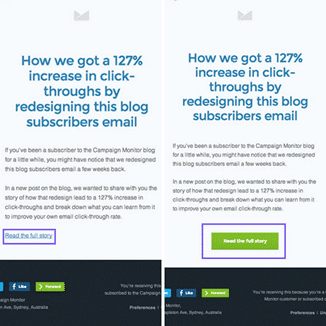
In the above email, Campaign Monitor tested which call to action readers preferred: link text or a button. After testing these two variations, results showed that there was a 28% increase in click-throughs on the email with a button CTA.

Here are a few ideas to consider for multivariate testing in your email marketing campaigns:

  • Are subscribers more responsive to emails with your company name in the subject line?
  • Will including images increase engagement?
  • Are your subscribers more likely to click linked text or a linked image?
  • Will newsletters with colored text increase click rate?

If you want help with professional web design in Houston, Austin, or Dallas/Fort Worth, our experienced team is ready to assist your Texas-based business!

2. Example of Multivariate Landing Page Testing

Multivariate testing allows you to develop high-converting landing pages by experimenting with the performance of different variables. Never underestimate the importance of landing pages—they’re what turns a visitor into a prospect and a prospect into a conversion.

With multivariate testing, a website’s landing page will be split into several slightly different versions to be randomly assigned to your site’s visitors. Each version’s success will be tracked, ultimately showing you the best way to run your site.

multivariate experimental design on landing pages

Source: Leadpages

Your landing page copywriting is key to persuading your audience to take action. Consider testing different lengths and tones and sentiments.

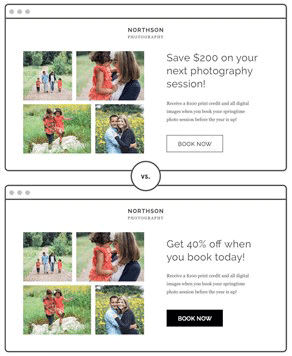
In this example, both landing pages’ headlines present the same offer while using unique language. The only way to know which one is better is by testing it.

3. Example of Digital Content Testing on Social Media

When testing your digital content strategy on social media channels, the goal is to determine which combinations are well-received by your audience. Consider these key metrics for social media marketing when running multivariate tests:

  • Engagement: Which version results in more likes, comments, shares, or clicks?
  • Impressions: Which version reaches the largest number of people?
  • Traffic: Which version drives the most visitors to your site?
digital marketing testing techniques

Source: Sprout Social

In this example, Entrepreneur is testing both the title copy and featured image. Note that the caption, subtext and link all remain the same. The goal of a test like this is to understand which combination will get the most clicks.

Here are a few other multivariable testing ideas worth trying:

  • GIFs vs. static images
  • Use the same content with different audiences
  • Change the tone of voice
  • Experiment with different CTA buttons
  • Incorporating videos vs. images

While testing content changes on your website, keep in mind that your page copy has an effect on maintaining an SEO-friendly website design. If you’re based in East Texas, an Austin, Dallas, or Houston SEO company can help reconcile your verbiage changes with your ongoing strategy.

MARION Can Help Your Business Create High-Performance Digital Marketing Assets

Multivariate testing can be a powerful optimization method, regardless of your business. It’s a sure-fire way to drive traffic to your website and improve customer experience. Not quite ready to take on multivariate testing on your own? We’re here to help! MARION is a Texas-based digital marketing agency that offers traditional and internet marketing services.

Marketing emails you’ll actually want to read.

Get marketing tips and news sent to 
your inbox.

This field is for validation purposes and should be left unchanged.
Name(Required)