Category: Lead Generation

How to Generate Leads Using ChatGPT

Did you know that AI can help you bring in more leads for your business? ChatGPT is a powerful AI tool that can help you generate leads and improve your overall marketing strategy. And here’s how to do it!

Bringing in More Leads for Your Business

Generating leads for your business starts with knowing your audience and what they care about. This means sharing content that either interests them or helps solve their problems. Blogs, social media posts, and emails are great ways to reach them and point them toward what you offer. It also means making sure your website and landing pages have clear calls to action. And let’s not forget about market research and keeping up with your competitors. Sounds like a lot? That’s because it is.

But, imagine a tool that helps you streamline this process and work smarter…

Using ChatGPT to Get More Leads

Need help turning visitors into leads? ChatGPT can make it happen.

Simply put, AI has forever changed how businesses approach finding and nurturing potential customers. Here are just 5 examples:

1. Create Compelling Content (Quickly!)

Content marketing remains one of the most effective ways to attract and nurture leads…but it can be time-consuming. ChatGPT can assist by generating blog posts, social media, email newsletters, and even landing page content in minutes.

Types of Content + Example Prompts:

  • Blog ideas, outlines, and drafts“Can you help me come up with blog ideas for a construction company?”
  • Landing page content and CTAs“Write copy for a landing page offering a free consultation for pest control services.”
  • Email campaigns, including subject lines and body copy “Craft an email campaign promoting accounting services to existing customers.”
  • Ad copy for paid campaigns “Create ad copy for a paid campaign promoting a special discount on roof repair services in Houston, Texas.”
  • Social media posts and captions“Create a caption for a social media marketing post announcing a seasonal sale of kitchen appliances.”
  • Whitepapers and long-form articles“Help me outline a whitepaper on the future of renewable energy technologies.”
  • SEO-friendly website copy “Write SEO-optimized content for a service page about professional cleaning services.”
  • Event invitations and promotional materials“Write an invitation for a networking event for professionals in the tech industry.”
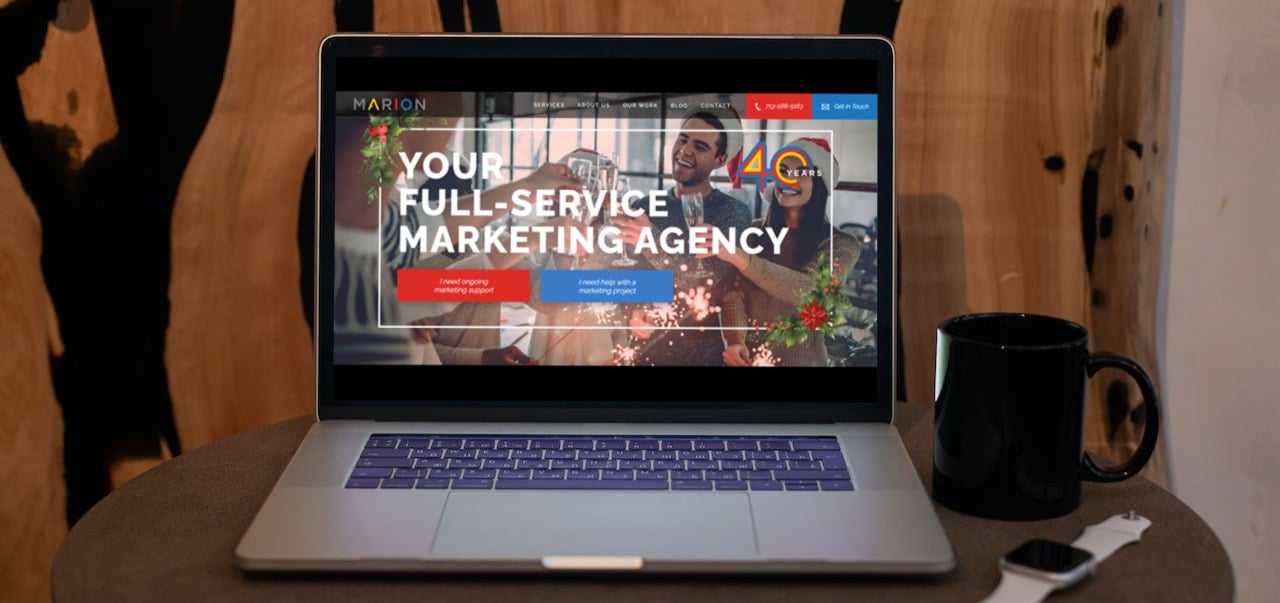
holiday marketing landing page

2. Improve Your Lead Nurturing Emails

Email marketing is one of the best ways to nurture leads, but writing those emails can feel like a lot. That’s where ChatGPT comes in.

Write better subject lines.

A good subject line can make all the difference in whether your email gets opened. ChatGPT can help you come up with attention-grabbing ideas to test with your audience.

Write clear & simple messaging.

Your email’s body needs to hold your reader’s attention and motivate them to take action. ChatGPT can help you create clear, conversational messages for everything from welcome emails to follow-ups. It’s an easy way to keep your emails aligned with your audience’s needs and interests.

Add a personal touch.

Personalized emails are more likely to connect with your audience. ChatGPT can generate tailored content for specific groups, making each message feel relevant and meaningful to the reader.

Example prompt:

“Generate an email sequence for a webinar on B2B marketing trends, targeting mid-sized businesses in the tech industry.”

3. Automate Lead Qualification

Automating lead qualification can save time and improve your sales process, and while ChatGPT isn’t here to replace your sales team, it can definitely make a big difference. By integrating ChatGPT into your website, you can set up intelligent chatbots that answer FAQs, recommend products, and even gather contact details from potential leads.

You can also use ChatGPT to create interactive forms or quizzes that collect valuable data about your leads’ needs, preferences, and how ready they are to buy. For example, a chatbot can help guide a visitor through the process of choosing the right service package and then direct them to schedule a consultation, making it easier to move prospects down the sales funnel.

Example prompt:

“Write a chatbot script for a project management SaaS company that helps website visitors explore features, answers common questions, and guides them to book a live demo.”
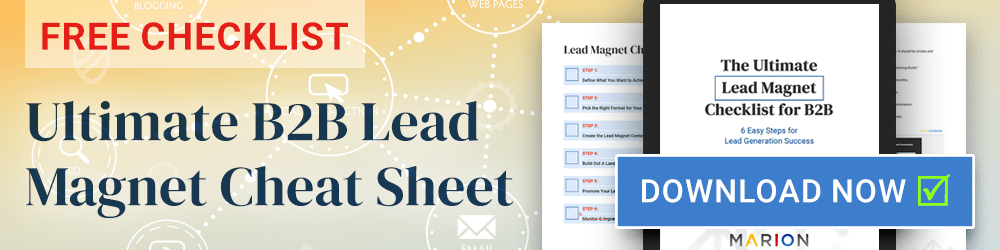
lead magnet checklist download

4. Optimize Your Website for Conversions

Your website is a critical touchpoint for lead generation, and ChatGPT can help you optimize it.

  • Write clear CTAs. Generate CTA ideas that inspire action, like “Download Our Free Guide” or “Schedule Your Free Consultation Today.”
  • Write FAQ sections. Put together FAQ pages that answer common questions and clear up any doubts, so potential leads stay interested. This helps build trust and keeps your audience engaged longer.
  • Polish your copy. Use ChatGPT to edit and refine website content, making it more persuasive and user-friendly.

Example prompt:

“Improve the copy for a consulting firm’s services page to focus on the benefits for CEOs and CFOs.”

5. Conduct Competitor and Market Research

AI makes competitor and market research quicker and easier by analyzing huge amounts of data in no time. It can help you spot what competitors are doing and identify trends shaping your industry. With AI handling the heavy lifting, you can focus on using those insights to fine-tune your strategy.

Example prompt:

“Summarize the key differences between our services and [Competitor’s Name] to highlight our unique selling points.”

Let MARION Handle Your Marketing

With ChatGPT, the lead generation possibilities are endless!

And while AI can give you the tools, you don’t have to tackle digital marketing on your own. At MARION, we’re here to make things easier. From strategy to content to execution, our marketing agency has your back every step of the way. Let us take care of the heavy lifting so you can focus on what matters most.

Send us a message and let’s get started ASAP!

Marketing emails you’ll actually want to read.

Get marketing tips and news sent to 
your inbox.

This field is for validation purposes and should be left unchanged.
Name(Required)

9 Proven B2B Marketing Strategies + Examples

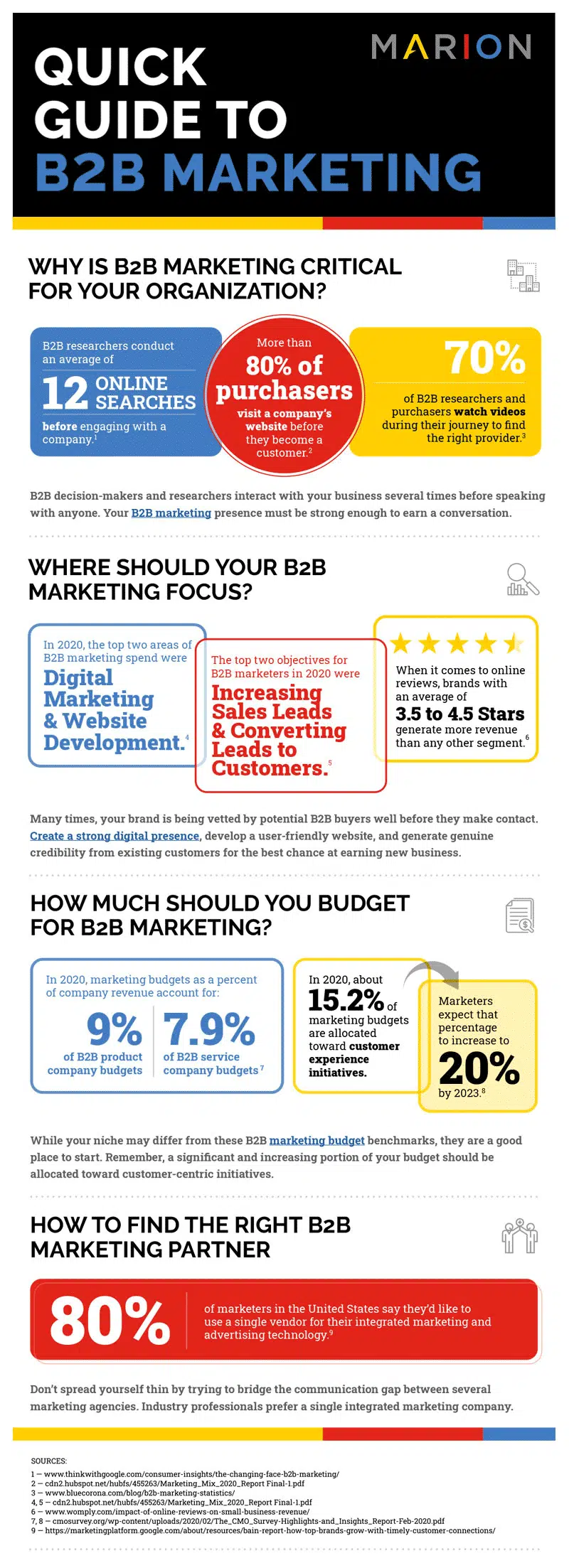
Marketing to businesses is a different challenge. While we’re all familiar with marketing as consumers, reaching other businesses (B2B) requires a unique approach compared to consumer-focused (B2C) tactics.

Here’s what we’ve learned in our 40 years of providing outsourced marketing services to Texas businesses.

What is B2B Marketing?

B2B marketing is when one business markets its products or services to another business. It’s essential for companies that supply goods or services that help other businesses operate or improve their own offerings.

Some B2B marketing examples include:

  • An industrial pump manufacturer is attempting to market and sell its products to an oil and gas producer.
  • A commercial construction company is attempting to market and establish a contract to build out the office space for a law firm.
  • A heavy equipment dealership is attempting to market and sell industrial equipment to a construction company.


What is a B2B Marketing Agency?

A B2B marketing agency specializes in crafting marketing strategies that effectively connect your business with other companies. These agencies know how to reach key decision-makers and position premium products or services to stand out in the market.

Why B2B Marketing?

B2B marketing is essential because most companies depend on the products or services of other businesses. Rarely does a company handle every part of its production and distribution in-house. For instance, your favorite clothing brand might source materials from various suppliers, and your phone’s components likely come from multiple vendors.

These partnerships start with effective B2B marketing, connecting companies with what they need to function or grow. Plus, B2B relationships often have high revenue potential. Unlike one-time consumer purchases, business partnerships are often longer-term and higher-value. For example, a landscaping contract for a corporate campus may involve months of service and a substantial budget—much more than a single residential project.

Types of Business-to-Business Marketing

importance of B2B marketing strategies

Here are three core B2B marketing techniques to consider. Think about how each might fit into your strategy, and then check out what your competitors are doing to see if these approaches could work in your industry.

Digital Marketing for B2B

Digital marketing is a scalable way to get your products or services in front of the right people. A digital marketing campaign makes it easy to track ROI, and you can use granular targeting to reach decision-makers.

For example, LinkedIn ads can target individuals with certain job roles so that you can directly target a purchasing manager or executive. If your ideal customers are searching for your products or services online, you can use an SEO company to make sure your web pages are at the top of the search results.

Traditional Marketing for B2B

Traditional marketing strategies for the business-to-business market casts a wide net and tends to be expensive, but it helps build brand equity. You can use radio, television, or print ads to grab the attention of your potential customers and remain top of mind. You’ll be in the running when those companies are looking for a new vendor.

Personal Selling for B2B

Personal selling is one of the oldest and most effective B2B marketing methods. Personal selling leverages face-to-face networking and relationships to get deals inked. This is the least scalable way to market your business to other companies, but it has the highest conversion rate.

Personal selling is frequently paired with digital marketing. Digital campaigns generate leads that are followed up in person by a salesperson.

9 Examples of How to Do B2B Marketing (That Actually Work)

When it comes to B2B lead generation, business marketing companies often use nine core strategies. These tried-and-true B2B marketing tactics can help drive growth and increase sales.

  1. Customer Pain Point Research
  2. Reviews, Testimonials, & Case Studies
  3. B2B SEO
  4. Social Media for Business
  5. B2B Advertising
  6. Referral Systems
  7. Marketing Automation
  8. Influencer Marketing
  9. Campaign Tracking and Reporting

1. Research Customer Pain Points

Successful B2B marketing starts by researching what your customers need. Just because you’re offering a product or service doesn’t mean customers will come running. Find out what drives the demand for your product/service and how you can stand apart from the competition.

One way to better identify your customer needs is to form customer user groups. Similar to focus groups for a new product, customer user groups leverage the people who are already benefiting from your offerings. For example, after interviewing your customer user group, you may find that marketing for IT companies is more effective when you focus on the pain point of cloud security. Identifying these pain points can go a long way when tailoring your marketing message.

User groups can be conducted in person, or you can build surveys that uncover the unique pain points that customers experience before searching for your solution.

Other research methods include doing keyword research to discover organic search demand or leveraging existing data about your industry.

2. Prioritize Reviews, Testimonials, and Case Studies

One of the most effective B2B marketing strategies is leveraging reviews, testimonials, and case studies from existing customers. This builds credibility in the eyes of potential customers who need to know your products or services can deliver.

Reviews and testimonials are important to your B2B digital marketing strategy as well. Reviews can be leveraged online to help your brand outrank competitors and improve your organic and Google Ads click-through rates. Learn more about how to get Google reviews for your business today!

Case studies are helpful the closer you get to a purchase decision. For example, when customers have a list of potential product/service providers together, they’ll want to see how you’ve performed in the past. Having a case study of a similar customer might be the proof your prospects need to see before making a big purchase decision.

3. Use B2B SEO

Search engine optimization is a valuable asset to your B2B online marketing. Prospects need to make informed decisions, so they conduct preliminary online research. If you’re not a top result for the product or service you’re selling, you might not even be considered a potential vendor.

One way to improve your SEO is by leveraging content marketing for your business website. Content marketing helps position your brand as an authority to both search engines and users. In fact, content strategy has proven to have a major role in B2B manufacturing marketing and manufacturing web design. Both of these work together to improve SEO for manufacturers and drive organic search traffic. By regularly publishing highly educational content, you show your subject matter expertise and help users make more informed decisions.

By combining B2B online marketing strategies like reviews and content marketing, you can dominate the search results for your products/services. Not only will business prospects find you in search results more often, but your reviews will help prove that you’re a trusted provider.

4. Use Social Media for Business

Simply put, being active on social media isn’t optional anymore. Business buyers often check social channels to get a sense of your company’s reputation and culture. In fields like marketing or professional services, your social presence can be especially influential. But with organic reach on the decline, standing out may mean setting aside a budget for paid social media ads.

5. B2B Advertising

Your B2B internet marketing should include paid spend on search and social media. These paid B2B marketing services can generate great ROI if done correctly.

Learning how to successfully advertise on social media can help you meet your prospects where they already spend their time. The decision-makers and purchasing managers that you’re targeting represent businesses, but they are just people at the end of the day. They spend time on social media channels, and you can use the advanced targeting features of today’s popular social channels to reach them.

Paid search is also a great way to target relevant prospects. The difference between organic vs. paid search is that you can jump the line and appear at the top of the search results without having to pour time into SEO.

Paid search targets your prospects for their exact interest at the exact moment they’re interested. Traditional marketing often relies on user demographics for targeting. This is why many business to business marketing strategies prioritize digital over traditional.

what is B2B marketing?

6. Set Up a Customer Referral System

Referrals are a great way to drive new business but are often overlooked in favor of digital methods. Set up a process for gathering referrals by checking in with satisfied clients regularly.

For example, a commercial lawn care company might send out a six-month email for feedback and kindly request referrals from happy clients. For even more traction, consider offering incentives, like a small discount or credit for each new referral, which can create a steady revenue stream with minimal cost.

7. Use Marketing Automation

Marketing automation helps you connect with leads, nurture prospects, and streamline all your marketing channels. For instance, if someone downloads a case study, an automated follow-up email could share more tailored insights, maximizing engagement from each contact. Just ensure you don’t overwhelm your contacts—too many emails or overly personalized messages can lead to unsubscribes.

8. Use Influencer Marketing

Partnering with influencers can be a very effective creative marketing strategy for B2B businesses. It makes the most sense to leverage this if there are well-known public figures for the industry you’re targeting.

Going back to our commercial construction example, if your construction firm is trying to get contracts for restaurant build-outs you could partner with a public figure that most restaurant owners follow. Sponsoring a promotional article about your restaurant designs on Gordon Ramsay or Guy Fieri’s blog could be a great way to generate leads.

There’s a good chance you know about local influencers in your target industries. If you’re operating a local business, these local influencers are probably a relevant and cost-effective way to improve your business to business marketing effectiveness. Learn how to advertise a small business locally

9. Track Your Campaigns and Use Reports

marketing strategies for the business to business market

How will you know if your B2B marketing strategies are effective? Before you implement any digital content strategy, develop a system for tracking its effectiveness.

If you’re engaging in B2B SEO, what will you use to measure rankings, organic traffic, and conversions? If you’re advertising on social media, do you have to correct pixels installed so that you can trace marketing ROI back to its source?

If you’re using forms of traditional marketing for B2B, they might be more difficult to track. However, just because something’s difficult to track doesn’t mean you should avoid measuring it. If you want to improve your marketing effectiveness over time, you’ll need to track and regularly review reports about the marketing KPIs that matter most to your business.

Let MARION’s Experts Handle Your B2B Digital Marketing Strategy

At MARION, we have over 40 years of experience with B2B marketing in Houston and Austin, Texas. Our marketing team consists of digital marketing, graphic design, and traditional marketing experts with proven track records.

Contact us today to schedule a consultation and discover how we can help your business grow!

Marketing emails you’ll actually want to read.

Get marketing tips and news sent to 
your inbox.
This field is for validation purposes and should be left unchanged.
Name(Required)

How Email Newsletters Nurture Leads and Amplify Your Influence

Effective email newsletters can help you stay top-of-mind with your audience.

Not all emails are created equal. While promotional emails shout, “buy now!” and focus on driving sales, email newsletters offer valuable content to keep your audience engaged with your brand. While you might not see a direct impact on sales, email newsletters provide educational and entertaining content that will put your brand top-of-mind and establish trust with your customers as they become more comfortable with you. With effective email newsletters, you can nurture leads, become a thought leader in your industry and ultimately increase website traffic. In this article, we’ll dig into the power of email newsletters.

What’s the difference between an email and a newsletter?

We’re glad you asked. When you set out to design an email marketing campaign, there are various types of emails you can employ to target your audience. Most emails fall into two categories: promotional emails and engagement emails. Both categories have unique strengths, and when paired together, they create a powerful duo for your marketing strategy.

Promotional Emails.

Promotional email marketing functions as an advertisement that informs people about a product or service, usually followed by a strong call-to-action (CTA) to let a consumer know how to take the next step in purchasing the product or signing up for the service.   The CTA could also call for a transaction, download or a free trial sign-up. These emails are more direct and less personal and work best when targeted at those most likely to act.

Email Newsletters.

Email Newsletters are a softer approach used to connect with your subscribers and build a relationship over time, while keeping your brand top of mind. Speaking to your audience’s pain points, these emails are filled with helpful tips, guidance and expertise that establish you as the authority in your industry. The education you provide can come from your own experience, as well as the latest trends and industry news that are relevant to your customers. As these emails land in your readers’ inboxes consistently, you become their go-to source for solutions. Not only that, but with softer CTAs like “read more” or “see our latest project,” you’ll boost website traffic as curious readers explore who you are.

We know what you’re thinking. “Why should I waste my time writing a newsletter if it may not help with direct sales?” The benefit of consistent email newsletters goes beyond a single sale. Every newsletter you send out is like putting a piece of your paycheck into your retirement fund — in the end, it pays off. Your efforts to educate and inform your audiences keeps your brand top-of-mind, encouraging subscribers to think about you once they are ready to buy.


The Benefits of Email Newsletters: Nurture leads, become a thought leader and drive website traffic
With effective email newsletters, you can nurture leads, become a thought leader in your industry and ultimately increase website traffic.

Nurture leads with the power of email newsletters.

As you gather leads through different sources like trade shows, free trials and online surveys, you’ll find that each person is in a different stage of the buyer’s journey. When you nurture a lead, you are inviting them to learn more about how your industry works while inspiring them to take the next steps.1 It’s a courtship of sorts, as strangers become friends. Friends don’t tell each other what to do, but they do give advice and guidance. This is where a newsletter comes in as a helpful tool for nurturing leads.

The best way to use email newsletters is to personalize them according to who you’re speaking to. That can sound daunting when looking at your giant stack of emails, but we’ve got a method. Looking at the data you have on each of your leads, you can segment them into categories. There are two types of data to gather: behavioral and non-behavioral.2 Non-behavioral data — such as location, age range, gender and job type — is a great place to start. Behavioral data, on the other hand, provides information about how leads interact with your brand. It can include how they found you, how often they visit your website and what pages they visit. If you have more personal information like names, you can use automated email software to populate names in subject lines.

If all you’ve got on a lead is an email — that’s okay! Segment your leads based on what stage of the brand relationship they’re in. Once you’ve organized your emails into different categories, you can create content that will help nurture leads and move them along to the next stages of the buyer journey.


Here’s an example of our newsletter The Flipside, where we offer subscribers useful marketing tips and talk about the latest marketing trends.

Use thought leadership to establish authority and boost website traffic.

Thought leaders act as guides, providing a wealth of knowledge on the latest developments in the industry and predicting what is to come. Audiences look to thought leaders as trusted authorities on certain topics who bring ideas to the table that cannot be found elsewhere.3 With email newsletters, you have the power to educate your audiences and position yourself as the expert in your industry.

Here are some strategies for developing thought leadership content for a newsletter.

Focus on what makes you different.

It’s easy to get too broad and wander into subjects outside of your wheelhouse. Stick to your area of expertise, and become the leading expert in a niche subject.

Pick a theme for each newsletter.

Rather than sharing general company news, pick a theme or topic to focus on. For example, a newsletter topic for a bank might look like saving money and budgeting for the future, while the next topic after that could focus on how to use retirement plans.

Educate your audience.

A good rule of thumb is to make sure 90% of your newsletter is informative; the remaining 10% can be promotional.4 Combine your expertise with further research, featuring company blog posts and case studies to increase website traffic, while linking to a few related articles from other sources.

Keep it short and sweet.

Your audience gets tons of emails every day. Give them a quick overview of topics and link out to blog posts and other articles. Your goal is to get them off the email and onto your website, boosting website traffic and getting eyes on your company.

Write compelling subject lines.

Write something that compels the reader to open the email and see what’s inside. Use action-oriented verbs that pique curiosity and tell a story. A catchy subject line will entice more people to open your emails, generating more leads.


Here are some catchy subject lines we’ve used for Design At Work’s email newsletters.

Be a good listener.

Stay on top of the latest industry developments and conversations, while keeping tabs on how your customers’ needs are changing.

Create captivating email newsletters with a team that gets you.

Ready to become an email newsletter ninja? Design At Work can help you develop email newsletters that nurture leads and increase traffic to your website. Contact us today to get started on an email marketing newsletter campaign.


Sources:

  1. 46 PPC Stats to Empower Your Marketing Strategy in 2024, Techjury
  2. 7 tips to create an effective digital marketing budget, Spendesk
  3. Economic Impact: Methodology, Google
  4. 80+ Industry Specific Social Media Marketing Statistics For 2024, Synup

Beetlejuice vs. Barbie: Two Winning Marketing Campaigns

When it comes to movies, Beetlejuice and Barbie couldn’t be more different — and yet, both are standout marketing examples of how to build excitement, captivate audiences, and ensure box office success. From nostalgic callbacks to playful reinvention, these films offer unique approaches to marketing that brands can learn from.

Let’s dive into how the marketing campaigns behind Beetlejuice and Barbie set the stage for their iconic status.

Beetlejuice’s Nostalgia Marketing

Beetlejuice, directed by Tim Burton, has long been a cult classic since its release in 1988. So, when a sequel was announced, their team leaned heavily on nostalgia marketing. Fans of the original film were eager to revisit the quirky world of the Ghost with the Most, and the campaign smartly played into that sentiment.

Targeting the Original Fans

The marketing for Beetlejuice Beetlejuice primarily spoke to fans of the original, using references to iconic scenes, quotes, and characters. For brands, this is a powerful strategy. If you can tap into an already-established audience’s emotional connection, you’re already halfway to winning their loyalty.

Playful Teasers

Early teaser trailers and posters for the sequel highlighted Michael Keaton’s return as Beetlejuice, with the tagline “It’s Showtime!” This throwback to one of the original’s most famous lines helped rekindle excitement and anticipation.

Social Media Buzz

The campaign also utilized social media to reach new audiences while still catering to long-time fans. By sharing behind-the-scenes footage, throwback clips, and fan art, Beetlejuice marketing kept the conversation alive and well.

The Barbie Movie’s Fresh Take

On the other hand, Barbie had a completely different challenge — reinventing a decades-old brand for a modern audience. The Barbie movie marketing team knew that they had to break away from the traditional “pink and perfect” image associated with the doll and turn it into something fresh, funny, and deeply relatable.

Subverting Expectations

The Barbie marketing campaign flipped traditional perceptions of the doll by using humor and irony. The first teaser trailer, for example, parodied 2001: A Space Odyssey, signaling that this wasn’t your typical Barbie movie. This strategy not only generated curiosity but also attracted an audience that might not have been interested otherwise.

Collaborations and Partnerships

Mattel and the movie’s marketing team pulled out all the stops with brand collaborations. From Barbie-themed fashion collections to custom pink shoes, Barbie went beyond the screen and into everyday life. For brands, this kind of omnichannel marketing creates a cohesive experience that feels fresh and exciting.

User-Generated Content

The Barbie campaign also tapped into the power of user-generated content (UGC). By creating fun filters, challenges, and interactive social media elements, the marketing team turned fans into brand advocates who spread the word organically.

Comparing the Two: Nostalgia vs. Reinvention

Both films used distinct marketing strategies that catered to their strengths:

  • Audience: Beetlejuice relied on the loyal fan base built over decades, while Barbie aimed to bring new life to a legacy brand by appealing to modern audiences.
  • Tone: While Beetlejuice stuck to its quirky, dark-comedy roots, Barbie surprised audiences with humor, satire, and boldness that felt fresh and in touch with current cultural conversations.
  • Brand Partnerships: While Beetlejuice focused on character and plot-driven teasers, Barbie leaned into product collaborations and lifestyle branding that turned the movie into a broader cultural moment.

Takeaways for Marketers

The creative marketing campaigns for both Beetlejuice and Barbie teach us that understanding your brand’s legacy and audience is key to crafting a winning strategy.

1. NOSTALGIA WORKS. If your brand has a long-standing history, don’t be afraid to leverage it. People love revisiting beloved characters, themes, and memories, just as Beetlejuice fans were eager for a return to Tim Burton’s eerie yet charming world.

2. REINVENTION IS POWERFUL. If you’re looking to attract a new or broader audience, take a page from Barbie and flip the narrative. By playing against expectations, you can create a buzz that gets people talking and draws in new fans.

3. OMNICHANNEL STRATEGIES BUILD HYPE. From product collaborations to social media filters, Barbie capitalized on omnichannel marketing. Having multiple touchpoints across different platforms and industries maximizes exposure and keeps the excitement going.

In the end, whether you’re marketing a nostalgic sequel or reinventing a beloved brand, understanding your audience and creating campaigns that engage and excite them are the keys to success.

Get Creative with MARION

Looking for your next great marketing campaign? At MARION, we specialize in crafting creative and tailored strategies that resonate with your audience. So, if you’re looking to tap into nostalgia or launch a brand refresh, we’ve got the tools to bring your vision to life.

Contact us today to start your next marketing campaign!

Marketing emails you’ll actually want to read.

Get marketing tips and news sent to 
your inbox.

This field is for validation purposes and should be left unchanged.
Name(Required)

A Closer Look at Paralympic Games Marketing Campaigns

With the Paris 2024 Summer Paralympic Games, businesses have a chance to connect with global audiences through marketing, advertising, and branding. The Paralympics not only highlights incredible athleticism but also emphasizes the importance of inclusivity and diversity. For brands that share these values, this event offers a powerful platform to amplify their message and expand their reach.

Why the Paralympics Matter

The Paralympic Games have grown in popularity over the years, drawing millions of viewers worldwide. Paris 2024 will shine a spotlight on athletes who exemplify resilience and the human spirit. These Games go beyond sports — they celebrate diversity and inclusion, offering companies a unique opportunity to align their brand with these inspiring themes.

Inspiration from Past Campaigns

Check out these examples of Paralympic marketing campaigns from previous years.

Paralympics Marketing Campaign

Image Source

Toyota’s “Start Your Impossible” Campaign

Toyota’s “Start Your Impossible” campaign during the 2018 Winter Games is a great example of how brands can connect with the Paralympic spirit. By telling the inspiring stories of Paralympic athletes, Toyota highlighted values like resilience and inclusivity, making a powerful impact. This kind of approach could be a great fit for brands looking to stand out during the Paris 2024 Summer Paralympic Games.

Paralympics Marketing Campaign

Image Source

Citi’s “Stare at Greatness” Campaign

Citi’s “Stare at Greatness” campaign for the Tokyo 2020 Paralympic Games challenges perceptions by encouraging audiences to admire, rather than look away from, the achievements of Paralympic athletes. Launching globally on social media and featuring Team Citi, this campaign flips the script on how we view disabilities, turning what might be seen as a negative into a powerful, positive message of admiration and respect. By celebrating the strength and perseverance of these athletes, Citi is not just supporting the Paralympic Games — they’re also promoting a more inclusive and diverse society.

Marketing and Advertising Opportunities

  1. Inclusive Advertising Campaigns: The Paralympics is a great time to roll out inclusive marketing that highlights diversity and inclusion. Featuring Paralympians or people with disabilities in your ads can create a strong emotional connection with viewers. This not only shows your commitment to inclusion but also resonates with a wider audience that values social responsibility.
  2. Storytelling and Content Creation: Paralympic athletes have incredibly inspiring stories. Sharing their journeys through videos, social media, or blog posts can deeply engage your audience. Collaborating with athletes to tell their stories brings a human touch that can leave a lasting impact.
  3. Social Media Engagement: Just like with Olympics marketing, social media plays a huge role during the Paralympics. Engaging with your audience through live updates, athlete interviews, and behind-the-scenes content can build excitement around your brand. Using hashtags, challenges, and interactive content can also boost your reach and encourage user-generated content.

Aligning your brand with the Paralympic Games is more than just marketing — it’s about giving your brand a meaningful purpose. Consumers today are looking for companies that make a positive impact on society. By supporting the Paralympics, you’re not just promoting your products; you’re supporting a global movement that celebrates diversity and inclusion.

Start Your Inclusive Marketing Journey with MARION

Ready to make your brand more inclusive and impactful? At MARION, we’re here to help you create marketing strategies that resonate with diverse audiences and drive meaningful connections. Let’s work together to build a more inclusive future. Get started with MARION today.

Let’s get in touch!

Marketing emails you’ll actually want to read.

Get marketing tips and news sent to 
your inbox.

This field is for validation purposes and should be left unchanged.
Name(Required)

Digital Advertising: Is It Right for Your Business?

Demystifying the expansive world of digital advertising. 

With a powerful return on investment (ROI) opportunity — up to 200%, in fact1 — digital advertising can play an essential role in your integrated marketing strategy. But, just where to begin? Between social media, streaming content, responsive search ads and retargeting content, it can feel overwhelming trying to navigate the digital marketing landscape.

If you’re wondering whether digital advertising is right for your business, you’re in luck. With insights from our resident digital marketing strategist, we have outlined the elements of a digital ad campaign — from clarifying goals to the pros and cons of the most popular platforms — to make it easier to understand.

Define campaign objectives.

The first step in creating a successful digital advertising strategy is defining your campaign objectives. Begin by asking yourself these two questions: What do you want to achieve with the ad campaign? And, how will this campaign fit into your overall marketing strategy? Digital ads are one piece of the marketing puzzle, and a successful strategy uses each piece to complement the others. The answer to these questions will help you determine your primary campaign objective, allowing you to build your strategy around the right objectives and conversions. The most common campaign objectives are brand awareness, website traffic, online engagement, leads and sales.

Understand your audience.

Who are you going to target with this campaign? Understanding your audience — from their online habits to the language they use — allows you to tailor your campaign to make the biggest impact. For example, are you targeting new audiences who are unfamiliar with your brand or established customers who are already familiar with your offerings? For new audiences, your content would likely need to provide an overview of your services and what sets your business apart, while you could hone in on more detailed content for users that are already in the know. You could also consider targeting audiences in a specific location — this is especially valuable for brick-and-mortar shops — or reach users who work in a specific industry, such as construction, commercial real estate or chemical engineering. Not only does defining your audience help with your content messaging, but it also helps you select the platform more likely to reach them. Understanding how the audience would interact with the brand organically helps you determine how best to reach them through a sponsored ad — ultimately, you want to meet them where they are.


This sponsored ad for Food Town offers solutions to the grocery store audience’s primary pain point: price.

This LinkedIn ad campaign for security services provider SentriForce targeted decision-makers in key industries by job title.

Case in point: Google vs. LinkedIn ads.

To see how distinct audiences can shape an ad campaign, let’s take a closer look at two of our clients. First up: Food Town, a locally-owned grocery store wanted to reach repeat shoppers in the Houston area. Targeting an audience already familiar with the grocery store, and locations, we developed an integrated marketing strategy using digital display ads to drive in-store traffic, and sparking sales using local search Google ads.

Surveillance system provider SentriForce wanted to reach new prospective customers in the construction industry across multiple locations. To do so, we launched a comprehensive campaign on LinkedIn showcasing how their systems address theft on construction sites that targeted decision makers in the industry by job title.

Establish a timeline.

Next up, you’ll want to consider how long the campaign will run. Evergreen campaigns are ideal for brand awareness, maintaining visibility with users long-term. On the other hand, targeted drip campaigns or seasonal campaigns can be used to drive high-impact concentrated messaging around a more time-sensitive or relevant topic.


Over the course of six months, this digital ad campaign raised awareness of high commercial property taxes, thereby familiarizing audiences with the company’s services prior to tax season.

Case in point: Peak Season.

A dedicated ad campaign can help drive awareness leading up to and during your business’ peak season. For example, we launched a digital ad campaign for a commercial property tax company to boost brand awareness six months before tax season. This helped plant the seeds in potential clients’ minds over the months in advance, encouraging more conversions during tax season by strengthening name recall, brand awareness and authority. 

Set the budget.

Once you have clear goals, a target audience and a timeline, you’ll want to determine just how much to spend on your ads. While the specific number will depend on your goals and overall marketing strategy, your marketing spend should ideally be between 7 – 10% of your net profit.2 You can use this number as a starting point and adjust your spend, as needed, as you continue to optimize your campaign overtime.

Select ad platforms.

Last, but absolutely not least, you’ll determine where to launch your campaign. Reflect on all of the previous steps, from the overarching goals to where your audience is online to the timeline and budget. These elements can help to inform the best platform to initiate an integrated digital ad strategy that best supports your business’ marketing initiatives.

Pros and cons of digital advertising platforms.

While digital ads can support all businesses, selecting the right ad platform is essential for crafting a successful campaign. Learn more about the most common examples of digital advertising platforms below — and what type of campaigns each one is best suited for.

Search engine ads.

With an average ROI of $2 for every $1 spent3, Google Ads are a powerful tool in your digital marketing kit. From dynamic graphics to location-specific ads, search engine ads on Google and Bing offer a wide range of options to choose from — each with specific benefits depending on your business’ services and campaign goals.


Digital ad campaigns can be highly effective — when the right message is delivered on the best-suited platform.

Search ads.

Search ads are a great place to begin a digital campaign because of the wealth of in-depth data they provide. These sponsored text ads appear on search results pages and typically lead users to a dedicated landing page. Search ads can provide you with invaluable information such as the specific user search terms, how the user is navigating online and engaging with your content, and where they are in the sales funnel when they engage. This insight allows you to refine and optimize your campaign in real time, adapting to the language and phrases your real target audience is using.

Responsive display ads.

Display ads are dynamic, relying on native and responsive tools to create ads tailored to the platform where they are served up to your audience. These ads pull from a bank of images and headlines, pairing them together to best fit the platform or page. While these are designed to best suit the format used by your audience, there is limited control over how the various elements are combined, so you need to provide a flexible bank of images and content that can easily be mixed and matched together.

Video ads.

Video ads provide you with a lot of valuable information about users’ search behavior, making them a good choice for using at the start of a brand awareness or educational campaign. As you learn more about various behaviors and how users are engaging with your content, you can further refine your strategy across various platforms. While eye-catching, video ads can also be more time-consuming to create and maintain.

Local ads.

Local ads target users in a specific geographic area, which typically translates to a smaller, more concentrated audience. With these ads, businesses can target specific actions such as placing online orders, calling a business or getting driving directions, as well as monitoring foot traffic. Local ads are often a strong fit for established brands or familiar industries such as restaurants and retail, and can be used to generate high ROI conversions.

Remarketing.

Ever felt like an ad is following you around the internet? That’s likely a remarketing ad. These ad types use data collected during a previous campaign to remarket messaging to users who have previously engaged with your content. Remarketing ads are a visual reminder, keeping your brand top of mind for users and encouraging them to take a desired action.

Social media ads.

With 74% of shoppers researching products on social media before making a purchase4, social media ads are a powerful tool for direct-to-consumer and business-to-consumer brands. While these ads offer flexibility and can be relatively cost effective, they have relatively limited insights and can be difficult to target businesses through Meta. Platforms like LinkedIn, Pinterest and YouTube offer a variety of native tools that can be used to drive engagement with specific audiences, depending on where your target audience spends time online.


Before allocating resources to a social media ad campaign, it’s essential to understand where your audience spends its time — and how they engage with content on those platforms.

Instagram.

Instagram, which is part of Meta’s ad suite, is a popular choice for business-to-consumer and direct-to-consumer businesses. As a visual-first platform, video, photography and graphic elements help with brand education and driving sales — especially through the use of direct product shop links. However, the demographic reach for Instagram is relatively limited, with most users being under 50 years of age.

Facebook.

On the other hand, Facebook — also part of Meta’s ad suite — has a broader demographic range that engages with ads in a variety of ways, including Messenger, Stories and the in-platform newsfeed. The ads are integrated into users’ experiences more organically, which can help build trust. However, Facebook controls the view and advertisers do not have access to specific data sets or audiences, which can make it difficult to refine audience segments.

LinkedIn.

LinkedIn’s native tools are designed for targeting audiences by industry or profession, which makes this a good platform for brand awareness and engagement campaigns. However, it’s important to be flexible with audience segments, taking advantage of the platform’s built-in automation tools to guide the ads to potential customers and brand advocates.

Pinterest.

As a primarily visual platform, Pinterest is ideal for aesthetically pleasing photos and videos — especially content that can be repurposed or “pinned” for inspiration such as recipes, home décor or DIY projects. Advertising on this platform is akin to casting a wide net. While it can be difficult to zero in on the exact target audience you have in mind, there is opportunity to reach a large number of potential customers who are interested in your brand’s industry or niche.

YouTube.

Advertising on YouTube can help you better understand your target audience’s online behaviors. The platform shares a good amount of data about users’ search behavior, which provides insight into how users find your business online. The platform can also help you reach a large audience — however, on the flip side, it can also lead to ad fatigue when repeatedly served up to the same users. It can also be challenging to ensure your ads appear on content that aligns specifically with your brand’s mission or values.

Digital marketing campaigns continue to evolve over time, and you have the opportunity to continue finetuning them as you learn more about your audience members. As part of an integrated multi-channel marketing strategy, digital ads play an important role in keeping your brand top of mind, improving authority and brand recognition, and driving digital conversions. Talk to our digital marketing experts about crafting a marketing campaign designed around your business’ goals.


Sources:

  1. 46 PPC Stats to Empower Your Marketing Strategy in 2024, Techjury
  2. 7 tips to create an effective digital marketing budget, Spendesk
  3. Economic Impact: Methodology, Google
  4. 80+ Industry Specific Social Media Marketing Statistics For 2024, Synup

Marketing Insights from Summer 2024 Blockbusters

As we dive into the hot summer of 2024, Hollywood is back with a lineup of highly anticipated movies, each with an incredible marketing campaign. From huge billboards in Times Square to eye-catching trailers all over social media, these blockbuster marketing strategies are all about capturing attention and building hype.

Summer 2024 Blockbuster Lineup

Summer 2024 is bursting with blockbuster movies that are sure to captivate audiences and inspire marketers alike. From the post-apocalyptic landscape of “Furiosa: A Mad Max Saga” to the genre-bending comedy “Hit Man,” there’s a diverse array of films showcasing creative marketing strategies.

“A Quiet Place: Day One,” a prequel helmed by Michael Sarnoski, expands on the alien invasion narrative with new characters played by Lupita Nyong’o and Joseph Quinn. Horror fans can look forward to “MaXXXine,” the thrilling conclusion to Ti West’s trilogy, while romance takes to the stars in “Fly Me to the Moon,” starring Scarlett Johansson and Channing Tatum. “Twisters,” directed by Lee Isaac Chung, revisits the storm-chasing genre with a fresh cast and cutting-edge visual effects.

All of these films’ marketing campaigns offer valuable lessons in building anticipation, leveraging multi-channel strategies, and creating compelling narratives that resonate with audiences.

  • The Power of Teasers and Trailers – Take notes from how studios strategically release trailers months in advance, carefully selecting scenes to evoke emotion and curiosity. For example, the thrilling previews of “A Quiet Place: Day One” have already set the internet abuzz, showcasing just enough to stir excitement without giving too much away. The takeaway? In business, whether you’re launching a new product or service, teasing your audience with compelling previews can generate excitement and anticipation.
  • Building on Established Brands and Franchises – Sequels and reboots dominate the summer blockbuster landscape, capitalizing on established fan bases and brand recognition. While originality is crucial, there’s value in building on what’s already familiar. Movies like “MaXXXine,” “A Quiet Place: Day One,” and “Twisters” are riding the wave of their predecessors’ success, drawing in audiences who are already invested in these stories.
  • The Importance of Timing – Timing is everything in blockbuster marketing. Studios meticulously plan release dates to maximize box office potential and minimize competition. For example, “MaXXXine” is being strategically released on July 5th, right after the holiday weekend, to capitalize on audiences looking for post-celebration entertainment.

Marketing Lessons from This Year’s Biggest Movies

As we marvel at the spectacle of summer 2024 blockbusters, there’s much to learn from the strategic brilliance behind their marketing campaigns. Whether you’re a small startup or an established enterprise, the principles of effective marketing—building anticipation, leveraging digital platforms, creating immersive experiences, and capitalizing on brand loyalty—are universal.

Summer Blockbuster Marketing

So, as you plan your next marketing campaign, take a page from Hollywood’s playbook. Think big, engage creatively, and remember that the journey from anticipation to satisfaction is what keeps audiences—and customers—coming back for more.

1. The Power of Anticipation

Build buzz early. Movie studios begin marketing their blockbusters months, sometimes even years, before their release dates. Teaser trailers, social media hints, and behind-the-scenes looks create anticipation and excitement.

Lesson for Your Business: Start your marketing campaigns early. Whether it’s a new product launch or an upcoming event, build anticipation with sneak peeks, teasers, and early announcements. Use social media, email newsletters, and blog posts to keep your audience engaged and excited.

2. Multi-Channel Marketing

Reach audiences everywhere. Blockbuster movies leverage various channels to reach their audience: TV commercials, PPC ads, influencer partnerships, outdoor billboards, and more.

Lesson for Your Business: Utilize a multi-channel marketing approach to maximize your reach. Combine online and offline marketing tactics. For instance, complement your digital ads with direct mail campaigns or local event sponsorships. The goal is to be where your audience is, across various platforms.

3. Storytelling

Create emotional connections. Movies are all about storytelling, and their social media campaigns often reflect this. Trailers, posters, and promotional content tell a compelling story that resonates with the audience.

Lesson for Your Business: Incorporate storytelling into your marketing efforts. Share customer success stories, the journey behind your products, or the mission of your business. Emotional connections can significantly enhance customer loyalty and engagement.

4. Influencers

Partner with the right people. Celebrity endorsements and influencer partnerships are staples in blockbuster movie marketing. These collaborations help tap into the influencer’s fan base and add credibility to the campaign.

Lesson for Your Business: Identify influencers or local personalities who align with your brand and can help amplify your message. Collaborations can range from social media shoutouts to co-hosted events. Ensure the partnership feels authentic and mutually beneficial.

5. Interactive and Experiential Marketing

Engage your audience. Movie marketing often includes interactive elements like augmented reality (AR) experiences, themed merchandise, and live events. These create memorable experiences that deepen audience engagement.

Lesson for Your Business: Think of ways to make your marketing interactive. Host contests, create AR experiences, or offer exclusive merchandise. Experiential marketing can leave a lasting impression and encourage word-of-mouth referrals.

6. Consistent Branding

Maintain a cohesive look and feel. From posters to trailers, blockbuster movie campaigns maintain consistent branding. This cohesive look and feel help build recognition and trust.

Lesson for Your Business: Ensure consistency in your branding across all marketing materials. Use the same colors, fonts, and messaging in your ads, social media posts, and website. Consistent branding reinforces your identity and makes your business more memorable.

7. Analyzing Data and Feedback

Learn and adapt. Movie studios closely monitor audience reactions and box office performance to refine their marketing strategies for future releases.

Lesson for Your Business: Use analytics tools to track the performance of your integrated marketing campaigns. Pay attention to customer feedback and adjust your strategies accordingly. Continuous improvement based on data and feedback is key to long-term success.

Grow Your Business with MARION Integrated Marketing

So, when you’re gearing up for your next big marketing move with MARION, think bold, get creative, and remember that journey from anticipation to customer delight. Just like a blockbuster captivates audiences, MARION can help captivate yours.

Our outsourced marketing agency is located right here in Texas, ready to team up and make your marketing dreams a reality. Visit our website to learn more or give us a call today!

Marketing emails you’ll actually want to read.

Get marketing tips and news sent to 
your inbox.

This field is for validation purposes and should be left unchanged.
Name(Required)

Better Together: How to Align Your Sales and Marketing Teams

Insights into how to bridge the gap between sales and marketing teams for greater impact.

Aligning your sales and marketing efforts — making sure teams are on the same page, speaking the same language and working toward shared goals — is essential for success. Not only is it important for building trust and improving efficiency, but it impacts the bottom line. It’s estimated that sales-marketing misalignment costs businesses over $1 trillion each year. Yet, as your business grows and your teams get larger, it becomes harder to keep these teams in sync.

Integrated marketing campaigns use a multi-pronged approach to raise brand awareness and connect with your target audience. But marketing campaigns don’t exist in a vacuum. Marketing can drive leads all day, but those leads need to convert to truly move the needle — and that’s where the sales team comes in. In the B2B industry, the average conversion rate is just 3.6 across all industries.2 When sales and marketing are misaligned, that percentage may be even lower, and your company is likely missing out on high-value opportunities. But the good news is that the flipside is true, too. When there’s synergy between these two teams, you’re likely to see a powerful impact on your conversions and growth.

In this article, we’ll take a closer look at how you can bridge the gap between sales and marketing. From brainstorming to sharing milestones, here are a few actionable steps that can help your teams work together.

Speak the same language.

One of the biggest hurdles in getting on the same page? Not speaking the same language. While teams may be talking about similar topics, they may use different terminology or language to mean the same thing. For example, “flysheets” and “one-pagers” may both refer to a single- or double-sided flyer. Or, vice versa, they may use the same vocabulary words to mean different things. For example, “conversions” likely refer to different goals for each team — marketing may use this term to refer to web traffic that completes a specific action like submitting a new business form, while sales may use this term to refer to the number of prospects who sign up for your service.

To get teams to speak the same language — and to truly understand each other — it can be helpful for them to spend time meeting regularly. For example, weekly or bi-weekly huddles can be used as a time to check in and connect, and shadowing sales calls or marketing strategy sessions can provide a firsthand view into the language each team uses day to day.

Crack the corporate lingo code.

It can be easy to get swept up in corporate lingo or industry jargon. But buzzwords and acronyms can make it much more difficult to connect with cross-functional teams. Instead of speaking in what is essentially code, when team members speak plainly using accessible language and take the time to explain acronyms to colleagues who may be unfamiliar with them, it goes a long way in improving communication. Explaining any department-specific acronyms or short-hand phrases will help both teams get on the same page.

Define milestones and metrics.

Another important way to build connection between the team is to define milestones, metrics and even shared goals. Clarifying the key performance indicators (KPIs) used to measure success provides insight into how both teams contribute to the overall goals — and how they can support one another. The teams can work together to strategize ways to achieve the defined KPIs and meet project milestones on a monthly, quarterly or annual basis. Not only does this support internal processes, but it has a major impact on your business’ bottom line. Companies typically see a 27% faster profit growth when sales and marketing teams work toward shared goals.3

Share customer insights.

Sales teams speak to prospective customers — so they understand the concerns and most common questions that arise. Their firsthand knowledge means that they know what terminology is being used by current and prospective customers. The marketing team can, in turn, use these valuable insights to align your company’s marketing initiatives with your ideal customers.

Marketing teams can take this information to address your customer’s specific needs — the challenges they’re encountering day to day, the benefits they’re looking for, what’s holding them back from making a purchase or signing up for your service. These factors can be addressed directly in the marketing materials, providing powerful and persuasive sales tools.

Collaborate on Campaigns.

A lot of strategy, effort and money goes into developing integrated, multi-platform marketing campaigns. But marketing is only one half of the battle. If the sales team is disconnected from the campaign goals, the potential for success diminishes. So rather than operating in silos, marketers can collaborate with the sales team to ensure they are not only informed but also connected with the company’s campaigns.

Brainstorm and idea share.

Marketers can bounce ideas off the sales team to get a better understanding of what might connect with customers. This can take many different forms — from structured meetings to freeform ideas sharing sessions — but, ultimately, the goal remains the same: to brainstorm ways to effectively communicate your value, services and products with your ideal audience.  


Marketing and sales teams should work collaboratively to determine which types of content and collateral will help drive sales.

Put the partnership into action.

Once your teams are on the same page, speaking the same language and working towards the same goals, it’s time to put things into motion. Here are some tools that marketers and creative teams can craft to help the sales team close more deals.


a blue and white website banner
Email marketing templates serve as a foundation for nurturing leads and staying top of mind.

Email marketing templates and automations.

Ideal for both cold calls and warm lead nurturing, email marketing templates and automations can be used to connect with prospective customers and keep your company fresh in people’s minds. These are great to send after events, successful sales calls or even to begin a new conversation, freeing up the sales team’s time while still keeping their leads warm.

Sales decks and presentation templates.

Branded presentations are essential for building brand recognition and conveying credibility. Creative teams can design editable templates to serve as the foundation for the sales team, providing flexibility and removing stress.


Sales sheets created by our marketing team for Far West Capital.
Sales sheets, one-pagers and flyers are tools designed to help the sales team connect with prospective customers. 

One-pagers and fact sheets. 

By providing a snapshot of your business’ offerings and benefits, one-pagers, flyers and sales sheets are helpful tools to keep customers engaged and raise top-of-mind awareness. These materials can be created in digital or print formats depending on the team’s needs.

Embracing alignment ultimately lifts both teams up by cultivating strong communication and cross-functional development. Rather than feeling disconnected or siloed as each team works toward its own goals, bringing both teams together allows them to pool resources, gain new insights and share knowledge with each other. What’s more, the numbers show that companies whose sales and marketing teams work in sync with each other are able to increase their revenue by up to three times.3 This clearly shows the power in partnership. When teams work together to amplify each other’s strengths, great things are possible.


Sources:

  1. How Sales and Marketing Alignment Increased Revenue by 34% (Case Study), Super Office
  2. B2B Conversion Rates Explained with Numbers, UpLead
  3. Sales and Marketing Alignment: Stats and Trends for 2023, LXA

How (And Why) to Create a Killer Email Marketing Strategy

Email Marketing Strategy Is Not Dead — Contrary to What You Might Have Heard.

Rumor has it that email marketing is not as effective as it once was. There are too many emails, too many businesses vying for space in your inbox, and too few ways to really make emails break through the static. So, is email marketing dead? The short answer? Heck no.

Email marketing strategy is still alive and well. Strike that. It’s alive and thriving! How can you argue with statistics like, 77% of marketers saw an increase in email engagement in 20231; or email marketing revenue is estimated to reach just shy of 12.5 billion in 20242; or 87% of brands say email marketing is critical to their success3?

The answer is: you can’t. So, here’s how your business can benefit from email marketing plus a few more ways your email marketing can be more effective and cut through the clutter.

Top five email marketing benefits for your business.

If you’re in the camp that says email marketing is pointless, you may want to think again. There are many ways email marketing adds value to your business, from increasing customer engagement to generating website traffic.

1. Connect with your audience.

Typically, segmented lists drive more opens and click-throughs because the content—from the subject line to the call-to-action — can be tailored to a specific audience subset. Personalized content is also highly important in 2024, as you may recall from our 2024 market trends article. Content is so important because people are absolutely inundated with information. Hyper-personalizing what you distribute and targeting to a segmented list means you can connect with your audience in a meaningful way.

2. Generate website traffic.

Sure, you can post on social media or use other means to drive traffic. But when it comes to email marketing in 2024, most are reading your communication on their phone. And what’s easier than using your fingertip to click a button or link via your inbox? For an on-the-go audience, email marketing reaches them anywhere — which means they are just one click from your website at any time.

3. Optimize marketing costs.

Traditional print or direct marketing campaigns can often be budget breakers, and digital advertising costs add up quickly when bidding against competitors. With email marketing, you have an engaged audience of potential customers who want to get information from your company. There’s no battling against the masses to get noticed. Plus, email marketing services typically base pricing on email list size, making it much more cost-effective to send multiple campaigns at a fraction of the cost of other mediums (yay frequency!).

4. Seize the moment.

Reaching people at the right time is half the battle. Email marketing platforms offer lots of features so you’re able to explore data, as well as time your emails to reach each segment (by location, open rate and so on) at exactly the right moment, making your business always top-of-mind.

5. Provide value to your customers.

When your business shares worthwhile content like industry news, promotions and deals and educational content, you begin to cultivate a loyal customer base. When they start to expect helpful, thoughtful content that resonates, your audience will be more willing to pay attention to your emails — even the salesy ones that will increase your ROI.


Email marketing is still a solid strategy that benefits businesses trying to communicate and engage with their audience on a regular basis.

2024 email marketing trends that will shape your marketing strategy.

The future of email marketing is still bright — although there are trends that are reshaping how individuals engage with email content. There is an email marketing transformation happening that prioritizes dynamic content to create a true experience for the recipient. So, how can you create a mini moment? Here are a few takeaway tips:

  • Embedding features like polls and surveys to increase interaction
  • Utilizing rich media to make content more visually appealing
  • Gamifying content like spin-to-win adds fun elements
  • Interactive call-to-actions that change or animate to be more eye-catching

Making email marketing mobile-friendly should be a priority.

As the data shows, most emails are opened from mobile devices. That means designing and programming for mobile users is key. We’ve all received an email where the margins are wonky and the text overflows or the images takeover the content we’re trying to consume. Getting on board with mobile-friendly email marketing is key to engagement. Consider these tips on your next email campaign:

  • Responsive design to fit the screen of various devices
  • Touch-friendly features so your audience has the ease of finger-clicking
  • Content that is brief but resonates — and clicks through to a longer version

Get in with a team that can deploy solid email marketing strategy FOR your business today

We’ve got the trends down—and the experience to know what to leverage and when. Let the Design At Work team plan the right combination so your business sees the benefits of email marketing. Contact us to get started on your refreshed email marketing strategy.


Sources:

  1. The Ultimate list of Email Marketing Stats for 2023, HubSpot
  2. Number of sent and received e-mails per day worldwide from 2017 to 2026, Statista
  3. The 2023 State of Email Workflows Report, Litmos

How to Integrate Awards Season into Your Marketing Efforts

Get ready for the buzz as the 2024 awards season approaches! The internet is filled with anticipation as we unite to celebrate the upcoming nominees and winners in the entertainment industry. The Golden Globes will kick off awards season on January 7, honoring excellence in film and television. The Grammys will follow on February 4, and the grand finale awaits with the prestigious Academy Awards on March 10, celebrating outstanding achievements in the film industry. Marketers – it’s time to revel in the excitement of awards season!

Make Your Brand the Star this Awards Season

So, why should marketers care about awards season? Engaging with current events (especially awards shows) is crucial for your brand to establish cultural relevance, accounting for 25% of consumers’ purchase decisions.

Not to mention, social media platforms thrive on trending topics and cultural conversations. Brands that tap into these discussions not only increase their visibility but also have the potential to go viral, reaching a broader audience. Trends and pop culture events evolve rapidly online, and brands that stay attuned to these can undoubtedly remain competitive in their industries.

award season marketing

3 Awards Season Marketing Tactics

Awards season isn’t just a celebration of cinematic achievements; it’s a golden opportunity for your brand to take center stage. As Hollywood’s finest strut down the red carpet, your brand can shine just as brightly by sharing the excitement. Here’s a quick guide on how to use awards season as a marketing opportunity to forge meaningful connections with your audience.

1. Award-Worthy Content

Tip: Build a digital content strategy inspired by the themes of awards season. Create “nomination” lists, share customer success stories, or highlight standout achievements within your brand. Connect your products or services to the spirit of accomplishment.

2. Behind-the-Scenes Moments

Tip: In the spirit of awards shows, pull back the curtain on your own brand. Share behind-the-scenes glimpses of your team preparing for key moments, whether it’s launching a new product or achieving a milestone. Humanize your brand and build a connection.

3. Celebrity Spotlights

Tip: Use celebrities and influencers as inspiration to create content around awards season. For instance, brands can run successful social media campaigns spotlighting celebrities in a way that ties in their products or services. The key is to seamlessly integrate these figures into your brand narrative, creating an authentic and exciting connection with the audience while amplifying the brand’s visibility on social media platforms.

award season marketing

Remember, the key is to infuse the excitement of awards season into your brand’s narrative. By aligning with the festivities, creating engaging content, and involving your audience, you can turn awards season into a marketing opportunity that resonates and leaves a lasting impression. Now is your time to strategize and implement award-worthy campaigns!

Create Award-Worthy Marketing Campaigns with MARION

Ready to turn your brand into the talk of the town? MARION has the magic touch to create award-worthy marketing campaigns that’ll have your audience captivated. From social media campaigns to culturally relevant content, our creative marketing team is here to make your brand the true MVP this awards season.

Ready to get started? Contact us today!

Marketing emails you’ll actually want to read.

Get marketing tips and news sent to 
your inbox.

This field is for validation purposes and should be left unchanged.
Name(Required)