Learn how this new tool is helping marketers build better campaigns.
Last month, LinkedIn announced the release of new advertising tools designed to help marketers better target their paid campaigns. Among them is a feature that allows for much more robust audience forecasting. Read on to learn how LinkedIn has improved its Audience Forecasting tool with the introduction of the new “Segment Breakdown” feature.
Forecasted Results Window in Campaign Manager
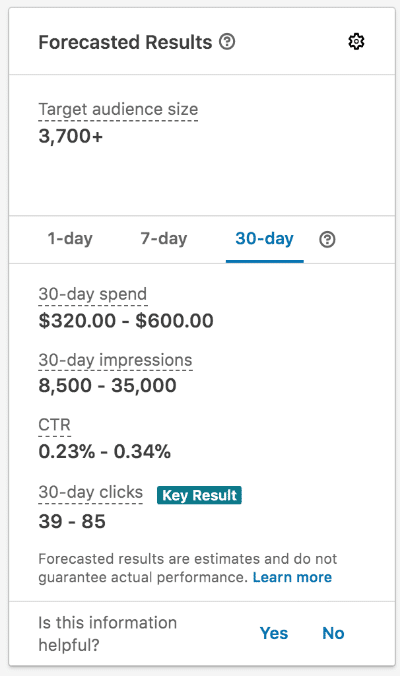
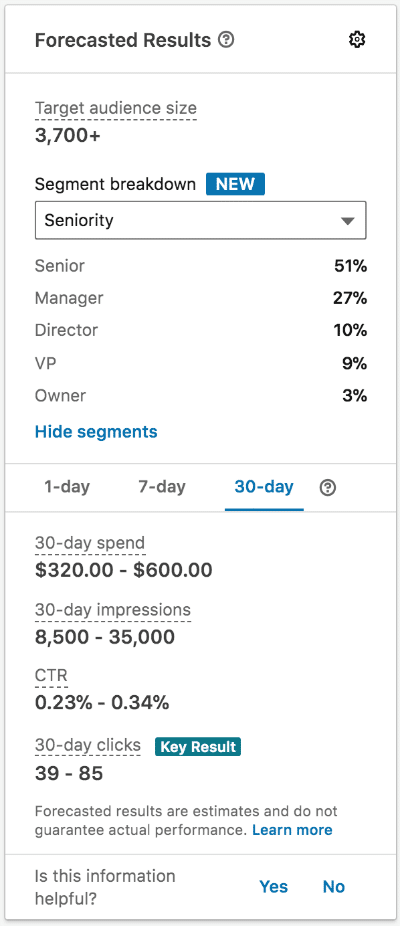
The Forecasted Results window appears on the ride side of the page when you are creating a new campaign in LinkedIn Campaign Manager. Previously, this window would only report on forecasted audience size, campaign spend, and campaign results. Thanks to LinkedIn’s recent “Segment Breakdown” addition, this panel now provides insights about your target audience including: Job Function, Job Seniority, Years of Experience, Company Size, Company Industries, and Interests.
[su_row]
[su_column size=”1/2″ center=”no” class=””]
Previous Forecasted Results Window
[/su_column]
[su_column size=”1/2″ center=”no” class=””]
New Forecasted Results Window
[/su_column][/su_row]
Build Better Target Audiences with the New Forecasted Results
This feature is such a great addition to LinkedIn Campaign Manager because it helps marketers improve their LinkedIn ad targeting and increase their likelihood of reaching ideal prospects.
With better knowledge of the makeup of a forecasted audience, marketers are able to make strategic changes to audience targeting and see the effect it will have on the audience that will be reached in real time. Better initial audience forecasting means less time and money spent on A/B testing!
In addition, when a campaign is using a lookalike or matched audience, this feature will allow marketers to gain better insight into the types of people they are targeting. This insight will allow for the creation of social media marketing creative assets and messaging that will resonate best with the forecasted audience.
How to See the New LinkedIn Forecasted Results
If you go into your campaign manager and you are not seeing the audience breakdown view, make sure you have selected a location, language, and added at least one targeting segment or matched audience segment (as it will not show until these things are included).
If you still are not seeing this feature, you may need to click the text under “Target Audience Size” that says “show segments” to expend the segments tool.
Contact MARION for Help with Social Media Advertising
Struggling to hit the mark with your social media advertising? MARION’s social media marketing agency in Houston and Austin can help you streamline your efforts.
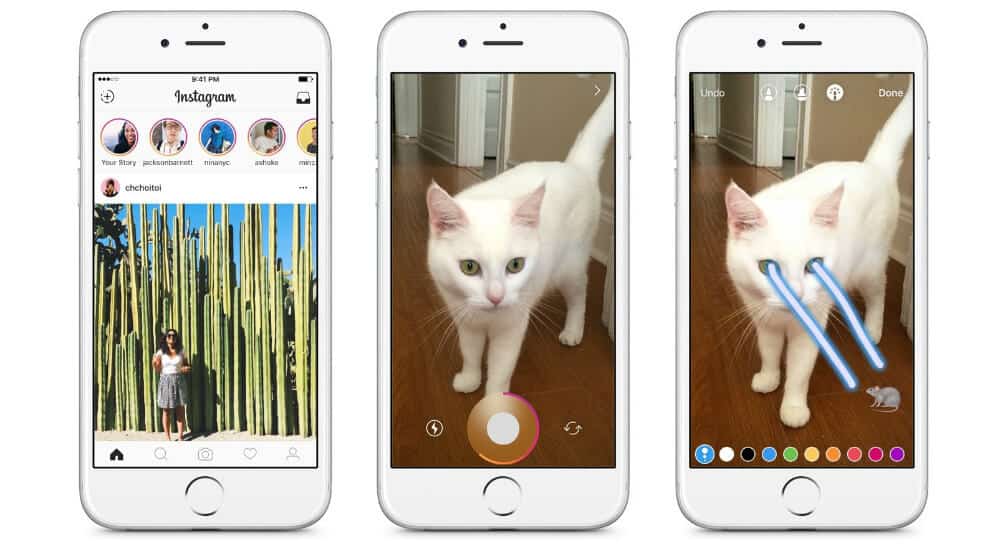
Instagram released the Stories feature in August of 2016, where users could upload multiple photos and videos to their personal “story” separate from their feed that would disappear after 24 hours. Fortunately, this Facebook-owned tool offers BIG opportunities for marketing with Instagram stories for business.
Instead of likes and comments, the only way to measure your posts’ success without using polls or other engaging stickers is through the number of views (that only you can see).
If this sounds familiar, that’s because it’s essentially a shameless copy of Snapchat’s core design. However, since its release, Instagram Stories has rocketed in popularity and overshadowed Snapchat with twice as many active users in just under two years. As of January 2019, 500 million people are daily active users of Instagram Stories.
Instagram
Does Instagram Stories Have Other features?
Ever since their announcement 3 years ago, Instagram has steadily rolled out fun and experimental updates. In the beginning, you could only draw over your pictures or add a filter, but now, the possibilities are quite endless.
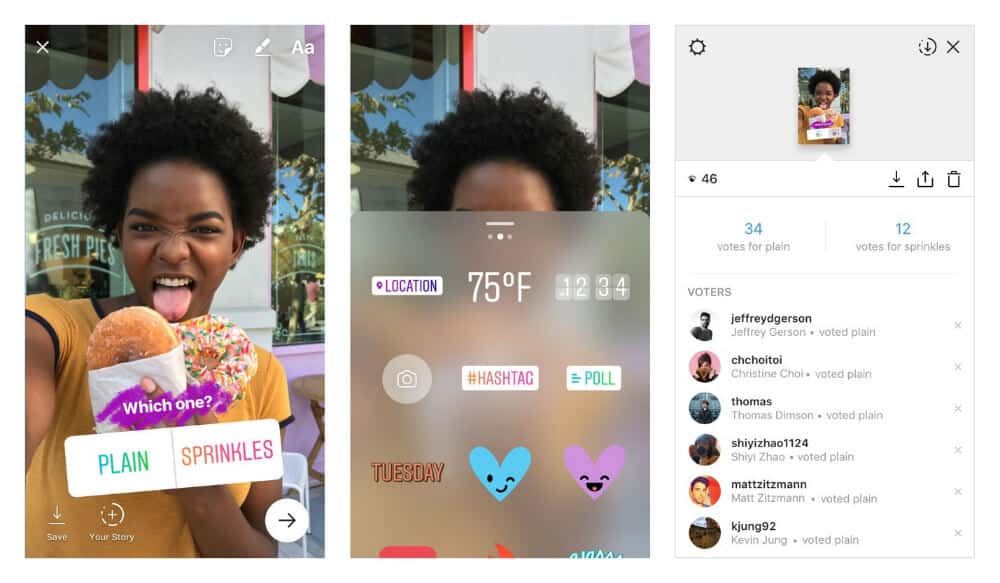
You can add stickers, GIFs, polls, music, and much more. You can film Boomerangs, rewind videos, and rumors have been swirling about a new stop motion tool! It’s always smart to keep an eye out for new updates.
Why Use Instagram Stories for Business?
Instagram has stereotypically been the home to glossy, highly-stylized photos, which doesn’t speak to the growing trend of consumers valuing authenticity. According to Social Media Today, over 86% of people in a survey stated that authenticity is a factor when deciding which brands they support.
Business Instagram stories, on the other hand, are spontaneous, real, and light-hearted due to their short-lived nature. This combination is the antidote to the “unauthentic” reputation that the platform had gained.
“Ephemeral content” is the perfect solution when you want to share something but don’t necessarily want it permanently on your gallery. The benefits of Stories demonstrate why your business needs social media to execute a fully rounded marketing campaign.
How to Use Instagram Stories for Business
If you’re a small business, this type of intimate connection is vital since you depend on your community and the individuals in it. Social media marketing is cost-effective, so you’ll stay under budget while still easily giving personalized attention to your potential customers.
Use the following Instagram stories marketing tips to make the most of this business opportunity!
1. Let the Polls Decide
You can use the “Poll” sticker to create your own prompts and receive answers in either a yes/no format, short answer, or a reaction slider. Polls are one of the most straightforward tools for you to gauge interest in a product, sale, or a new strategy. They are a prime example of how Instagram stories help businesses.
Customers enjoy polls because they are a quick way to engage with low effort on their part. It’s a very simple way to make them feel included. When the poll is finished, you can share results onto your Story.
If your customers aren’t interested in seeing something, you want to find out as early as possible, so you don’t waste your time. Polls are a fantastic way to leverage Instagram stories for marketing because they help you gain insight into what they want and who they are as a customer. Whenever you need to gather feedback or crowdsource ideas straight from your customers, consider using a poll sticker!
2. Peek Behind the Scenes
Giving your followers an unfiltered tour of what goes on behind the scenes can instill authenticity as you show the human faces that run your company. You can do this by showcasing what it’s like to work there or how you do or make things – really anything that will help develop your brand and relationship with customers.
Some businesses will take a tour of their office, factory, or use employee takeovers to bring their followers into the daily process behind the products or services they offer. This use of Instagram stories for brands will lead many customers to have an appreciation for the work and effort you put into them.
3. Go Live
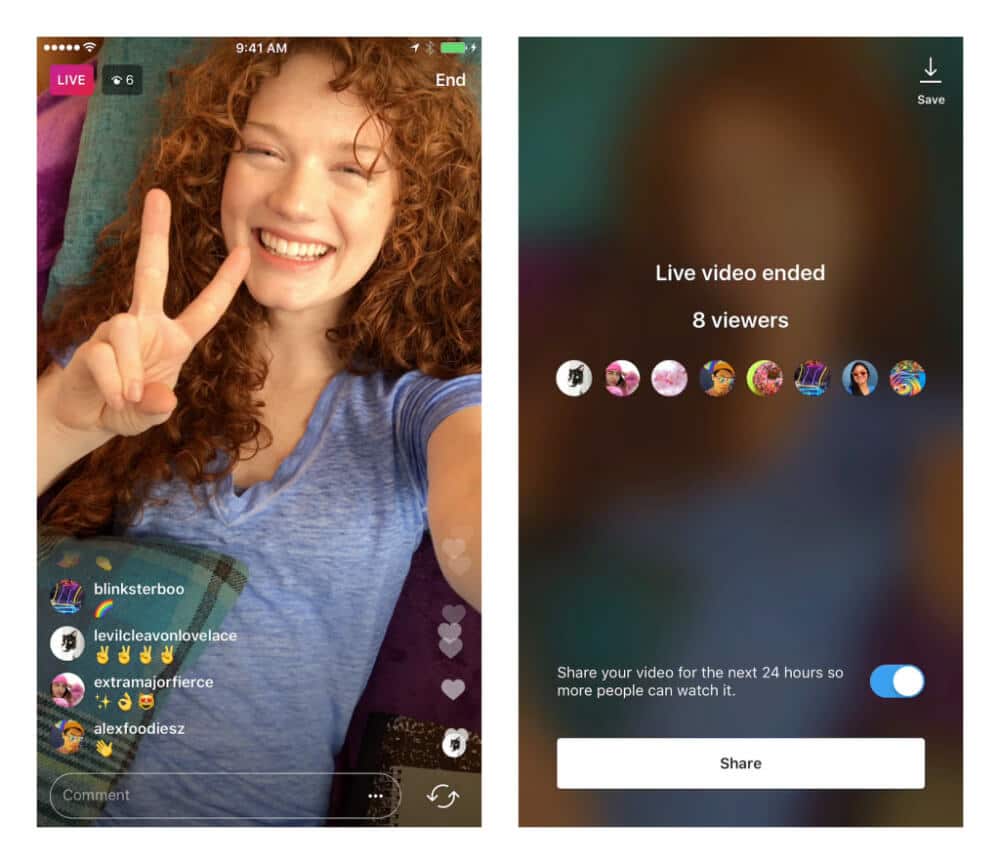
Going live is an excellent way to get instant feedback from followers. Instagram allows creators to start a live stream where people can react in real time and then share the video on your story for 24 hours for those that missed it. When you watch the broadcast after it ends, you can skip forward or backward in 15-second increments by tapping on the left or right of your screen.
Live Instagram stories for business accounts can be used to announce new products or launch promotions. One of the best ways to use this feature is to hold a Q&A session, where you can show customers how to use a product or answer frequently asked questions. As you walk them through a product, you can answer questions that followers ask right away, giving them instant access to information with your live sessions.
4. Showcase Customer Reviews & UGC
Posting on social media consistently can be a drain on creativity. Luckily, there is another channel of content you can harness!
Many businesses don’t take advantage of user-created content (UGC), which means any content that has been posted without being paid for by the brand. This is the pinnacle of authentic marketing because your business did not push any customers to create a review or promote your products.
Highlighting your fans’ testimonials on your Instagram Story can make them feel included and is an easy way to thank them for being part of the journey. When users tag your business, you can share that Story post onto your own.
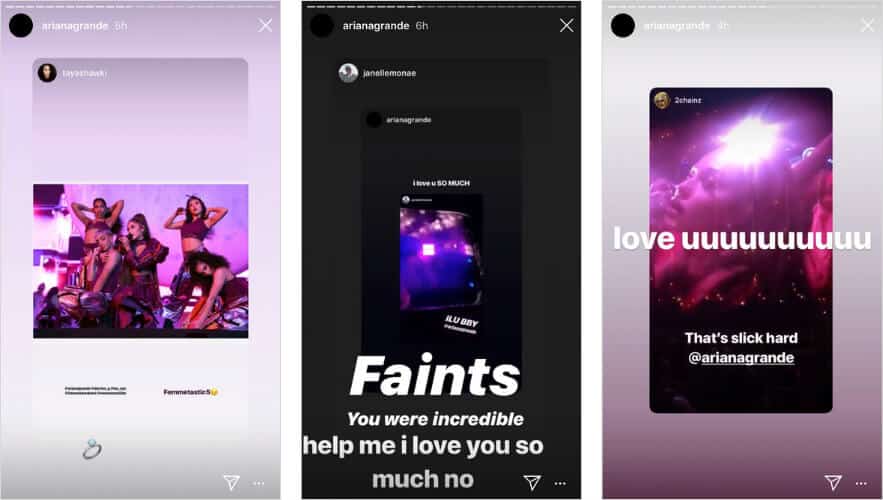
For example, you can see Ariana Grande (a pop superstar and brand/business in her own right) utilize her Story to make fans feel seen and appreciated for supporting her.
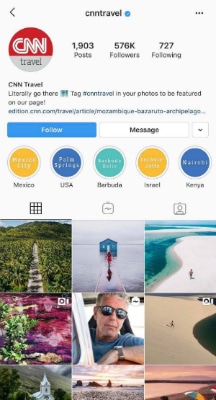
One of the biggest advantages that Instagram Stories has over Snapchat is the ability to create “Story Highlights,” where you can add selected stories to categories you create that stays under your profile.
You can name these highlights and choose a cover of your choice from posts that you’ve added to the album. This way, you don’t have to lose your hard work from the other 4 methods we talked about!
Using highlight albums with your Instagram business account stories is a clever way to categorize things, such as demos, tutorials, different product collections, insights, and more. When visitors first visit your page, they can flip through your albums in the way that you organized them and get a taste of your brand.
It also doesn’t sacrifice the aesthetic or strategy of your normal gallery feed, since they’re tucked away at the top of your profile.
Let MARION Help Level Up Your Social Media Marketing
Social media has so many dimensions to it that you can easily become overwhelmed. Let the experts at MARION help with your social media marketing in Austin and Houston. Our strategists have the B2B and B2C experience needed to grow your business!
In today’s day and age, social media plays a major role in a business’s marketing strategy. For B2B companies, LinkedIn is woven into the fabric of the modern social media landscape — it’s the tool industry leaders turn to when they need to make meaningful business connections. Today, we’ll be discussing why your B2B business should embrace the “LinkedIn era.”
LinkedIn Is a One-of-a-kind Tool
When LinkedIn first came about in 2003, online social networks were used for connecting with friends and dating — not for networking and business. LinkedIn has revolutionized the way we think about business, networking, job searching, and so much more.
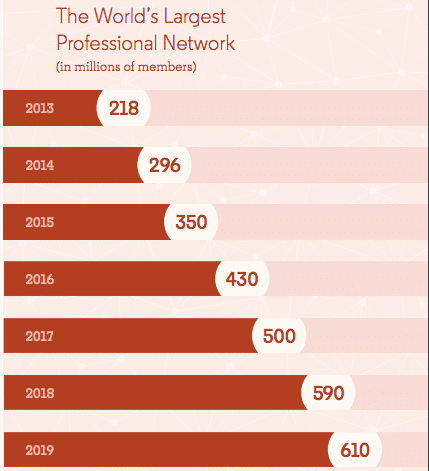
The fact is, LinkedIn is a one-of-a-kind online professional tool. It’s the world’s largest professional network, and there really is no other platform like it for businesses to reach qualified professionals and connect with potential customers.
In terms of advertising through social media, LinkedIn allows businesses to reach highly targeted professional audiences. Compared to other platforms like Twitter and Facebook, LinkedIn Campaign Manager provides a wealth of more in-depth targeting parameters, such as the ability to target a user based on job experience (seniority, skills, job title, job functions, etc.), company information (company name, size, industry etc.), education, interests, and demographics.
LinkedIn’s Audience Is Large — and Will Only Continue to Grow
LinkedIn has maintained an impressive growth rate since its inception over 16 years ago. In fact, over the last two years, LinkedIn has gained 123 million users (comparatively, Twitter has only gained 9 million users during the same time period).
With over 630 million professionals using LinkedIn and 50% of Americans with a college degree using the platform, it has become a major tool in the lives of today’s professionals. With two new users joining every second, LinkedIn’s popularity will only continue to boom over the coming years.
Experts predict that LinkedIn will continue to grow and become an even more vital tool in the business landscape, saying that LinkedIn could one day become such a vital communication tool that it replaces the need for work email — seriously!
According to Forbes, LinkedIn will be adding many exciting features soon. Some of these may include building local connections through a location radius tool and putting more emphasis on using hashtags for building connections and fostering community discussions.
LinkedIn’s Users Are the Most Qualified Social Audience for B2B Marketing
LinkedIn’s user audience is not only large — it’s also very qualified. LinkedIn users are an educated audience who are far more likely to be experts in your field than your other social audiences, such as Facebook or Twitter.
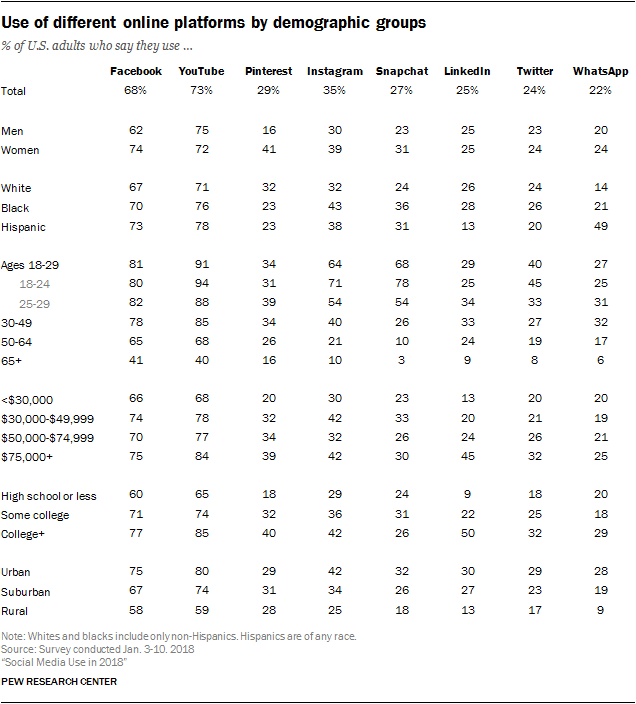
According to research conducted by Pew Research Center, LinkedIn is most popular among educated, urban, professional Americans from households earning more than $75,000 per year. It reaches a wealthier and more educated audience than Instagram, Snapchat, or Twitter.
Take a look at all the data to compare how LinkedIn performs against other popular social media platforms:
LinkedIn’s users also holds a lot of power within their respective organizations, with four out of five LinkedIn members driving business decisions. Furthermore, they hold two times the buying power of web audiences. LinkedIn’s audience is made up of 630 million members, including 180 million senior-level influencers, 63 million decision makers, and 10 million c-level executives.
In short, if you want to reach qualified B2B decision makers, LinkedIn is the effective and targeted social platform you need to be using!
Leading B2B Marketers Love LinkedIn
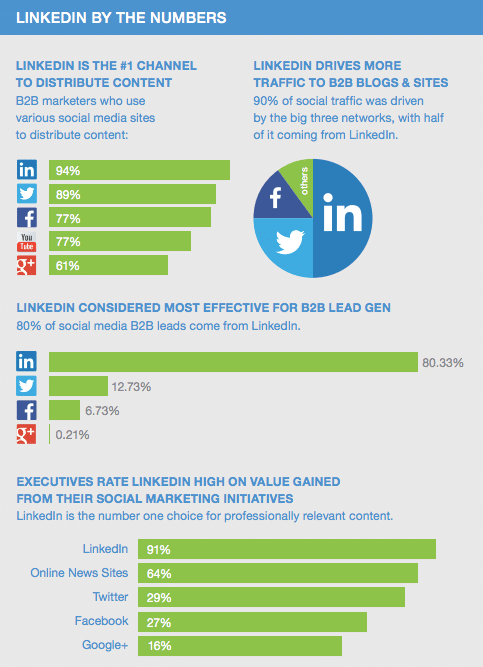
Did you know LinkedIn has been rated the #1 platform for B2B lead generation by marketers? This is because LinkedIn allows businesses to reach a quality audience in a professional context, allowing B2B businesses to engage with users in a very meaningful way.
LinkedIn is also the #1 channel for B2B marketers to distribute content, as well as the highest traffic-driving social media platform, with half of all social traffic to B2B blogs and websites coming from LinkedIn.
Furthermore, a staggering 80% of all social media B2B leads come from LinkedIn, and executives consistently rank LinkedIn high on value gained from their social media marketing initiatives.
Remember when your mom used to say “If ‘so and so’ were going to jump off a bridge, would you jump, too?” Well, if ‘so and so’ is 30 million companies and the bridge is over a pool of social media success, then we’d have to say yes!
The fact is, over 30 million companies have LinkedIn profiles — and while you may not be on LinkedIn yet, chances are, you competitors already are (and as we’ve learned, your ideal target audience definitely is).
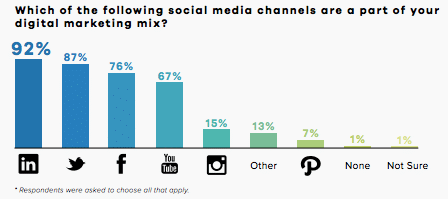
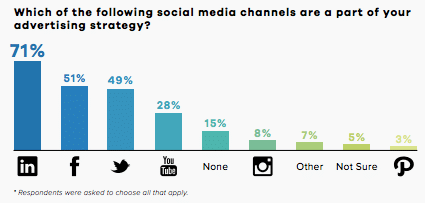
In fact, LinkedIn is the leading social media channel for B2B marketers, with 92% reporting that LinkedIn is a part of their digital marketing mix and 71% reporting that it’s a part of their advertising strategy. Frankly when it comes to other social media channels, they cannot match LinkedIn’s potential by a long shot and today’s business leaders understand that.
Source: DemandWave
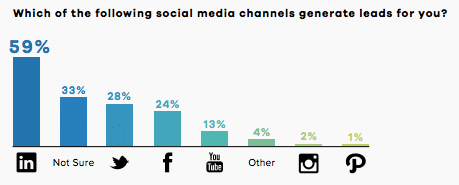
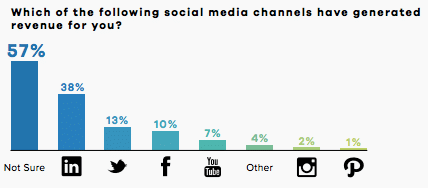
And when it comes to seeing actual, real results from using LinkedIn, B2B marketers like what they see, with 59% reporting that LinkedIn is the #1 social network for lead generation and 38% saying LinkedIn has helped their business generate revenue.
Source: DemandWave
Well, what are you waiting for? Take the first step to achieving B2B social media success and create your LinkedIn business page now!
September 2020 Editor’s Note: As of September 2020, Facebook started messaging advertisers the following in regards to their 20 percent text rule.
“At Facebook, we are constantly improving and refining the best ways to improve the quality of ads on our platform. One of the ways is revisiting the effectiveness and impact of existing ad quality checks.
As part of this review, we will no longer penalize ads with higher amounts of image text in auctions and delivery.
As of Sept. 7th, we will begin gradually removing external material and sources that indicate that we enforce high levels of text in images.
Please note, Advertisers will still need to abide by our ad policies regarding the content of the text. Advertisers are still encouraged to reduce the amount of text with images, as we have found that images with less than 20% text generally perform better.
– Facbook”
Chatter about the Facebook 20% rule began when the text overlay tool used to validate ad image text percentages started being redirected.
End of editor’s note
If you’re just getting started on Facebook Advertising, you know that there’s a lot to learn! From meeting Facebook’s basic requirements to learning the many different tips and tricks for maximizing ad performance, all the things you need to learn to be successful can seem daunting.
One Facebook advertising rule you may have heard is the “20% rule.” If you’re confused on just what the 20% rule is, you’re not alone. Today, we’re keeping it simple and breaking down this basic Facebook ad requirement in laymen’s terms. Keep on reading to learn what Facebook’s 20% rule is, why it matters, and how you can always ensure you meet this advertising requirement.
What Is the 20% Rule?
Designers and marketers who have come from a traditional marketing background may be thrown off by Facebook’s 20% text rule. While billboards, posters, and other traditional print advertising often focus on images with catchy text and copy, Facebook ads takes the opposite approach.
To reach users on this platform, you need to created ads that mix well and blend in seamlessly with the rest of the content on their newsfeeds. To do this, ads should focus on high-quality, simple images with minimal text and concise, straightforward messages.
Because Facebook knows that ads perform best with little to no text, it implemented the 20% rule. This rule states that in order to run an image-based ad, your image(s) must have less than 20% text per image. This rule applies to all image-based ads shown on both Facebook and Instagram, including single image ads, carousel ads, and video ads. (Please note that this rule only applies to the image in the ad, not text outside the image like the ad copy, call to action button, not description.)
There are a few exceptions to the 20% rule, including products like book and album covers, video games, event posters, and some other product images that contain text (ex: a box of crackers). Watermarks and logos that contain text are not an exception to the 20% rule and will be counted as text.
Maybe you’re thinking “Pshhh… I’m going to take a risk and break the rules” … sorry, not possible! Ads with more than 20% text covering any image will be rejected by Facebook during its automated ad review process. Even if the ad was not rejected, with too much text, performance will decrease, and the ad may be shown less frequently.
Now, if you’re looking at a potential Facebook ad image you’ve created and you’re trying to do math in your head to see if it meets this rule, there is a better way!
Facebook provides users with a tool to check that images meets the 20% rule before they are submitted for review — so you don’t have to be an Einstein to figure out if your image complies. To take a look at this handy tool, visit: https://www.facebook.com/ads/tools/text_overlay
Examples of Facebook Ad images
Now, let’s look at what the 20% rule looks like when successfully used in a Facebook ad.
Like we’ve discussed, to create the highest performing Facebook ads, use as little (to no) text as possible. In this example, the image only contains the company’s logo, sized small.
If this image seems too plain to you, just remember that the 20% rule was put into place to help your ads perform better. Ignore all your instincts to include text and embrace the blank space!
Instead of cluttering the image with distracting text, this business will say what they want to say in the copy and description. Because this image is simple, it will blend into users’ newsfeeds and is more likely to perform well. This image gets an A+!
Next, we’ll look at what would happen if this business decided to add an additional line of text to their image.
This image technically passes the 20% rule, and it would be approved by Facebook – however, the additional text may cause the ads reach to be lower. To increase ad performance, this business should forgo the additional line of text in the image and instead, add the offer directly to the body of the ad copy. This ad gets a C. It’s passing the test but has room for improvement!
Finally, let’s look at an image that would not be approved by Facebook.
This add is full of text, and it clearly breaks the 20% rule. While it may seem like a good idea to put your offer in big bold letters on your image to try and attract users, research has shown that doing so will actually do the opposite! Remember, when it comes to Facebook advertising, the cleaner the image is, the better. This image gets a big fat F! There’s no way Facebook would approve an ad with so much text!
Remember that the 20% rule is in place to help your ads perform their best and create a better experience for both social users and advertisers. The best way to capture a Facebook users’ attention is to let an eye-catching image speak for itself! It’s just that easy!
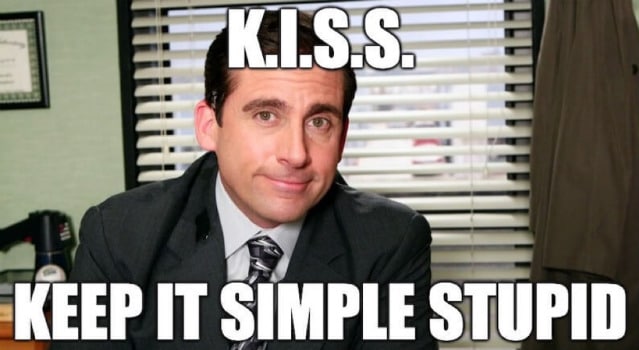
When in doubt, remember this piece of advice from the one and only Michael Scott:
When it comes to Facebook ad images, simple really is better!
Let MARION Upgrade Your Social Media Marketing
Let an experienced social media marketing agency in Houston like MARION work with you to improve your social presence! Social media platforms are evolving rapidly, and the strategists our digital marketing company keep up-to-date with the latest changes so you don’t have to.
Contact MARION today to schedule a free consultation regarding your digital marketing.
There are ways to improve sales strategies and marketing tactics without being pushy, but you definitely can’t sit back and expect customers to arrive at your doorstep. Even the most basic marketing plan to increase sales must be clearly defined for you to reach and connect with as many target customers as possible.
3 Examples of How to Improve Sales and Marketing
In this post, we’ll discuss how to improve sales with proven business marketing strategies.
1. Create Buyer Personas
Buyer personas are detailed profiles that describe an ideal target customer as if they were a real person, including important traits beyond basic information like age, gender, and income. Buyer personas often include details such as their job role, duties, shopping preferences, desires, obstacles, and more.
It’s up to you to decide which information is relevant to your business or brand and tailor it to different types of customers you’d like to attract in order to solve their problems.
Struggling to build a profitable brand? Download our free guide to building a better brand today, and position yourself for major growth!
Once you’ve created a few buyer personas, you can then create personalized experiences for each category. You can create copy, landing pages, blog posts, and even e-books with specific personas in mind. Without buyer personas, your unempathetic copy might not resonate with the person you’re trying to convert. When it comes to sales, you can prepare beforehand and switch up your script depending on which category the prospect falls under.
Craft a buyer persona by brainstorming with fellow employees, send out surveys, analyze market research, or observe reports from social media and your website. When you figure out which channels your persona will most likely be reached through, you can invest your time in those and waste less time on less effective platforms.
Once you understand each buyer persona’s needs and start tracking them over time, you’ll be able to tailor your marketing message with greater accuracy and increase sales. 3 in 5 people are more likely to make a purchase when recommended options based on past preferences or purchases.
2. Establish Thought Leadership
One of the best marketing strategies to increase sales is to educate people. This shows that you are knowledgeable but also eager to assist your customers in achieving their goals. Providing them with resources means giving your audience immediate value, which builds trust and goodwill to increase the number of people who return.
Useful resources include whitepapers, e-books, blog posts, case studies, video guides, and much more- the possibilities are endless. Keeping it varied and consistent (and not overtly promotional) will slowly build your reputation as an industry leader whose thoughts and opinions are credible and reliable.
Make your content available on your website, social media, and email campaigns to nurture your leads and convert them into sales (take a look at our blog post about the 7 touches of marketing/sales!) At conferences, trade shows, or speaking engagements, you can direct your new contacts to your digital properties where they’ll find your valuable resources. Over time, this will help reduce costs of both B2C and B2B marketing strategies as your list of resources and contacts grows.
Simply sharing valuable information created by other people is also a good strategy because it shows you’re not simply promoting yourself all the time and engaging with others in the industry. Creating a social media calendar that includes a robust mix of internal and external industry information is a great way to get started.
Shaping and nurturing a strong community is a useful strategy in building awareness, especially for smaller businesses- which leads us to strategy #3!
3. Word-of-Mouth Marketing
Out of all the marketing tips to increase sales, word of mouth marketing is one of the most effective and proven marketing strategies available. According to Neilsen, 92% of people trust recommendations from friends and family over all other types of marketing campaigns.
There are several ways to take advantage of word of mouth marketing, the most common of which being referral marketing and the most recent being affiliate and influencer marketing.
As a matter of fact, referrals influence up to 50% of all purchasing decisions. Not only that, referrals tend to generate more than 2 times the sales of paid advertising. This is evidence that people place a lot of stock on other customers’ opinions rather than directly from the business itself.
While good customer service and memorable experiences may cause customers to organically recommend you to their friends, setting up a referral program can yield faster and greater results. You can get creative with how you want to incentivize your customers to refer their friends with different rewards that work for your company.
Although affiliate marketing works similarly, the two people usually do not have an existing relationship. It’s usually “one-sided”, such as a celebrity. Even if you’re a smaller business without a huge marketing budget, spreading the word with micro-influencers (less than 100,000 fans) can be a more cost-effective solution than hiring influencers with large audiences.
Sometimes it’s just more effective – period. AdWeek found that on average, engagement actually drops the more followers an account has. Leveraging influencers can yield excellent results if you take the time to find the right one.
Lastly, you can simply ask existing customers to write reviews and post them online. According to BrightLocal, 88% of consumers say they trust online reviews as much as personal recommendations. Once you collect a decent catalog of reviews, this word of mouth avenue will play an essential role in gaining you customers.
Work with MARION for Better Marketing to Increase Sales
Not all marketing is created equal. After nearly 40 years serving Texas, MARION is among the top Houston marketing agencies.
LinkedIn ads is the preferred method of advertising for many business to business companies. In fact, 59% of B2B marketers say LinkedIn generates leads for their business and 90% say they reduced cost per lead by using LinkedIn Advertising.
LinkedIn has over 610 million members, including 180 million senior-level influencers, 63 million decision makers, and 10 million c-level executives. In addition, four out of five LinkedIn members drive business decisions, and LinkedIn’s audience has two times the buying power of the average web audience.
With so many users out there, how can your business tap into your social media potential and reach your target audience? The answer lies in LinkedIn Ad’s targeting facets.
LinkedIn Targeting Methods
Today, we’ll discuss how you can use LinkedIn’s many targeting options to build the perfect audience for your B2B marketing strategy.
Building a Custom Audience for LinkedIn
LinkedIn has five different target facet categories from which you can build your custom audience. They are:
1. Experience
Job Function
Job Title
Job Seniority
Years of experience
2. Company
Company Name
Company industry
Company Size
3. Education
Schools
Degrees
Fields of Study
4. Interests
Skills
Groups
5. Identity
Age
Gender
Location
When creating a custom audience, make your audience specific… but not too specific. If your audience is too broad, your ads will reach unqualified users. If your audience is too specific, there may not be enough users to show your ads to and they may not be able to spend their budget. I like to call this quest to find the perfect sized audience “the Goldilocks challenge.”
In order to successfully face this challenge, use LinkedIn’s audience estimation tool. When creating ads, this tool will show on the right side of the screen, and it will tell you whether your audience is too broad or too specific — or just right!
As you’re building your audience, keep an eye on the audience estimation and note how including and excluding targeting features impacts your potential reach. If your audience is too specific, try taking away some targeting facets, and if it’s too broad, add a few more. It’s all about testing what works best and keeping an eye on LinkedIn’s prediction tools.
LinkedIn Matched Audiences
With the matched audiences feature, LinkedIn allows you to target users who have visited your website, as well as your current contacts or target companies/accounts. This feature allows you to get very specific in your targeting and accurately serve ads to your target audience. (Please note that you must have a list of at least 300 contacts to use this feature.)
By installing a LinkedIn Insights tag on your website, you can track your website visitors and serve them ads on LinkedIn. LinkedIn allows you to highly target these users by giving you the option to target visitors to all pages on your site or just visitors to a few specific pages.
For example, if a company sells office furniture and they want to advertise a new line of desks, they could target people who have visited their website page showing the desks they carry.
If you want to target your current contacts, it’s as simple as uploading your contact list (with email addresses) into LinkedIn. LinkedIn will then search your list and match your contacts with existing LinkedIn profiles, based on their emails.
The process is the same for targeting current companies and accounts — simply upload a list of the companies you’d like to target, and LinkedIn will do the work from there.
LinkedIn Lookalike Audiences
LinkedIn’s newly released lookalike audience feature allows you to target users who very closely resemble those in a matched audience you have created. While LinkedIn just released this feature in March 2019, lookalike audiences has been a feature of Facebook Ads for years.
This feature is one of the most accurate ways you can reach a potential new audience. While you can try your luck at building a custom audience using LinkedIn’s targeting facets, the matched audiences feature does all the work for you and, in most cases, produces a more accurate audience. To create a lookalike audience, LinkedIn analyzes all the data from the users in your matched audience and automatically finds users that closely resemble them.
You can create a lookalike audience from any matched audience you’ve created, either from website visitors, current contacts, or target companies/accounts. As a reminder, if your list length is too small to create a matched audience (less than 300 contacts), you will not be able to make a lookalike audience.
Improve Your LinkedIn Ads Targeting Today
For more comprehensive help with your social media marketing in Houston or Austin, contact MARION’s experts today! Our marketing agency has helped hundreds of businesses appeal to their target audience, and we’d like to serve you next!
Follow these tips for creating a LinkedIn Ads audience, and you’ll be well on your way to reaching your perfect target audience with B2B marketing via LinkedIn!
Are you constantly looking for ways to improve your marketing in today’s digital-first world? Don’t limit yourself by only investigating the latest platforms and digital tools. Many of the best marketing principles were developed decades ago, and applying them to your current strategy and process can be a great way to enhance your results today!
This post will cover the marketing rule of 7, and how you can leverage this classic principle for better results and a greater marketing return.
What is the Rule of 7 in Marketing?
The Rule of 7 is an established marketing adage that states a prospective customer needs to view your marketing message at least 7 times before noticing and taking the desired action. Many marketers may argue that it takes a lot more than 7 times, but the lesson is still clear – an overwhelming majority of your audience will not make their decision the first time they see your message. In order to convert customers, you need to consistently retarget potential buyers.
7 “Touches” of Sales
A similar concept is the sales strategy of using around 7 touchpoints with a lead after a cold call to generate a conversion. Every buyer’s journey is different but taking the time to check in with a lead and being persistent beyond a second or third attempt is vital in getting your message through. At the beginning of every journey, future customers are simply gathering the information they need to make a decision as you help build their awareness.
Variety is Key
Following the Rule of 7 without being overly repetitive or intrusive can be difficult. That is why variety is important when executing multiple touches of sales. Expanding the number of ways in which you reach out to people with means getting creative.
An excellent way to make sure you stay on track with your progress is to plan a system in which you have these interactions mapped out. Take a look at the examples below for inspiration on creating your own strategy.
How to Execute the Rule of 7
When you are creating content to share with potential clients, make sure you are focusing on cultivating a relationship instead of just throwing them a sales pitch. Go into each interaction with the intent to create value and offer solutions.
Email
Email makes it extremely easy for you to reach out to a large number of the same people at different intervals. Crafting emails that are valuable to your email marketing list is critical so they don’t unsubscribe (which they will if you’re sending irrelevant information that they won’t find useful). You can use email to welcome potential customers, inform them of new developments or products, offer gifts or discounts, or send a regular newsletter.
Video Marketing
Creating video content is another avenue worth exploring. Companies that use video in their marketing strategy show a 66% higher average website conversion rate than those who don’t. Videos are shareable, engaging, and can make your business seem more authentic.
Creating good videos can greatly increase your brand’s visibility, especially if you attract a loyal following. The more views there are, the more chances you have at attracting and converting more customers. Some ideas for videos include a business introduction, product or service explainers, tutorials, or staff messages. The possibilities are endless!
Are you struggling to build awareness for your brand? Download our free guide for building a better brand and start improving your business growth today!
Blog Posts
Blog posts are an excellent way to showcase your company’s expertise and to communicate with your customers. There are several marketing benefits of blogging. Having several links pointing to your site will also help it rank better on search engines. Writing long and engaging content means that third-party websites are more likely to link to your content, and prospective customers will come back to your site.
According to Hubspot, companies that put up 16+ blog posts a month gained 3.5 times more traffic than companies that only published posts 0-4 times a month. By creating a content calendar, you can maintain a steady publishing cadence and ensure that you’re addressing different pain points for your audience.
Social Media
Harnessing the power of social media is one of the most cost-effective ways to enact the Rule of 7. There are quite a few benefits that make it clear why businesses need social media.
You can directly speak and interact with your customers, share content that you’ve created just for social media or repurpose old content, and target ads towards people who may be interested in your business. If you are posting content that people want to see, they will share your story themselves (which is very powerful as people tend to trust the opinions of their peers more than brands).
Hedge Your Marketing Bets
There are countless more creative B2C and B2B marketing strategies to gain exposure for your business (podcasts, whitepapers, presentations, etc.) Don’t rely on just one method to communicate your message. Having a wide range of strategies creates more chances for success. It also creates a safety net in case people stop using one channel.
For example, if someone quits Twitter, you can still have your message displayed on LinkedIn, Facebook, their inbox, search engines, and more. If popular social media channels reduce the organic reach of your content, you can start to use social media advertising for your business. If your whitepapers aren’t pulling in as many clients, you can just pivot your focus on blog posts.
The more opportunities you give people to be familiar with your business, the better. Try as many methods as possible, determine which ones are most effective, and watch your business grow!
Partner with MARION to Improve Your Exposure Today
Do you need help reaching your audience, and turning your marketing efforts into revenue? MARION is a traditional and digital marketing agency with the experience needed to enhance your exposure and turn your target audience into happy customers.
Contact us today for a quote! Our team of marketing strategists and creatives will help turn your brand into a professionally branded revenue-generating machine.
Now that the digital age is in full swing, traditional B2B marketing strategies and tactics are no longer the most viable choice for your brand. Constantly evolving technology requires an approach that’s more fluid in nature. If you’re not able to meet the expectations of your audience, your digital campaign is destined for failure.
What Is a Digital Marketing Campaign?
A digital marketing campaign is an online effort put forth by an organization to drive conversions, revenue, traffic, or engagement to achieve a specific marketing goal, such as building an email list or selling a product or service. During an online marketing campaign, one or more digital channels are utilized to reach a targeted audience.
Most campaigns are composed of three stages – Planning, development, and management. With your goals outlined, your messaging and voice developed, and campaign properly managed, you will set your digital marketing campaign on the path to success.
When targeting other businesses, the focus of your internet marketing campaign should be to establish yourself as an authority in your industry and build in-depth relationships.
Let’s look at the most effective types of online campaigns for B2B, and some corresponding digital marketing campaign examples.
1. Social Media
Imagine yourself on a stage surrounded by millions of people at any given time, but there are thousands of stages just like yours vying for the attention of the masses. How do you earn the crowd’s attention? That’s social media marketing in a nutshell – Constantly competing for the attention of your audience.
It takes nuance to get a social media campaign just right, but you’ll have to master it if you intend on staying competitive. For B2B marketing, Instagram and LinkedIn are the primary social media platforms to target. However, old warhorses like Facebook and Twitter still have plenty of value to offer.
Here are a few tips on the type of content you should post for a B2B-focused social media page:
Testimonials
Industry news
Educational material from your company (links to your blog)
It’s also important to consider advertising through social media to supplement your organic reach. Now take a look at this example of a digital marketing campaign that leverages social media.
Huawei Showcases Its Mastery Over Twitter
Huawei, the world’s largest manufacturer of telecommunications equipment, showcases what it means to provide value with nearly every post on its Twitter page. Huawei offers endless resources on technology trends and quotes from leaders in the industry.
From its Twitter page alone, it’s easy to see that Huawei stands out from its competition with its consistent flow of relevant and highly informative content.
Your marketing budget should always include room for a healthy PPC (Pay Per Click) campaign. No digital media campaign would be complete without one, and with the right targeting and the right budget, you can get fantastic results. After years of providing PPC in Houston, we’ve identified the following insights.
Many digital ad campaigns nowadays provide top-tier segmentation, allowing you to accurately reach your target audience with pinpoint accuracy. Google Ads and Facebook are prime examples of advertising platforms that excel due to in-depth segmentation features.
Another benefit of PPC is that you’ll have access to analytics, which will enable you to see what works in your digital advertising campaigns and what doesn’t. When utilized correctly, a PPC campaign can be one of the most effective tools in your kit for raising brand awareness and getting leads for your business.
Pay-per-click is a very targeted strategy to include in internet marketing for manufacturing and industrial companies. We frequently see industrial firms opt for PPC instead of social media because of the platform’s high commercial intent.
Need help gaining real exposure for your brand? Ask a MARION marketing strategist about our Austin PPC services.
Porsche Automates Every Aspect of its Facebook Ad
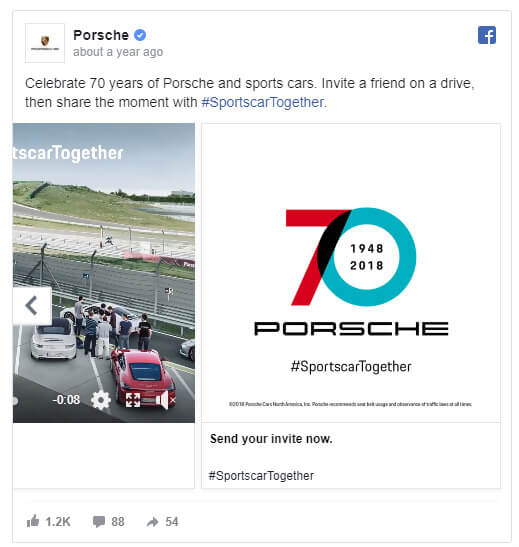
Porsche shows everyone how it’s done with this fully automated PPC-optimized ad.
Porche’s ad is completely interactive, featuring a carousel feature and chatbot. For your own B2B digital marketing endeavors, remember that customer interaction is key to drawing attention and holding interest.
While video ads are popular with many marketers for their visual appeal, you’ll find that podcasts can be just as attractive, especially in the B2B world. For the past few years, podcasts have been exploding in popularity.
CEOs and business owners often find podcasts to be useful because they can be consumed while multitasking. For example, you can listen to a podcast while commuting to work or eating lunch.
That makes podcasting a prime target for B2B digital marketing. Guest starring on the best business podcasts in your industry or paying for an advertising spot are great ways to approach this strategy.
Learning Podcast Marketing from the Masters
The podcast Good Copy, Bad Copy: the B2B Copywriting Podcast has a highly informative blog post highlighting everything they’ve learned about podcasting for B2B audiences. While much of the post discusses the do’s and don’ts of podcasting, you’ll get a unique perspective of what it means to incorporate a podcast into your B2B digital marketing campaign.
4. Advocate Marketing
Likely one of the most effective types of digital marketing campaigns you can employ, advocate marketing involves leveraging your existing networks to generate new leads. Advocate marketing is effective because people are more likely to listen to people they trust.
If, for example, your business partner suggests a specific product to improve your digital marketing, you’ll be more inclined to give the service a try.
Docu-Sign Uses Advocate Marketing to Influence Millions in its Pipeline
Docu-Sign implements advocate marketing beautifully by using advocate marketing software platform Influitive to influence more than $3 million in their pipeline. The moral of the story is never to underestimate the power of advocacy – it could generate your business millions.
The Importance of Online B2B Marketing Campaigns
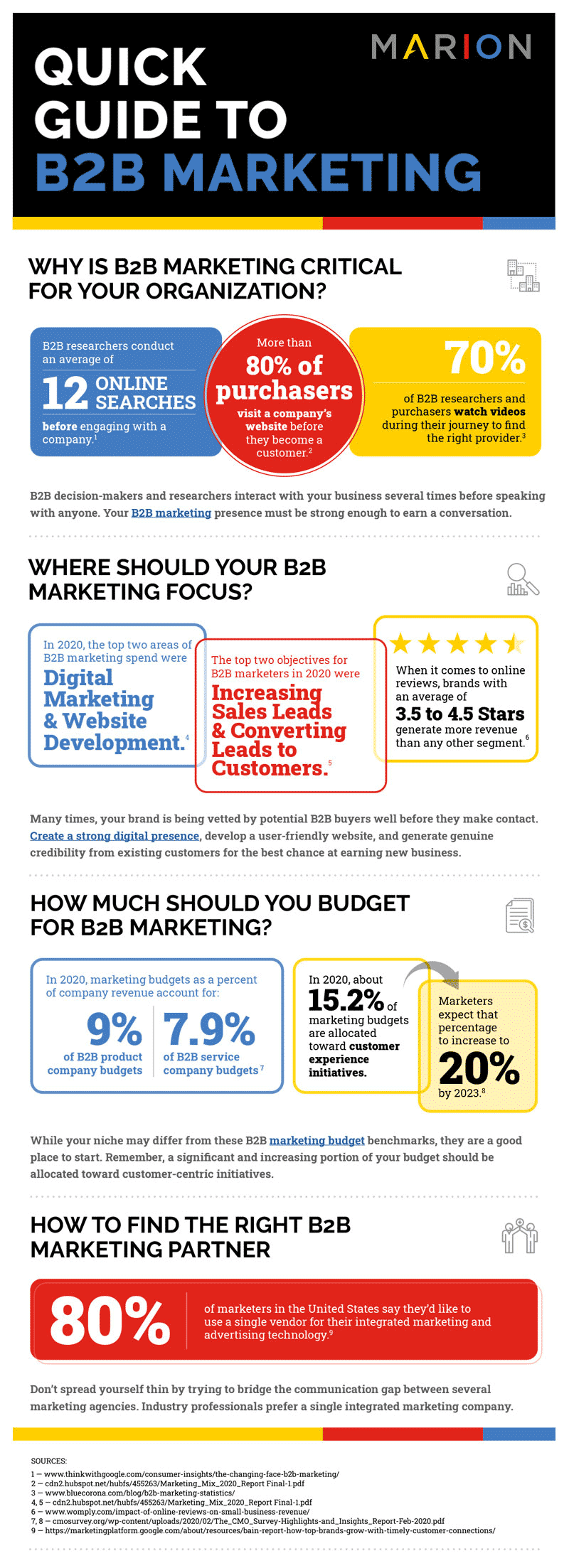
If you’re nervous about diving headfirst into the marketing abyss, don’t be! This infographic outlines exactly why your business needs to overhaul its approach to B2B integrated marketing campaigns today!
Implementing the Best Digital Marketing Campaigns for Your Business
Is your business leveraging the best online marketing campaigns? Are they working? Do they require tweaking? No matter what strategy you implement, focus on utilizing analytics to see what works and what doesn’t, and gradually tweak your campaigns until you start seeing results.
Creating a flawless B2B campaign takes expertise. Contact MARION today so our experts can show you how to run a digital marketing campaign the right way.
By this point, we’ve all been relentlessly beaten over the head with marketing advice from thousands of digital marketing “gurus.” Frankly, everyone has a “magic bullet” that’ll make your marketing campaigns successful.
And while there’s plenty of great advice out there, the best teacher is often failure. Fortunately, you don’t have to do the failing yourself when you can learn from the marketing mistakes of others.
4 Top Marketing Mistakes to Avoid
While even the most experienced marketers still make mistakes from time to time, you can still prevent the most egregious and common mistakes by identifying what has worked for others and what hasn’t.
Let’s take a look at 4 top marketing mistakes examples.
1. Failing to Pay Attention to Current Events
The world is continuously changing, and current events can have a significant impact on your traditional or online marketing campaign. If you’re not vigilant you may end up making a series of terrible marketing blunders.
At the time, the idea probably seemed ingenious. However, a resident thought the display was a bomb and called the authorities. At the time the city was on edge against terrorist attacks, and the police took no chances as they shut down roads and transportation lines before sending in the bomb squad to disarm several of the harmless LED displays.
The bomb scare was eventually cleared up, but Cartoon Network paid a heavy price, literally. The company paid $2 million for the emergency response team, and the CEO resigned as a result.
As marketers, we must always pay attention to current events and public perception. People who live in cities are always on the lookout for things out of the ordinary. It’s hard to say that this event was complete negligence by the marketers at Cartoon Network, but it’s still a lesson we can learn from and avoid during our own marketing campaigns.
2. Not Having a Unique Selling Proposition (USP)
Your unique selling proposition (USP) is what sets you apart from your competition. Essentially, you’re letting your customers know what’s unique about the service you provide. Your USP should lie at the core of your brand development strategy and marketing campaigns.
If your customer has no clue of how your product/service can benefit them, then you either don’t have a USP, or your USP is so ambiguous that it’s too difficult to understand.
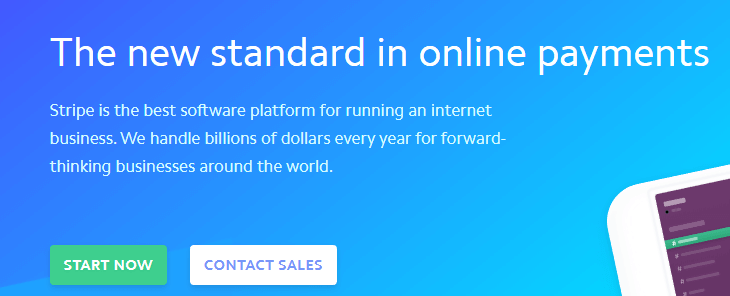
Let’s look at an example of a good USP:
The moment you arrive on the homepage, Stripe communicates what they are and who they’re for. If you’re an online entrepreneur, you’ll be hard-pressed not to hit the “start now” button to learn more about what Stripe can do for your business. The best B2B marketing strategies revolve around a powerful and concise USP.
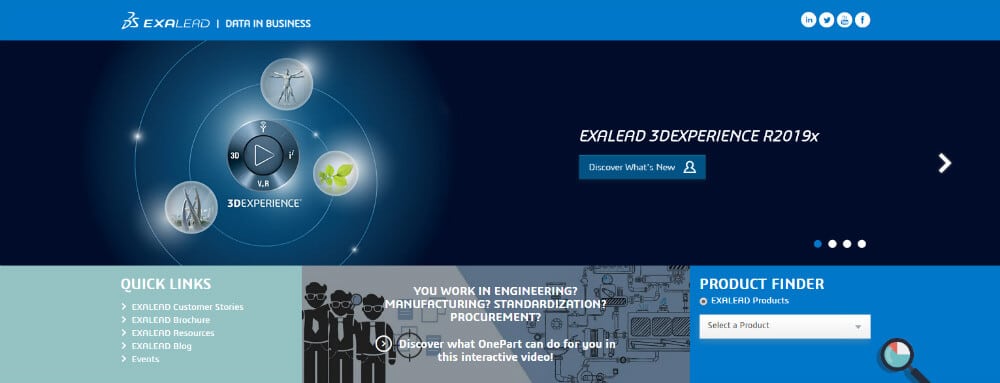
Now here’s a bad example:
You wouldn’t know it by looking at it, but ExaLead is a search engine. As you peruse the homepage, you’re not really convinced that you should use this service, and the industry-specific jargon is confusing.
You’ll likely have to thoroughly research the site to learn what ExaLead really brings to the table, but there’s an equal chance that you’ll leave due to confusion. If you’re not diligent, positioning errors in marketing can lead to the failure of your digital and traditional campaigns.
3. Making Promises You Can’t Keep
One of the biggest marketing blunders you can make is to get overzealous and make a promise you may not be able to fulfill when it comes time to deliver. Brand promises are meant to be kept, that’s marketing 101. Failing to deliver on a promise will prompt a loss of faith in your brand.
There’s no greater example than the disastrous launch of Fallout 76 by the video game studio Bethesda. In their marketing campaign, Bethesda made promises of a grand online multiplayer open-world adventure that would be teeming with life (amongst many other promises).
At launch, instead of jumping into a world full of eager players and interesting NPCS, players were instead greeted by a flat, empty world with numerous game breaking bugs. To add insult to injury, practically none of the features that were promised by Bethesda were actually present in the game at launch.
As you may have guessed, Fallout 76 fell flat on its face at launch, Bethesda lost millions, and the fanbase completely turned its back on the once beloved video game studio.
It just goes to show that if you promise something you must deliver or you will forever tarnish your reputation. Some speculate that Bethesda may never recover from this debacle.
When writing marketing copy, you should choose your words carefully. There’s nothing wrong with creating a clever slogan or tagline, but ensure you’re not isolating a segment of your audience, accidental or otherwise. There are a lot of people online, and the wrong image or phrasing can cause the kind of backlash that may turn your audience against you.
An Instagram post by fashion brand Benetton is a prime example of why you should carefully select the wording of your marketing campaigns.
I think it’s safe to say that Benetton had zero intention of actually offending anyone here but simply wanted to hammer home a clever post for a few chuckles. The above image, which features three boys with the tag line “Sorry ladies. Girls not allowed!” garnered all sorts of negative feedback and controversy.
Benetton’s followers hit the fashion brand hard with accusations of sexism and promoting negative gender roles. The fashion brand has since recovered from the debacle, but they will forever have to live with this stain on their record.
The lesson to be learned here is to be careful with the message you’re promoting in your marketing campaigns. Whether you intend to or not, you may end up offending a segment of your customer base.
Avoid the Biggest Marketing Mistakes
Marketing mishaps happen. All you can do is roll with the punches, learn your lesson, and try again. It’s inevitable you’ll make a few slip ups here and there, but you can avoid the most common marketing mistakes by learning from the failures of others.
Your marketing mistakes and successes will play a major role in how your brand is defined. Make sure your marketing is done right by contacting MARION today. We’ll help you avoid common mistakes and create a winning marketing campaign for your business.
Social media is one of the most powerful tools businesses have in reaching modern consumers. In fact, 69% of U.S. adults and 45% of the total world population use at least one social media platform. In the coming years, social media’s popularity will continue to grow with social media penetration set to hit three billion people worldwide by 2021.
Like any marketing tool, the results and performance of your social media efforts should be carefully tracked and analyzed to ensure that the time and money your business is spending is worth the return on investment.
Setting goals and tracking metrics can seem like a daunting task, but I’m here to help make it easy! Below, I discuss how you can get started setting your social media goals, along with some of the most common social media metrics that go along with each.
Begin with an audit
Before you dive into common social media goals and metrics, you’ll want to take a step back and look at what your business is doing right now by conducting a social media audit. Doing this will help you get a clear picture of where you currently stand so you have a baseline to measure any new social efforts against.
Begin your audit by thinking carefully about all of the different social accounts your company has and forming a list of these active accounts. Make sure your company doesn’t have any duplicate or old pages that may no longer be in use.
Next, search your company’s name on Google and various social media sites to see what social accounts exist. If you find accounts you don’t recognize, determine if they’re actually connected to your company. If you think they may be imposter accounts run by someone not affiliated with your brand, take the necessary steps to get them removed.
Once you have a clear list of all your social accounts, create a social audit spreadsheet to keep track of all of your information. For each of your social accounts, record the following information in your audit spreadsheet:
the link to your profile
the social handle of the profile
the internal person or people that manage the account (whoever “owns” it)
the top three posts in terms of engagement
any key demographic information
include a column for any additional notes for the account
Next, make sure each account is consistent with your brand image by setting cohesive profile pictures and cover images that align with your brand. Ensure your profile and biography text align with your current brand message and check that you are using the same handle across all platforms to ensure consistency. Use this brand strategy template if you need help aligning your messaging and imagery.
Don’t leave your branding up to chance. Download this free sample brand style guide today to align your brand materials!
Now, since you’ve already identified your best posts, it’s time to analyze them and look for patterns. Notice what kinds of posts, content, and copy get the best response, as well as how post engagement differs between platforms. For example, do posts with pictures perform better than posts with links? Write your thoughts on these patterns in the notes column of your audit spreadsheet.
Lastly, decide which channels are right for your business by looking at how each existing channel is currently performing and considering if there are any new platforms that may be right for you. Look at demographics for the various platforms and match them up with your target audience to determine where your time and effort is best spent to serve your business.
Once you have conducted your social media audit and have a good understanding of your social platforms, it’s time to set your goals and figure out what social media marketing metrics you should keep track of.
Setting social media goals and metrics
Here are some of the most common social media marketing goals and objectives, along with the metrics that should be tracked for each:
1. Increase conversions/sales
After years of offering social media marketing in Austin, we’ve found that this is a favorite social media goal among businesses because it directly relates to a company’s bottom line and is one of the best ways to show the value in social media.
A conversion is when a customer takes a specific action, like downloading a whitepaper or filling out a contact form. Conversions are not sales, but they are very valuable actions that have measurable value for the company. Measuring this goal is particularly useful for most B2B marketing strategies.
Key metrics related to conversions and sales include:
conversion rate
click-through rate
conversions
cost-per-click
cost-per-conversion
2. Generate Website Visits
Another popular goal for social media marketing is to increase traffic to your company’s website. Companies who choose to set this goal are focused on getting users to their site in the hopes that it will encourage them to browse around other pages, become more interested in their business, and maybe even make a conversion (such as filling out a contact form).
Key metrics related to generating website visits include:
link clicks
site visits
cost-per-click
3. Build & cultivate an engaged community
Fostering an active and engaged community means you have a ready audience that is interested in keeping up with your company’s latest news and developments. This is particularly useful for B2C companies, as a loyal audience is a major asset when launching a new product, having a sale, or trying to create a positive social brand image.
Key metrics related to community engagement include:
engagement rate
amplification rate
applause rate
reactions
4. Build brand awareness
Brand awareness is the extent to which people are familiar with your company. Set this goal if your main focus is to have social users know you exist and understand what your company does.
Key metrics related to brand awareness include:
brand mentions and tags
reach
impressions
shares
ad recall lift (for Facebook social ads)
Once you have figured out your goal and the key metrics that go along with it, be sure to add them to your social media audit to see where your company currently stands.
Lastly, consistently monitor and analyze how your ads are performing (given your key metrics) to ensure you are on track to meet your goals.
Now get out there are start making social media work for your business!
Develop Your Social Media Marketing Strategy with MARION