High-impact, low-budget methods that drive results.
It’s hard to decide what we love more about the Super Bowl — the game or the ads. Seeing what companies do with massive advertising budgets can provide creative inspiration, a preview of trends for the year ahead and, of course, entertainment.
Here, we give you our playbook for marketing that helps you connect with customers throughout the sales cycle — from first down to touchdown. And here’s the really great news: you can run these plays without a million-dollar budget.
The answer is: you can’t. So, here’s how your business can benefit from email marketing plus a few more ways your email marketing can be more effective and cut through the clutter.
Zero in on your target audience.
When resources are limited, the key to success is focusing on the right audience instead of trying to reach everyone. By understanding who your ideal customers are — where they spend their time, what matters most to them, and how they engage — you can allocate your budget more effectively and ensure your message resonates.
To achieve this, start by exploring the information you already have. Review your social media platforms for insights into engagement. What content do customers engage with the most? What channels do they spend the most time on, and when are they the most active? Investigating your email marketing analytics can also provide useful insights. Focus on data such as open rates and click-throughs, with particular attention paid to the pages of your website they click on the most. It’s also important to understand how customers behave after you’ve guided them to your site. Heat map tools such as Hotjar and Microsoft Clarity can help you to analyze trends and patterns in user behavior — and tweak your website to make it easier to use, if necessary.
Once you have a clear picture of your audience, it’s time to craft messaging and campaigns tailored to their specific needs and interests.
Leverage Social Media (Strategically).
Social media is a powerful tool for building connections, sparking engagement and amplifying your brand — often with minimal cost. Standing out doesn’t require a massive budget, but it does demand consistency, creativity and intentional strategy. By focusing your efforts where your audience is most active, you can create meaningful interactions that strengthen relationships and grow your presence.
To make the most of social media, share content that resonates with your audience and provides real value. Short videos, infographics, behind-the-scenes glimpses and client success stories are great ways to engage followers and showcase your brand’s personality. By maintaining a steady flow of authentic, relevant content, you’ll build trust and keep your audience coming back for more.
Through giveaways and strategic influencer partnerships, we helped to expose unfamiliar audiences to our client Kountry Boys’ products.
Embrace Email Marketing.
Email marketing remains one of the most effective and budget-friendly ways to nurture leads and keep your brand top-of-mind. Unlike other channels, email allows you to communicate directly and personally with your audience, delivering valuable content right to their inbox. With a well-crafted message, you can build relationships, drive engagement and encourage action — all without the need for a massive budget.
To make your email marketing impactful, focus on delivering regular updates, promotions or thought leadership that resonates with your audience. Use attention-grabbing subject lines, clear calls to action and visually appealing designs that are easy to navigate, especially on mobile devices. By consistently offering value and maintaining a polished, professional format, your email campaigns can strengthen connections and keep your brand at the forefront of your audience’s mind.
Get creative with content Marketing.
Content marketing is a powerful way to build trust and position your business as an authority in your industry. By creating valuable and engaging content — such as blogs, landing pages and case studies — you can educate and entertain your audience while showcasing your expertise. The added bonus? Great content is shareable, helping you expand your reach and attract new potential customers organically.
To make content marketing work, focus on solving your audience’s problems and answering their questions. Whether it’s through blog posts, how-to guides or bite-sized tips for social media, your content should deliver value in a way that resonates with your audience. By staying creative, relevant and consistent, you can stay top-of-mind with your audience and drive meaningful results for your business.
We created informational landing pages — such as this one on the subject of severe autism — to help users searching for information about the condition to connect with our client, Nexus Health Systems.
Be bold and authentic.
The most memorable Super Bowl commercials stand out not because of their big budgets, but because they’re gutsy and authentic. You don’t need millions of dollars to make an impact — just a willingness to tell your story in a relatable, genuine way. When your message feels real, it resonates with your audience and sets you apart from the competition.
Start by leaning into what makes your brand unique. Share your history, highlight customer testimonials or showcase fun, behind-the-scenes content that brings personality to your business. People connect with authenticity, and seeing the faces, stories and values behind a brand builds trust and loyalty. Being bold doesn’t mean being flashy; it means being confident in your business’ identity and the value you offer.
At the end of the day, connecting with your audience doesn’t require the scale of a Super Bowl ad. It takes intention and a focus on what truly matters: building genuine relationships. Because when it comes to marketing, real connection always beats flash.
Ready to make your message heard — without breaking the bank? Contact us to get started.
One of the best ways to ensure you have a consistent marketing strategy is to engage in integrated marketing.
But what is integrated marketing? It’s the process of unifying various advertising mediums in order to seamlessly deliver a cohesive message. This means that whether you visit the organization’s website, browse its social media accounts, or receive its emails, you’ll see similar content that demonstrates the brand’s core values or messaging.
So what does this look like in practice, and what popular channels can be used to accomplish an integrated marketing campaign?
The Effectiveness of Integrated Marketing Campaigns
Integrated marketing campaigns are highly effective for several different reasons. Since you’re using multiple channels to communicate with your customer base, you’ll reach a larger audience than you would with a single channel. Most of your audience will also likely see your messaging on various platforms, which keeps your company top-of-mind for customers who may need your products or services in the future.
Furthermore, an integrated marketing strategy can save you money since you can reuse much of the advertising content you create on different platforms. Minor modifications can keep content fresh and ensure it’s suitable for a particular channel.
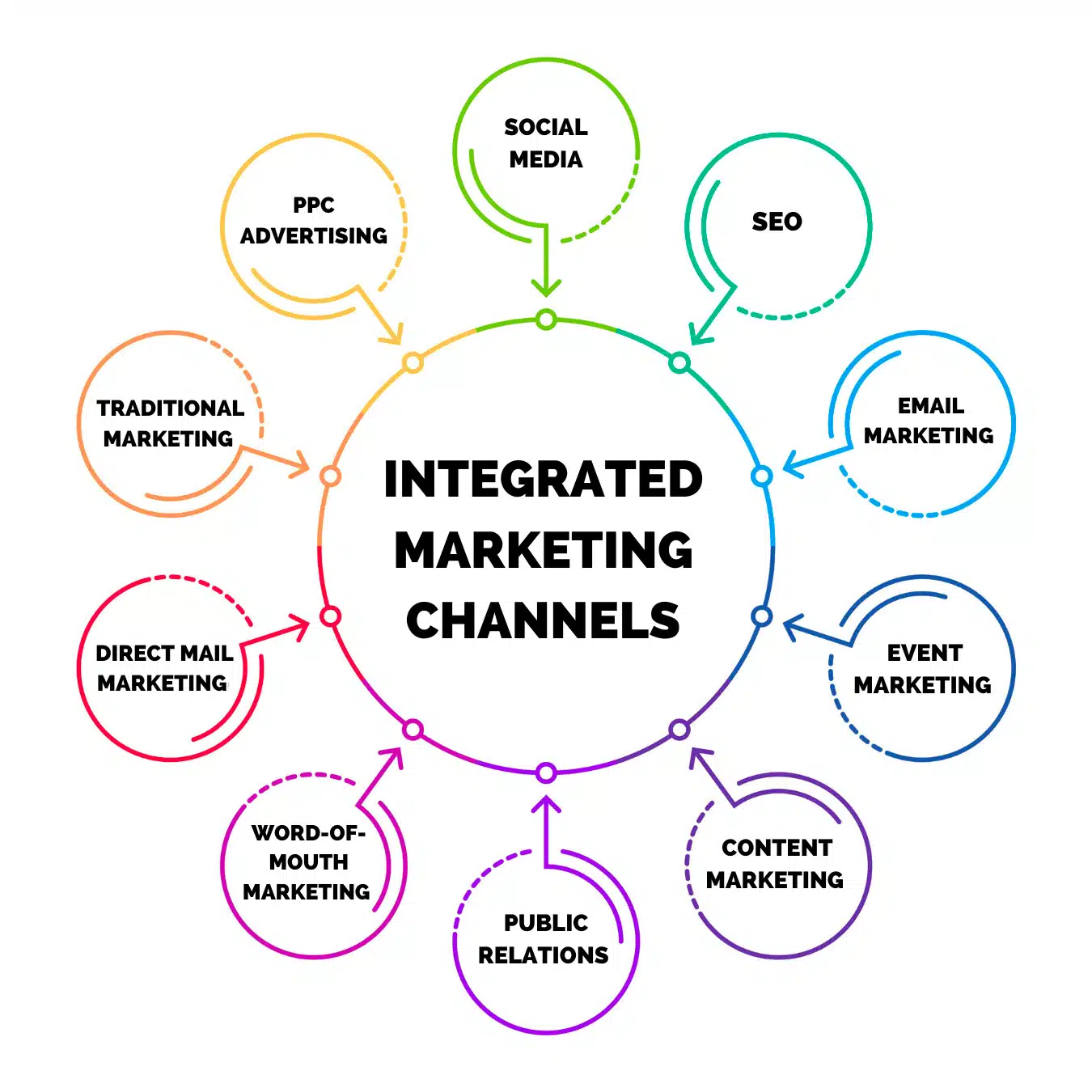
Top 10 Integrated Marketing Channels
There are several integrated marketing channels to choose from. Here are ten of the most common that companies rely on.
Email marketing is a time-tested integrated marketing tool that continues to be one of the most effective for driving conversions and building brand awareness. It lets you communicate directly with people who have signed up for your marketing list.
With the right tools, you can tailor your emails to match each customer’s interests and preferences, making your messages more relevant and impactful.
2. Social Media (Organic and Paid)
Social media platforms are powerful tools for displaying ads and content to your audience, including your followers and others who match your target. You can use your social media accounts organically to engage with followers or invest in paid ads to expand your reach. Organic content helps build trust with your current customer base, while paid social media ads are ideal for attracting new followers, increasing conversions, and boosting brand awareness.
A successful integrated marketing strategy includes both organic and paid social media efforts. Organic content can help nurture customer relationships, while paid ads drive wider visibility and more conversions.
Here’s how you can get the most out of social media marketing:
Organic Content: Builds trust and keeps your current audience engaged.
Paid Ads: Helps grow your reach, increase brand recognition, and boost conversions.
Targeted Campaigns: Ensure you’re reaching the right audience through precise targeting.
Content Variety: Use a mix of visuals, posts, stories, and videos to keep your audience interested.
By using both organic and paid strategies, you can connect with customers at different stages in their buying journey and keep your marketing efforts consistent across multiple channels.
3. Search Engine Optimization
Search engine optimization (SEO) is all about making sure your website shows up when people search for what you offer. It’s like putting your business on the map, but online. By using the right keywords and optimizing your site’s structure, you increase your chances of being seen by potential customers. It’s not an overnight thing, but over time, good SEO builds trust and helps your site rank higher in search results, which means more visibility and traffic.
Plus, it’s a long-term strategy – once you’re ranking, it’s easier to stay there.
4. PPC Advertising
Pay-per-click (PPC) advertising involves placing ads where your audience is likely to see them, such as on search engines. While many advertising options require paying for mere placement, PPC only bills you when a customer clicks on your ads. Though its costs can escalate quickly, PPC advertising benefits companies seeking quick sales or other conversions.
5. Content Marketing
Content marketing is all about creating useful, relevant content for your target customers. It’s a way to show that you understand their needs and can offer real solutions. Whether it’s blogs, videos, or infographics, content helps build your credibility in your industry.
In a B2B integrated marketing strategy, content can position your business as an authority, helping you stand out from competitors. By consistently sharing valuable content, you can attract more organic traffic and keep customers engaged across multiple channels – like your website, social media, and email.
Ultimately, content marketing is about building trust and loyalty, leading to more sales and stronger relationships with your audience. It’s a powerful tool that supports your overall marketing efforts and helps you connect with customers in a meaningful way.
6. Direct Mail Marketing
Direct mail marketing is ideal for companies with customers in a limited geographic area. Using this channel, you can mail advertisements directly to clients who fit your target audience and are most likely to need your products and services.
For instance, a local restaurant may use direct mail to advertise its opening day to people within a five-mile radius.
7. Traditional Marketing
Traditional marketing encompasses a variety of advertising techniques, like commercials, print collateral, and billboards. While traditional marketing is losing ground to the popularity and potential of digital strategies, many brands still incorporate it into their integrated marketing plans.
8. Event Marketing
In event marketing, a company showcases its products and services at a tradeshow or another similar event. Event marketing often combines information and learning with product demonstrations.
In this format, it’s common for a company representative to speak at the main event, then later demonstrate the organization’s products on the trade show floor.
9. Public Relations
Public relations includes press releases and public company meetings, like shareholder events. Press releases are ideal when the company introduces a new product or has a significant change they want their clientele to know about. Ideally, news organizations, websites, or journals will pick up these press releases and reprint them, increasing your brand visibility and potentially growing your client base.
10. Word-of-Mouth Marketing
Word-of-mouth marketing has always been the most powerful form of marketing because it gives individuals a chance to spread the word to their acquaintances and give an honest recommendation, usually without the interference of the brand. It’s, therefore, crucial for companies seeking to expand their audience and enhance revenue.
Influencer marketing is a form of word-of-mouth advertising, but it’s less powerful than genuine, organic word-of-mouth. For example, organizations can pay for a partnership with an Instagram or TikTok influencer, using the influencer to promote their products or services to their audience.
It’s difficult, however, to control word-of-mouth marketing enough for integrated marketing strategies. Brands must rely on more involved (and therefore less effective) approaches, such as influencer marketing, to deliver a cohesive message.
Where to Begin with Your Integrated Marketing Campaign: Best Practices
If you’re interested in building an integrated marketing plan, here’s how to get started:
Decide on a universal message you can promote to your target audience
Determine the most suitable integrated marketing channels for your brand
Try your strategy out on a few channels before adopting it widely
Introduce more integrated marketing channels over time
It’s not an easy task, but there’s another solution that can deliver fast, effective results: working with a talented marketing agency.
Grow Your Business with MARION Integrated Marketing
Looking to grow your business? MARION has your back with integrated marketing strategies that work. If you need to boost your online presence, increase customer loyalty, or support your in-house team, we’ve got the tools and expertise to help. Let’s chat about how we can make your web marketing efforts more effective and drive better results. Reach out today!
Contact us today to learn more about our integrated marketing services.
It isn’t news that B2B manufacturing marketing is difficult. After all, your manufacturing marketing strategy has to bridge the gap between you, distributors, wholesalers, and users in an effective and cost-efficient way.
Targeting the right decision makers at the right time is a complex task that B2B marketing strategies need to address. Fortunately for you, there are ways to target a highly qualified audience with very granular messaging. How exactly?
Digital marketing for manufacturing companies.
How to Market a Manufacturing Company
Whether you’re relying on a marketing department in a manufacturing company or a marketing agency for the manufacturing sector, your whole marketing plan starts with a strong brand identity. Positioning your business is easier after you engage in research and discovery about your history, process, people, and differentiation.
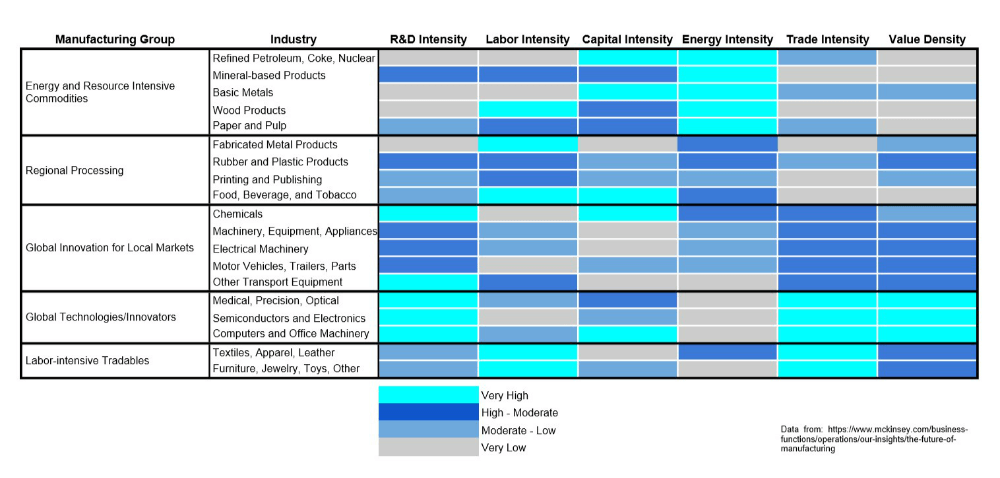
Being in the manufacturing industry can look very different depending on your product, but can actually be boiled down into five main groups. Use this table to identify which main group and industry sub-group your operation belongs to.
Once you’ve developed your brand identity and decided how to position your company in the minds of your distributors and users, you can begin to set marketing goals. In many cases, your goals will involve financial targets that are closely tied to your mission statement. Then, figure out which strategies you’ll target to achieve those goals.
The rest of this article will cover the five digital marketing tactics that are highly effective for manufacturer growth.
Digital Marketing Strategies for Manufacturers
The most complicated part of a digital marketing strategy for most manufacturers is presenting the right message to decision-makers. Internet marketing for manufacturers helps to effectively target B2B decision-makers with little budget waste.
These five B2B manufacturing marketing strategies can each be used to grow your market share in a cost-efficient manner.
Look at each of the strategies, and decide on which method will best help you realize your goals.
1. Content Marketing for Manufacturers
In a 2018 survey of industrial marketers, 86% of respondents said they were using content marketing. Fortunately for you, only 22% of those manufacturing content marketers considered their organization to be “sophisticated” or “mature” at this skill. This Content Marketing Institute data indicates that you still have time to catch up if you aren’t leveraging the power of content marketing yet.
Content marketing strategies can take many different forms. Whether you’re distributing content through email marketing, social media marketing, or organic search, you can attract the right users by creating valuable content assets for your end users.
For example, a midstream pump manufacturer can use content marketing in Houston to write a blog post about the physics behind torque-speed curves to help midstream users determine how to select the right pump for their next application.
Solving Pain Points Through Strategic Content
The key to successful content marketing for manufacturers is identifying the pain points of your target audience, then building content assets that can ease that pain. If an industrial user isn’t sure how to choose between you and your competitors, put together a comprehensive list of performance factors for your product. If a heavy equipment user is struggling to choose between you and your closest competitor, write a detailed comparison piece to highlight the areas in which you come out on top.
By creating free value-added content for your potential customers, you can position your brand as an authority in your industry.
Manufacturing SEO is the practice of optimizing your website so that you show up at the top of search engine results when users are searching for the products you offer. For example, if you’re a chemical manufacturer, you want your surfactant web page to show up when a potential customer Googles “surfactant suppliers.”
According to a recent study, organic search helps to generate nearly 53% of B2B revenue. This means that successful manufacturing search engine optimization can be the key to meeting and exceeding your marketing growth goals.
The Role of Web Design in SEO Success
Keep in mind that an SEO-friendly web design is paramount to ranking well in search results. If your website looks like it’s from the 2000s, users may hit the back button and visit your competitor’s site instead. It’s like showing up to a business meeting or interview in sweatpants. Doing some competitor research, customer interviews, and user testing will help you develop the best manufacturing website design possible.
Aside from design, the content on your website is highly important to your SEO for B2B manufacturing. Like we mentioned in the first section, by creating content that addresses the pain points of your target users, you can rank highly in the search results and generate more revenue today.
If you’re interested in trusting your organic growth to an SEO agency in Austin or Houston, contact MARION today to schedule a free consultation!
3. PPC Advertising in Manufacturing Industries
Over the past decade, several types of digital marketing campaigns have improved the scalability of manufacturing advertising. Before the internet, manufacturing outfits had to rely on direct mail, cold calls, and costly trade shows to generate new opportunities. While there are benefits to relationship-based selling once the ice has been broken, gaining that initial exposure is difficult.
Today, pay-per-click advertising for manufacturers allows you to target psychographically. You can serve an ad that targets a potential customer’s exact need for mere dollars. This flies in the face of trade events where the barrier to entry can be tens of thousands of dollars.
An Example of PPC in Action
For example, a powder coating manufacturer can run pay-per-click ads that appear when a search engine user looks for “high temperature powder coating.” When an interested potential customer clicks on your ad, it will cost you around $2. Depending on the size of your average sale, the profit margin on PPC for manufacturers can be massive.
If you’re interested in running pay-per-click in Houston or Austin, contact the strategists at MARION today to set up a free consultation.
4. Social Media for Manufacturers
“My ideal customers aren’t on social media.”
Without fail, we hear this from industrial and manufacturing businesses about once per month. As of 2023, there are:
Without a doubt, your target customers are on social media. Whether or not they are in the mindset to buy while browsing social media is a different story. When it comes to social media marketing for manufacturing, the most relevant platform for a high return on marketing investment is LinkedIn.
LinkedIn
50% of Americans with a college degree use LinkedIn. This makes using LinkedIn for B2B marketing a no-brainer. Not only is LinkedIn a great place to post organic updates that your connections can see in their timeline, but its ad targeting capabilities grow more and more advanced each year.
Once you’ve refined your LinkedIn ad targeting options to reach the right decision-makers, you can begin generating a return on your manufacturing social media marketing efforts.
If you’re interested in exploring social media marketing in Houston or Austin, contact MARION to set up a free consultation with one of our strategists today!
At MARION, we pride ourselves on staying ahead of marketing trends to position your brand as an industry authority. Whether it’s designing campaigns that resonate with your audience or optimizing your digital presence to generate measurable results, our strategies are built to help your business thrive.
5. Marketing Automation for Manufacturing
Manufacturing outfits are moving to robotic process automation in an attempt to optimize costs and production. Doesn’t it make sense that your OEM digital marketing strategy makes use of automation too?
How Marketing Automation Simplifies Industrial Marketing
Digital marketing for industrial companies becomes dramatically easier when paired with the right marketing automation platform. Automation allows you to:
Seamlessly track qualified leads.
Identify which marketing messages are most effective.
Score which marketing materials have the best impact on your bottom line.
By identifying which B2B manufacturing marketing materials have the highest conversion impact, you can focus your efforts for compounding returns and overall business growth.
Choosing the Right Platform for Your Strategy
The strategy behind marketing and manufacturing automation will largely depend on the platform you choose. While our sales and marketing teams generally recommend using HubSpot, we can work with several different automation platforms to help you reach your goals.
How to Choose a B2B Manufacturing Marketing Agency
Now that you’ve been exposed to several digital marketing strategies for b2b manufacturers, you can choose the strategy or strategies that best match your B2B manufacturing marketing goals. Depending on whether you’re interested in mostly branding, SEO, web design, or outsourced marketing, the following resources will help guide you through the process of choosing a marketing partner:
The general process for choosing a marketing team will follow the same steps.
Determine if the agency understands your business.
Analyze the team and their past success. Do they have a portfolio or case studies?
Do you get along with your future point of contact? This will affect the success of your partnership more than you know.
Does the agency seem to have a curious spirit?
Can the agency adapt to different circumstances?
Are you able to effectively communicate with the agency?
MARION Makes Digital Marketing for Manufacturers Easy
For over 40 years, MARION has been a trusted partner to local manufacturers, helping them navigate the evolving marketing landscape. Our extensive experience in industries like Energy, Chemicals, and Industrial Equipment means we bring unparalleled technical expertise to every project. From contract manufacturers to large-scale industrial operations, our local team understands the unique challenges you face and is equipped to deliver solutions that drive sustainable growth.
Our approach to digital marketing is rooted in aligning sales and marketing efforts to maximize lead generation and customer loyalty. By combining inbound marketing strategies with targeted paid campaigns, we help you attract more website visitors from your target market and convert them into long-term customers.
Ready to see the difference MARION can make? Explore our portfolio and case studies to view examples of our work, then contact us today to schedule a free consultation. Let’s discuss how we can support your goals for lead generation, customer loyalty, and sustainable growth in today’s competitive market!
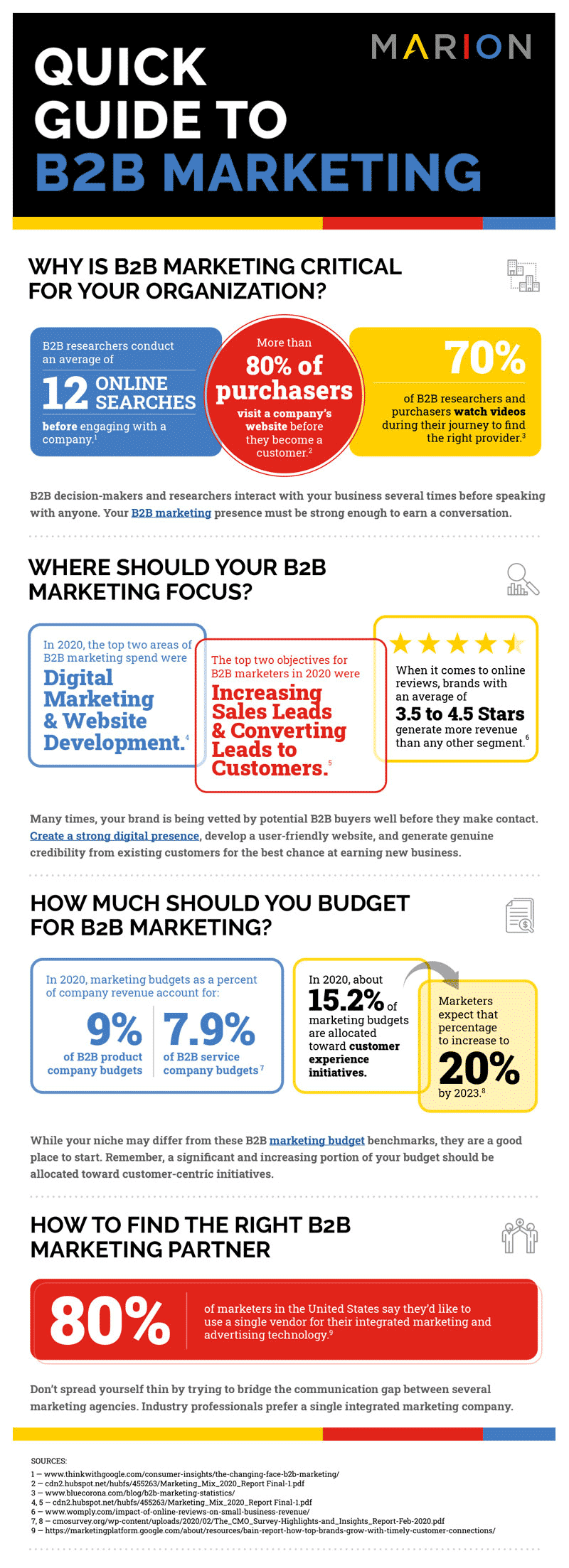
Marketing to businesses is a different challenge. While we’re all familiar with marketing as consumers, reaching other businesses (B2B) requires a unique approach compared to consumer-focused (B2C) tactics.
B2B marketing is when one business markets its products or services to another business. It’s essential for companies that supply goods or services that help other businesses operate or improve their own offerings.
Some B2B marketing examples include:
An industrial pump manufacturer is attempting to market and sell its products to an oil and gas producer.
A commercial construction company is attempting to market and establish a contract to build out the office space for a law firm.
A heavy equipment dealership is attempting to market and sell industrial equipment to a construction company.
What is a B2B Marketing Agency?
A B2B marketing agency specializes in crafting marketing strategies that effectively connect your business with other companies. These agencies know how to reach key decision-makers and position premium products or services to stand out in the market.
Why B2B Marketing?
B2B marketing is essential because most companies depend on the products or services of other businesses. Rarely does a company handle every part of its production and distribution in-house. For instance, your favorite clothing brand might source materials from various suppliers, and your phone’s components likely come from multiple vendors.
These partnerships start with effective B2B marketing, connecting companies with what they need to function or grow. Plus, B2B relationships often have high revenue potential. Unlike one-time consumer purchases, business partnerships are often longer-term and higher-value. For example, a landscaping contract for a corporate campus may involve months of service and a substantial budget—much more than a single residential project.
Types of Business-to-Business Marketing
Here are three core B2B marketing techniques to consider. Think about how each might fit into your strategy, and then check out what your competitors are doing to see if these approaches could work in your industry.
Digital Marketing for B2B
Digital marketing is a scalable way to get your products or services in front of the right people. A digital marketing campaign makes it easy to track ROI, and you can use granular targeting to reach decision-makers.
For example, LinkedIn ads can target individuals with certain job roles so that you can directly target a purchasing manager or executive. If your ideal customers are searching for your products or services online, you can use an SEO company to make sure your web pages are at the top of the search results.
Traditional Marketing for B2B
Traditional marketing strategies for the business-to-business market casts a wide net and tends to be expensive, but it helps build brand equity. You can use radio, television, or print ads to grab the attention of your potential customers and remain top of mind. You’ll be in the running when those companies are looking for a new vendor.
Personal Selling for B2B
Personal selling is one of the oldest and most effective B2B marketing methods. Personal selling leverages face-to-face networking and relationships to get deals inked. This is the least scalable way to market your business to other companies, but it has the highest conversion rate.
Personal selling is frequently paired with digital marketing. Digital campaigns generate leads that are followed up in person by a salesperson.
9 Examples of How to Do B2B Marketing (That Actually Work)
When it comes to B2B lead generation, business marketing companies often use nine core strategies. These tried-and-true B2B marketing tactics can help drive growth and increase sales.
Successful B2B marketing starts by researching what your customers need. Just because you’re offering a product or service doesn’t mean customers will come running. Find out what drives the demand for your product/service and how you can stand apart from the competition.
One way to better identify your customer needs is to form customer user groups. Similar to focus groups for a new product, customer user groups leverage the people who are already benefiting from your offerings. For example, after interviewing your customer user group, you may find that marketing for IT companies is more effective when you focus on the pain point of cloud security. Identifying these pain points can go a long way when tailoring your marketing message.
User groups can be conducted in person, or you can build surveys that uncover the unique pain points that customers experience before searching for your solution.
Other research methods include doing keyword research to discover organic search demand or leveraging existing data about your industry.
2. Prioritize Reviews, Testimonials, and Case Studies
One of the most effective B2B marketing strategies is leveraging reviews, testimonials, and case studies from existing customers. This builds credibility in the eyes of potential customers who need to know your products or services can deliver.
Case studies are helpful the closer you get to a purchase decision. For example, when customers have a list of potential product/service providers together, they’ll want to see how you’ve performed in the past. Having a case study of a similar customer might be the proof your prospects need to see before making a big purchase decision.
3. Use B2B SEO
Search engine optimization is a valuable asset to your B2B online marketing. Prospects need to make informed decisions, so they conduct preliminary online research. If you’re not a top result for the product or service you’re selling, you might not even be considered a potential vendor.
One way to improve your SEO is by leveraging content marketing for your business website. Content marketing helps position your brand as an authority to both search engines and users. In fact, content strategy has proven to have a major role in B2B manufacturing marketing and manufacturing web design. Both of these work together to improve SEO for manufacturers and drive organic search traffic. By regularly publishing highly educational content, you show your subject matter expertise and help users make more informed decisions.
By combining B2B online marketing strategies like reviews and content marketing, you can dominate the search results for your products/services. Not only will business prospects find you in search results more often, but your reviews will help prove that you’re a trusted provider.
4. Use Social Media for Business
Simply put, being active on social media isn’t optional anymore. Business buyers often check social channels to get a sense of your company’s reputation and culture. In fields like marketing or professional services, your social presence can be especially influential. But with organic reach on the decline, standing out may mean setting aside a budget for paid social media ads.
5. B2B Advertising
Your B2B internet marketing should include paid spend on search and social media. These paid B2B marketing services can generate great ROI if done correctly.
Learning how to successfully advertise on social media can help you meet your prospects where they already spend their time. The decision-makers and purchasing managers that you’re targeting represent businesses, but they are just people at the end of the day. They spend time on social media channels, and you can use the advanced targeting features of today’s popular social channels to reach them.
Paid search is also a great way to target relevant prospects. The difference between organic vs. paid search is that you can jump the line and appear at the top of the search results without having to pour time into SEO.
Paid search targets your prospects for their exact interest at the exact moment they’re interested. Traditional marketing often relies on user demographics for targeting. This is why many business to business marketing strategies prioritize digital over traditional.
6. Set Up a Customer Referral System
Referrals are a great way to drive new business but are often overlooked in favor of digital methods. Set up a process for gathering referrals by checking in with satisfied clients regularly.
For example, a commercial lawn care company might send out a six-month email for feedback and kindly request referrals from happy clients. For even more traction, consider offering incentives, like a small discount or credit for each new referral, which can create a steady revenue stream with minimal cost.
7. Use Marketing Automation
Marketing automation helps you connect with leads, nurture prospects, and streamline all your marketing channels. For instance, if someone downloads a case study, an automated follow-up email could share more tailored insights, maximizing engagement from each contact. Just ensure you don’t overwhelm your contacts—too many emails or overly personalized messages can lead to unsubscribes.
8. Use Influencer Marketing
Partnering with influencers can be a very effective creative marketing strategy for B2B businesses. It makes the most sense to leverage this if there are well-known public figures for the industry you’re targeting.
Going back to our commercial construction example, if your construction firm is trying to get contracts for restaurant build-outs you could partner with a public figure that most restaurant owners follow. Sponsoring a promotional article about your restaurant designs on Gordon Ramsay or Guy Fieri’s blog could be a great way to generate leads.
There’s a good chance you know about local influencers in your target industries. If you’re operating a local business, these local influencers are probably a relevant and cost-effective way to improve your business to business marketing effectiveness. Learn how to advertise a small business locally.
9. Track Your Campaigns and Use Reports
How will you know if your B2B marketing strategies are effective? Before you implement any digital content strategy, develop a system for tracking its effectiveness.
If you’re engaging in B2B SEO, what will you use to measure rankings, organic traffic, and conversions? If you’re advertising on social media, do you have to correct pixels installed so that you can trace marketing ROI back to its source?
If you’re using forms of traditional marketing for B2B, they might be more difficult to track. However, just because something’s difficult to track doesn’t mean you should avoid measuring it. If you want to improve your marketing effectiveness over time, you’ll need to track and regularly review reports about the marketing KPIs that matter most to your business.
Let MARION’s Experts Handle Your B2B Digital Marketing Strategy
At MARION, we have over 40 years of experience with B2B marketing in Houston and Austin, Texas. Our marketing team consists of digital marketing, graphic design, and traditional marketing experts with proven track records.
Contact us today to schedule a consultation and discover how we can help your business grow!
MarCom and Integrated Marketing Form Distinct Parts of the Marketing Whole.
More than the products you sell, your company has a heartbeat — a “why” behind everything you do. While you might send dozens of marketing messages a day, how many of them are connected to that heartbeat?
Let’s say you’re a sports outfitter looking to advertise a new pair of athletic shoes. You could send a marketing email about the shoes, gaining a significant number of sales. However, if you want those sales to turn into loyal customers who are engaged with your brand, you may need to think bigger than email.
By merging all of your marketing communication efforts — email, social media, print advertising, PR and digital advertising — into one unified marketing plan and brand message, your audience will experience the whole picture of your sports brand while purchasing those new shoes. This strategy is known as integrated marketing communication.
Marketing Communication VS. Integrated Marketing Communication.
Marketing Communication (MarCom) refers to the methods and tools used to convey messages to segmented audiences. These messages are often tailored to specific products and services and use individual marketing tools and channels to communicate. MarCom can look like anything from TV advertising and print media to email marketing and social media campaigns.
Integrated Marketing Communication (IMC) is a strategy that takes things a step further to unify all parts of a company’s marketing efforts and create a cohesive brand message. IMC shares brand messages with a larger audience through several marketing channels and tools on a consistent basis. More than making sales, the goal of IMC is to generate brand awareness and build long-term relationships with audiences.
Here are some of the main differences between these two strategies:
Goals.
While MarCom aims to promote a specific product or service, the goal of IMC is to increase brand awareness through consistent messaging across all marketing platforms.
Strategies.
MarCom focuses on individual, segmented marketing strategies to promote a specific product or service to an isolated group. IMC unifies all marketing channels and tools to communicate a cohesive message that reaches a broader audience and points to the brand as a whole.
Channels.
While MarCom uses specific channels based on the product, service or audience type — an integrated marketing approach combines multiple channels like social media, email, digital ads, print media and more to communicate a synergized message.
Messaging.
MarCom sends varied marketing messages that are different based on the campaign’s goals. IMC places a high priority on sending consistent, evergreen messaging that is relevant across all channels.
Engagement.
MarCom aims to increase customer engagement for the duration of an individual campaign or promotion, while IMC builds long-term customer relationships through continuous engagement across all channels.
Success.
Success for MarCom is measured according to the sales or engagement for an individual campaign. IMC measures the success of marketing efforts by overall brand awareness gained through multiple channels and engagement across many platforms.
Flexibility.
MarCom campaign messaging can be significantly changed and adjusted, while IMC integrates holistic messaging that is the same throughout each channel so that changes made to one channel affect all channels involved.
Budgeting.
MarCom calculates budgets according to a singular campaign, while IMC allocates a budget that covers multiple channels and tools.
Our nonprofit client needed to encourage local business growth by showcasing the city’s warm and welcoming culture. Here’s how we used integrated marketing communication to foster a sense of unity in the Hempstead community.
The Benefits of Integrated Marketing Communication.
If you want your marketing efforts to be successful, it’s time to think bigger. Rather than one or two channels, reach your audience through multiple channels such as social media, websites, digital ads, blogging, email, print media and signage. IMC allows for more efficient use of these channels, and combined, they can amplify one another and communicate a consistent message. It’s all about using more channels more often, with a recognizable message that resonates with your target audience. Below are some of the outcomes your business can achieve by implementing IMC strategies.
Establish Your Brand.
Every interaction you have with your audience counts, and the more interactions you have, the more familiar people will become with your brand. A consistent message that is reinforced through several mediums allows you to build and solidify your brand identity. The use of branding or brand codes1 throughout your marketing content helps to establish this identity through familiar images, slogans, logos and communication styles. Branding communicates your core values and personality while further defining the solutions you bring to audiences. Repetition is key, and just when you think it’s getting old, do it even more. It’s easy to get burnt out by your own message, but your audience is still getting to know you, and they need consistency.
Reach a Wider Audience.
Many channels are available in today’s vast marketing landscape, each catering to different audiences and preferences. With each channel comes a unique opportunity to connect with a variety of people. Rather than focusing on one or two channels, IMC casts a wider net using multiple channels to reach more people and keep your brand top-of-mind. When you have the same brand message and imagery embedded into each of these channels, your audience will experience your brand more holistically.
Our client Kountry Boys needed updated branding to improve the visual appeal of its packaging, digital presence and sales collateral. Here are the results of our integrated marketing strategy.
Influence the buyer’s journey.
From brand awareness to consideration and buying decisions, audiences evaluate your company to decide if they want to purchase products or services. IMC helps to build upon the awareness stage of the buyer’s journey2 and guides them through the decision-making process. Here are some ways IMC strategies can help you nurture leads.
Awareness Stage.
As you broadcast branded messages with IMC through multiple channels, people will become more aware of your company as they are consistently exposed to you. Publish branded content across a collection of platforms that establishes your company as a thought leader and provides real solutions to your audience’s problems. Audiences will begin to develop trust in your brand and see you as a valuable source of information.
Consideration Stage.
In this stage, the consistency of your IMC strategies will continue to reach your audiences with the message that your products and services are a valuable investment. With shared audience data gleaned from multiple channels and marketing tools, you can target audiences who are further down the funnel with more specific messages.
Decision Stage.
By employing IMC through multiple channels consistently, your marketing efforts will contribute to faster decision-making as audiences become more familiar with your brand. Your IMC content will reinforce the message that your company is worth investing in, and create customers who are loyal to your brand, not just your products.
Strengthen Your Marketing Channels.
The IMC strategy helps to connect each of your marketing channels so that they are working together, not separately, to establish your brand and nurture leads. When your marketing channels are integrated, they become connected and influenced by each other. For example, if someone visits your social media page, they might also click on the link in your bio that takes them to your website. Once they browse your website, they might fill out a form for a free download that comes through email. Now you have access to this person’s inbox, where you can send more branded content that leads them to other channels like your blog page, YouTube channel or more products on your website. As audiences engage with each channel, data is gathered through Google Analytics, CRM tools, social media insights and online surveys to target your audience more effectively.
Integrated marketing communication unifies your channels and strengthens them as they work together.
Foster Brand Loyalty.
IMC creates emotional connections with your audience through brand storytelling techniques that interweave your company’s values and mission in a relatable way. Going beyond the product itself, your content should create a sense of connection with personalized messages that make your audience feel understood and valued. IMC encourages active engagement from customers, inviting them to participate in brand-related activities within the company’s online or in-person community. As customers experience a sense of belonging and connection, you’ll develop long-term relationships with loyal lovers of your brand.
It Takes a Unified Team to Synergize Your Brand.
To implement an integrated marketing approach, you need a team that works together to align with your brand goals and ensure every channel is working in harmony. Design At Work is a full-service marketing agency that offers combined skills and resources all under one roof. Contact us to talk about how we can help streamline your marketing efforts.
As the Texas film scene continues to grow, it’s not just filmmakers who are reaping the benefits — businesses and brands have an opportunity to shine, too. The intersection of marketing and the film industry presents a unique chance to align your company with creative projects, tap into new audiences, and build partnerships.
The Rise of Texas as a Film Hub
Texas has long been a desirable location for filmmakers due to its diverse landscapes, talented workforce, and favorable production costs. Over the last decade, however, the Texas film industry has seen a notable boom. Cities like Austin, Dallas, Houston, and even smaller towns have become sought-after destinations for independent filmmakers and major studios. With its sprawling desert landscapes, bustling urban centers, and lush countryside, Texas offers a wide variety of backdrops that can stand in for nearly any location.
Statewide initiatives like the Texas Film Commission’s production incentives have further fueled this growth. By offering financial incentives and tax rebates for film and television productions, Texas has attracted major projects like The Texas Chainsaw Massacre reboot, TV shows like Fear the Walking Dead, and even portions of blockbuster films like The Tree of Life and Boyhood.
Austin, in particular, has emerged as a creative hotspot. With high-profile events like SXSW and the Austin Film Festival, the city has become a mecca for independent filmmakers and media professionals. Filming for the second season of 1923, a Yellowstone spin-off, is even set to take place in Austin this year.
Sponsorships
One of the simplest ways to tap into the Texas film scene is through event sponsorships. Film festivals, premieres, and local screenings offer plenty of opportunities for brands to sponsor events that attract a captive audience. By aligning your brand with an exciting, creative project, you can increase brand visibility and positive associations with the arts and entertainment community.
For example, sponsoring a Texas film festival allows you to connect with film lovers, creatives, and influencers, all while showcasing your brand in a fun setting. Things like branded swag, logo placements, or even a custom booth at the event can create lasting impressions and increase your reach in key markets.
Digital Campaigns
Beyond the screen, brands can ride the wave of excitement around Texas-based films with digital marketing campaigns. As productions are announced or films premiere, brands can create campaigns that tie into the buzz surrounding these projects. You could run a social media contest that asks fans to guess key locations in a Texas film or offer special promotions tied to a movie release.
Using hashtags, behind-the-scenes content, and exclusive interviews with filmmakers or cast members can boost engagement and create a narrative that your audience connects with. Use local film releases as a springboard to amplify your digital presence while celebrating the growth of Texas’ entertainment industry.
Local Partnerships
Finally, consider how you can collaborate with local film projects on a more community-focused level. Working with Texas-based production teams or supporting local independent filmmakers not only boosts your brand but also strengthens your ties to the local creative community. Hosting events, offering your space or resources to productions, or even providing local businesses as filming locations can go a long way in building goodwill and generating brand awareness.
The Bottom Line
As the Texas film industry grows, so do the opportunities for businesses to step into the spotlight. From event sponsorships to digital campaigns, brands can tap into the booming Texas film scene to grow their marketing efforts and gain visibility. The opportunities to boost your brand are endless!
Effective email newsletters can help you stay top-of-mind with your audience.
Not all emails are created equal. While promotional emails shout, “buy now!” and focus on driving sales, email newsletters offer valuable content to keep your audience engaged with your brand. While you might not see a direct impact on sales, email newsletters provide educational and entertaining content that will put your brand top-of-mind and establish trust with your customers as they become more comfortable with you. With effective email newsletters, you can nurture leads, become a thought leader in your industry and ultimately increase website traffic. In this article, we’ll dig into the power of email newsletters.
What’s the difference between an email and anewsletter?
We’re glad you asked. When you set out to design an email marketing campaign, there are various types of emails you can employ to target your audience. Most emails fall into two categories: promotional emails and engagement emails. Both categories have unique strengths, and when paired together, they create a powerful duo for your marketing strategy.
Promotional Emails.
Promotional email marketing functions as an advertisement that informs people about a product or service, usually followed by a strong call-to-action (CTA) to let a consumer know how to take the next step in purchasing the product or signing up for the service. The CTA could also call for a transaction, download or a free trial sign-up. These emails are more direct and less personal and work best when targeted at those most likely to act.
Email Newsletters.
Email Newsletters are a softer approach used to connect with your subscribers and build a relationship over time, while keeping your brand top of mind. Speaking to your audience’s pain points, these emails are filled with helpful tips, guidance and expertise that establish you as the authority in your industry. The education you provide can come from your own experience, as well as the latest trends and industry news that are relevant to your customers. As these emails land in your readers’ inboxes consistently, you become their go-to source for solutions. Not only that, but with softer CTAs like “read more” or “see our latest project,” you’ll boost website traffic as curious readers explore who you are.
We know what you’re thinking. “Why should I waste my time writing a newsletter if it may not help with direct sales?” The benefit of consistent email newsletters goes beyond a single sale. Every newsletter you send out is like putting a piece of your paycheck into your retirement fund — in the end, it pays off. Your efforts to educate and inform your audiences keeps your brand top-of-mind, encouraging subscribers to think about you once they are ready to buy.
With effective email newsletters, you can nurture leads, become a thought leader in your industry and ultimately increase website traffic.
Nurture leads with the power of email newsletters.
As you gather leads through different sources like trade shows, free trials and online surveys, you’ll find that each person is in a different stage of the buyer’s journey. When you nurture a lead, you are inviting them to learn more about how your industry works while inspiring them to take the next steps.1 It’s a courtship of sorts, as strangers become friends. Friends don’t tell each other what to do, but they do give advice and guidance. This is where a newsletter comes in as a helpful tool for nurturing leads.
The best way to use email newsletters is to personalize them according to who you’re speaking to. That can sound daunting when looking at your giant stack of emails, but we’ve got a method. Looking at the data you have on each of your leads, you can segment them into categories. There are two types of data to gather: behavioral and non-behavioral.2 Non-behavioral data — such as location, age range, gender and job type — is a great place to start. Behavioral data, on the other hand, provides information about how leads interact with your brand. It can include how they found you, how often they visit your website and what pages they visit. If you have more personal information like names, you can use automated email software to populate names in subject lines.
If all you’ve got on a lead is an email — that’s okay! Segment your leads based on what stage of the brand relationship they’re in. Once you’ve organized your emails into different categories, you can create content that will help nurture leads and move them along to the next stages of the buyer journey.
Here’s an example of our newsletter The Flipside, where we offer subscribers useful marketing tips and talk about the latest marketing trends.
Use thought leadership to establish authority and boost website traffic.
Thought leaders act as guides, providing a wealth of knowledge on the latest developments in the industry and predicting what is to come. Audiences look to thought leaders as trusted authorities on certain topics who bring ideas to the table that cannot be found elsewhere.3 With email newsletters, you have the power to educate your audiences and position yourself as the expert in your industry.
Here are some strategies for developing thought leadership content for a newsletter.
Focus on what makes you different.
It’s easy to get too broad and wander into subjects outside of your wheelhouse. Stick to your area of expertise, and become the leading expert in a niche subject.
Pick a theme for each newsletter.
Rather than sharing general company news, pick a theme or topic to focus on. For example, a newsletter topic for a bank might look like saving money and budgeting for the future, while the next topic after that could focus on how to use retirement plans.
Educate your audience.
A good rule of thumb is to make sure 90% of your newsletter is informative; the remaining 10% can be promotional.4 Combine your expertise with further research, featuring company blog posts and case studies to increase website traffic, while linking to a few related articles from other sources.
Keep it short and sweet.
Your audience gets tons of emails every day. Give them a quick overview of topics and link out to blog posts and other articles. Your goal is to get them off the email and onto your website, boosting website traffic and getting eyes on your company.
Write compelling subject lines.
Write something that compels the reader to open the email and see what’s inside. Use action-oriented verbs that pique curiosity and tell a story. A catchy subject line will entice more people to open your emails, generating more leads.
Here are some catchy subject lines we’ve used for Design At Work’s email newsletters.
Be a good listener.
Stay on top of the latest industry developments and conversations, while keeping tabs on how your customers’ needs are changing.
Create captivating email newsletters with a team that gets you.
Ready to become an email newsletter ninja? Design At Work can help you develop email newsletters that nurture leads and increase traffic to your website. Contact us today to get started on an email marketing newsletter campaign.
For decades, Texas has been synonymous with wide-open spaces, country music, and, of course, western fashion. But in 2024, our unique style has truly taken off. From fashion trends to chart-topping country albums, western wear is making its mark across the nation.
Native Texans vs. National Trendsetters
For native Texans, western wear has always been a staple. Cowboy boots, denim, and fringe have never gone out of style here. But what used to be a symbol of Texan pride is now being embraced by fashionistas in places like New York, LA, and beyond. It’s more than just a look; it’s a lifestyle, and it’s resonating with people everywhere.
This isn’t the first time Texas-inspired trends have caught on nationwide, but 2024 is seeing a full-on surge. Just how Barbiecore dominated with its bold, pink aesthetic, Cowboy Core and western fashion have become the must-have look for 2024. It seems like every other TikTok or Instagram post is full of jean jackets, cowboy boots, and Stetson hats.
Music Icons Go Country
It’s not just in fashion that Texas influence is expanding. Artists like Post Malone and Beyoncé have taken note, releasing country-inspired albums that are winning over fans across the globe. These artists are blending the lines between country and pop, turning what used to be niche genres into mainstream hits. And with their massive influence, they’re bringing western culture with them.
I’ve lost count of how many people I know who weren’t into country music but suddenly have these albums on repeat. From the rodeo-inspired outfits in music videos to the boots and hats sported at concerts, the Western trend is bigger than ever, and it’s thanks to stars who are embracing their Texas roots or jumping on board with the cowboy aesthetic.
Western Influences Everywhere
Western culture isn’t just limited to fashion and music — it’s showing up in other areas of pop culture too. From interior design to film and TV, the rugged, nostalgic feel of the west is everywhere you look.
Home decor has leaned into the rustic charm of the west, with people decking out their spaces with leather accents, wooden furniture, and Southwestern patterns. Western films and series, like Yellowstone, are also fueling the fire, portraying a romanticized version of life in the west that’s appealing to a broader audience.
Western-inspired sting is another area seeing major growth. Brands are tapping into the trend by using rugged landscapes, cowboy imagery, and themes of freedom and independence in their campaigns. Whether it’s a luxury brand releasing a western-themed collection or a food company promoting Texas BBQ, the cowboy lifestyle has gone fully mainstream. You can’t scroll through your feed without seeing some new ad about it.
What This Means for Brands
With western wear and cowboy culture trending, brands that tap into this craze can find exciting new ways to connect with consumers. Much like Barbiecore in 2023, Cowboy Core has a cultural momentum behind it that can translate to campaigns across industries. Whether it’s incorporating rugged visuals into your advertising, using cowboy-inspired themes for product lines, or collaborating with influencers who embody the trend, there are endless ways to ride this wave.
The Takeaway: Texas Culture Goes National
What was once uniquely Texan is now a national phenomenon. The rise of western wear, cowboy culture, and Texas-inspired trends proves that the spirit of the Lone Star State has never been stronger. As brands continue to embrace this mainstream shift, it’s clear that Texas has officially gone nationwide (and we’re all better off for it!)
So, whether you’re a native Texan or just love the lifestyle, one thing is certain: Texas is here to stay, and it’s bigger than ever.
Partner With A Trusted Texas Marketing Agency
Interested in how your brand can tap into the latest trends? At MARION, we specialize in creating marketing campaigns that truly resonate. Get in touch with us today to discuss how we can help your business stay relevant!
When it comes to movies, Beetlejuice and Barbie couldn’t be more different — and yet, both are standout marketing examples of how to build excitement, captivate audiences, and ensure box office success. From nostalgic callbacks to playful reinvention, these films offer unique approaches to marketing that brands can learn from.
Let’s dive into how the marketing campaigns behind Beetlejuice and Barbie set the stage for their iconic status.
Beetlejuice’s Nostalgia Marketing
Beetlejuice, directed by Tim Burton, has long been a cult classic since its release in 1988. So, when a sequel was announced, their team leaned heavily on nostalgia marketing. Fans of the original film were eager to revisit the quirky world of the Ghost with the Most, and the campaign smartly played into that sentiment.
Targeting the Original Fans
The marketing for Beetlejuice Beetlejuice primarily spoke to fans of the original, using references to iconic scenes, quotes, and characters. For brands, this is a powerful strategy. If you can tap into an already-established audience’s emotional connection, you’re already halfway to winning their loyalty.
Playful Teasers
Early teaser trailers and posters for the sequel highlighted Michael Keaton’s return as Beetlejuice, with the tagline “It’s Showtime!” This throwback to one of the original’s most famous lines helped rekindle excitement and anticipation.
Social Media Buzz
The campaign also utilized social media to reach new audiences while still catering to long-time fans. By sharing behind-the-scenes footage, throwback clips, and fan art, Beetlejuice marketing kept the conversation alive and well.
The Barbie Movie’s Fresh Take
On the other hand, Barbie had a completely different challenge — reinventing a decades-old brand for a modern audience. The Barbie movie marketing team knew that they had to break away from the traditional “pink and perfect” image associated with the doll and turn it into something fresh, funny, and deeply relatable.
Subverting Expectations
The Barbie marketing campaign flipped traditional perceptions of the doll by using humor and irony. The first teaser trailer, for example, parodied 2001: A Space Odyssey, signaling that this wasn’t your typical Barbie movie. This strategy not only generated curiosity but also attracted an audience that might not have been interested otherwise.
Collaborations and Partnerships
Mattel and the movie’s marketing team pulled out all the stops with brand collaborations. From Barbie-themed fashion collections to custom pink shoes, Barbie went beyond the screen and into everyday life. For brands, this kind of omnichannel marketing creates a cohesive experience that feels fresh and exciting.
User-Generated Content
The Barbie campaign also tapped into the power of user-generated content (UGC). By creating fun filters, challenges, and interactive social media elements, the marketing team turned fans into brand advocates who spread the word organically.
Comparing the Two: Nostalgia vs. Reinvention
Both films used distinct marketing strategies that catered to their strengths:
Audience: Beetlejuice relied on the loyal fan base built over decades, while Barbie aimed to bring new life to a legacy brand by appealing to modern audiences.
Tone: While Beetlejuice stuck to its quirky, dark-comedy roots, Barbie surprised audiences with humor, satire, and boldness that felt fresh and in touch with current cultural conversations.
Brand Partnerships: While Beetlejuice focused on character and plot-driven teasers, Barbie leaned into product collaborations and lifestyle branding that turned the movie into a broader cultural moment.
Takeaways for Marketers
The creative marketing campaigns for both Beetlejuice and Barbie teach us that understanding your brand’s legacy and audience is key to crafting a winning strategy.
1. NOSTALGIA WORKS. If your brand has a long-standing history, don’t be afraid to leverage it. People love revisiting beloved characters, themes, and memories, just as Beetlejuice fans were eager for a return to Tim Burton’s eerie yet charming world.
2. REINVENTION IS POWERFUL. If you’re looking to attract a new or broader audience, take a page from Barbie and flip the narrative. By playing against expectations, you can create a buzz that gets people talking and draws in new fans.
3. OMNICHANNEL STRATEGIES BUILD HYPE. From product collaborations to social media filters, Barbie capitalized on omnichannel marketing. Having multiple touchpoints across different platforms and industries maximizes exposure and keeps the excitement going.
In the end, whether you’re marketing a nostalgic sequel or reinventing a beloved brand, understanding your audience and creating campaigns that engage and excite them are the keys to success.
Get Creative with MARION
Looking for your next great marketing campaign? At MARION, we specialize in crafting creative and tailored strategies that resonate with your audience. So, if you’re looking to tap into nostalgia or launch a brand refresh, we’ve got the tools to bring your vision to life.
Contact us today to start your next marketing campaign!
With the Paris 2024 Summer Paralympic Games, businesses have a chance to connect with global audiences through marketing, advertising, and branding. The Paralympics not only highlights incredible athleticism but also emphasizes the importance of inclusivity and diversity. For brands that share these values, this event offers a powerful platform to amplify their message and expand their reach.
Why the Paralympics Matter
The Paralympic Games have grown in popularity over the years, drawing millions of viewers worldwide. Paris 2024 will shine a spotlight on athletes who exemplify resilience and the human spirit. These Games go beyond sports — they celebrate diversity and inclusion, offering companies a unique opportunity to align their brand with these inspiring themes.
Inspiration from Past Campaigns
Check out these examples of Paralympic marketing campaigns from previous years.
Toyota’s “Start Your Impossible” campaign during the 2018 Winter Games is a great example of how brands can connect with the Paralympic spirit. By telling the inspiring stories of Paralympic athletes, Toyota highlighted values like resilience and inclusivity, making a powerful impact. This kind of approach could be a great fit for brands looking to stand out during the Paris 2024 Summer Paralympic Games.
Citi’s “Stare at Greatness” campaign for the Tokyo 2020 Paralympic Games challenges perceptions by encouraging audiences to admire, rather than look away from, the achievements of Paralympic athletes. Launching globally on social media and featuring Team Citi, this campaign flips the script on how we view disabilities, turning what might be seen as a negative into a powerful, positive message of admiration and respect. By celebrating the strength and perseverance of these athletes, Citi is not just supporting the Paralympic Games — they’re also promoting a more inclusive and diverse society.
Marketing and Advertising Opportunities
Inclusive Advertising Campaigns: The Paralympics is a great time to roll out inclusive marketing that highlights diversity and inclusion. Featuring Paralympians or people with disabilities in your ads can create a strong emotional connection with viewers. This not only shows your commitment to inclusion but also resonates with a wider audience that values social responsibility.
Storytelling and Content Creation: Paralympic athletes have incredibly inspiring stories. Sharing their journeys through videos, social media, or blog posts can deeply engage your audience. Collaborating with athletes to tell their stories brings a human touch that can leave a lasting impact.
Social Media Engagement: Just like with Olympics marketing, social media plays a huge role during the Paralympics. Engaging with your audience through live updates, athlete interviews, and behind-the-scenes content can build excitement around your brand. Using hashtags, challenges, and interactive content can also boost your reach and encourage user-generated content.
Aligning your brand with the Paralympic Games is more than just marketing — it’s about giving your brand a meaningful purpose. Consumers today are looking for companies that make a positive impact on society. By supporting the Paralympics, you’re not just promoting your products; you’re supporting a global movement that celebrates diversity and inclusion.
Start Your Inclusive Marketing Journey with MARION
Ready to make your brand more inclusive and impactful? At MARION, we’re here to help you create marketing strategies that resonate with diverse audiences and drive meaningful connections. Let’s work together to build a more inclusive future. Get started with MARION today.