Category: Marketing Campaigns

How to Choose a Marketing Agency That’s Perfect for Your Business 

There are dozens of marketing agencies out there, so it can be difficult to pin down the right agency for your business. Choosing the best marketing agency is a lot like marriage — if you want the relationship to stand the test of time, you need to be compatible. Otherwise, a very costly separation may be in your future.

We’re going to break down how to find a marketing agency that will work well with your business so that you can generate more leads and ultimately grow your bottom line.

What is a marketing agency?

Marketing agencies specialize in finding businesses leads through optimized marketing campaigns. This is done through extensive market research, building relationships with potential customers, and increasing sales and profits. At the core of it all, marketing agencies are in the business of communicating with target audiences. It’s their job to position your business in front of as many eyeballs as possible.

What does a marketing agency do?

It’s wrong to think that all marketing agencies are the same. Yes, most marketing companies implement marketing strategies to generate business leads, but each agency may go about this process in their own unique way. Furthermore, many marketing firms only have a single area of expertise.

In some instances, businesses will hire more than one agency to ensure all their marketing needs are handled. Though this method may be necessary on occasion, it’s far more cost effective to hire a single agency that can handle all of your marketing needs.

Types of Marketing Agencies

Let’s look at the most common marketing agencies.

what is a marketing agency

Telemarketing

These agencies provide marketing services via telephone. In a sense, they act as a call center for your business. Agencies that specialize in telemarketing often make calls to follow up with prospects. They will also take customer service calls to answer questions and provide information about your products and services.

Digital marketing

Agencies that specialize in digital marketing promote your services across a variety of online platforms that include social media, email marketing, and online ads like PPC. These agencies can help you optimize your website and create online funnels to attract and convert leads. Many businesses end up choosing a digital agency because online promotion is one of the best and most affordable ways to attract customers in today’s modern world.

Traditional marketing

Traditional marketing agencies provide tried and tested marketing techniques that have been alive and well for thousands of years. Traditional marketing leverages the use of flyers, brochures, billboards, radio spots, and TV commercials to market products and services. Though traditional marketing services have essentially become overshadowed in the battle between traditional marketing vs. digital marketing, businesses can still benefit greatly from an effective traditional campaign that’s run by an experienced team.

Full-service marketing

Full-service agencies offer an entire range of services that include branding and design, digital marketing, and traditional marketing. You can think of a full-service marketing agency as a “one-stop-shop” where you can meet all of your outsourced marketing services via a single source.

Contact MARION today to learn more about how our full-service marketing firm can help your business grow!


How to find a marketing agency that’s right for your business

Now that we’ve defined the various types of marketing agencies out there, let’s focus on what you should look for in an agency to ensure that it’s the perfect fit for your business.

1. Do they understand your business goals?

A marketing agency needs to understand both the short term and long term goals of your business. Understanding your goals will ensure they can help you meet the needs of both your business and your customers.

how to find a marketing agency

2. Analyzing the team

How qualified is the team working on your account? How much success have they had in the past? How many customers have they worked with? How many years of cumulative experience does the team bring to the table? Questioning the team behind the agency is crucial. You want an agency that has a well seasoned crew standing at the helm.

3. Can you work together?

Sure, it’s great to find a marketing agency that knows precisely what it’s doing, but that doesn’t necessarily mean they’re the easiest to work with. There are thousands of capable marketing agencies out there that are more than qualified to work on your account. However, that doesn’t necessarily mean you will get along. We’re not telling you that you have to make friends per se, but your business relationship would be more productive if you’re able to work with someone you can actually hold a conversation with.

4. Curiosity

Even the most qualified marketing agencies should show some curiosity when it comes to learning about your target audience. Marketing expertise can only take you so far. If you don’t know how to connect with and speak to the people you’re marketing to then all of your efforts will be wasted. Good marketing agencies understand this and strive to learn as much about your business as possible. Otherwise, their chances of success will not be very high.

5. Adaptability

If a marketing agency has worked with enough businesses, they should recognize the fact that not every marketing campaign works the same for every business. Adaptability is an essential skill for any successful marketing agency. You should rest assured that if you run into any issues, your marketing agency will be able to adapt and adjust accordingly.

6. Good communication

Any marketing agency worth their salt will tell you one thing — communication is key for success. It’s certainly your choice if you want to work with an agency that claps their hands together and works their marketing magic from behind the scenes with no questions asked.

However, you should strive to work with an agency that openly communicates with you. That doesn’t mean they have to share their trade secrets with you. Good communication can be as simple as seeking client input and giving regular updates on marketing campaigns.

what does a marketing agency do?

Questions to ask before choosing a marketing agency

As you’re going through the marketing firm selection process, you should ask yourself a few crucial questions:

  1. Where does my business need the most success?
  2. What can the agency teach me?
  3. Does my team have any strengths that could be leveraged by the agency?
  4. What are my company’s most pressing needs?
  5. Where do I see my business in the future?
  6. Who will represent my business when it comes to communicating with the agency?

Questions you should ask marketing agencies before partnering

  1. What results have they achieved for past clients?
  2. What do they specialize in?
  3. What is the full range of their services?
  4. How extensive is their client list?
  5. What is their client retention rate?
  6. What vision do they have for your business?
  7. Do your plans for your business match up with their plan?
  8. How qualified is their team?
  9. What tools do they have at their disposal to help them achieve success?

Skip the long search for a marketing agency

Knowing how to find a marketing agency that’s the perfect fit for your business is more difficult than you may think. Save yourself the hassle of a long search and work with our team at Marion. Marion is a full-service marketing agency that offers a wide variety of services that cover state of the art website design, online business marketing, and traditional marketing.


Contact us today for more information on how we can help your business grow!


Marketing emails you’ll actually want to read.

Get marketing tips and news sent to 
your inbox.

This field is for validation purposes and should be left unchanged.
Name(Required)

Traditional Marketing Vs. Digital Marketing – Differences and Benefits

If you’re a business-savvy entrepreneur, you should know that marketing is the lifeblood of any business endeavor. A successful marketing campaign can ensure the enduring success of a business, but it can also drain your accounts and leave you hanging high and dry if you don’t know what you’re doing.

There are two primary types of marketing in the world today — traditional marketing and digital marketing. Traditional marketing services have reigned supreme for hundreds of years, but with the digital age upon us, it’s no surprise that digital marketing is driving consistent results. With that being said, just because something is shiny and innovative doesn’t necessarily mean it’s automatically the best choice for your business.

Let’s delve into the differences between traditional and digital marketing and analyze their various benefits.

Digital Marketing vs. Traditional Marketing

If you’ve ever driven down a highway and seen a billboard, watched a commercial on TV, received a discount in the mail, or read an ad in the newspaper, then you should be familiar with traditional marketing. It’s one of the oldest forms of marketing and is still used to this day.

digital marketing vs. traditional marketing

Digital marketing is the new kid on the block. Email marketing, Facebook ads, paid pop-ups, search engine optimization, and PPC campaigns fall into this category. The popularity of digital marketing grows more and more every year. Many businesses have made the switch from traditional marketing to digital marketing, and the trend doesn’t seem to be slowing down anytime soon.

Overall, it’s much cheaper and easier to scale a marketing campaign using digital marketing vs. traditional marketing. However, traditional marketing still has its strengths.

What Are the Benefits of Traditional Marketing?

Though there are several disparities between online marketing vs. traditional marketing methods, the latter still has distinct advantages.

– Physical Copies

One distinct advantage traditional marketing has over digital marketing is that you can keep physical copies of promotional materials. This may not sound like a big deal to younger generations who store practically everything on their phones, but to those who appreciate physically holding a flyer or brochure in their hands, this is an invaluable benefit.

– Exposure to both Broad and Local Audiences

Putting up flyers outside of popular establishments or sending direct mail to addresses in a specific neighborhood makes it easy to target a local audience. Furthermore, advertisements over the radio, TV commercials, and billboards have the potential to be seen by thousands of people.

– The Material Is Simple to Understand

When you’re dealing with traditional marketing, your non-tech-savvy audiences don’t have to worry about navigating to various websites or hunting through their email to take advantage of a promotion.  Tech savviness comes intuitively to younger generations, but for older folks who aren’t glued to their electronics, a billboard or flyer is very easy to view and understand.

Disadvantages of Traditional Marketing

If your small business still invests in traditional marketing campaigns, look out for these disadvantages.

– Lack of Analytics

Frankly, there is no real in-depth way to track how successfully a traditional marketing campaign is doing. For example, it’s impossible to know how many people a billboard has reached on a busy stretch of highway. There’s also no way of knowing how many thousands of people listened to a radio ad. You can try sending out surveys to ascertain how your customers heard about your business, but that method is nowhere near as detailed as digital analytics.

When you’re running a campaign that involves printed materials such as flyers or posters, you’ll find that expenses can rack up very quickly. You must pay for paper, ink, and distribution of your advertisement depending on the channel. Your marketing budget will take an even bigger hit if you decide to go with television or radio ads. Overall, traditional marketing can be a costly endeavor.

online marketing vs. traditional marketing

What Are the Advantages of Digital Marketing?

Online marketing mediums have gained popularity due to their specificity. The following advantages highlight how tailored ads are highly effective for small businesses.

– Hyper-focused Ads

The beauty of digital marketing is that you can create ads to target your ideal customer. Facebook ads are the shining example of hyper-focused ads that allow you to target customers by demographics, location, income, interests, online behaviors, and much more. Digital marketing gurus have made millions from Facebook ads due to hyper-focusing on their target market.

Targeted ads are critical to the success of a B2B digital marketing strategy. Your marketing efforts need to impact decision-makers within an organization, and a blanketed approach isn’t cost-effective. By targeting based on industry, job position, and other dimensions that only digital marketing can provide, you eliminate unnecessary spend.

For example, B2B manufacturing marketing would need to target decision-makers in a particular industry to truly be effective. Once you identify and target the right audience, make sure you’re sending them back to your appealing manufacturing web design, otherwise, you still run the risk of losing your investment.

– Cost-effective

One of the benefits of digital marketing over traditional marketing is the price of running campaigns. PPC ads can be as cheap as a penny per click (or even cheaper believe it or not). A $5 digital marketing budget can expose your brand to a hundred or more people if you know what you’re doing. $5 in a traditional marketing campaign wouldn’t even buy you printer paper for a flyer distribution campaign. Digital marketing significantly reduces the cost of getting leads for your business, and minimizes the cost of customer acquisition.

As you can see, a big difference between digital marketing and traditional marketing is the amount of money you’ll ultimately end up spending during a campaign. Overall, digital marketing holds an advantage when it comes to cost comparison.

– Audience Interaction

With the use of social media and email, you can interact instantly with your audience. Thus, one of the advantages of internet marketing over traditional marketing is audience interaction.

With improved customer interaction, you can suggest that your prospects take action in real-time. If you engage in business blogging, you can encourage your audience to read a blog post or point them toward a promotion or press release on your website.

You can also publicly address concerns through mediums like social media, email, and your website. Real-time interaction on social media platforms is a major advantage of social marketing vs. traditional marketing. This is a significant benefit because it allows the rest of your customers to see how transparently you run your business, which builds trust.

– Everyone Is on an Even Playing Field

When it comes to internet advertising vs. traditional advertising there is a significant disparity in the respective “playing fields.” In traditional marketing, the bigger the advertising budget, the more likely you’ll dominate your niche. Therefore, smaller players are often dwarfed by major corporations with multi-million dollar advertising budgets.

Though the same is somewhat true for digital marketing, just about any business with an effective digital marketing plan in place can compete with even the largest companies. As long as you create an engaging campaign that targets the right audience, you’re a contender.

– Real-time Analytics

Yet another one of the advantages of online advertising over traditional advertising is the use of real-time analytics. You can track website traffic volume, the amount you’re spending per ad, which ads are performing, which are underperforming, and what times of the day your followers are the most active on social media.

With access to real-time analytics, you can tweak your advertising campaigns little by little until you find a formula that helps you meet your marketing goals and objectives.

Internet Marketing Vs. Traditional Marketing: Which Is Better?

Very clearly digital marketing reigns supreme regarding reach, cost, scalability, and analytics. However, traditional marketing still has its uses. There’s nothing quite like holding a business card or brochure in your hands. Creating a strategy that incorporates both digital and traditional marketing will give you the most reach when targeting your customer base.

MARION is a full-service marketing agency in Houston that not only specializes in digital marketing but also in traditional marketing. We recognize the immense benefits of effective integrated marketing campaigns, but we also understand that traditional marketing can reach thousands of potential customers.

If you’re in need of a professional marketing team that can get you results contact MARION today.

Marketing emails you’ll actually want to read.

Get marketing tips and news sent to 
your inbox.

This field is for validation purposes and should be left unchanged.
Name(Required)

7 Small and Mid-Sized Business Marketing Trends for 2017

There are many questions and undoubtedly surprises in store for 2017.  Part of the fun of the new year for marketers is making predictions regarding what the next big thing will be.  Small to mid-sized businesses, however, may find that the hottest trends might not always be the most relevant or realistic approaches.

Small Business Marketing Trends from 2017

Here are the 7 small business marketing trends for 2017 being discussed around the proverbial marketing water cooler this year that we think will stand out.

1. Content Marketing

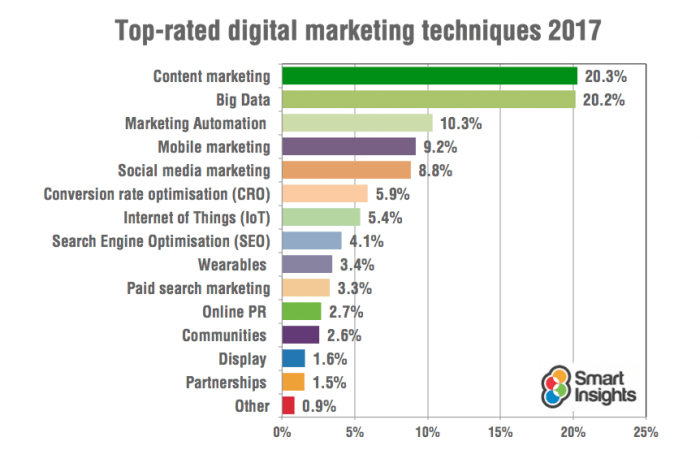
There really isn’t anything new here. Content marketing has been around in one form or another for about as long as the internet and search engines have existed.  In the last few years, it’s really taken on a new life and complexity.  By the look of things, as illustrated by this graphic from Smart Insights, it’s still top of mind for most marketers going into the new year as well.

small business marketing trends 2017


2. Mobile Web Design

We’ve heard for a few years now that mobile web design is the future.  Well, the future is here.  More traffic is now coming from mobile devices than desktops.  Anyone who isn’t serving their users content that can be easily consumed on a mobile device has missed the boat.  If your business doesn’t have a mobile-friendly website, then this should make the top of your marketing priority list for the year.

3. Marketing Automation

Efficiency has played a role in the transformation of many industries, and its marketing’s turn to see the gains that automation can bring.  Say hello to the “set it and forget it” era of marketing.  Now, we wouldn’t recommend actually forgetting it, but there are huge gains to be made by turning over some of the repetitive yet effective marketing tasks to email automation workflows. Adding automation to your marketing packages will yield a significant ROI if you implement properly and keep the inbound methodology in mind.

4. Personalization

Personalization should go hand-in-hand with your marketing automation efforts. Segmenting your audience into lists based on their interactions with your brand, website, and content allows you to serve them content, ads, offers, and more that is in tune with what they are looking for.  Personalization, if done correctly, keeps your audience engaged, and keeps your business top of mind.

5. Social Media Marketing

With the introduction of “buy” buttons on social media websites like Facebook and Pinterest, we’ve witnessed the beginning of the next evolution of social media as a marketing juggernaut. While not all small and mid-sized business social media marketing strategies can directly benefit from these “buy” buttons, it should reinforce the idea that your customers are on social media and you should be too.

2017 small business marketing trends

6. Video Content

If content is king, then video content is a king maker. Each month, 3.25 billion hours of content are consumed on YouTube alone.  Coupled with the fact that only 9% of small business are currently on YouTube, we think 2017 will see a big growth in video content marketing for small and mid-sized businesses.

7. Niche Audience Marketing

You may have noticed a pattern in the trends for 2017. There’s very little that feels gimmicky about it.  All the trends that our digital marketing agency has listed for 2017 are targeted at ensuring that brands connect, and in a meaningful way, with their target audience.  Directing your marketing efforts towards niche audiences or verticals within your target market is a great way to develop the content and marketing collateral that drives the meaningful interactions needed to the grow your sales funnel and your bottom line.

Marketing emails you’ll actually want to read.

Get marketing tips and news sent to 
your inbox.

This field is for validation purposes and should be left unchanged.
Name(Required)

5 Ways You Should Be Using Video Marketing

Did you know, internet video traffic is expected to be over 80% of all consumer traffic in the next four years? The digital landscape has constantly been changing for the last ten years. If by now you haven’t heard all the rage about video content, and how it can drastically improve your marketing efforts, you might be living under a rock.

Many marketers are referring to the year 2017 as the year of video marketing. Why? Because video content is POWERFUL. Even though video content has some of the best ROI in the industry, less than 60% of business are utilizing it.

Why Should You Be Using Video Content?

As the human population continues to dive deeper into information overload, our attention spans are getting shorter. When you combine shorter attention spans, with people who are always on the go, it shouldn’t come as a surprise that people are four times more likely to watch a video about something than reading about it.

Video content also has a higher recall retention rate than any other content. Facebook and Nielsen teamed up to gather data about Facebook’s video platform and learned that 74% of the total Ad Recall can be achieved within the first 10 seconds of the video.

How Should You Be Using Videos?

There are a number of ways that videos can be used to the benefit of your marketing strategy. Many businesses are ignoring video content because they don’t believe that they have the resources to take advantage of it. Truth is, you don’t need a long professionally produced video by Michael Bay for it to be successful. In fact, over 56% of videos published last year are less than 90 seconds long.

Below we’re listing some of the more common ways you can use videos and what kind of benefits you can expect to reap from using this content medium.

1.   Branding

Let’s face it, a traditional “About Us” page on a website rarely ever resonates with people in the year 2017. What can make a tremendous difference is video content that conveys the story of how a unique company got started and the celebrates the company culture.

Video content also sets the overall tone of the brand for the company while delivering important messages you want your consumers to know. Let’s take a look at this great example from Black Rifle Coffee Company

From this 37 second commercial, you can tell that what makes this coffee company completely different than the thousands of other coffee companies that exist, is that they not only have an adventurous and humorous tone, but they are also huge advocates for supporting American veterans.

Video allows viewers to associate emotion with your brand’s message which makes it a very effective medium for branding. Storytelling through video content helps your consumers feel like they relate to your brand which can creates brand preference and authority for your brand.

2.   Native Website Content

Did you know 1 out of 4 consumers reported losing interest in a company if they don’t have video?  In addition to telling your brands story through video, there are many other ways to use videos for your website content such as explaining how a complicated product or service works.

Another great method of using videos for your native website content is through customer created testimonials videos which can take the load off of some video production while also providing great valuable and emotional content for your website.

Product demonstration videos, testimonials, or even a video of your FAQs could also be incredibly effective at increasing your conversion rates through your landing pages. In fact, multiple studies have shown that adding videos can increase your conversion rates by 80%.

3.   SEO

Aside from telling your brand story and creating visually appealing content, video content also has great search engine optimization benefits. While it’s okay to have your video content formatted directly on your website, it’s not a bad idea to link them from your YouTube channel. After all, YouTube is the second largest search engine in the world right under Google.

Speaking of Google, YouTube is owned by Google. It should go without saying that having videos on YouTube and on your website will boost your SEO efforts. However, if you decide to host the video on your website without YouTube, both the video and supporting text will still help the page ranking pages because your website traffic will likely stay on your website longer which dramatically improves your bounce rate.

4.   Social Media

Using video content from your website on your social media pages is a great way to give your brand exposure. Every day there are over 500 million people watching videos through social media platforms. On Facebook, videos are currently getting the 135% more organic reach in comparison with all the other types of content.

Not only does the Facebook algorithm love videos, but so do Facebook users. Facebook users generate 1,200% more shares of video content than text and images combined!  These statistics ultimately benefit your business by saving you money when you start using Facebook ads.

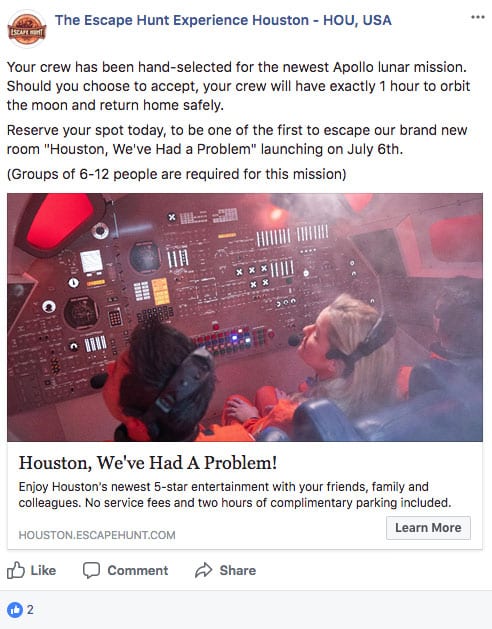
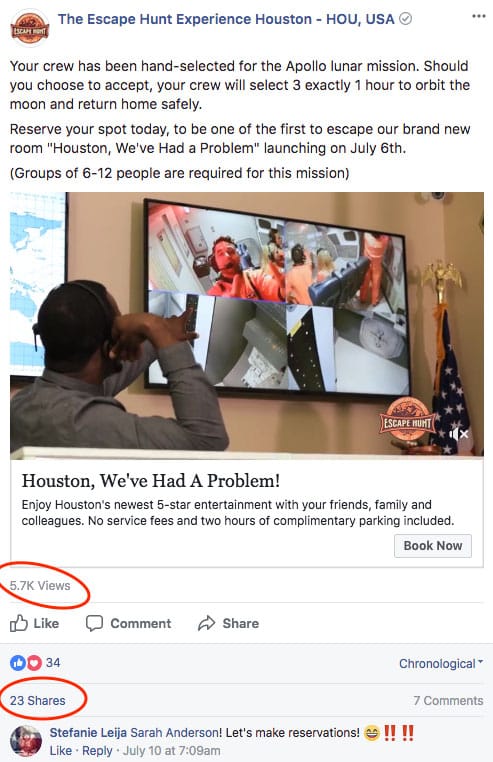
At MARION, we put these reported social media statistics to the test, as we created a Facebook ad campaign for our client Escape Hunt Houston. Both of these Facebook ads were in the same campaign with the same budget, for the same amount of time. Can you tell which one of these was a video versus a still frame photo?

escape hunt facebook post
escape hunt video facebook post

Another great way to take advantage of social media for video content is using the Facebook and Instagram live stories feature. This alerts all your current followers that you are broadcasting live and allows them to directly interact with your brand and see the real roots of your brand. Some great ways to execute live story videos is conducting live interviews with influencers in your field, showing how something is made or conducting a live Q&A with your fans and followers. Once the video is done showing live, it will reappear on your feed and live on your social media forever for your future audience to see.

Pro Tip: Still need some inspiration? Check out this list from HubSpot of major brands who executed their own watch-worthy Facebook Live videos; you’ll notice most of them feel very organic and not as if a scripted production.

5.   Email Marketing

Email marketing might not be an obvious place for your video content to live, but did you know that videos inside of an email marketing campaign actually provides a 20% boost in open rates and higher click-through rates? In addition, email subscriber dropout is also reduced by 75% when video is incorporated.

Given that email marketing and video marketing has some of the biggest ROI in the marketing industry, why wouldn’t you combine these two together for explosive results!

The Takeaway

It’s no doubt that video content is worth the investment, regardless of how you plan to use it. If there is one common denominator that we can pull out of these 5 ways to incorporate video in your marketing mix, is that people really love videos whether or not they realize it.

Just like all your other internet marketing materials, if you start using video content and find that it doesn’t start generating better numbers for you, it may require some tweaking. Some examples of ways you can tweak your video content can range from website placement to choosing whether or not to play automatically. If you still need help, you can always contact us to start getting your video campaigns headed in the right direction.

Have you asked yourself recently why you’re not taking advantage of the video marketing revolution?

Marketing emails you’ll actually want to read.

Get marketing tips and news sent to 
your inbox.

This field is for validation purposes and should be left unchanged.
Name(Required)

Win at marketing – Run a marathon, not a sprint

I’ve worked with small and mid-sized businesses on various marketing initiatives, in a range of industries, and in a range of roles for the last decade.  There are a few fundamental lessons I have learned about what works and what doesn’t along the way.

The truly important lessons that I’ve learned aren’t industry or role specific; they are universal.  They aren’t tips or tricks; they are guiding principles, ideas, and thought-processes.  They aren’t difficult to understand, but they can be challenging to implement and even harder to see through.

One example of these guiding principles is that in marketing, unlike nature, every action does not necessarily generate an equal and opposite reaction.

It can be easy, even tempting to try and think of marketing as transactional.  For example, if I spend X dollars this month it should buy me X new leads.  Return on investment is important, but it’s rarely as simple as that.

More often than not, a lead is generated from a complex set of factors aligning over a series of interactions that, at some point, included spending capital on directly marketing or advertising to a target audience member.

Your advertising spend for any single month doesn’t accurately encompass the investment you’ve made in acquiring the leads you received that month.

I can tell you from experience, that you can see success in fits and spurts by constantly chasing the next lead generation tip or trick, but if you want to see sustained and predictable results you must take a holistic, long-term, and enduring approach to your marketing.  In short, you should be running a marathon, not a sprint.

What type of marketer are you?

Admittedly, it can be dangerous territory when a web designer and digital marketer (a.k.a. a nerd) tries to make a sports analogy, but I think this is a simple enough analogy not to incur the wrath of sports fans everywhere.

In my experience, there are three general types of business owners when it comes to their approach to marketing – the bench warmer, the sprinter, and the marathoner.

marketing bench warmer

The Bench Warmer

The bench warmer has quite simply never made it past the starting line with their marketing.  Business owners fall into this category when they do the bare minimum required.

They often distrust marketing and rely solely on referrals or their own savvy as sales men and women to keep the doors open.

Quite often these business owners are satisfied with the current scale of their business and aren’t necessarily interested in growth and therefore keep their marketing sidelined, only investing small amounts on an as needed basis to cover the basics.

If you regularly spend little to no money on marketing efforts, you might be a bench warmer.

marketing sprinter

The Sprinter

Working with a marketing sprinter can be a rollercoaster ride.  One month you are killing it, and the leads were flowing like water, but the next month a drought sets in.  Rinse and repeat.

The underlying problem is that marketing can be counterintuitive.  You might look at what you did last month because last month was a great month, and say “let’s do that again.”  The problem is, that last month was good because of what you did four months ago, and when you replicate last month, you don’t get consistent results… so you sprint to the next idea.

Sprinters may find themselves dumping cash into a new marketing service only to cancel it a few months later because they didn’t see the results that they wanted.

If it takes more than one hand to count the number of marketing and advertising companies and services that you’ve hired and fired in the last year or so, you might be a sprinter.

marketing marathon runner

The Marathoner

The marathoner is usually a former sprinter who has shifted their approach and turned their attention to the bigger picture.  They focus on the long-term, breaking yearly goals into quarterly and monthly goals and spreading their investments across a larger marketing mix.

The marathoner understands that, in the long game, little changes can have big results for long term success and they focus on details, consistency, and small gains.

Investing in aspects of your marketing that are not necessarily going to generate leads in the short-term like branding, content marketing, and search engine optimization will make your business lead generation campaigns more successful, consistent, and cost-effective in the future.

If you care more about trend lines than the daily numbers, you might be a marathoner.

How long should your marketing tactics take to show results?

If you’re a business owner or manage the marketing for a small to mid-sized business, then you’ve probably asked the question “How long will it take for me to see results?”

I’d also venture to guess that, depending on who you were talking to, you’ve probably gotten a range of answers, and possibly for the same services.  That’s one of the reasons that I always recommend that companies explore marketing tactics on a yearly basis, and as a part of a larger integrated marketing strategy.  Doing this ensure’s that you’re not dependent in the short term on a new marketing tactic.

The truth is, though, that how quickly you can and will see results will depend on the marketing tactic, your investment, and the skill with which you execute it.

Branding and Design

Often overlooked as a marketing tactics, it’s important to take a moment a discuss the importance of branding and design.

Part of playing the long-game in marketing means investing up-front in quality branding and design.   Quality branding and design will lend credibility to your company and make future marketing efforts more effective, giving you an increase on your ROI in the future.  Instead of spending a bunch of time spouting off facts about this, let me pose a hypothetical.

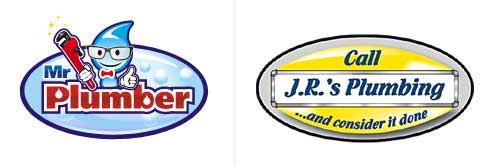
Your kitchen-sink just started spraying water all over your kitchen, you google local plumbers, and you find there are two plumbers in your area.  These are the logos you see in the top left corner of their websites:

Logo examples

Who do you call?  My guess is that you’d call the company that appears to have been successful enough to invest in their branding.  You may not have gone through that thought process in your head, but your natural bias pulls you in that direction, and the same is true of your potential customers.

Social Media Marketing

If you asked fifteen social media marketing experts how long social media marketing will take to generate real results, you’d probably get fifteen “the more you put into it, the more you will get out of it” style answers.

The bottom line is that it really does depend, but if done right, according to HubSpot, “Six months in, you start to have a feel for what is working and what you should tweak for better results.”

So, if you commit to a year of consistent social media marketing, you should realistically be able to expect to see some results.  If, however, you commit for only a few months, you’ll probably not see much return.

Given the nature of pay per click advertising, it can be a little more straight forward.  That is not to say that it is not complicated, just that it can be easier to identify the returns on your investment..

I can’t tell you the number of business owners I have seen decide to try PPC in Houston, only to spend $500 a month for two months without seeing good results and decide that Google Ads is not a good fit for them.  To be honest, there are too many things wrong with this approach to go into great detail in this article, so I will just say if you are going to try Google Ads, give yourself a chance to be successful by speaking with an expert before spending your hard earned money on it.

If executed properly, it is possible to begin to see results from Google Ads in mere months, but to fire on all cylinders will generally take anywhere from 6 months to a year, and require constant tweaking in perpetuity.

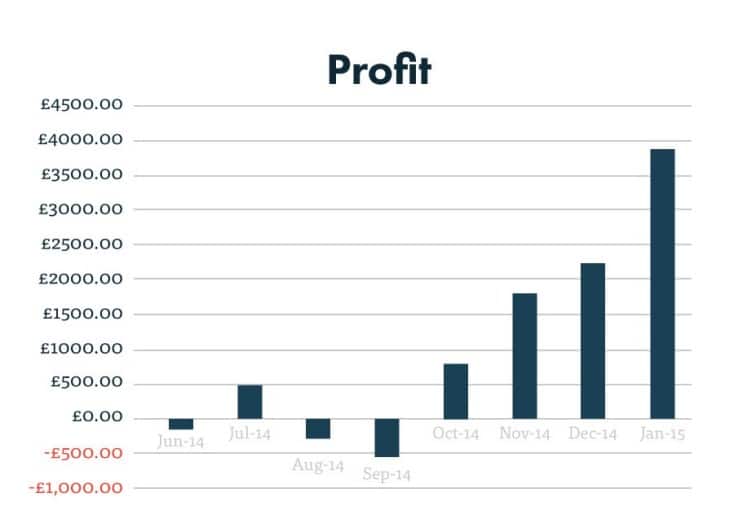
London based Vertical Leap wrote a very nice write up on the PPC optimization timeline, in which they were able to optimize a campaign over an 8 month period with the following results:

PPC Optimization timeline

Even a successful PPC campaign like this lost money for the first four months before turning around and becoming profitable.  Whether starting off with PPC for the first time, or revamping a long running program, it’s important to have realistic expectations about the time it takes to optimize campaigns.

Every company and campaign will be different, but allowing for 6 months to a year of Google Ad spending should be enough time for you to begin to see results and decide if Google Ads should be included in your marketing mix going forward.

Search Engine Optimization

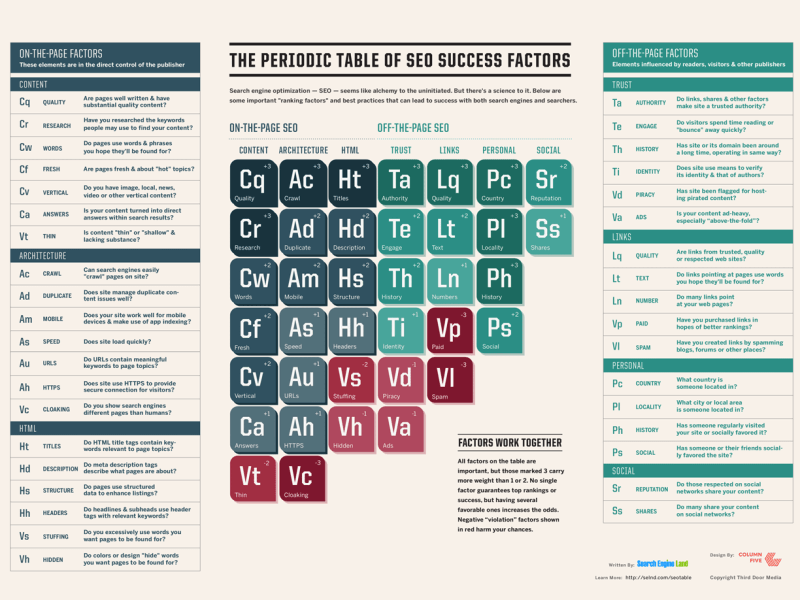
Search engine optimization or third party SEO services is one of the truly long-term investments that you can make in your marketing mix.  The tricky part of nailing a timeline down on SEO is how you measure success.  A website redesign could be a huge SEO success, for example, depending on your website redesign SEO strategy.

Search Engine Land has a great graphic for download that covers the factors for SEO success in all their complex glory.

SEO Periodic Table

The fact is that a website that was last redesigned in 1992, has seven pages of content, and no backlinks is in a wholly different situation than a site that was last redesigned in 2015 and has hundreds of pages and backlinks.

Furthermore, who you compete with online and how serious they are about SEO is a giant factor in what kind of success you will see and within what timeline.

You should expect to invest in SEO for a minimum of 6 months before seeing any real results, and in some cases years before it begins to really pay off.

Once you are successful in your SEO efforts, however, the results can have a dramatic long-term impact on your business and bottom line.

Inbound and Content Marketing

Like SEO, content and inbound marketing can also be boiled down to an ongoing investment in improving your website and digital marketing efforts.

Whether you are doing this by creating great content for your target audience to consume, or by creating landing pages and calls-to-action that are designed to turn visitors into customers, it takes the time to gather the data and make the adjustments needed to refine your efforts.

According to inbound marketing software provider HubSpot, “All but only 1.79% of companies [surveyed] saw results within their first 12 months of utilizing inbound marketing methodologies.”

Now, keep in mind that “results” could mean more sales, more website traffic, or any number of KPIs or key performance indicators for marketing departments.  The important thing is that after a year of focusing on inbound marketing you can reasonably expect to see some sort of measurable result.

The Take-Away

As a business owner, it can be difficult to decide to spend your hard-earned capital on marketing efforts that may not generate new business right away, and it can be even more difficult to stay true to that commitment four months into it.

If you can power through those initial months and view your marketing spend as a long-term investment in your business, you can and will set yourself up for future success.

In marketing, the sprinter can see bursts of success, but the marathoner will see the consistent and sustained success that every business owner wants and from which every bottom line thrives.

If / When you are unsure of where you are in the marketing race, don’t be afraid to reach out to a marketing agency to get a better picture.

Marketing emails you’ll actually want to read.

Get marketing tips and news sent to 
your inbox.
This field is for validation purposes and should be left unchanged.
Name(Required)

Winning In Search Engines with Influencer Marketing

Influencer marketing is big with companies looking to reach people in new ways. After all, the average consumer is more marketing savvy than ever and it is easy to become “white noise.”

More and more companies are looking for creative ways to reach their potential customers and effectively deliver their marketing message. Going through someone they trust and admire is a great way to make sure their eyes are on your product or service.

Working with influencers can do more than just get your name out on social media though. It can also help boost your search engine optimization so that more people can find you when they use Google.

In this post, we’ll look at what Influencer marketing is, how it works, and the positive impacts it can have on your search engine traffic.

What is Influencer Marketing?

Influencer marketing focuses on using thought leaders, industry leaders, and popular figures to deliver your brand’s message to a broader audience. Rather than delivering your brand’s message through traditional and online advertising channels to your target audience, you instead engage with, partner with, or pay influencers to deliver your message for you.

Most commonly Influencer Marketing is used in conjunction with content and social media marketing.  Most Influencer Marketing campaigns involve a company creating content or the influencer creating content which they then spread through their social media channels, which generally have large and often targeted audiences.

Because this content is either created or curated by a trusted figure in the lives of your target audience, many of the barriers that you face in advertising are hurdled, and your message is more likely to be received and accepted.

According to a McKinsey Study, marketing-inspired word-of-mouth generates more than twice the sales of paid advertising, and these customers have a 37% higher retention rate.

If you’re curious about how brands are using Influencer Marketing, HubSpot has recently published a great post highlighting ten fantastic uses of influencer marketing, including this gem featuring Nick Offerman (though it is quite long).

Using Influencer Marketing for SEO

While Influencer Marketing can provide fantastic benefits for your marketing in the short term, it also has the power to effect long-term change.

Given that Influencer marketing is content based and driven by social media, it can have a positive, even dramatic, impact on your visibility in search engines, and should be at the top of your “to-discuss” list with your SEO company.

1. SEO Boost from Engagement

The goal of any good marketing strategy is to have your potential clients engage with your brand, and influencers make this happen more organically.

When they mention your product and send customers your way, those people are likely to do a deeper dive into your website and content – and they’re more likely to read instead of skim, to linger instead of leave.

This increased engagement also helps your SEO, because Google factors in things like time spent on your pages and your bounce rate when determining its rankings. When an influencer steers viable prospects to your site, their engagement boosts your search engine ranking, leading to a better presence and even more hits.

2. SEO Boost from Backlinks

A great influencer will link to your site, your social media, and your blog frequently when they write or make a video about how much they love you.

Search engines take into account the number of backlinks that connect to your site when ranking your pages, so your influencer is doing some great SEO work for you – even if they don’t realize it.

Work with your influencer to connect to particular pages, and encourage them to use all their platforms since backlinks from a range of sources will give you more unique content mentions, which search engines love.

Additionally, good influencers will likely have followers who are influencers themselves, just on a smaller scale.  Often these sub-influencers will repurpose content from their influencer icons for their own purposes, generating even more backlinks to your site.

3. SEO Boost from Social Media

Don’t forget that more people than ever are using their favorite social media platforms like search engines.

When your influencer gets your name out on Twitter, Facebook, and Instagram, your brand is ready and waiting to be found when someone searches. Expanding your reach into non-traditional search engines is a great way to make sure that everyone finds you – not just Google.

But beyond the inherent benefits of being found on social media is the idea that as your brand’s reach on social media grows, so will your SEO rankings.

While the jury is still out on just how important social signals are for SEO, it’s fair to say that they are part of the whole picture that search engines look at when determining your ranking.

Having an increased presence on social media is shown to be correlated with higher search engine rankings.  A Cognitive SEO report indicates that “on average, presence on social networking sites (which includes likes, shares and comments on Facebook, plus shares on Google+, LinkedIn, and Pinterest) is negatively associated with site rank, and the relationship is close to linear (and perfectly linear for the first 5 ranks). This means that, in general, the smaller the rank number is (so, the higher up the website), the higher the chances are that the average presence on social network is larger.”

The Take-Away

Working with an influencer isn’t just a trendy way to get millennials to like you. It’s also a solid plan for improving your search engine presence and making sure you’re ranking when people are looking for your product or service.

As with all online and offline marketing, it’s important to look at all of the consequences of any marketing endeavor that you may undertake, both good and bad.

Luckily for almost everyone involved, Influencer Marketing, if done well, can be an effective way to build your brand, promote your products or services, and in the process, add to your SEO foundation.

Just pick your influencer wisely and ensure that they stay on message, you don’t want a good thing to go bad.

Marketing emails you’ll actually want to read.

Get marketing tips and news sent to 
your inbox.
This field is for validation purposes and should be left unchanged.
Name(Required)

Should You Let Interns Handle Your Social Media?  

Each year more companies realize the importance of being on social media. For many small to mid-sized businesses, it has been a neglected piece of the marketing puzzle because managing each social media account can be very time-consuming.

Business owners would much rather spend that time closing the next major business deal instead of being on a computer monitoring social conversations or even going through the hassle of trying to learn how to do social media marketing themselves.

According to the PEW Research Center, the men and women between the ages of 18-29 years old are dominating each of the major social networks. Wouldn’t it just make sense to hire the people who statistically use social media the most to handle it for you?  The quick answer is not necessarily, but it’s important to understand why.

While interns can be a great asset to completing necessary tasks for your company, there are several things to consider before giving them full reins to your company’s social media accounts. In this blog post, we’re providing you five factors to consider before hiring an intern to handle your social media.

1. Handling social media for a brand is different than handling personal social media.

The intern you’re hiring may look promising because they have over 5,000 followers on each social network. They obviously are doing something right, right? Being successful at managing personal social media accounts doesn’t always translate well into managing a business account.

While they might be successful with their niche audience, they likely aren’t going to learn how to be successful with your ideal customer audiences overnight. For example, their audiences might be following them for posting hundreds of funny memes or selfies, while your audience might be looking for the latest innovation in healthcare technology.

Social media algorithms for business pages also work differently than personal social media accounts. Unfortunately, the algorithm does not work in favor of business pages. In fact, in 2014 organic reach for business pages were as low as 2% and an algorithm change late last year cut organic reach in half again.  Low organic reach ultimately means that more work, thought, and ad dollars must be put into a social media strategy than a personal social media page would require to get similar results.

Social Media Influencer taking Selfie

2. Social media is one of your company’s most public-facing assets.

Would you let an intern handle the contents on your website? If you answered no, then ask yourself why. Your social media pages will likely receive even more exposure than your company’s website.

Everything that is pushed out on your social media account will be accounted for in your overall brand image. You need to make sure that your social media content is in line with how you want the overall tone for your brand to be portrayed.

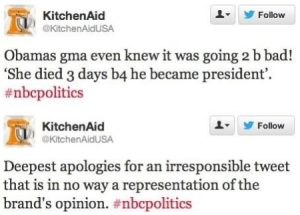
Remember, once something makes it to social media, it will remain on the internet forever, even if you delete the post right away. One tiny mistake can make national news.

Social Media fail.

3. You’re at Risk of Spending More Money on Ads

Without someone experienced handling your social media ads, it’s very easy to make a simple mistake that could end up costing your business hundreds, even thousands of dollars without noticing.

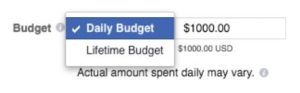
For example when handling Facebook ads, if you don’t flip the switch correctly from lifetime budget to daily budget, your $1000 Facebook ad budget for the month, could easily become a $30,000 monthly budget. This simple mistake might seem like a no-brainer, but it’s more common than you might think.

Ad spending dropdown bar

In addition to the setup of the ad sets themselves, experience is the number one factor that will give you more bang for your social media buck. No amount of Marketing 101 textbooks or online articles can give you the secret sauce for creating the most efficient social media ad campaign for your industry because it is constantly changing.

An experienced social media marketing expert can create social media ads for businesses that cost as little as $0.01 cent per engagement, while a less experienced social media marketer can struggle to get the same ad to cost less than $1.00 per engagement.  (Pro tip: You should always aim to get your cost per engagements under $1.00)

Anyone who continuously tests what is working for their social media ads each day can tell you that their secret sauce for lower cost ads mainly comes with experience.

4. Handling Negative Comments and Crisis Management

With every great social media account, comes great responsibility! Let’s be honest, every engagement on your social media page isn’t going to be a positive one. Will your intern have the professional customer service skills and social media skills to handle negative feedback properly?

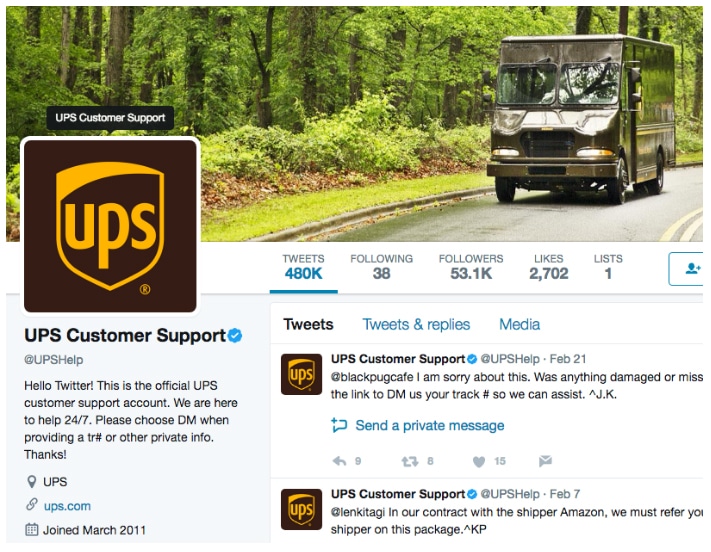
In some ways, social media has become the modern-day customer support call center.  Many large companies such as Apple, UPS, Amazon, Hulu and Postmates have even implemented secondary social media accounts strictly to handle complaints they receive on social media accounts.

UPS Customer Support Twitter Page

5. Transitioning 

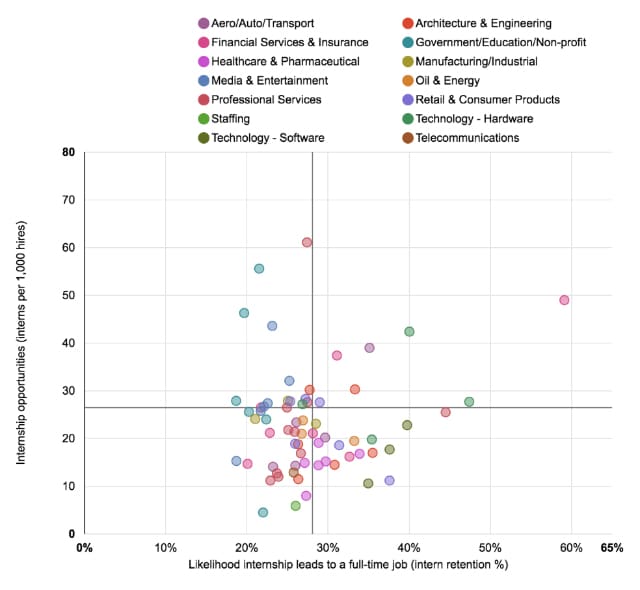
Many internships happen over summer break. In most cases they are meant to gain some real-life experience while still attending school. Many students don’t have the time to take on a full-time position once their next semester starts again. The graph below shows the typical internship retention rate across a variety industries.

Statistical Chart showing intern retention rate

As you can see, there is only one industry that has an intern retention rate of over 50%. What does this mean for you? This low rate of retention means that you will likely have a disconnect in your social media.

Unless you end up hiring your intern to work full-time (assuming they accept the offer) you will have to keep transitioning new people to handle your social media accounts.  Every new intern will likely have a different writing and aesthetic style, making it more difficult to hand off your social media accounts seamlessly and professionally.

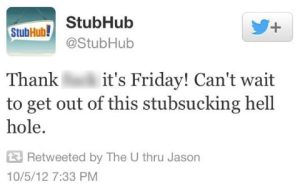
Although most likely a rare circumstance, you may also risk the possibility of having a salty intern who didn’t get the job offer they were expecting, sabotage your social media accounts.

Disgruntled job seeker social media sabotage example

THE TAKE-AWAY

We don’t want to discredit interns because we have all been at the starting points of our careers at some point in our lives. Hiring interns is a great way to gain real life experience outside of the textbook world while easing the workload.

It’s important to note that we strongly encourage hiring interns to help with your social media marketing efforts.  On top of providing them with a great opportunity to learn and hone their skills, they can bring a fresh take to your activities and with the proper direction can take on some of the more time-consuming tasks.  We just encourage you to give a second thought to turning the management of your social media marketing over to an intern.

Always remember that everything that goes out on social media stays on the internet forever. If you’re considering hiring an intern to handle your marketing efforts, it may be time for your business to consider partnering with an experienced and reliable marketing company to handle all your content marketing services.

Marketing emails you’ll actually want to read.

Get marketing tips and news sent to 
your inbox.

This field is for validation purposes and should be left unchanged.
Name(Required)

Three Local Marketing Strategies That Work

If you have a business, then you have dabbled in marketing whether you realize it or not. You’ve decided on a name, and you’ve worked to get out the word about your products or services. You’ve also likely considered the times of year that are best for certain promotions and how to deliver a positive overall experience to your customers.

These thought exercises and activities are a great place to start, but to ramp up your revenue, you’ll need to dedicate the time, energy, and capital to small business marketing strategies that work.

In this post, we’ll cover the basics of local marketing, and offer three avenues that we have seen used to market local small to mid-sized businesses successfully.

What is Local Marketing?

Local Marketing refers to marketing activities that are designed to target specific geographic areas.  Generally, this is aimed at generating foot traffic to a local shop or service provider rather than a regional business or one operating in the digital arena, such as an eCommerce business.

“If you operate a local business (one that gets most of its customers from within a 75-mile radius) you can try many general marketing strategies, but you have one special consideration,” explains the Small Business Administration. “You have to attract prospects who are close enough to walk into your shop or close enough for you to visit to provide service. That calls for special techniques called ‘local marketing.'”

There are a large number marketing activities that can fit nicely into your Local Marketing strategy.  Almost all of the traditional and digital marketing strategies that make up the bulk of the marketing mix of small to mid-sized businesses can be localized.

What works best for your business will depend on the type of business you operate, where you operate it, and your target demographics.  Having said that, there are some pretty universally used Local Marketing strategies that we think are a good fit for most small to mid-sized businesses.

Localized Search Engine Marketing

The first local marketing strategy to put on your list is localized search engine marketing. Most people start their search for products and services online. According to Search Engine Land, 50% of people go to the store or business they searched for within a day of that search.

There are two ways to look at this.  The first is that Google searches are a great way to attract new customers. The second is that if you’re not showing up in Google searches, then you are missing out on customers who are actively looking for businesses like yours.

Either way you look at it, showing up in local searches is an absolute must for your business.

There are multiple considerations regarding how you approach your search engine marketing strategy.  More specifically, there are three things to consider, the paid search results, the local map results, and the organic results. Note that there are major differences between organic vs. paid search, so considering them separately is important.

Let’s look at an example:

Google Search bar

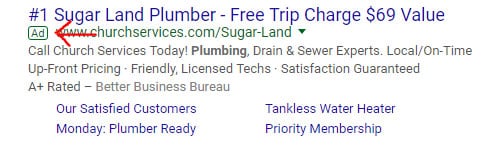
Paid results at the top of Google search results

The first results that you are presented for your search will usually be the paid search results or Google AdWords.  These are ads in the form of search results, as indicated by the ad notification.

To advertise in this area of search results, you bid on what you are willing to pay each time someone clicks on one of your ads.  How high on the page, and how often you show up in the search results is based on your bid relative to the bids of others.  See our article on SEO versus AdWords for a more in-depth look at the benefits and drawbacks of each.

Local Map Results

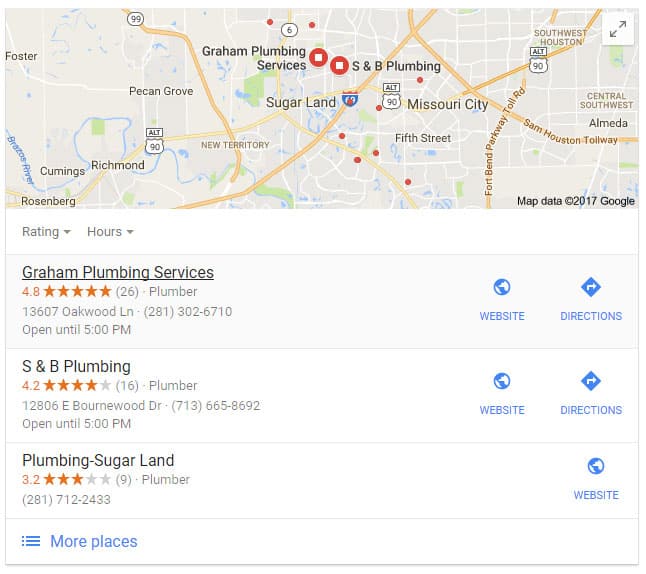
Google map search results

The local map results usually follow the paid search results.  The map results show businesses based on a number of factors including proximity to the location from where that the search was made, the number of reviews a business has, and a whole range of other factors.

When it comes to local map results, first things first, tell Google about your business.  You will need to create a Google Business Listing and confirm that you operate at the address that you list before Google even considers returning you in the map results.

Next, you’ll want to create a system for online reputation management.  Encouraging good reviews and addressing negative reviews quickly and effectively is the best way to maintain a stellar online reputation and improve your local search engine marketing effectiveness.

Organic Search Results

The rest of the results in Google are what we call “organic” search results.  Showing up well organically can be a difficult endeavor, but with the right knowledge, tools, and elbow grease, your local SEO strategy can be a long-term revenue driver for your business.

Localized Social Media Campaigns and Ads

In addition to your efforts to build a local presence on search engines, you should also build a local organic and paid social media strategy.

In practice, your social media acts as a line of communication between your fans, followers, customers and you.  For most small to mid-sized businesses, social media won’t be their main lead generation tool.  It is, however, an important piece of the larger marketing mix.

It’s important to recognize the power that social media marketing offers in communicating with not only potential customers but your existing customers.  Whether you are reinforcing your brand, responding to feedback, or promoting a sale, social media can be a direct line to very targeted groups of individuals.

But while your customers and potential customers are on social media, organically they could see as few as 1 percent of your posts, which means your posts may be less effective than they could be.

Google studied the correlation between social media usage and company influence. As it turned out, even if a large number of people follow your social media or click on your website, it doesn’t mean they will visit your business.

As a means to remedy this, look at paid social media ads. Your potential audience is exponentially higher;  you can focus your ads on people who follow brands and companies similar to yours and target only those who live in your desired geographical area.

Community and Industry Involvement

Finally, if you really want to stretch your local marketing budget and see some tangible results, look at local and industry events. Whether you hold events for a good cause at your store or you donate money so that a non-profit can have an event, your company’s name will be listed and shared several times over for every dollar you spend.

In many cases, events can see a better ROI in terms of brand awareness than ads will provide while doing something good for your community. Just make sure that the event matches with your brand. “For example, a toy store might not do so well sponsoring an event at a local nightclub,” writes the Small Business Administration. “Sponsoring a kids’ sports team would be more relevant.”

In addition to community events, get involved in local industry functions like trade shows.  Aside from the obvious potential for new leads that trade shows or industry events offer, you should not underestimate the power of building relationships within your professional community.

The Take-Away

If you are a local business, make sure your marketing efforts reflect that. You may find that in the end, you lean more towards traditional marketing techniques over digital marketing techniques or vice versa.

As with all marketing efforts, knowing who and where your audience is and marketing to them there will lead to the greatest success.

You are the most qualified person to manage many aspects of your marketing, like building relationships, but in other areas, you may benefit from finding partners who offer the expertise that you lack in specific areas.  Contact us if you are interested in sitting down with one of the experts at our outsourced marketing agency to discuss your local marketing efforts and where you might be able to make improvements.

Marketing emails you’ll actually want to read.

Get marketing tips and news sent to 
your inbox.
This field is for validation purposes and should be left unchanged.
Name(Required)

Inbound vs. Outbound Marketing for SMBs

Whether you work in marketing or are a business owner trying to increase brand awareness, you’ve likely heard about both inbound and outbound marketing. Maybe you’ve even used their various techniques, whether you realized it or not. But if you want to be as effective as possible, it’s important to know the facts behind any type of marketing you do. It’s a good idea to get to know the differences between inbound and outbound marketing.

More importantly, you should know whether focusing your attention on inbound or outbound marketing makes more sense for your business.  In this post we’ll explore the differences between inbound and outbound marketing and whether you should focus on either when marketing your small to mid-sized business.

Difference Between Inbound and Outbound Marketing

Simply put, outbound marketing is often made up of traditional advertising techniques, while inbound marketing relies on newer methods to reach an audience. Outbound marketing requires you to actively reach out to people so you can grab their attention and deliver your marketing message.

When you directly deliver you marketing message to an audience through some form off communication or advertisement, you’re practicing outbound marketing tactics. Many marketing experts claim outbound marketing is no longer very effective because people get inundated with it so much and can easily tune you out using tools like spam blockers and caller ID.

For this reason, marketers now increasingly turn to inbound marketing to get discovered, meaning customers come to them instead of the other way around. Simply having a website, blog or social media page for your brand is a good start to inbound marketing.

Is the shift from traditional forms of marketing, or outbound marketing, to more modern techniques, or inbound marketing, really the right choice for small to mid-sized businesses?

inbound vs. outbound marketing

Inbound Marketing Techniques

The goal for your inbound marketing campaign should be to first attract the attention of consumers, and one of the best ways to get started is to have a website so that people can easily find your business online. Adding a blog and the right SEO keywords will help you get found faster, as will being active on your brand’s social media accounts.

Once you get people to your website, blog or social media pages, you can turn them into leads using a great call to action. You can also have them fill out a form to get a free whitepaper, report or anything else that might be of value to them.

Once you have their contact information, you can send emails or make phone calls, at which point you have a chance to close. Meanwhile, keeping your social media and blog updated with valuable information will keep them interested in your brand throughout the sales cycle.

inbound marketing vs. outbound marketing

Outbound Marketing Techniques

Most businesses have practiced some common outbound marketing techniques when trying to get the attention of their audience. The most popular include direct mail, cold calls, print ads, and banner ads. Placing ads on television, radio, or in newspapers and magazines is also outbound marketing. Other techniques of this kind include billboards, trade shows and seminars.

Though many brands still employ these methods, there’s definitely more resistance to them than ever before. People no longer have to watch or listen to ads on the TV or radio because they use streaming apps, and more people than ever before get their news online rather than from the newspaper. It’s common to use ad blockers online and to screen phone calls with caller ID, making it harder to reach your audience when you’re using outbound marketing techniques.

Inbound vs. Outbound for Small to Mid-Sized Businesses?

We’ve explored how inbound and outbound marketing is approached and the techniques used in both, but which is better for small to mid-sized businesses?

The answer is both.  The bottom line is that, while the specifics will differ from business to business, small to mid-sized businesses need to be effectively leveraging a healthy mix if inbound and outbound marketing activities.  Don’t fall into the trap of assuming that because you’re primarily an online or offline business that your marketing should be limited to online or offline methods only.

Not every marketing activity will, or is intended to directly generate leads.  While still very important, some marketing activities or techniques will play more of a supporting role in your lead generation efforts.

what is inbound marketing vs. outbound marketing?

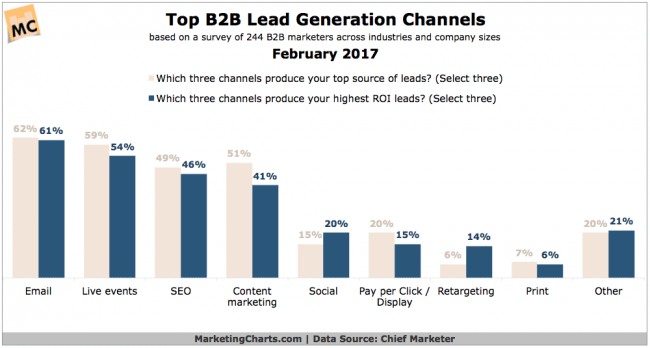
Having said that, even if we look at only the top four lead generating marketing activities, we find that they are split between inbound and outbound marketing activities. When executed properly, your inbound and outbound marketing should work together.

It is worth noting that email marketing is a grey area in terms of classifying it as inbound or outbound marketing.  Depending on how it is used it can either be a way of directly delivering your marketing message to your target audience, making it outbound marketing, or a way of sharing relevant content that is not a direct marketing message but intended to encourage interaction with your brand, making it inbound marketing.

The Take-Away

At the end of the day, the terms “inbound marketing” and “outbound marketing” are more of a reflection of the changing marketing industry and our own self-segregation than a paradigm shift in how you should approach marketing your business.

Your marketing should begin with your business goals.  Once you have established business goals you can decide on marketing objectives that will help you achieve your business goals.  Finally, decide which marketing techniques and channels with help your meet your objectives.

For most small to mid-sized businesses this will mean both inbound and outbound marketing.   The most successful businesses will be those who successfully integrate their marketing across all channels into one cohesive and resonant message.

Contact MARION today to get a quote and learn more about how we can help grow your presence in the market, and your bottom line.

If you feel that there is a deficit in either your inbound or outbound marketing, partner with an integrated marketing agency who has experience successfully executing marketing activities in that area, or consider working with a firm that offers online marketing services for both your inbound and outbound marketing needs.

Marketing emails you’ll actually want to read.

Get marketing tips and news sent to 
your inbox.
This field is for validation purposes and should be left unchanged.
Name(Required)

4 Must-haves in Your Marketing Plan for Small Business

Business owners spend so much time establishing a company’s unique selling proposition that they often convince themselves that the company is, in fact, so unique that their marketing plan must be truly unique as well.  On the flip side, business owners often get lost in the hunt for leads and neglect expenditures that they don’t see as directly generating new leads or business.

If either scenario is the case for you, it’s time to take a critical look at your marketing plan and ensure that you’re not missing important pieces of the marketing puzzle that could be hurting your marketing’s effectiveness.

Now, it’s true that your marketing plan must reflect your brand, your business model, and your unique selling proposition.  However, more often than not, tailoring your marketing to your company should happen in the lower level planning and execution of your marketing plan, not in establishing the high-level overview of your marketing plan.

4 Must-have Pieces of Your Marketing Plan for Small Business

In this post, we’ll take a look at some of the most often ignored or overlooked aspects of a marketing plan that are critical to accomplishing all of your marketing goals.

1. Your marketing plan must include branding

branding

For too many small to mid-sized businesses, branding is an afterthought.  They see it as an element of marketing that is reserved for businesses with a huge amount of discretionary capital that can be devoted to market research projects, focus groups, and projects with trendy design firms.  The bottom line is, that mentality is all wrong.

Great branding doesn’t always require a high-quality branding company, and can be created with little more than a shoestring budget.  Great branding is more of a reflection of the time and thought put into connecting with your target audience than the amount of money that you pump into it.

If you don’t take the time to focus on your brand and how it will be perceived, your target audience will pick up on that.  There is a credibility threshold that your branding absolutely must cross to appear legitimate and trustworthy to your target audience.  In fact, a 2013 psychological study found that logos have a profound effect on the decision-making process.

The study found that “It is not sufficient for companies to try to attract consumers with price promotions, good customer support, or product-specific technical requirements (e.g., updates)… Instead, companies should place special emphasis on brand design and awareness and strive to promote strong affective associations with their brand among customers to develop and maintain a competitive advantage.”

In practical terms, your marketing plan needs to include initiatives that focus on getting your brand up to snuff.  Depending on where your company is on the branding spectrum, this could mean designing a logo, refreshing an old logo, creating a brand style guide, establishing a tone of voice for your company, and / or running advertising campaigns aimed at branding.

2. Effective marketing must include good design

graphic design

“It doesn’t have to look pretty to be effective” is one of the worst mindsets a business owner or marketer can have when it comes to their marketing collateral.  Yes, it’s technically true, it doesn’t have to be “pretty,” but that’s not the goal of good design.

Taking the design of any single marketing piece for granted is a mistake.  Art is pretty; the design is useful.  When a designer sits down with a piece of collateral, they are thinking about the goal of the collateral and what that means for the hierarchy of importance for all the elements included in the piece.

Whether you are specifically speaking about a website, a brochure, a flyer, or an advertisement, having the same content or elements does not mean that two designs will be equally effective.  Understanding how humans interpret the content that they encounter plays a major factor in how a piece of collateral should be designed.

For example, have you ever wondered why company logos are almost always in the top left corner of a website?  It’s simple; people expect them to be there.  Placing your logo somewhere else on the page may look cool or just different, but users don’t like it, and it can actually have a negative impact on your website’s conversion rate.

This underlying motivation or reasoning is true with all good design.  The orientation, imagery, fonts, and colors of a design are used specifically to elicit a response and not from sheer creative motives.  If you want your marketing to be as effective as possible, you need to work with skilled designers when creating your collateral.

3. Content is still king for marketing

content is king

Good copywriting has always been a differentiator in marketing, and it is more so today than ever.  Catalogs and brochures were largely the best medium for content up until the mid to late 90s, and they are still important, but people’s buying behaviors have changed.

The internet, with its wealth of knowledge, has changed they way we seek and consume information when making a buying decision.  No longer is most of the educational aspect of marketing done by your sales staff, but by the end consumer for themselves.

That is not to say that your sales staff does not play an important role for your company, they do.  It’s just that their role has changed.  In fact, upwards of 82% of consumers research products or services online before buying.

For many small to mid-sized businesses implementing a content marketing strategy is a consideration that must be worked into a marketing plan to successfully attract and convert target shoppers during the education and purchasing stages of the sales cycle.

For the vast majority of our clients having a content strategy means leveraging a blog on their website.  Blogging isn’t a fit for every business, but that doesn’t mean creating and distributing high-quality content is not important, it simply means they probably need to use a different delivery method.  Creating presentations, webinars, promotional and instructional videos, and maintaining social media accounts are all great ways to use high-quality content to support your marketing efforts.

4. A healthy traditional and digital marketing mix is a must

integrated marketing

Generally speaking, business owners and marketers are more comfortable with either digital or offline marketing strategies.  There’s nothing unusual or wrong with that.  In fact, “do what you know” is usually pretty good advice, but your marketing needs to live at the corner of online and offline marketing.

In today’s marketing environment, “do what you know” may be less important than “know what you don’t know.”  If you have a great head for offline marketing, you’re halfway there, but that doesn’t mean you should ignore digital marketing.

For a very large number of business owners, especially those in the professional services industry, “know what you don’t know” may apply to marketing in general.  If you’re in the professional services industry, you probably got where you are by developing an expertise in a very specific area, and it probably wasn’t marketing.  If that’s you, you may consider finding a strategic marketing agency, like MARION’s managed marketing services, which will address all aspects of your marketing needs.

A solid mix of traditional and digital marketing strategies is essential to address all stages of the sales lifecycle.  Just because you operate an online based business doesn’t mean that you should ignore traditional marketing channels.  Look at Blue Apron, for example; they have been very successful at filling their sales funnel with direct mail campaigns despite being an online business.

The same holds true in reverse.  Just because you operate a local B2B operation doesn’t mean that you should neglect digital marketing.  In fact, if you do you are missing out on hugely successful integrated marketing channels being successfully leveraged by hundreds and thousands of local B2B shops.

With Market Research, MARION Marketing can help you determine your customers’ needs for your products or services, and with a Marketing Plan, we can help you satisfy those needs with the right Marketing Mix – the right messaging, in the right media.

Market Research

To determine your customer needs, MARION market research will provide current and relevant market intelligence, including:

  • Customer satisfaction or dissatisfaction with your products or services.
  • Opportunities for new products or services.
  • Trends that could affect your company sales and profitability:
    • Population shifts.
    • Legal developments.
    • Local and national situations that could create problems and opportunities.
  • What your competitors are doing.

MARION can assist you with market surveys, customer focus groups, researching published reports and statistical information, and interviewing industry experts.

Once we have gathered and analyzed all this market research information, MARION will help you determine your competitive advantages and express your superior benefits to customers through an aggressive Marketing Plan.

marketing plan for small business

Managing the Marketing Mix

Determine how best to satisfy customer needs by formulating the correct marketing mix:

Products and Services: Are you concentrating on a narrow product line? Are you developing a highly specialized product or service? Are you providing a product-service package containing unusually high-quality service?

Marketing Promotions: In our “massively connected” society, successful promotional strategies embrace multiple media, both online and offline, including a website (now a necessity), corporate capabilities brochure, direct mail, email campaigns, tradeshows and public relations events. All promotions should reflect your corporate identity, be consistent and on message as you grow your brand.

Keep in mind too that all company policies and activities should be directed toward satisfying customer needs – perhaps the most critical piece of sustaining a healthy corporate identity and brand.

Distribution Channels: If you are a manufacturer or wholesaler, you must decide how to distribute through established distributors or agents. Retailers consider cost and traffic flow in store location; remember that a low-cost, low-traffic site means more must be spent on traffic-building advertising.

Pricing: Getting the price right is critical for maximizing revenue.In general, higher prices mean lower volume; lower pricing means higher volume. Personalized service can often command higher prices. Also, having a profitable sales volume is more important than having a high sales volume.

Measure Your Performance

After executing a marketing promotion, successful companies periodically evaluate their success and look for ways to improve performance. Other issues to consider:

  • Is your company doing all it can to be customer-oriented?
  • Are your customers satisfied and leave wanting to return?
  • Can customers find competitive pricing easily?

Analyze and act.

The Take-Away

You should be proud of how unique your business is, and you should celebrate those differences, but don’t assume that just because your business is unique that your high-level marketing plan has to be as well.  And don’t assume that just because a marketing spend doesn’t directly bring you a new customer that it isn’t improving your marketing effectiveness and bringing in revenue.

Want a marketing plan tailored to the uniqueness of your building, but don’t have the time? Contact MARION today, and we’ll create and execute on an effective marketing strategy for your company.

Regardless of the specific strategies that you employ in the end, start your plan by focusing on your branding, then build and design your content around it and make sure that you’re utilizing the vast number of both traditional and digital marketing techniques at your disposal.  These are universal needs for all businesses.

Marketing emails you’ll actually want to read.

Get marketing tips and news sent to 
your inbox.

This field is for validation purposes and should be left unchanged.
Name(Required)