Learn how this new tool is helping marketers build better campaigns.
Last month, LinkedIn announced the release of new advertising tools designed to help marketers better target their paid campaigns. Among them is a feature that allows for much more robust audience forecasting. Read on to learn how LinkedIn has improved its Audience Forecasting tool with the introduction of the new “Segment Breakdown” feature.
Forecasted Results Window in Campaign Manager
The Forecasted Results window appears on the ride side of the page when you are creating a new campaign in LinkedIn Campaign Manager. Previously, this window would only report on forecasted audience size, campaign spend, and campaign results. Thanks to LinkedIn’s recent “Segment Breakdown” addition, this panel now provides insights about your target audience including: Job Function, Job Seniority, Years of Experience, Company Size, Company Industries, and Interests.
[su_row]
[su_column size=”1/2″ center=”no” class=””]
Previous Forecasted Results Window
[/su_column]
[su_column size=”1/2″ center=”no” class=””]
New Forecasted Results Window
[/su_column][/su_row]
Build Better Target Audiences with the New Forecasted Results
This feature is such a great addition to LinkedIn Campaign Manager because it helps marketers improve their LinkedIn ad targeting and increase their likelihood of reaching ideal prospects.
With better knowledge of the makeup of a forecasted audience, marketers are able to make strategic changes to audience targeting and see the effect it will have on the audience that will be reached in real time. Better initial audience forecasting means less time and money spent on A/B testing!
In addition, when a campaign is using a lookalike or matched audience, this feature will allow marketers to gain better insight into the types of people they are targeting. This insight will allow for the creation of social media marketing creative assets and messaging that will resonate best with the forecasted audience.
How to See the New LinkedIn Forecasted Results
If you go into your campaign manager and you are not seeing the audience breakdown view, make sure you have selected a location, language, and added at least one targeting segment or matched audience segment (as it will not show until these things are included).
If you still are not seeing this feature, you may need to click the text under “Target Audience Size” that says “show segments” to expend the segments tool.
Contact MARION for Help with Social Media Advertising
Struggling to hit the mark with your social media advertising? MARION’s social media marketing agency in Houston and Austin can help you streamline your efforts.
In today’s day and age, social media plays a major role in a business’s marketing strategy. For B2B companies, LinkedIn is woven into the fabric of the modern social media landscape — it’s the tool industry leaders turn to when they need to make meaningful business connections. Today, we’ll be discussing why your B2B business should embrace the “LinkedIn era.”
LinkedIn Is a One-of-a-kind Tool
When LinkedIn first came about in 2003, online social networks were used for connecting with friends and dating — not for networking and business. LinkedIn has revolutionized the way we think about business, networking, job searching, and so much more.
The fact is, LinkedIn is a one-of-a-kind online professional tool. It’s the world’s largest professional network, and there really is no other platform like it for businesses to reach qualified professionals and connect with potential customers.
In terms of advertising through social media, LinkedIn allows businesses to reach highly targeted professional audiences. Compared to other platforms like Twitter and Facebook, LinkedIn Campaign Manager provides a wealth of more in-depth targeting parameters, such as the ability to target a user based on job experience (seniority, skills, job title, job functions, etc.), company information (company name, size, industry etc.), education, interests, and demographics.
LinkedIn’s Audience Is Large — and Will Only Continue to Grow
LinkedIn has maintained an impressive growth rate since its inception over 16 years ago. In fact, over the last two years, LinkedIn has gained 123 million users (comparatively, Twitter has only gained 9 million users during the same time period).
With over 630 million professionals using LinkedIn and 50% of Americans with a college degree using the platform, it has become a major tool in the lives of today’s professionals. With two new users joining every second, LinkedIn’s popularity will only continue to boom over the coming years.
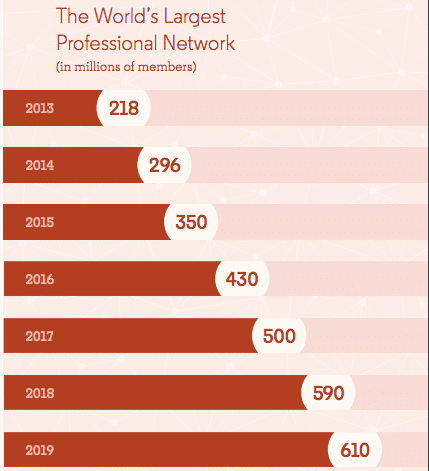
Experts predict that LinkedIn will continue to grow and become an even more vital tool in the business landscape, saying that LinkedIn could one day become such a vital communication tool that it replaces the need for work email — seriously!
According to Forbes, LinkedIn will be adding many exciting features soon. Some of these may include building local connections through a location radius tool and putting more emphasis on using hashtags for building connections and fostering community discussions.
LinkedIn’s Users Are the Most Qualified Social Audience for B2B Marketing
LinkedIn’s user audience is not only large — it’s also very qualified. LinkedIn users are an educated audience who are far more likely to be experts in your field than your other social audiences, such as Facebook or Twitter.
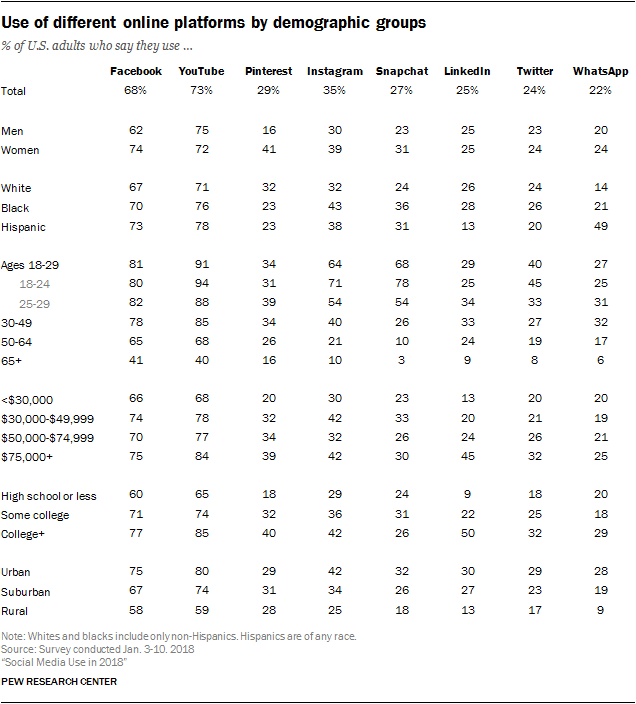
According to research conducted by Pew Research Center, LinkedIn is most popular among educated, urban, professional Americans from households earning more than $75,000 per year. It reaches a wealthier and more educated audience than Instagram, Snapchat, or Twitter.
Take a look at all the data to compare how LinkedIn performs against other popular social media platforms:
LinkedIn’s users also holds a lot of power within their respective organizations, with four out of five LinkedIn members driving business decisions. Furthermore, they hold two times the buying power of web audiences. LinkedIn’s audience is made up of 630 million members, including 180 million senior-level influencers, 63 million decision makers, and 10 million c-level executives.
In short, if you want to reach qualified B2B decision makers, LinkedIn is the effective and targeted social platform you need to be using!
Leading B2B Marketers Love LinkedIn
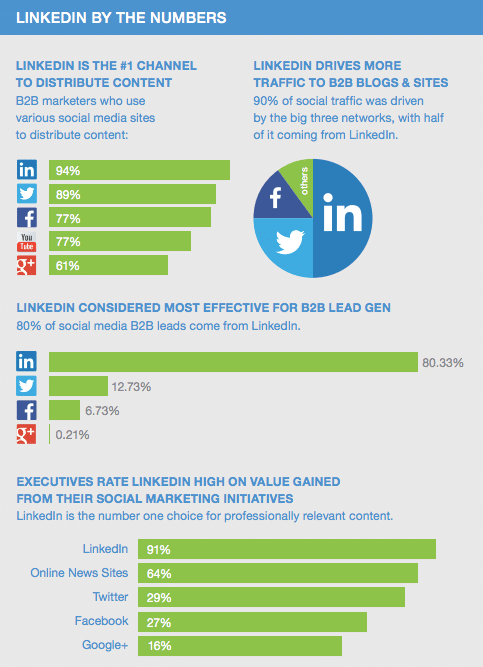
Did you know LinkedIn has been rated the #1 platform for B2B lead generation by marketers? This is because LinkedIn allows businesses to reach a quality audience in a professional context, allowing B2B businesses to engage with users in a very meaningful way.
LinkedIn is also the #1 channel for B2B marketers to distribute content, as well as the highest traffic-driving social media platform, with half of all social traffic to B2B blogs and websites coming from LinkedIn.
Furthermore, a staggering 80% of all social media B2B leads come from LinkedIn, and executives consistently rank LinkedIn high on value gained from their social media marketing initiatives.
Remember when your mom used to say “If ‘so and so’ were going to jump off a bridge, would you jump, too?” Well, if ‘so and so’ is 30 million companies and the bridge is over a pool of social media success, then we’d have to say yes!
The fact is, over 30 million companies have LinkedIn profiles — and while you may not be on LinkedIn yet, chances are, you competitors already are (and as we’ve learned, your ideal target audience definitely is).
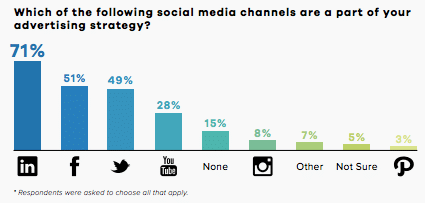
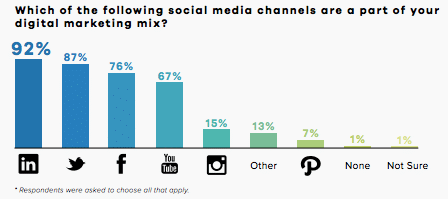
In fact, LinkedIn is the leading social media channel for B2B marketers, with 92% reporting that LinkedIn is a part of their digital marketing mix and 71% reporting that it’s a part of their advertising strategy. Frankly when it comes to other social media channels, they cannot match LinkedIn’s potential by a long shot and today’s business leaders understand that.
Source: DemandWave
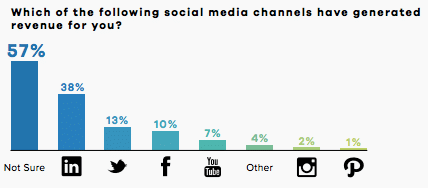
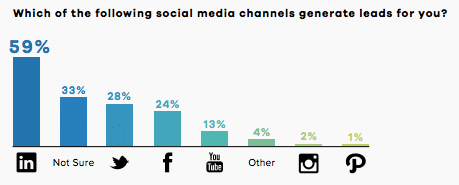
And when it comes to seeing actual, real results from using LinkedIn, B2B marketers like what they see, with 59% reporting that LinkedIn is the #1 social network for lead generation and 38% saying LinkedIn has helped their business generate revenue.
Source: DemandWave
Well, what are you waiting for? Take the first step to achieving B2B social media success and create your LinkedIn business page now!
There are ways to improve sales strategies and marketing tactics without being pushy, but you definitely can’t sit back and expect customers to arrive at your doorstep. Even the most basic marketing plan to increase sales must be clearly defined for you to reach and connect with as many target customers as possible.
3 Examples of How to Improve Sales and Marketing
In this post, we’ll discuss how to improve sales with proven business marketing strategies.
1. Create Buyer Personas
Buyer personas are detailed profiles that describe an ideal target customer as if they were a real person, including important traits beyond basic information like age, gender, and income. Buyer personas often include details such as their job role, duties, shopping preferences, desires, obstacles, and more.
It’s up to you to decide which information is relevant to your business or brand and tailor it to different types of customers you’d like to attract in order to solve their problems.
Struggling to build a profitable brand? Download our free guide to building a better brand today, and position yourself for major growth!
Once you’ve created a few buyer personas, you can then create personalized experiences for each category. You can create copy, landing pages, blog posts, and even e-books with specific personas in mind. Without buyer personas, your unempathetic copy might not resonate with the person you’re trying to convert. When it comes to sales, you can prepare beforehand and switch up your script depending on which category the prospect falls under.
Craft a buyer persona by brainstorming with fellow employees, send out surveys, analyze market research, or observe reports from social media and your website. When you figure out which channels your persona will most likely be reached through, you can invest your time in those and waste less time on less effective platforms.
Once you understand each buyer persona’s needs and start tracking them over time, you’ll be able to tailor your marketing message with greater accuracy and increase sales. 3 in 5 people are more likely to make a purchase when recommended options based on past preferences or purchases.
2. Establish Thought Leadership
One of the best marketing strategies to increase sales is to educate people. This shows that you are knowledgeable but also eager to assist your customers in achieving their goals. Providing them with resources means giving your audience immediate value, which builds trust and goodwill to increase the number of people who return.
Useful resources include whitepapers, e-books, blog posts, case studies, video guides, and much more- the possibilities are endless. Keeping it varied and consistent (and not overtly promotional) will slowly build your reputation as an industry leader whose thoughts and opinions are credible and reliable.
Make your content available on your website, social media, and email campaigns to nurture your leads and convert them into sales (take a look at our blog post about the 7 touches of marketing/sales!) At conferences, trade shows, or speaking engagements, you can direct your new contacts to your digital properties where they’ll find your valuable resources. Over time, this will help reduce costs of both B2C and B2B marketing strategies as your list of resources and contacts grows.
Simply sharing valuable information created by other people is also a good strategy because it shows you’re not simply promoting yourself all the time and engaging with others in the industry. Creating a social media calendar that includes a robust mix of internal and external industry information is a great way to get started.
Shaping and nurturing a strong community is a useful strategy in building awareness, especially for smaller businesses- which leads us to strategy #3!
3. Word-of-Mouth Marketing
Out of all the marketing tips to increase sales, word of mouth marketing is one of the most effective and proven marketing strategies available. According to Neilsen, 92% of people trust recommendations from friends and family over all other types of marketing campaigns.
There are several ways to take advantage of word of mouth marketing, the most common of which being referral marketing and the most recent being affiliate and influencer marketing.
As a matter of fact, referrals influence up to 50% of all purchasing decisions. Not only that, referrals tend to generate more than 2 times the sales of paid advertising. This is evidence that people place a lot of stock on other customers’ opinions rather than directly from the business itself.
While good customer service and memorable experiences may cause customers to organically recommend you to their friends, setting up a referral program can yield faster and greater results. You can get creative with how you want to incentivize your customers to refer their friends with different rewards that work for your company.
Although affiliate marketing works similarly, the two people usually do not have an existing relationship. It’s usually “one-sided”, such as a celebrity. Even if you’re a smaller business without a huge marketing budget, spreading the word with micro-influencers (less than 100,000 fans) can be a more cost-effective solution than hiring influencers with large audiences.
Sometimes it’s just more effective – period. AdWeek found that on average, engagement actually drops the more followers an account has. Leveraging influencers can yield excellent results if you take the time to find the right one.
Lastly, you can simply ask existing customers to write reviews and post them online. According to BrightLocal, 88% of consumers say they trust online reviews as much as personal recommendations. Once you collect a decent catalog of reviews, this word of mouth avenue will play an essential role in gaining you customers.
Work with MARION for Better Marketing to Increase Sales
Not all marketing is created equal. After nearly 40 years serving Texas, MARION is among the top Houston marketing agencies.
LinkedIn ads is the preferred method of advertising for many business to business companies. In fact, 59% of B2B marketers say LinkedIn generates leads for their business and 90% say they reduced cost per lead by using LinkedIn Advertising.
LinkedIn has over 610 million members, including 180 million senior-level influencers, 63 million decision makers, and 10 million c-level executives. In addition, four out of five LinkedIn members drive business decisions, and LinkedIn’s audience has two times the buying power of the average web audience.
With so many users out there, how can your business tap into your social media potential and reach your target audience? The answer lies in LinkedIn Ad’s targeting facets.
LinkedIn Targeting Methods
Today, we’ll discuss how you can use LinkedIn’s many targeting options to build the perfect audience for your B2B marketing strategy.
Building a Custom Audience for LinkedIn
LinkedIn has five different target facet categories from which you can build your custom audience. They are:
1. Experience
Job Function
Job Title
Job Seniority
Years of experience
2. Company
Company Name
Company industry
Company Size
3. Education
Schools
Degrees
Fields of Study
4. Interests
Skills
Groups
5. Identity
Age
Gender
Location
When creating a custom audience, make your audience specific… but not too specific. If your audience is too broad, your ads will reach unqualified users. If your audience is too specific, there may not be enough users to show your ads to and they may not be able to spend their budget. I like to call this quest to find the perfect sized audience “the Goldilocks challenge.”
In order to successfully face this challenge, use LinkedIn’s audience estimation tool. When creating ads, this tool will show on the right side of the screen, and it will tell you whether your audience is too broad or too specific — or just right!
As you’re building your audience, keep an eye on the audience estimation and note how including and excluding targeting features impacts your potential reach. If your audience is too specific, try taking away some targeting facets, and if it’s too broad, add a few more. It’s all about testing what works best and keeping an eye on LinkedIn’s prediction tools.
LinkedIn Matched Audiences
With the matched audiences feature, LinkedIn allows you to target users who have visited your website, as well as your current contacts or target companies/accounts. This feature allows you to get very specific in your targeting and accurately serve ads to your target audience. (Please note that you must have a list of at least 300 contacts to use this feature.)
By installing a LinkedIn Insights tag on your website, you can track your website visitors and serve them ads on LinkedIn. LinkedIn allows you to highly target these users by giving you the option to target visitors to all pages on your site or just visitors to a few specific pages.
For example, if a company sells office furniture and they want to advertise a new line of desks, they could target people who have visited their website page showing the desks they carry.
If you want to target your current contacts, it’s as simple as uploading your contact list (with email addresses) into LinkedIn. LinkedIn will then search your list and match your contacts with existing LinkedIn profiles, based on their emails.
The process is the same for targeting current companies and accounts — simply upload a list of the companies you’d like to target, and LinkedIn will do the work from there.
LinkedIn Lookalike Audiences
LinkedIn’s newly released lookalike audience feature allows you to target users who very closely resemble those in a matched audience you have created. While LinkedIn just released this feature in March 2019, lookalike audiences has been a feature of Facebook Ads for years.
This feature is one of the most accurate ways you can reach a potential new audience. While you can try your luck at building a custom audience using LinkedIn’s targeting facets, the matched audiences feature does all the work for you and, in most cases, produces a more accurate audience. To create a lookalike audience, LinkedIn analyzes all the data from the users in your matched audience and automatically finds users that closely resemble them.
You can create a lookalike audience from any matched audience you’ve created, either from website visitors, current contacts, or target companies/accounts. As a reminder, if your list length is too small to create a matched audience (less than 300 contacts), you will not be able to make a lookalike audience.
Improve Your LinkedIn Ads Targeting Today
For more comprehensive help with your social media marketing in Houston or Austin, contact MARION’s experts today! Our marketing agency has helped hundreds of businesses appeal to their target audience, and we’d like to serve you next!
Follow these tips for creating a LinkedIn Ads audience, and you’ll be well on your way to reaching your perfect target audience with B2B marketing via LinkedIn!
If anyone tells you there are hard and fast rules when it comes to pricing marketing services, they’re lying. Marketing fees and pricing structures can range from downright cheap to obscenely expensive.
Setting the right pricing structure can make or break a business. That’s why it’s vitally important that business owners understand the differences between cost-based and value-based pricing in marketing.
What Is Cost-based Pricing in Marketing?
With the cost-based pricing approach, businesses calculate the costs of providing a service. A markup is then applied to determine the charge to the customer. The goal is to charge more for the service than it costs to produce.
For this reason, cost-based pricing lends itself well to marketing projects. Individual projects can range in scope, causing prices to fluctuate depending on various goals and objectives. Cost-based pricing can easily scale with projects of different sizes, making it the ideal choice for project pricing.
Benefits of Cost-based Pricing
Businesses that operate on a cost-based pricing structure tend to charge by the hour. This method benefits both the business and the client – businesses can easily work out the price of the project with the client without the need for in-depth data analysis or market research.
A markup percentage can then be added to ensure costs are covered while leaving enough room for profit. Clients benefit by seeing their money put to work based on the amount of time and material needed to complete a project.
Examples of Cost-based Pricing in Marketing
Let’s say a digital agency is hired for a manufacturing web design project. The agency will need to consider employee salaries, overhead costs, marketing objectives, the size of the agency, and other factors to determine the cost of the project. When the costs have been added up, the agency can then markup its web design services to ensure they make a healthy profit.
The same could be said for a logo design project. The agency would have to calculate the cost of the graphic designer, scope of the project, hours logged, and the markup to determine the price of the project.
What Is Value-based Pricing in Marketing?
Value-oriented pricing is determined by how much value your product or service adds to your client. Businesses that use value-based pricing should consider several vital questions:
How much does your target consumer perceive the value of your product or service?
Are your customers happy?
Does your product/service provide a benefit?
Clients who keep marketing agencies on retainer often prefer value-based pricing. Marketing retainers are typically determined by the perceived value of the service provided. Keeping a marketing agency on retainer ensures you have access to a vast pool of marketing knowledge whenever you pick up the phone. Source: Giphy
Good retainers often pay for themselves in the value they provide. There may be instances where you would use value-based pricing for marketing projects as well. This, of course, depends on the scope of the project.
Benefits of Value-based Pricing
One of the primary benefits of the value-based pricing model is that it helps you determine what price point your customers are willing to pay for your products and services. This should confirm that your customers are interested in what you have to offer in terms of value.
Also, the value-based pricing approach encourages businesses to provide higher quality products and services. Typically, businesses that sell value-based products and services will continually increase the quality of their goods, allowing them to raise their prices accordingly.
Value-based pricing requires a continuous and close relationship with your target audience. You will need to learn their needs and wants so you can provide a viable solution as you improve upon the services you already offer.
Examples of Value-based Pricing in Marketing
Let’s say a full-service marketing agency notices that one of its clients struggles with digital marketing and can’t seem to find any customers. Because the full-service marketing agency provides a range of effective services (such as social media marketing services, custom web design, custom logo design, etc.), they can justifiably command a high monthly retainer.
Alternatively, let’s say you lack the skillset to rank your website on Google organically. Therefore, you keep an SEO agency on retainer so they can help you improve your search engine ranking. Businesses are typically willing to pay SEO specialists anywhere from $2,500 – $5,000 (or more) a month due to the immense value of their services.
Value-based Pricing and Cost-based Pricing – Which Is Right for Your Business?
Some say cost-based pricing is the superior pricing model, while others argue in favor of value-based pricing. While they both have their strengths, the pricing structure you decide to use will often be determined by your industry and service offerings.
No matter what pricing structure you prefer, MARION’s digital marketing agency is here to help you execute on your ongoing campaigns and marketing projects. Our team of professionals is on standby to help you succeed in your marketing endeavors.
Now that the digital age is in full swing, traditional B2B marketing strategies and tactics are no longer the most viable choice for your brand. Constantly evolving technology requires an approach that’s more fluid in nature. If you’re not able to meet the expectations of your audience, your digital campaign is destined for failure.
What Is a Digital Marketing Campaign?
A digital marketing campaign is an online effort put forth by an organization to drive conversions, revenue, traffic, or engagement to achieve a specific marketing goal, such as building an email list or selling a product or service. During an online marketing campaign, one or more digital channels are utilized to reach a targeted audience.
Most campaigns are composed of three stages – Planning, development, and management. With your goals outlined, your messaging and voice developed, and campaign properly managed, you will set your digital marketing campaign on the path to success.
When targeting other businesses, the focus of your internet marketing campaign should be to establish yourself as an authority in your industry and build in-depth relationships.
Let’s look at the most effective types of online campaigns for B2B, and some corresponding digital marketing campaign examples.
1. Social Media
Imagine yourself on a stage surrounded by millions of people at any given time, but there are thousands of stages just like yours vying for the attention of the masses. How do you earn the crowd’s attention? That’s social media marketing in a nutshell – Constantly competing for the attention of your audience.
It takes nuance to get a social media campaign just right, but you’ll have to master it if you intend on staying competitive. For B2B marketing, Instagram and LinkedIn are the primary social media platforms to target. However, old warhorses like Facebook and Twitter still have plenty of value to offer.
Here are a few tips on the type of content you should post for a B2B-focused social media page:
Testimonials
Industry news
Educational material from your company (links to your blog)
It’s also important to consider advertising through social media to supplement your organic reach. Now take a look at this example of a digital marketing campaign that leverages social media.
Huawei Showcases Its Mastery Over Twitter
Huawei, the world’s largest manufacturer of telecommunications equipment, showcases what it means to provide value with nearly every post on its Twitter page. Huawei offers endless resources on technology trends and quotes from leaders in the industry.
From its Twitter page alone, it’s easy to see that Huawei stands out from its competition with its consistent flow of relevant and highly informative content.
Your marketing budget should always include room for a healthy PPC (Pay Per Click) campaign. No digital media campaign would be complete without one, and with the right targeting and the right budget, you can get fantastic results. After years of providing PPC in Houston, we’ve identified the following insights.
Many digital ad campaigns nowadays provide top-tier segmentation, allowing you to accurately reach your target audience with pinpoint accuracy. Google Ads and Facebook are prime examples of advertising platforms that excel due to in-depth segmentation features.
Another benefit of PPC is that you’ll have access to analytics, which will enable you to see what works in your digital advertising campaigns and what doesn’t. When utilized correctly, a PPC campaign can be one of the most effective tools in your kit for raising brand awareness and getting leads for your business.
Pay-per-click is a very targeted strategy to include in internet marketing for manufacturing and industrial companies. We frequently see industrial firms opt for PPC instead of social media because of the platform’s high commercial intent.
Need help gaining real exposure for your brand? Ask a MARION marketing strategist about our Austin PPC services.
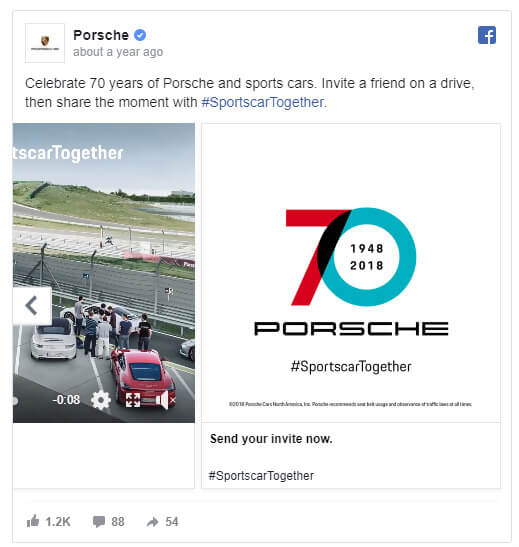
Porsche Automates Every Aspect of its Facebook Ad
Porsche shows everyone how it’s done with this fully automated PPC-optimized ad.
Porche’s ad is completely interactive, featuring a carousel feature and chatbot. For your own B2B digital marketing endeavors, remember that customer interaction is key to drawing attention and holding interest.
While video ads are popular with many marketers for their visual appeal, you’ll find that podcasts can be just as attractive, especially in the B2B world. For the past few years, podcasts have been exploding in popularity.
CEOs and business owners often find podcasts to be useful because they can be consumed while multitasking. For example, you can listen to a podcast while commuting to work or eating lunch.
That makes podcasting a prime target for B2B digital marketing. Guest starring on the best business podcasts in your industry or paying for an advertising spot are great ways to approach this strategy.
Learning Podcast Marketing from the Masters
The podcast Good Copy, Bad Copy: the B2B Copywriting Podcast has a highly informative blog post highlighting everything they’ve learned about podcasting for B2B audiences. While much of the post discusses the do’s and don’ts of podcasting, you’ll get a unique perspective of what it means to incorporate a podcast into your B2B digital marketing campaign.
4. Advocate Marketing
Likely one of the most effective types of digital marketing campaigns you can employ, advocate marketing involves leveraging your existing networks to generate new leads. Advocate marketing is effective because people are more likely to listen to people they trust.
If, for example, your business partner suggests a specific product to improve your digital marketing, you’ll be more inclined to give the service a try.
Docu-Sign Uses Advocate Marketing to Influence Millions in its Pipeline
Docu-Sign implements advocate marketing beautifully by using advocate marketing software platform Influitive to influence more than $3 million in their pipeline. The moral of the story is never to underestimate the power of advocacy – it could generate your business millions.
The Importance of Online B2B Marketing Campaigns
If you’re nervous about diving headfirst into the marketing abyss, don’t be! This infographic outlines exactly why your business needs to overhaul its approach to B2B integrated marketing campaigns today!
Implementing the Best Digital Marketing Campaigns for Your Business
Is your business leveraging the best online marketing campaigns? Are they working? Do they require tweaking? No matter what strategy you implement, focus on utilizing analytics to see what works and what doesn’t, and gradually tweak your campaigns until you start seeing results.
Creating a flawless B2B campaign takes expertise. Contact MARION today so our experts can show you how to run a digital marketing campaign the right way.
Social media is one of the most powerful tools businesses have in reaching modern consumers. In fact, 69% of U.S. adults and 45% of the total world population use at least one social media platform. In the coming years, social media’s popularity will continue to grow with social media penetration set to hit three billion people worldwide by 2021.
Like any marketing tool, the results and performance of your social media efforts should be carefully tracked and analyzed to ensure that the time and money your business is spending is worth the return on investment.
Setting goals and tracking metrics can seem like a daunting task, but I’m here to help make it easy! Below, I discuss how you can get started setting your social media goals, along with some of the most common social media metrics that go along with each.
Begin with an audit
Before you dive into common social media goals and metrics, you’ll want to take a step back and look at what your business is doing right now by conducting a social media audit. Doing this will help you get a clear picture of where you currently stand so you have a baseline to measure any new social efforts against.
Begin your audit by thinking carefully about all of the different social accounts your company has and forming a list of these active accounts. Make sure your company doesn’t have any duplicate or old pages that may no longer be in use.
Next, search your company’s name on Google and various social media sites to see what social accounts exist. If you find accounts you don’t recognize, determine if they’re actually connected to your company. If you think they may be imposter accounts run by someone not affiliated with your brand, take the necessary steps to get them removed.
Once you have a clear list of all your social accounts, create a social audit spreadsheet to keep track of all of your information. For each of your social accounts, record the following information in your audit spreadsheet:
the link to your profile
the social handle of the profile
the internal person or people that manage the account (whoever “owns” it)
the top three posts in terms of engagement
any key demographic information
include a column for any additional notes for the account
Next, make sure each account is consistent with your brand image by setting cohesive profile pictures and cover images that align with your brand. Ensure your profile and biography text align with your current brand message and check that you are using the same handle across all platforms to ensure consistency. Use this brand strategy template if you need help aligning your messaging and imagery.
Don’t leave your branding up to chance. Download this free sample brand style guide today to align your brand materials!
Now, since you’ve already identified your best posts, it’s time to analyze them and look for patterns. Notice what kinds of posts, content, and copy get the best response, as well as how post engagement differs between platforms. For example, do posts with pictures perform better than posts with links? Write your thoughts on these patterns in the notes column of your audit spreadsheet.
Lastly, decide which channels are right for your business by looking at how each existing channel is currently performing and considering if there are any new platforms that may be right for you. Look at demographics for the various platforms and match them up with your target audience to determine where your time and effort is best spent to serve your business.
Once you have conducted your social media audit and have a good understanding of your social platforms, it’s time to set your goals and figure out what social media marketing metrics you should keep track of.
Setting social media goals and metrics
Here are some of the most common social media marketing goals and objectives, along with the metrics that should be tracked for each:
1. Increase conversions/sales
After years of offering social media marketing in Austin, we’ve found that this is a favorite social media goal among businesses because it directly relates to a company’s bottom line and is one of the best ways to show the value in social media.
A conversion is when a customer takes a specific action, like downloading a whitepaper or filling out a contact form. Conversions are not sales, but they are very valuable actions that have measurable value for the company. Measuring this goal is particularly useful for most B2B marketing strategies.
Key metrics related to conversions and sales include:
conversion rate
click-through rate
conversions
cost-per-click
cost-per-conversion
2. Generate Website Visits
Another popular goal for social media marketing is to increase traffic to your company’s website. Companies who choose to set this goal are focused on getting users to their site in the hopes that it will encourage them to browse around other pages, become more interested in their business, and maybe even make a conversion (such as filling out a contact form).
Key metrics related to generating website visits include:
link clicks
site visits
cost-per-click
3. Build & cultivate an engaged community
Fostering an active and engaged community means you have a ready audience that is interested in keeping up with your company’s latest news and developments. This is particularly useful for B2C companies, as a loyal audience is a major asset when launching a new product, having a sale, or trying to create a positive social brand image.
Key metrics related to community engagement include:
engagement rate
amplification rate
applause rate
reactions
4. Build brand awareness
Brand awareness is the extent to which people are familiar with your company. Set this goal if your main focus is to have social users know you exist and understand what your company does.
Key metrics related to brand awareness include:
brand mentions and tags
reach
impressions
shares
ad recall lift (for Facebook social ads)
Once you have figured out your goal and the key metrics that go along with it, be sure to add them to your social media audit to see where your company currently stands.
Lastly, consistently monitor and analyze how your ads are performing (given your key metrics) to ensure you are on track to meet your goals.
Now get out there are start making social media work for your business!
Develop Your Social Media Marketing Strategy with MARION
In today’s market, promoting services from one business to another has become a common practice. Trends give rise to new strategies which need to be employed to stay ahead of competitors and to draw in customers.
Information technology companies face marketing challenges unique to their field, though an abundance of opportunities offsets this. With that being said, marketing for IT companies just requires the right strategies.
B2B Marketing for IT Companies
Effective B2B marketing strategies are essential for any IT company, but which tactics should you use? These B2B marketing strategies are proven to help you create your own IT services marketing plan.
1. B2B Event Marketing
There are countless IT services marketing strategies available, but few are as powerful as hosting a B2B marketing event. Marketing events are offline marketing channels where real-life experiences are leveraged to achieve a variety of business goals like:
sales acceleration
customer retention
brand awareness
B2B event marketing are centered on education and building relationships between organizations, and a firm handshake can be a great step towards closing a deal. During these in-person interactions, the use of video and interactive sales presentations are highly recommended to keep potential customers engaged.
2. Visual Content
Visual content has completely permeated the marketing landscape. Formats such as videos, images, live discussions, and webinars are some of the most popular forms of visual content widely utilized.
Simply put, people prefer interacting with other people. Blogging for business has marked benefits, but blog copy can only convey so much emotion. Visual content, however, hints to prospects know they’re dealing with another living, breathing human. This builds reliability and trust.
Social media management plays a major role in B2B marketing for IT companies. While social media channels are often used to participate in industry discussions, it can also be used to promote and share content.
Content marketing has been a widely successful approach in the B2B space over the past decade. For your content marketing to be effective, focus on delivering quality, highly relevant information that delivers value to your readers. Delivering value first will build trust and pave the way to future business partnerships.
Content such as blogs, whitepapers, and case studies work well to draw in potential clients. Relevancy should be one of your main focuses during content creation. Nowadays, businesses are focused on topics such as cloud computing, cybersecurity, storage and Office 365 amongst other topics.
Not sure how to create quality content assets that your customers will appreciate? For expert content marketing in Houston, let MARION’s team of strategists help. Unlike some other IT marketing firms, we have firsthand knowledge about growing a highly profitable IT services company.
5. Mobile Marketing
An effective marketing strategy for an IT company would not be complete without the inclusion of mobile marketing. Mobile website marketing campaigns are ideal for reaching executives who are constantly on the move. Executives are often inundated with meetings, management duties, and other similar responsibilities, and often only have time to quickly scroll through their phone during a short break.
Ensuring your pages are mobile friendly will guarantee greater interaction between your business and its intended audience. You’ll also be providing a personalized experience for your users, something everyone appreciates.
6. A Winning Website
Once upon a time, marketing strategies for IT companies relied chiefly upon word of mouth for growth and brand awareness. Nowadays, an impressively designed website has taken over this role.
Focusing on a winning website design is crucial because your site acts as an indicator of your credibility. A website that fails to impress visitors can act as a deterrent to successfully selling IT products to interested organizations. We have more details in a recent blog post if you’re unsure of what makes a good website.
Marketing ideas for IT companies should always include a winning website design. Remember, your website is your primary hub for setting up an online marketing presence. This is where visitors can view your mission statement, access links to your social media profiles, visit your blog and much more.
Contact MARION for custom web design in Houston that will leave a lasting and positive impression on your potential customers.
7. Marketing Automation
A solid marketing strategy for IT services often includes automation tools. The advent of marketing automation technology has completely revolutionized marketing practices across the board.
Automation tools can allow your IT company to personalize email messages with the press of a button, create an increase in website traffic, update social media channels, and much more. With minimal management required and the right automation tools, your marketing strategy can be set on autopilot which makes marketing automation a must. Any IT marketing agency worth their salt can get you set up with the right tools for your unique circumstances.
Developing a Winning B2B Marketing Plan for IT Companies
Knowing how to market an IT company is essential for reaching the right audiences, developing business relationships, and establishing new clients. We recommend trying the above strategies to find what works and what doesn’t for your marketing efforts.
MARION makes digital marketing easy. The careful approach of our award-winning marketing agency ensures that your business will always have access to the resources needed to make your marketing strategies successful.
If your business is mostly B2B, LinkedIn is a necessary tool to connect with industry peers and potential clients. Whether you’ve just created a new LinkedIn company page or you’re looking for ways to grow your follower count, here are some LinkedIn company page tips to get you started.
1. Make Sure Your Page Looks Good
No one wants to follow a sloppy-looking business with an incomplete page. Your LinkedIn page should make sense aesthetically- take the time to write a good, concise description and use engaging visuals for your header and profile images. Remove as much clutter as possible to keep your page looking professional and streamlined.
Another thing that is easy to overlook is your custom URL. When you create a page, the default URL will include a group of random numbers at the very end. For example, our LinkedIn URL is www.linkedin.com/company/marionmarketing instead of a bunch of numbers at the end. You can customize your URL to look more professional and in control of your brand.
Keep in mind that your old URL will not redirect to your new URL if you change it. So, if you’ve linked to your LinkedIn page over the years on several websites, online profiles, or guest blogs, you will have broken links scattered across the web. Make sure you’re happy with your custom URL from the start so you don’t have to change it.
2. Get Employees Involved
One of the easiest steps to growing your company’s page is to have your employees list it on their personal profiles. Every time someone checks out their profile, it will lead back to your company’s LinkedIn page. They can also share company updates, blog posts, pictures, etc. to their own personal page. The more they engage, the more credibility it lends to the company’s page.
Another easy method is to have them add a small LinkedIn button at the bottom of their email signatures so that any time someone corresponds with your company’s members, they have an easy way to visit your company page.
3. Post Good Content Consistently
One of the best ways to attract and retain followers is to share good content consistently, but not too often. Posting on a reliable schedule with content that is relevant and valuable to your audience is the best method of gaining followers in the long term. Relentless self-promotion will turn away most people, so make sure your B2B marketing through LinkedIn includes helpful links, videos, infographics, etc. that will give them a reason to keep following you.
Showcase Pages are extra pages that you can create from your main company page that show off specific products or services. Users are able to follow Showcase Pages without following the business, which means you can cater to specific audiences. There are countless ways you can set up a Showcase Page. They are also an excellent way to gradually attract people that wouldn’t normally follow your company page.
5. Use Existing Clients
Ask your clients to follow your page- after all, they’re already fans of what you do and are more inclined to share your posts and articles than someone who has just stumbled onto your page. It’s a no-brainer to tap into an audience you already worked hard to get.
6. Join LinkedIn Groups
LinkedIn Groups is a feature where professionals can gather to share insights and network with each other. Drive engagement by joining industry-related groups and actively participating by sharing your thoughts and joining discussions.
You can even make your own community by creating your own LinkedIn Group. The most important thing to remember is that to be successful using this method, you must be providing something of value for the members. Building trust and reputation in communities will drive visitors to your page.
With a combination of these factors (and even more that haven’t been listed), it’s easy to reach the exact audience that you are looking to attract.
8. Cross-Channel Promotion
Make sure you embed a LinkedIn button in all your relevant marketing channels. This includes emails, newsletters, business blog posts, other social platforms, company website, and more. You can even include the URL on business cards, brochures, etc. Any blog posts that you have on your company website should include an option to “share on LinkedIn” so the reader can post it onto their personal LinkedIn page if they’d like. This simple but ubiquitous presence can fill the holes in promoting your growing page.
Growing followers for your business can happen organically if you dabble in a few or all of these tips to increase visibility. For B2B marketing strategies, LinkedIn is extremely vital to your organization’s social media marketing success.
Schools, just like small businesses, can truly benefit from effective and engaging online marketing. Similar to most small businesses, schools usually provide services in a certain locality.
Schools deal with branding and promotion, as well as the need for continuous recruitment. While a business may need to advertise to consumers, investors and partners…a school must advertise to students, parents and volunteers.
Your type of school, the age, and size of the school, as well as its growth needs, should be considered and evaluated when creating a charter or private school marketing strategy. Whether you’re a public school, private school, charter school, Montessori school, magnet school or even a specialty school, it’s important to understand which marketing and advertising objectives are the most effective.
Typically, marketing ideas for private schools and charter schools should focus on recruiting more students and qualified faculty, as well as highlighting the benefits for parents and caretakers of students at the school. This is usually achievable by highlighting the advantages of the school.
Perhaps your school is public and a great athletic school. It would be important to showcase stats, highlight videos, championship trophies, etc. It would be advantageous to highlight previous students who moved on to play at the next level (collegiately) or even professionally.
Charter schools and magnet schools have an area of educational focus where they prevail compared to other schools. This educational focus is usually the main reason for attending the school. It could be a school that focuses on healthcare and teaching the next generation of healthcare providers, or a school that teaches the performing arts to young, future entertainers.
Want to improve your school marketing effectiveness? Learn how to run an online marketing campaign by downloading your free eBook today!
Regardless of what type of school you may need to promote and advertise, the school marketing ideas below should be of assistance.
Digital Marketing Ideas For Schools
All schools, no matter the type, should engage in digital marketing. It is extremely important that your school, its location, and other pertinent information about your school are easily found online. This applies to visitors using search engines, social media or just browsing the web. If a potential student, teacher or parent is online searching for a school that offers what your school may provide, you need to be found.
School Website Development & Maintenance
The school’s website is usually the first place people will visit to gather more information about the school. It is extremely important that the website is responsive. The website visits could happen on a mobile device, tablet or desktop computer. The usability should be consistent across all devices. If you need help making this happen, leverage most web design companies can help.
Core Information about the school (admissions, curriculum, forms, etc…) should be easy to navigate to and read. Time-based content like events and photos should be displayed prominently. Other content like blog posts, press releases and news should be posted in a way that is easy to access and share.
Local SEO for Schools
Local search engine optimization for a school is the most important school marketing strategy that must be handled correctly. If your school is brand new and built from the ground up, Google and Bing will have no listing for the school. It will need to be created. Maybe your school was formally another school or had a recent name or location change. Updating Google My Business and Bing Places profiles will solve this issue. Keep in mind, the citations for your school are listed on hundreds of other directories also. We prefer a tool like Yext, to claim and update all your school listings on the internet.
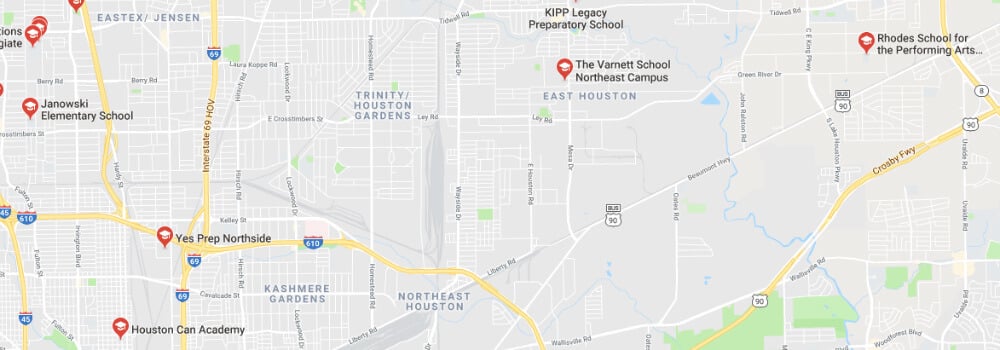
The benefits of local SEO is getting your school listed in the Maps section of Google and other search engines. Users view the maps section to understand where the school is and the distance from home or work. Google maps are also the trigger that activates the navigation on Android mobile devices. Local SEO for your website will help users searching for your school or a similar school to find you.
Social Media Marketing for Schools
Social media marketing for private schools and charter schools is just one aspect of social usage. Social media should be used to convey messages, share news and events, provide updates and serve as a point of indirect communication.
Facebook posting is a great way to keep parents and guardians of the students up to date with the latest school events and news. Instagram is perfect for showcasing photos and videos of events and daily activities going on at the school. Twitter is used by major corporations as a vehicle for customer service. Schools could use Twitter in the same fashion by sending out timely tweets about events or changes that need to be sent quickly.
Social media marketing for a school works best when the school can create social profiles that are the same, or at least very similar to the website domain name. For example, Houston ISD has a school called, Lamar High School. The website address is lamarhs.org. The Facebook, Twitter and Instagram profiles are all, lamarhs. This makes searching, finding and sharing extremely easy.
Email Marketing for Schools
No matter how many people search Google or use social media, the inbox is still the most visited place on the internet. Email marketing for schools is not a luxury; it’s a necessity. Everyone checks their email multiple times a day. One of the huge benefits to email marketing is the fact that history will dictate when emails should be sent and on average how many users will open them. More importantly, we’ll know what times are best to send emails.
A school should have a few different email lists.
A generic, “all users” list to send out general school information every month at the same time.
An “all faculty” list to send important internal reminders
A “parents & guardians” list to send external dates, reminders, and information
These different lists should be emailed consistently at different times of the month. The generic list would be served a Monthly Newsletter. All faculty should be emailed every Morning with weekly updates. The parents and guardians could be emailed in the middle of the month with news and events.
Pay Per Click Management for Schools
Search engines like Google & Bing offer the ability to bid on keywords and phrases and have your ad shown within the search results. When someone searches for a term you’ve bid on and clicks your ad, the search engine will charge you for the click…hence the name, pay per click (PPC).
With so much competition online, getting your website listed in the search engines can be challenging and very time-consuming. PPC gives the opportunity to be listed without the wait. Google offers two networks, search and display. The search network places your school’s ads on Google and other search partners (AOL, etc…) so the ads can be seen and clicked on. The display network uses image and text ads and displays them on websites within Google’s network of websites that have display ads.
For a school, creating a remarketing campaign through Google’s Display Network is one of the best uses of marketing dollars. These campaigns allow the school to display ads to users who may have visited the website before, or at the very least, have searched the internet for terms that relate to the school.
These school marketing ideas and strategies can be used for any elementary, middle or high school that is public, private, magnet or charter. The key is to stick with it and use them constantly. Either add staffing to manage the marketing, or partner with a digital marketing agency like MARION who has the experience, skillset, and resources to do it for your school.
Contact MARION for School Marketing Ideas & Implementation
There are several time-consuming dimensions to effective traditional and digital marketing for private schools, charter schools, and Montessori schools. You may want an expert on your side that has experience with school marketing strategy.
Contact MARION today if you’re interested in improving your school marketing effectiveness.